Blog
Sports Team Neon Signs: Any Team, Any Wall
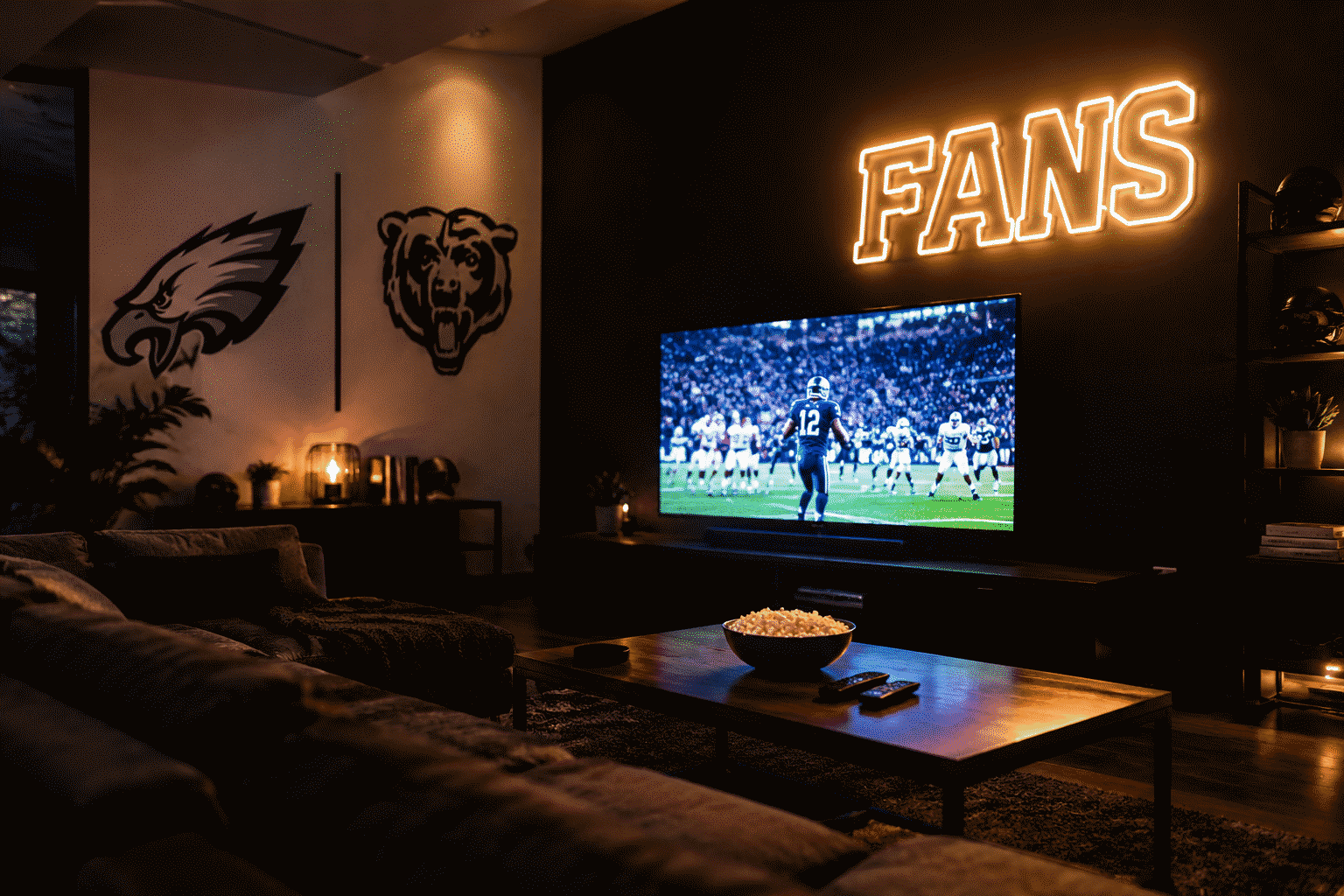
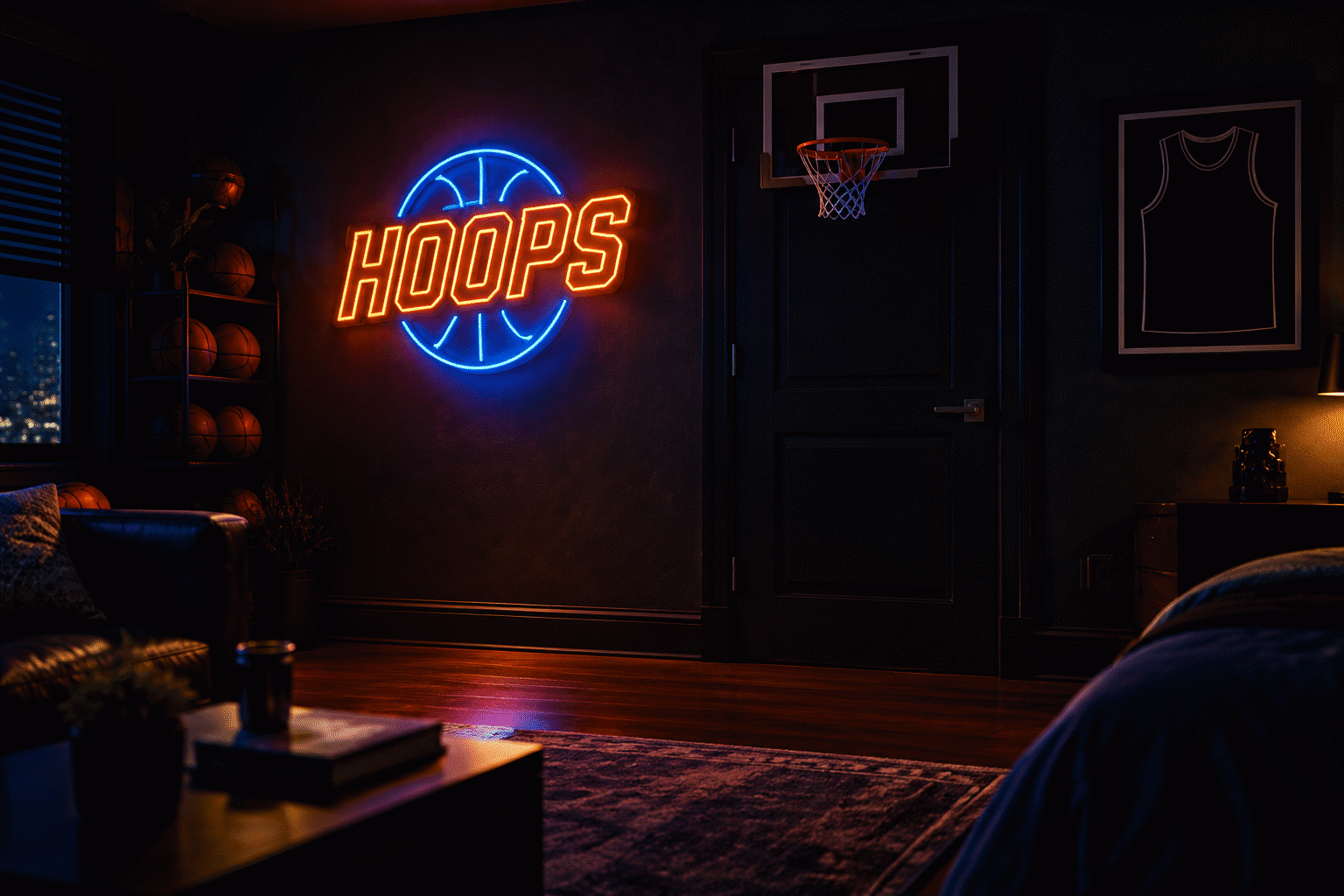
Every sports wall is really two walls: the one the season lights (the team piece at full output on game day) and the one the off-season keeps (the same piece at 20%, the room’s flag never quite furled). The sports register is the biggest category in fan decor, and the fan-styled neon route has quietly become its main street — every team’s colors, every era’s marks, every household’s own story, available as light.
This guide is the register’s master map: the four-season wall architecture, the multi-team household layouts, the color discipline that keeps rival marks from open warfare, and the custom tiers. The league-specific deep dives live in their own guides — football and baseball — with more on the way.
The Four-Season Architecture
The American sports house runs a full calendar, and the wall can run it too:
- Fall: football season (September–February). The year’s anchor season — the wall’s full-employment stretch. The football piece works Sundays, the college piece Saturdays, and the two months of overlap with the year’s other endings make autumn the glow calendar’s peak.
- Winter into spring: basketball and hockey (October–June). The indoor seasons — the wall’s second shift, running the evenings the football piece rests.
- Summer: baseball (March–October). The long season — the wall’s steady state, the almost-every-evening register that bridges the football gaps. Our baseball guide covers the summer half.
- The year-round layer: soccer and the global game. The sport that never stops — the wall’s international tier, the piece that means a family’s origins as much as its fandom.
The architectural insight: a full four-season wall isn’t clutter — it’s a calendar. One anchor per season, the active season’s piece at full output, the others at rest brightness: the wall that tells you what month it is.
The Three Multi-Team Layouts
Most households hold multiple allegiances — by marriage, by generation, by city. The three working layouts:
The split wall. Two teams, one wall, a deliberate gap — the treaty format. Equal sizes (the peace depends on it), one color register per side, the gap doing the diplomatic work. The layout for the mixed-marriage wall and the roommates’ compromise.
The generations wall. The family tree of fandom: the parents’ teams above, the kids’ teams below, the college tier at the smallest scale (fandom being hereditary but not identical). The layout that turns the wall into a household portrait — and the one where the custom tier (“FANS SINCE” pieces) earns its keep.
The sport stack. The year-round calendar as a single composition: football on top (the tall season), baseball below (the long one), basketball and hockey flanking — the seasons stacked in the wall’s own order of operations. The full-stack wall wants width (ten feet of wall minimum for comfort) and the brightness discipline below.
The Color Discipline (Rival Management)
The sports wall’s hardest problem is hue — teams own colors, and the colors fight:

- One register per team, always. The mark in its own colors, unaltered — the fan-styled route’s first rule. “Adjusted” team colors read as errors, not designs.
- Rival colors never touch. Two teams whose palettes clash (the famous in-division feuds) get separate wall sections at minimum, separate walls ideally — the split-wall gap exists for exactly this.
- The harmony exceptions. Teams whose palettes naturally share (the navy-and-red families, the black-and-gold family) can share a section — the layout gift of the leagues’ overlapping palettes.
- The neutral tier. The phrase pieces (“GAME DAY,” the family’s own customs) run in warm white or the room’s neutral — the pieces that de-escalate a crowded wall.
The palette test: stand at the door. If the wall reads as a garage sale, the color discipline has failed; if it reads as a shrine, it worked.
The Fan-Styled Custom Tier
The honest note every sports piece on this site carries: our designs and customs are fan-styled LED pieces — not league merchandise under a licensing relationship. The custom tier is where that becomes an advantage:
- The est.-tier. “FANS SINCE 1997” in team colors — the household’s fandom, documented. The most-gifted sports custom.
- The scoreboard piece. The rivalry score, the championship game, the win that gets retold — the wall’s own record book, in the winner’s colors.
- The stadium and section tier. Your stadium’s name, your section number, your seat’s row — the personal detail no licensed catalog will ever carry.
- The dynasty count. The title numerals, added one at a time — the wall that updates its own history.
- The multi-team custom. The family’s two or three marks in one composed piece — the treaty wall as a single object, sizes negotiated at order time.
All live-priced by width and color count in the custom builder. The ready roster pieces — the 49ers, the Steelers, and the rest of the lineup — carry the fan-wall format in the meantime.
The Room Placements
- The man cave (the flagship). The sports wall’s native habitat — the full architecture, the layout rules in the man cave guide. The football piece anchors; everything else negotiates.
- The home gym. The effort register — the team piece at the mirror, the team colors as training fuel. The home gym guide covers the lighting logic; the team piece runs it in the family’s hues.
- The office and desk. The lettermark or the small mark at 12–16 inches — the cred tier, the Monday-morning proof.
- The kid’s room (the inheritance). The family teams at the smaller scale — where the generations wall begins. The mark on a ten-year-old’s wall is a seventeen-year plan.
- The porch and patio. The covered tier — the season’s outdoor register, the game-day cookout wall. Covered mounts only; the tailgate customs (“SPOT 47,” the lot’s own name) are the register’s most social builds.

The Office Cred Tier
The sports register’s most underrated deployment deserves its own note: the office wall. The working rules that make it land:
- The lettermark, not the mascot. The professional setting wants typography, not illustration – the single letter or the minimal mark at 12-16 inches reads as identity; the cartoon tier reads as a dorm.
- The one-team rule. The office wall carries one allegiance (the split-wall treaty logic collapses at desk scale). The lettermark plus optionally the est.-year footer: the fan wall at its most restrained.
- The brightness convention. The office piece runs at the low register during working hours – the dimmer doing the professionalism work. Full output is for game-day mornings and championship weeks, when the office temporarily becomes what it always was.
- The client-facing question. The conservative office runs the piece inside the office, not facing the door – the cred tier is for the people who work with you, not the people who hire you. Every fan in a client-facing room has learned this the polite way or the hard way.
The Sizes
| Tier | Size | For |
|---|---|---|
| Desk lettermarks | 12-16 in | Offices, kids’ rooms |
| The standard mark | 16-24 in | Bedrooms, offices, gyms |
| The anchor piece | 24-36 in | Caves, living rooms |
| Multi-team customs | composed | The treaty and stack walls |
More League Guides
- NBA neon signs — the hardwood league wall, team by team
FAQ: Sports Team Neon Signs
Where do I buy a sports team neon sign? Fan-styled LED pieces like our roster designs, the secondhand market for vintage bar pieces, and the custom tier – your text in team colors, live-priced in the custom builder. The licensed-vs-fan-styled distinction is covered in every sports guide we run.
How do I display multiple teams on one wall? The three layouts: the split wall (equal sizes, deliberate gap), the generations wall (parents above, kids below), and the sport stack (seasons stacked, football on top). One color register per team, rival palettes in separate sections.
What season does the sports wall peak? The football stretch, September through February – the wall’s full-employment season. The four-season architecture keeps the wall working all year: the active season at full output, the rest at rest brightness. The calendar logic is above.
How much does a team neon sign cost? Lettermarks run $80-$140; the standard marks $120-$220; anchor pieces $180-$320; multi-team customs by composition. The est.-tier and scoreboard customs usually land under $200 – the personal pieces are among the register’s most affordable.
Can rival teams share a room? Separate sections at minimum, separate walls ideally – the split-wall gap exists for exactly this. The harmony exceptions are the teams whose palettes naturally share; the famous clashes never make peace on one wall section.
Are fan-styled team signs legal? For personal display, yes – custom builds are your own text and design, and the fan-styled route is the sports decor market’s standard. The licensing burden lives with sellers of official marks, not with the wall that hangs them.
Run the House League
Four seasons, any number of allegiances, one wall that keeps score. Pick the architecture — split, generations, or the full stack — and build the first piece.
More sports glow: football walls, baseball walls, man cave layouts, the home gym register.
Sources & Further Reading
- Neon sign (Wikipedia) — the consolidated public record of neon-sign history and technology.
Pricing based on CustomNeon’s current catalog (2026); custom quotes come live from the sign builder.