
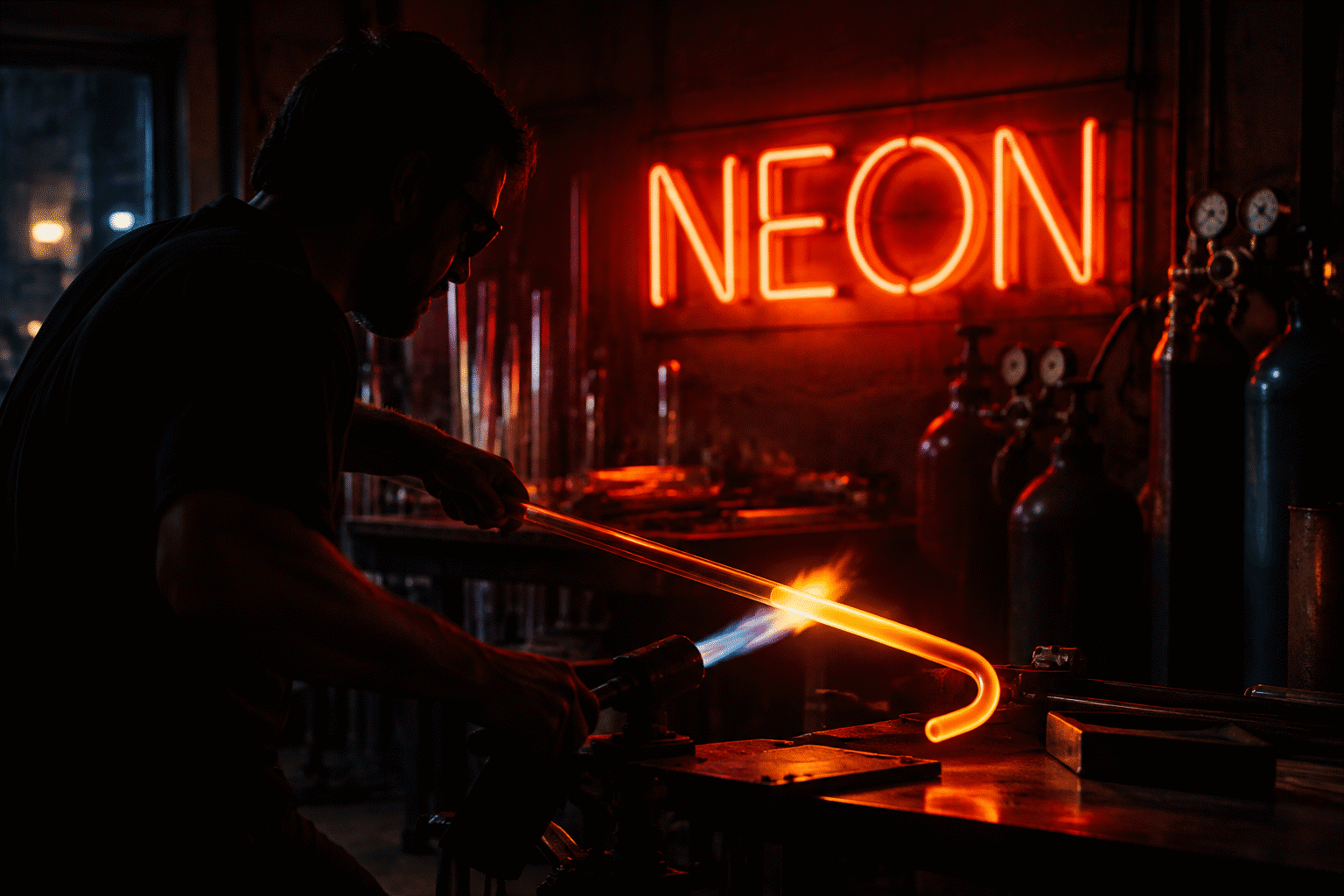
What Gas Is Used in Neon Signs? Colors & Safety
Neon signs use two gases for the overwhelming majority of tubes: neon, which glows red-orange, and argon mixed with a drop of merc...

How Long Do Neon Signs Last? LED vs. Glass Lifespan
A quality LED neon sign lasts 30,000 to 50,000 hours — that’s 10 to 17 years at 8 hours a day, or about 4 to 6 years running...
Do Neon Signs Use a Lot of Electricity? Watts & Costs
No — an LED neon sign uses about as much electricity as one or two standard light bulbs. A typical medium sign draws 15–30 watts, ...
Are Neon Signs a Fire Hazard? Glass vs. LED Facts
The direct answer: in normal operation, no — neither glass neon nor LED neon is a fire hazard. Neon signage has run in bars, theat...
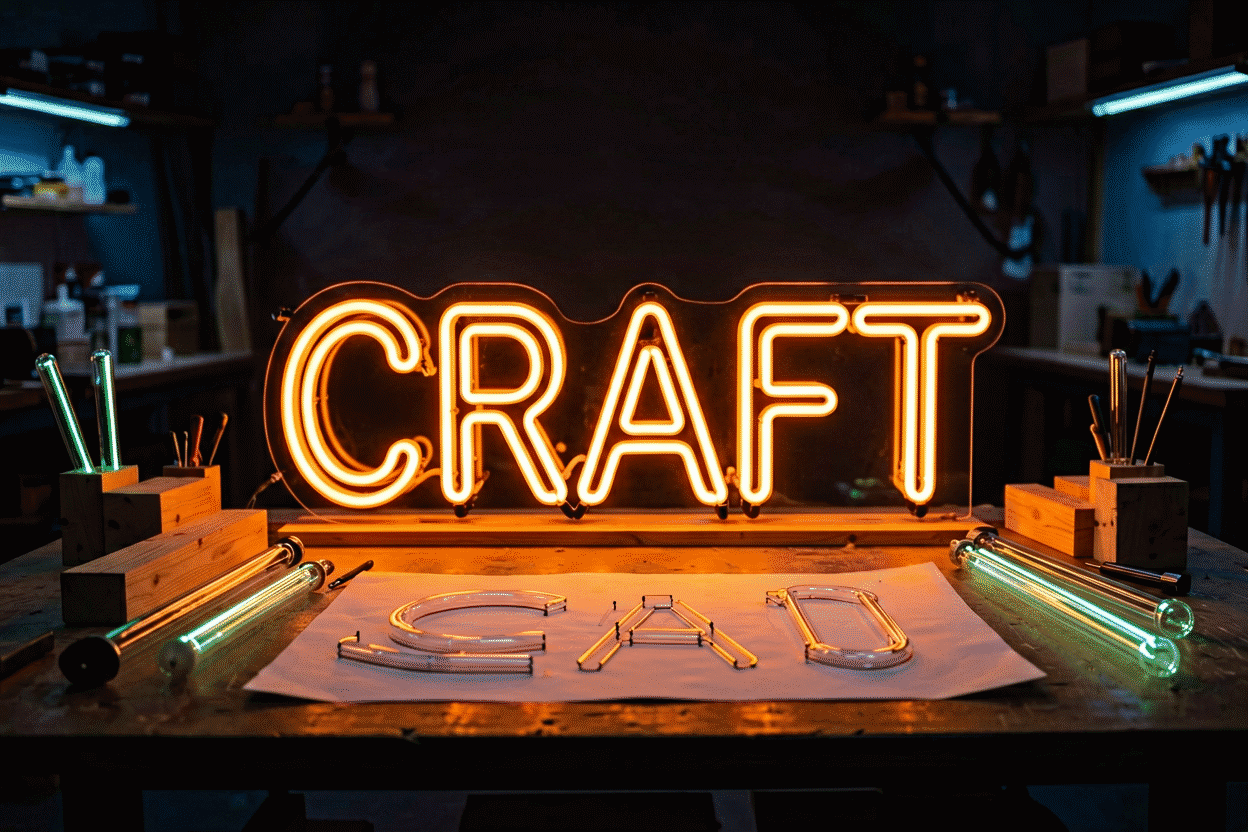
How Are Neon Signs Made? Factory to Finish
A glass neon sign is made in seven craft steps — pattern, bending, processing, gas fill, aging, assembly, installation — most of t...
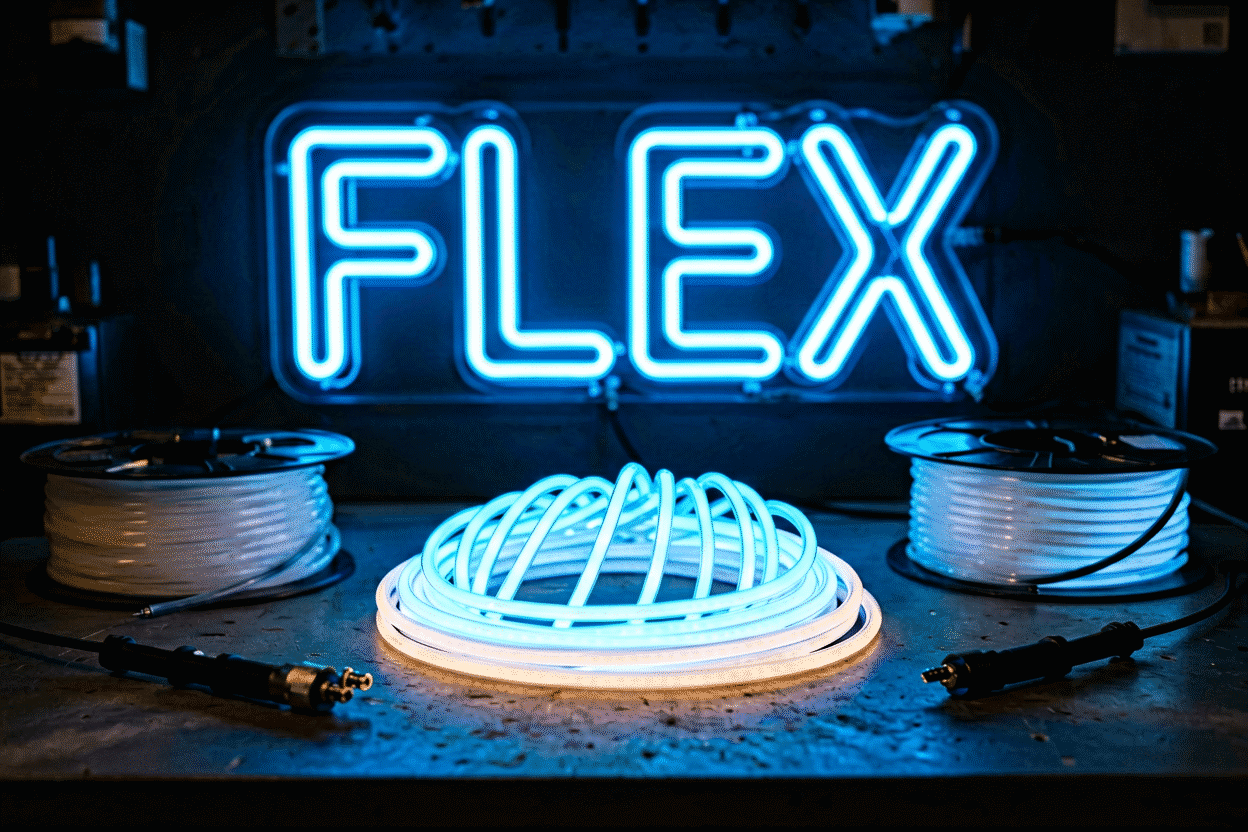
How Do LED Neon Signs Work? Inside the Tube
An LED neon sign works by running low-voltage electricity through a strip of light-emitting diodes embedded side-on inside a solid...
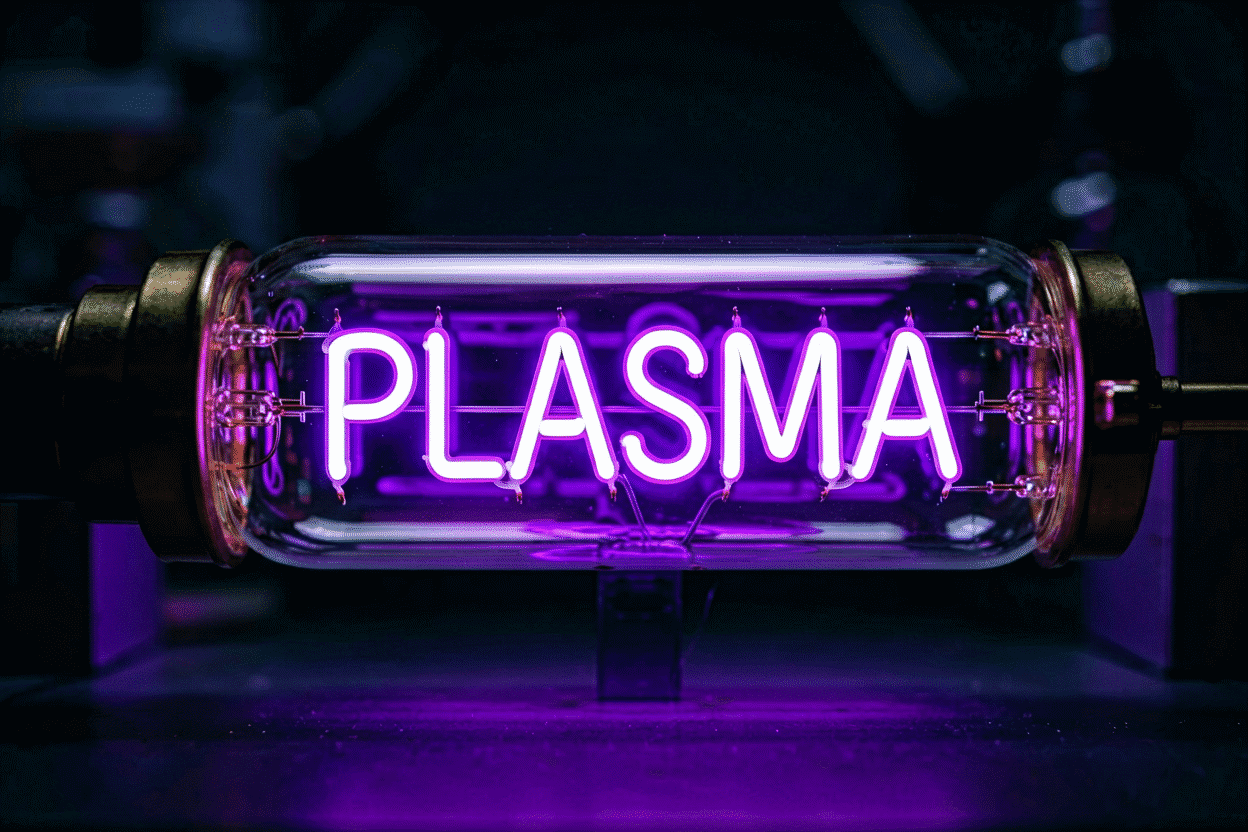
How Do Neon Signs Work? The Physics, Simply
A neon sign works by pushing electricity through a sealed glass tube filled with gas at low pressure: the voltage strips electrons...

LED Neon vs Glass Neon: The Real Differences
LED neon beats glass neon on price (roughly a third to a tenth the cost), safety (12 volts vs. 2,000–15,000), energy (a quarter th...
Where Does Neon Come From? From Stars to Signs
Neon comes from three places, in order of scale: stars, air, and factories. Stars forge it (neon is a major product of stellar nuc...

Neon Signs vs LED Strip Lights: Which Wall Wins?
A neon sign is a finished statement — your words or a shape, glowing as a designed object. LED strip lights are raw atmosphere — f...