Recording. Obviously.
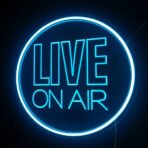
Live On Air Neon Sign
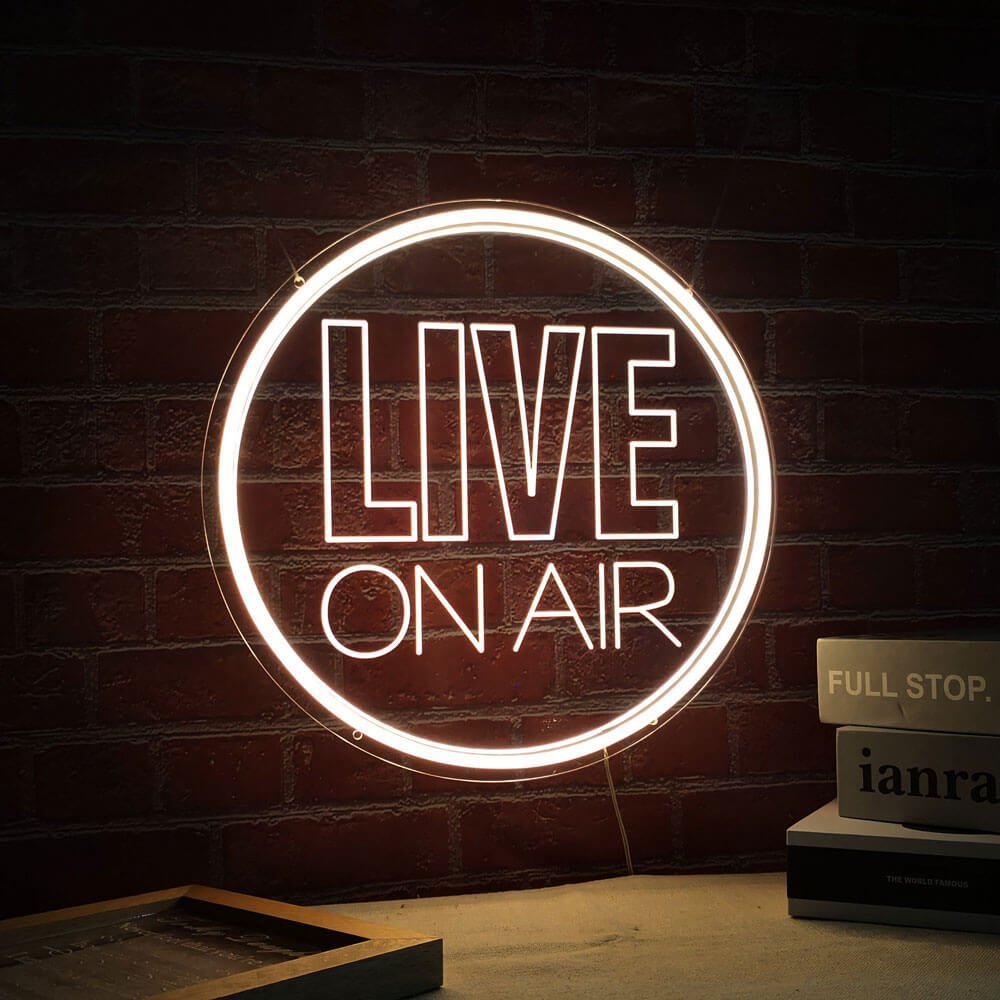
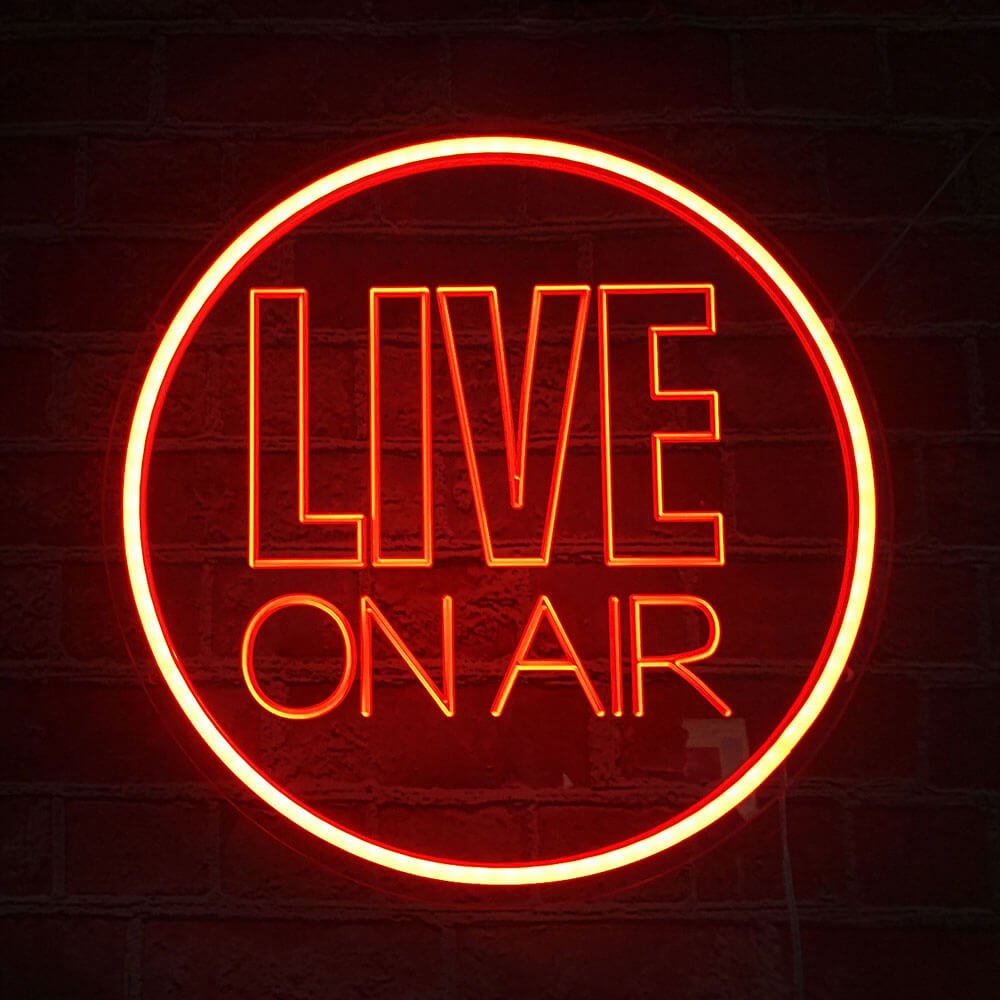
The light that means business is happening – studio red for podcasts, streams and the creators who want the door to know before they open it. Broadcast classic, bedroom price.
Hero visual placeholder
4:3 · red live on air letters glowing above a podcast mic setup in a home studio
Functional decor
It warns, it glows, it justifies itself.
Creator-room native
Podcasts, streams, TikTok walls.
Free design preview
Wording and colorway, mocked up free.
Broadcast-canonical red
The color every studio agrees on.
In-Stock & Custom
Studio & Creator Sign Designs
Warnings, moods and hustle markers – the creator-room family from broadcast to bedroom studio.
live on air letters
hustle block letters
live script letters
do what you love script
it was all a dream script
chill script letters
no vacancy block letters
the world is yours script
hotel california script
good vibes script
Studio Guide
How to Choose a Live On Air Sign
Every studio tool does two jobs: works the room and reads on camera. The on-air sign is the original – a warning light that became a broadcast icon that became creator-wall shorthand. Here is how to choose the version that works both jobs.
red letters above a podcast mic and boom arm
1 · From warning light to icon
The on-air light began as engineering: radio studios wired a red lamp above the door so nobody walked in mid-broadcast, and the phrase became the room’s entire etiquette. Television kept it, podcasts adopted it, and the creator era turned it into shorthand – a studio in one glance. That is the register the sign carries today: it says someone is working, the work is live, and the door should think twice. It is the rare decor piece with a job description.
2 · Red, and only red (mostly)
Broadcast red is the canonical colorway and the correct one – the color of recording indicators from the tape era to every camera body today; the red page covers the shade range. The exceptions are deliberate: white on-air signs suit minimal white-wall studios, and blue runs the tech-register for streaming rigs already full of RGB – the blue page covers it. But red is the color viewers read instantly, and instant reading is this sign’s whole product. Custom variants preview free in the customizer.
sign in frame of a streaming battlestation
on air sign at a home studio door
3 · Placement: door, wall, or in frame
Three positions, three jobs. At the door: the original duty – the sign as do-not-disturb, mounted where it reads from the hallway. On the wall behind you: the frame job – the sign reads in every shot and tells viewers the stream is the real thing. On the desk or shelf: the prop job – small 16–20 inch versions sit by the mic as set dressing. Creators running multi-cam setups put it where the wide shot catches it; the gaming room guide covers battlestation sizing.
4 · The wording variants
The family has three standards: on air (the classic, cleanest read), live on air (the fuller phrase, our stock version), and recording (the studio-legal register). Custom builds add the show name beneath or the handle – popular with podcasters branding their wall for guest photos. Word count discipline applies: two words plus optional show name is the ceiling; the sign’s power is instant reading, and small print kills it. Preview wording variants free before ordering.
red glow over an audio mixer desk
sign with acoustic panels and monitors
5 · Sizing and the camera test
Size by the sign’s primary job. Door duty: 18–24 inches, readable from the hallway. In-frame duty: 24–36 inches – big enough to read in a 1080p wide shot at desk distance. The camera test settles it: set up the shot you actually use, hold a paper printout at the intended size, and check the read on your phone’s screen. If the words survive phone-screen compression, the size works; if they blur, size up.
6 · Power, dimmers and the two-light studio
Creator rooms already run key lights, monitors and RGB – so the sign’s dimmer is the diplomatic tool: full output when the sign is the set’s statement, low when it plays supporting light to a key rig. Two-light discipline: the on-air sign and the key light should not fight; dim the sign until it reads but doesn’t wash. Draw is mic-clip grade, trivially small next to any audio interface; the electricity guide has the numbers. Cords route along the desk edge – visible wiring is the one thing that reads amateur faster than bad audio.
recording indicator version with camera rig
red letters above a podcast mic and boom arm
7 · Beyond creators: the funhouse register
The sign’s second market is comedic: the household that posts live on air over the home office to justify closed doors, the workshop where it means do-not-interrupt, the bedroom streamer’s little brother. Gift logic follows – it is the creator-gift canon (pair with the hustle sign for the full grinder wall), and the office-gag tier for anyone who has ever said I’m recording. For the off-hours, the chill sign is the documented counterweight.
8 · From engineering to credential
The light started as pure engineering: a red lamp wired above the radio-studio door so nobody walked in mid-broadcast, the room’s status posted at the threshold. The color choice was equally functional – red became the recording indicator of the tape era and then of every camera body since, which is why broadcast red still reads instantly to any viewer alive. The creator economy inherited both facts: mount the sign in frame behind your seat and it does credential work, telling the audience the stream is the real thing before you say a word. The door-duty grammar survived intact too – the household learns fast that the lit sign means recording, the original do-not-disturb that requires no app. One sign, two jobs, a century apart: warning light first, trust signal now.
red sign in frame behind a streaming seat and mic
dimmed sign above monitors with clipped cord along desk edge
9 · Session lighting and studio housekeeping
Studio duty has its own discipline. The smart-plug pattern is the modern version of the original engineering: put the sign on a plug triggered by the same routine that starts the recording rig – or a stream-deck button – and the light joins the session’s startup sequence, one press, whole studio mode. Light balance: full output when the sign is the set’s statement, low when it supports the key rig; two full-power sources fight, one dimmed reads as depth, and RGB-heavy rooms should set the red against the coolest key temperature for separation. Housekeeping is monthly rather than seasonal: studio dust is real dust and fans aerosolize it, so keep the sign out of direct airflow where motes would show in shot, mount on the wall rather than a desk edge because gear migrates quarterly, and route the cord along the desk edge – visible wiring reads amateur faster than bad audio.
Broadcast red, size by job (door/in-frame/desk), dim against the key light – in that order. Start with the classic red version or preview your show-name build free in the customizer. The light says working; the wall says studio.
In the Wild
On Air in Real Studios
Photo 4:3
家庭播客台上方红色字牌与话筒悬臂实拍
Photo 4:3
直播战斗位背景墙中的字牌构图
Photo 4:3
录音室门上方的警示位与走廊视角
Photo 4:3
调音台上方红色柔光与设备细节
Photo 4:3
声学板与监听音箱间的字牌组合
Photo 4:3
双机位直播场景中的广角构图
More Phrases & Spaces
More Studio & Hustle Signs
Warnings, verbs and off-air modes – the creator wall in light.
FAQ
Live On Air Sign FAQ
Q1 What does a live on air sign do in a home studio?
The original job still works: it tells the household and the hallway that a session is running – the do-not-disturb that doesn’t require an app. The second job is on-camera: in frame behind you, it tells viewers the stream is the real thing. It is the rare decor piece with a job description.
Q2 Should it be red?
Yes, unless deliberate – broadcast red is the color of every recording indicator from tape decks to camera bodies, and viewers read it instantly; the red page covers the range. White suits minimal studios, blue runs the RGB tech register for streaming rigs.
Q3 Where's the best placement?
Door duty at 18–24 inches (readable from the hallway), in-frame duty at 24–36 behind your streaming seat, or desk-prop versions under 20 by the mic. The camera test settles size: if the words survive phone-screen compression in your actual shot, it works.
Q4 Can I add my show name?
Yes – show name or handle beneath the phrase is the standard custom build for podcasters branding guest photos. Keep it to two words plus name; small print kills the instant read. Preview free in the customizer.
Q5 Will it fight my key light?
Only at full output – use the dimmer: full when the sign is the statement, low when it supports the key rig. Draw is mic-clip grade next to any interface; numbers in the electricity guide.
Keep Exploring
Where to Next
Build Your Studio Sign
Broadcast red, your show name, camera-tested size – previewed free.
More to Explore
The red light
means business.
Broadcast-canonical, camera-tested, door-duty included – design yours and preview it free.