Blog
Pac-Man Neon Sign: The Arcade’s Greatest Ghost
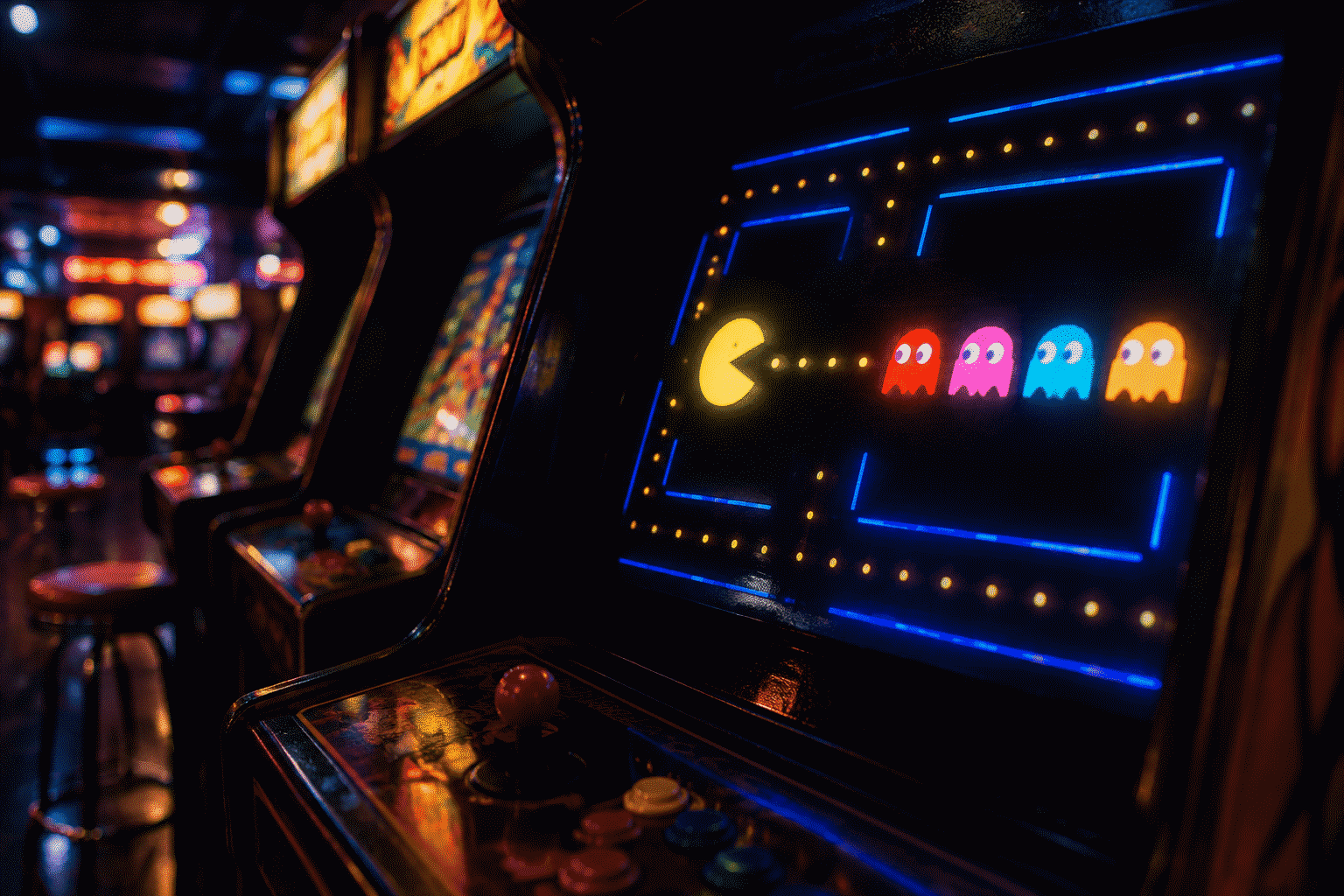
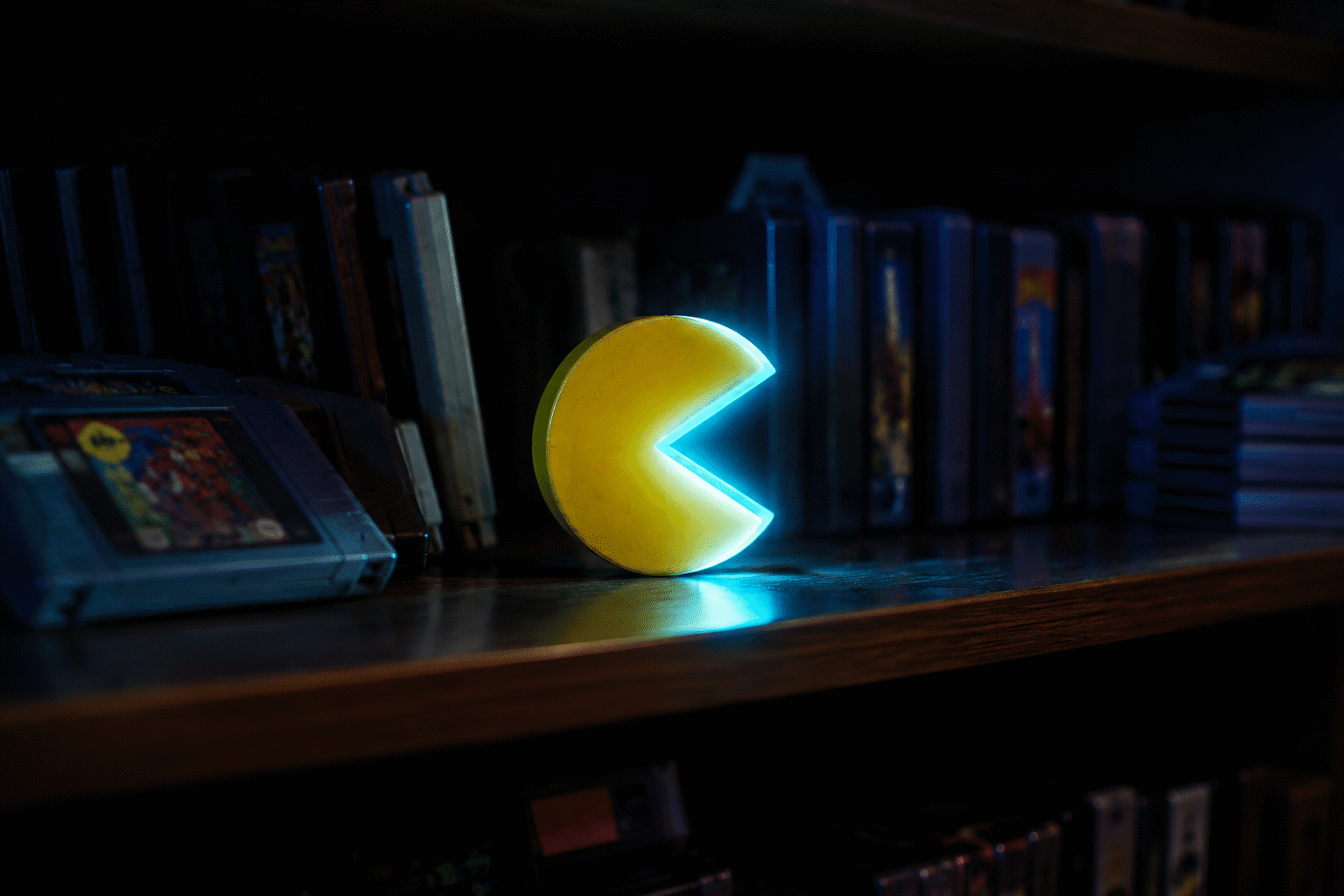
It is the simplest image in video game history: a circle with a wedge missing, chasing four shapes with eyes. Created in 1980, it has outlived every generation of hardware since — fifty years of the same yellow mouth, the same four ghosts, the same dot line. As a wall piece, the Pac-Man register is arcade nostalgia at its most geometric: shapes so simple they render perfectly in tube light, so specific that everyone under sixty reads them instantly.
This guide covers the Pac-Man glow: why the game’s geometry is neon-perfect, the three routes to a piece (the fan-styled custom, the ready designs, the vintage arcade stock), the rooms it owns, and the register’s one great color question (it’s yellow — but which yellow).
The Geometry: Why the Game Renders Perfectly
The game’s icons are the closest thing video games have to pure geometry, and pure geometry is what neon does best:
- The circle-with-a-mouth. One shape, one color, zero detail required. It reads as the character at any size — 8 inches or 40 — because the design IS the shape. Neon renders it as a single curved tube: the medium’s easiest possible subject.
- The four ghosts. Four simple silhouettes in the game’s fixed colors — red, pink, cyan, orange. The four-ghost lineup is the register’s most dramatic piece: four colors in a row, instantly readable, the arcade’s own abstract art.
- The dot line. The trail of dots — a horizontal row of small points, the game’s literal path rendered as a light line. The dot line is the understated tier: a custom detail that ties the wall together without shouting.
- The maze edge. The game’s blue maze border — the deep-cut reference for the true arcade faithful, and a surprisingly elegant line piece in dark blue.
The composition logic: the chase scene — the circle ahead, ghosts behind, dots between — is the canon arrangement, and it works at every scale from desk piece to wall anchor.
Three Routes to the Wall
The fan-styled custom route. The same honest note every brand piece on this site carries: custom builds are your design in the game’s visual language — not licensed merchandise. The Pac-Man register is unusually custom-friendly because its icons are geometric shapes: circles, wedges, simple silhouettes. What the custom tier builds:
- The chase scene (circle + four ghosts + dots) at your width — the signature order, priced live in the custom builder.
- The ghosts-only lineup — the four-color tier for the wall that wants abstract over literal.
- “GAME OVER,” “HIGH SCORE,” “INSERT COIN” — the arcade phrase canon in the game’s own context.
- The personalized tier: your high score in numerals, the est.-year of your arcade career, the family’s initials as dots.
The ready-design route. The arc of official and fan-styled designs at retail scale — the fastest route, the gift tier. Check the piece’s scale before ordering; the desk tier (12–16 inches) and the wall tier (20 inches and up) are different deployments.
The vintage arcade stock. The genuine articles: signage from the arcade era’s distributor and operator networks, surfacing through collector channels decades later. The honest math is the standard vintage-neon math — forty-year-old glass and transformers, budget the service pass, buy documented pieces — plus the arcade-specific premium: operator signage for this specific title is genuinely scarce, and the collectors know it.
The Rooms
The gaming room’s arcade corner. The canonical deployment: the chase scene or the ghost lineup over the retro shelf — the retro gaming guide covers the full corner build, and this register is usually its anchor piece. The gaming room layouts cover the wider integration; the arcade corner runs warmer and dimmer than the modern setup tier (it is a memory, not a battlestation).
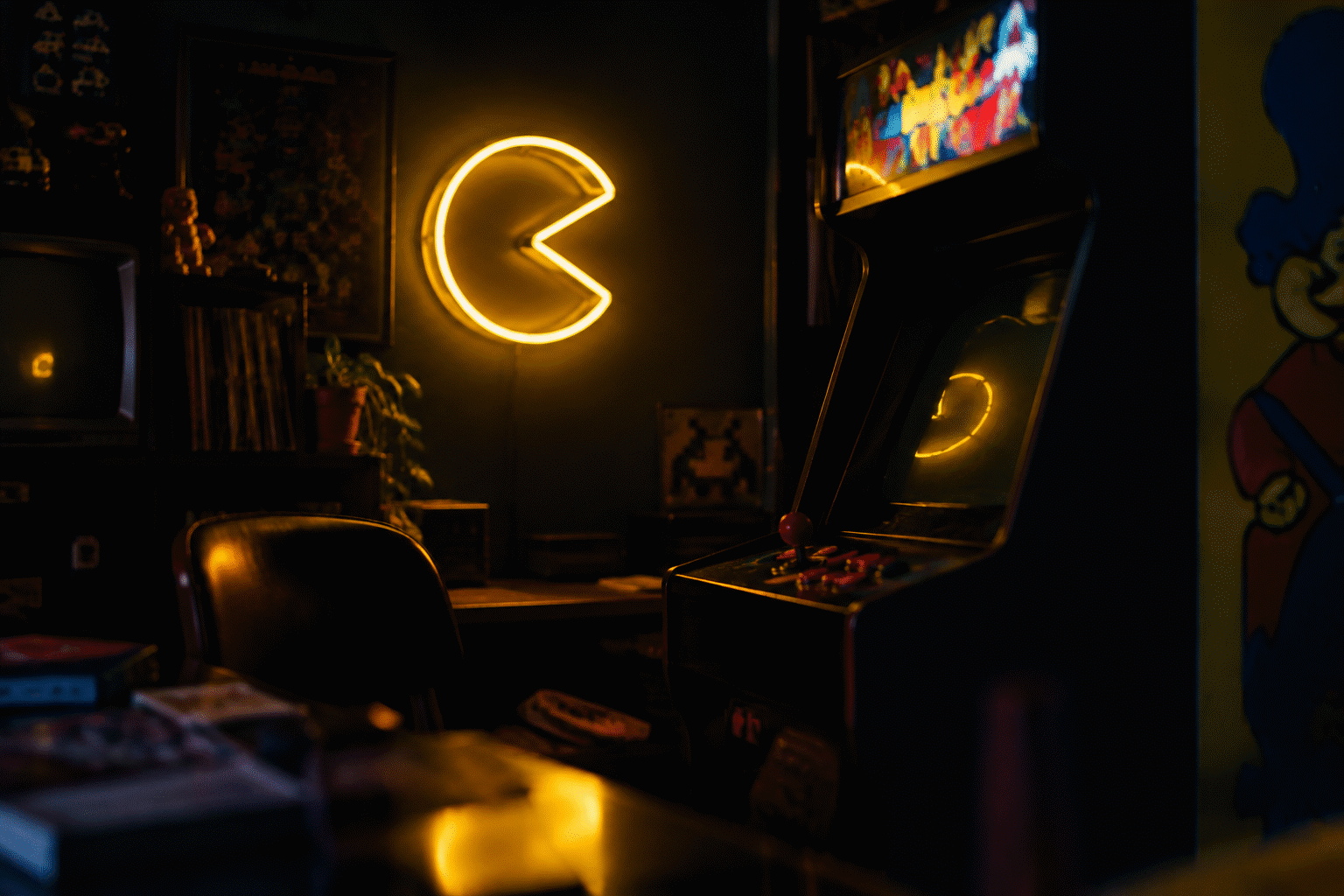
The man cave’s game wall. The Pac-Man piece among the beer and sports tiers — the eighties childhood anchor. The man cave guide covers the cohabitation rules; the arcade piece’s yellow reads as warm light, which is why it coexists with amber beer signs better than cyan gaming pieces do.
The bar and diner tier. The arcade-adjacent venues: the pizza-and-games family spot, the retro bar, the arcade-bar revival. The commercial register runs the chase scene in the window — the piece that reads from the street as “games inside.”
The office and desk tier. The circle-and-one-ghost mini build at 12 inches — the nostalgia piece that survives a professional office (it reads as design history, which is exactly what it is). The dot line as the monitor’s under-shelf accent is the desk tier’s subtlest version.
The Yellow Question
The character’s yellow is the register’s whole color identity, and yellow in neon has its own behavior (the full mechanics in our yellow sign guide):
- The arcade yellow. The warm saturated register — the authentic read, best against dark walls where it carries the arcade’s glow-for-glow’s-sake warmth.
- The lemon tier. The brighter, cooler yellow — the modern-minimal variant for white walls.
- The ghosts stay canon. The four ghosts keep their four colors (red, pink, cyan, orange) — the one place the register legitimately runs multi-color. The discipline elsewhere: the yellow pieces stay yellow.
The pairing register: Pac-Man yellow plus the maze’s dark blue — the two-color custom that says the most with the least.
The Nostalgia Layer
The piece carries fifty years of context, which is what makes it work in rooms full of people who weren’t alive for the arcade era:
- The game’s 1980 arrival made it the first true crossover hit — the arcade game that everyone played, not just the pinball faithful, and the first gaming image that entered the general culture (the circle appeared on lunchboxes, in pop songs, on magazine covers before the decade was out).
- Its arrival in American arcades coincided with the arcade boom’s peak — the years the mall arcade was the social center of American teenage life. The wall piece isn’t just a game reference; it’s a portrait of the room where a generation grew up.
- The game’s icons have been design canon ever since — museum-exhibited, endlessly referenced, the vocabulary everyone shares. The fifty-year birthday cohort keeps arriving: every year gives the register another generation of people who know the shapes.
Sizing and the Wall Math
The register’s shapes are geometric, which changes the sizing behavior from text-piece rules:
| Tier | Size | The tier is for |
|---|---|---|
| The desk circle | 10-14 in | Offices, shelves, gifts |
| The ghost pair | 14-18 in | Bedroom and den accents |
| The chase scene | 20-30 in | The arcade corner anchor |
| The full wall run | 30-40 in | Game rooms, bars, venues |
Geometric pieces read smaller than text at the same width (a circle is compact; a word is long), so the honest advice is to order one tier up from instinct — the chase scene that seems big at 24 inches is the room’s quiet centerpiece by next month. The ghosts-only lineup is the exception: four shapes in a row carry a wall the way a short sentence does, and 18-22 inches of ghosts reads like 30 inches of text.
FAQ: Pac-Man Neon Signs
Where can I buy a Pac-Man neon sign? Three routes: fan-styled custom builds (the chase scene, ghost lineup, or arcade phrases — geometric icons that render beautifully, live pricing in the custom builder), ready retail designs, and genuine vintage arcade-operator stock through collector channels at premium prices.
What is the best Pac-Man custom design? The chase scene — the circle, the four ghosts, and the dot line — is the canon arrangement at every scale. The ghosts-only four-color lineup is the abstract alternative for design-first walls.
What color should a Pac-Man sign be? Arcade yellow against dark walls — the authentic register. The ghosts keep their canonical four colors (the register’s one legitimate multi-color); the maze-blue two-tone custom is the minimalist’s route.
How much does a Pac-Man neon sign cost? Desk-tier circles and single ghosts run $60-100; the chase scene $150-250 by width; ghost lineups and two-tone customs $200-300. Vintage operator signage runs collector premiums with the standard forty-year service math.
Where does the piece go in a gaming room? The arcade corner — over the retro shelf, warmer and dimmer than the modern battlestation tier. The full corner build (cabinet styling, shelf tier, brightness etiquette) is in our retro gaming guide.
Are custom Pac-Man-style signs legal? Custom builds are your own arrangement of geometric shapes and arcade phrases — not licensed merchandise. The licensing question lives with sellers of official product; fan-styled customs for personal display are the standard route the whole arcade-decor category runs on.
Chase the Glow
The simplest image in gaming, fifty years deep, rendered in the medium it was drawn for. One circle, four ghosts, one dot line — build the chase at the width your wall gives you.
More arcade glow: retro gaming corners, the eighties decade, gaming room layouts.
Sources & Further Reading
- Neon sign (Wikipedia) — the consolidated public record of neon-sign history and technology.
Pricing based on CustomNeon’s current catalog (2026); custom quotes come live from the sign builder.