Blog
Lightning Bolt Neon Sign: High Voltage Wall Decor
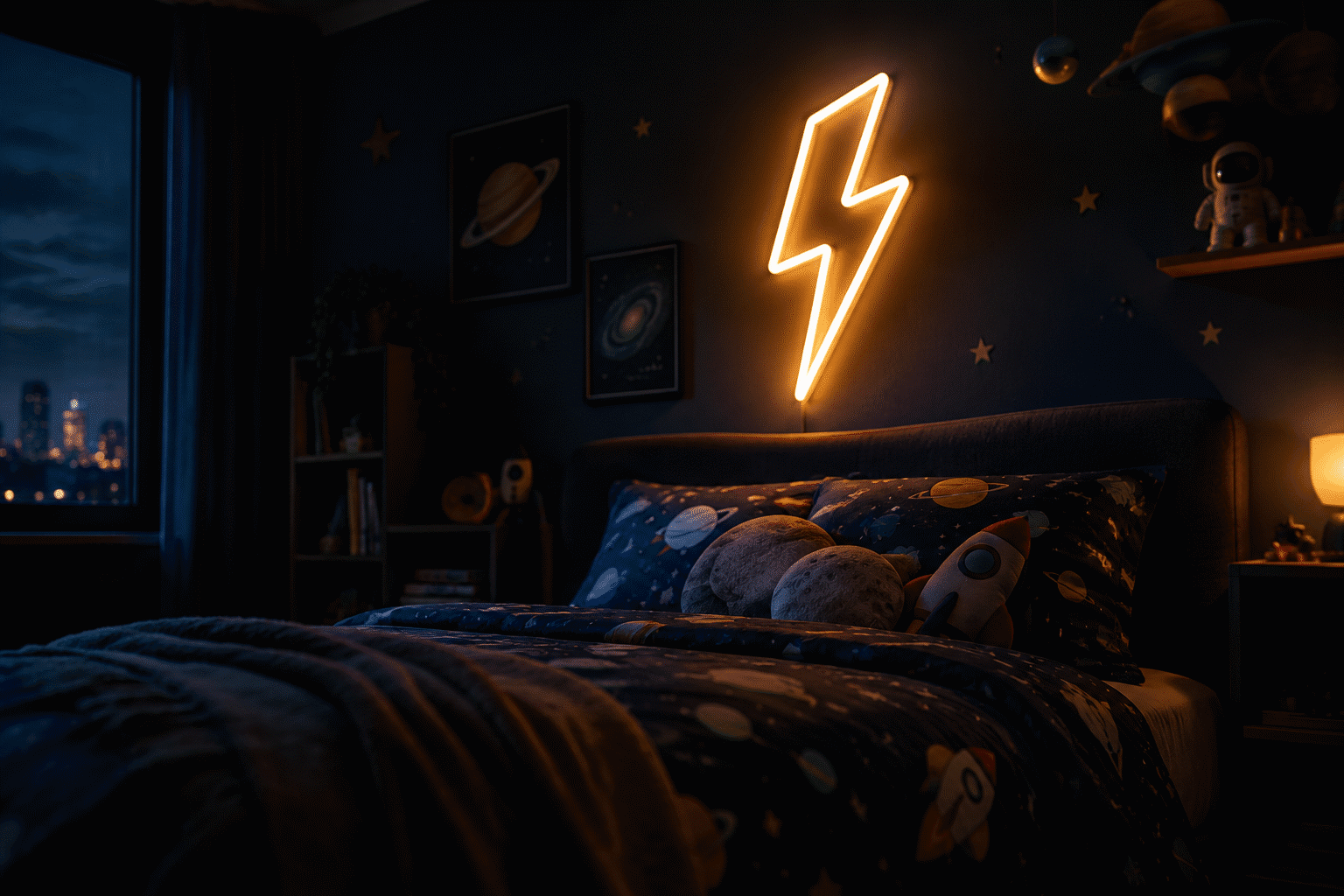
The lightning bolt is the only shape in the decor catalog that is pure energy — every other icon represents a thing, but the bolt represents a force. Six or seven straight lines, angled into the zigzag that humans have been drawing on cave walls, storm flags, and comic books since long before electricity had a name, and the shape still reads the same way: something just happened here.
In neon, the bolt finds its native medium twice over — the shape IS a tube path (straight runs with sharp corners, the easiest possible bend pattern), and the glow IS what lightning looks like at house scale. This guide covers the bolt: the shape’s mechanics and why it renders so well, the color registers (the color is the meaning – storm, rock, or energy), the four rooms it charges, the culture layer behind the zigzag, the custom tiers, and the sizing behavior. The short version: the classic double-zag in electric yellow at 16-24 inches, over the instruments or the monitors, one of the most affordable custom builds in the entire catalog.
The Shape: Why Bolts Render Perfectly
The design mechanics, because they explain the bolt’s versatility:
- Pure geometry. The bolt is 6-8 straight segments — no curves, no detail, no font. It renders at any size from a 10-inch desk accent to a 40-inch wall statement, and it reads instantly at all of them. Of every icon in the catalog, the bolt is the one that survives the most abstraction: fat bolt, thin bolt, single zag, triple zag — all read as lightning.
- The direction matters. A vertical bolt (striking down) reads as power and danger — the classic. A horizontal bolt reads as speed — the hot-rod and athletics register. A diagonal bolt reads as motion mid-event — the dynamic option for gallery walls.
- The zigzag count. The classic double-zag (the letter-shaped bolt everyone draws) is the canon; single-zag minimal bolts are the modernist’s variant; triple-zag comic bolts are the pop-culture tier.
The Color Registers
- Electric yellow. The canon — the color of the actual event, the medium’s own hue, the brightest thing the catalog can build. The full behavior in our yellow sign guide; the bolt runs the electric end of the family. The default build and the correct one for most rooms.
- Ice blue and electric blue. The storm register — cold lightning, the tech-glow version. The blue guide covers it; blue bolts suit gaming walls and the cyber-adjacent registers.
- Red. The rock register — the bolt that means volume. Pairs with the skull tier for the classic rock-wall composition.
- Purple and white. The mystic and minimal tiers — the storm-cell violet and the design-forward white. The abstract option for rooms running the bolt as pure shape.
The Four Rooms the Bolt Charges
The music and band wall. The bolt’s most famous deployment — rock’s own icon since a certain glam pioneer made the face-painted bolt the most recognizable makeup in music history. The red or yellow bolt over the instruments, alone or with the skull: the wall that means volume. (The bolt-as-makeup is design history; a fan-styled bolt piece needs nothing licensed to carry the whole register.)
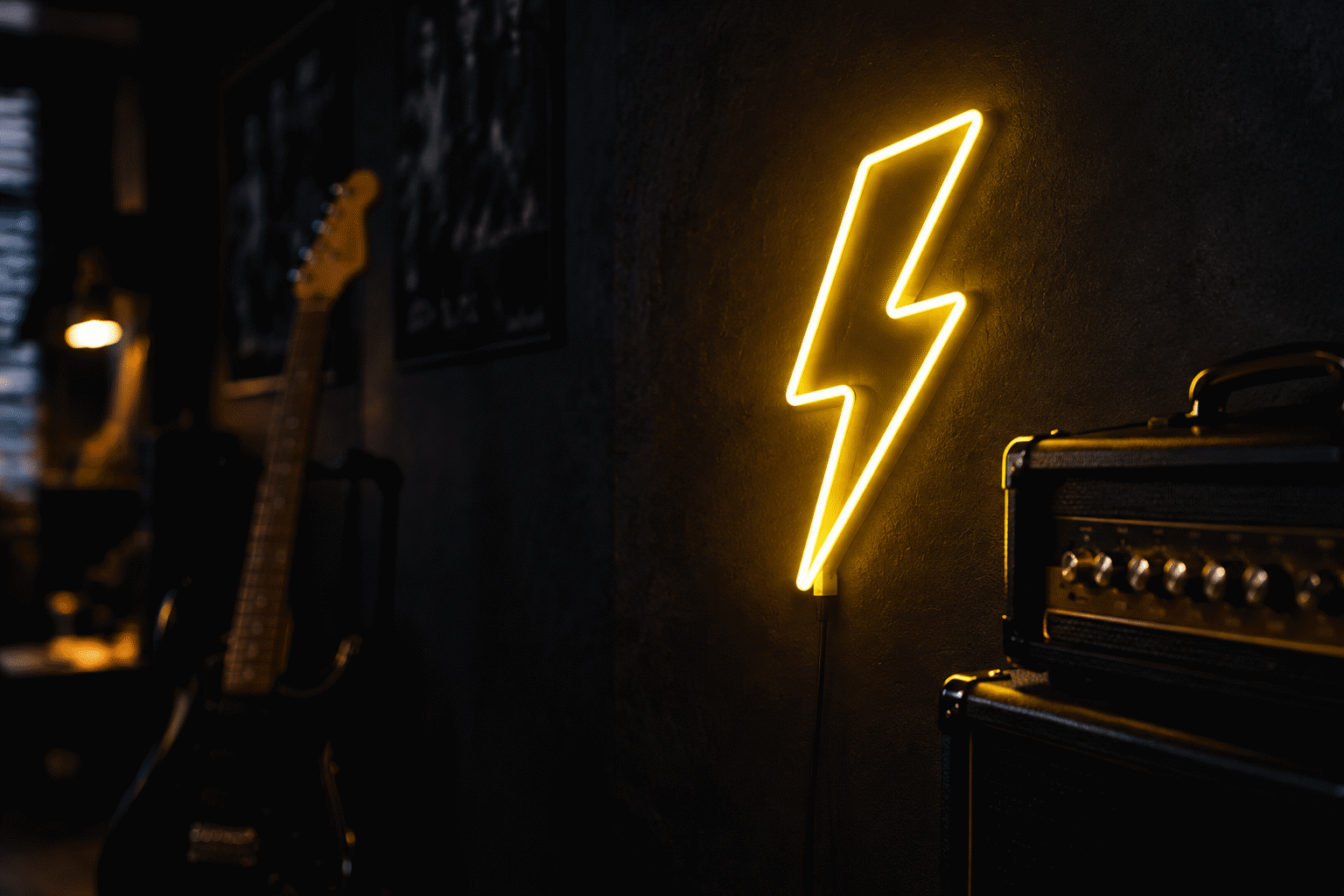
The gaming and tech room. The energy piece for the setup: the blue or yellow bolt over the monitor array, the room’s power symbol. Pairs with the gaming and cyber tiers — the bolt is the shared shape between the rock and the machine aesthetics (energy is energy; the room picks the color).
The home gym. The bolt’s most functional deployment: the single-word energy piece — no words needed, the shape IS the word. The yellow bolt at the mirror is the gym wall’s effort icon; the placement logic is in our home gym guide.
The kids’ room and the comic tier. The bolt every superhero comic ever drew — the friendly energy piece for the young fan’s wall. Yellow or blue at 12–16 inches, dimmed low: the shape that means “the hero just arrived.”
The Culture Layer: A Short History of the Zag
The bolt carries three distinct cultural charges, worth knowing because they’re what the wall borrows:
- The storm charge. The oldest: the shape humans drew to mean the sky’s power, from prehistory through Ben Franklin’s kite era to every weather app’s icon today. The bolt as danger-and-awe — the vertical strike.
- The rock charge. The 1972-and-after register: the glam-era face bolt, and after it the bolt as rock’s shorthand for volume and voltage. The red bolt on a black wall needs no explanation in any language that has heard an electric guitar.
- The energy charge. The modern utility reading: the power button, the charging icon, the energy-drink zigzag — the bolt as the shape of juice. The eighties and gaming registers run this charge; it is the friendliest of the three and the one the kids’ wall borrows.
The wall choice is really the charge choice: storm (vertical, blue/white), rock (red, with attitude), or energy (yellow, with speed).
The Custom Tiers
The bolt’s custom territory — the shape’s simplicity makes every variant buildable:
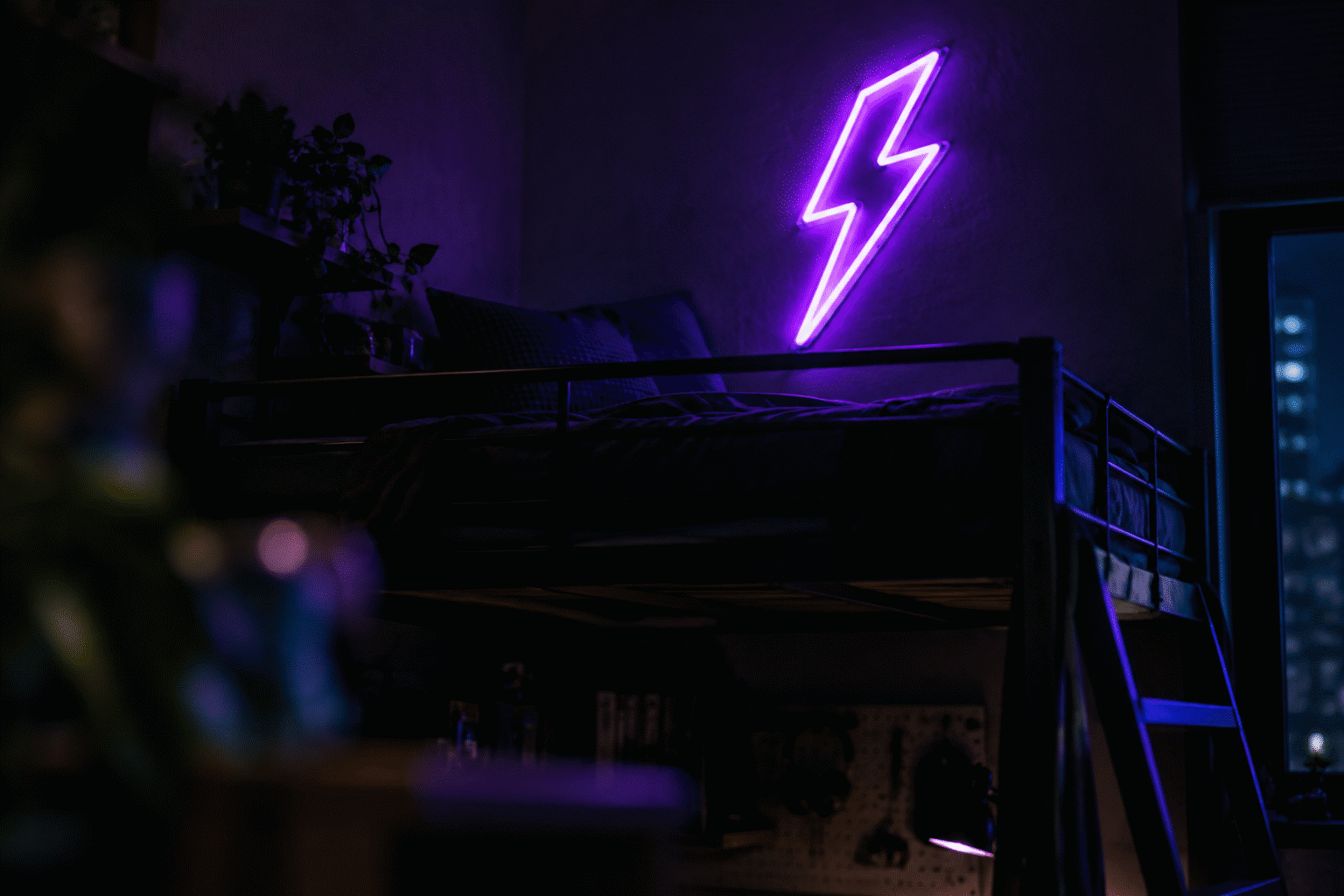
- The classic double-zag at any width, any color — the $80–$150 tier, the register’s bread and butter.
- The duo-bolt build. Two bolts crossed or stacked — the rock-wall composition piece; two colors (red and yellow) is the signature build.
- The bolt-plus-word. “HIGH VOLTAGE,” “STAY WILD,” “SHOCK THE WORLD” with the bolt through or beside it — the phrase tier, priced by width in the custom builder.
- The personal-charge tier. Your team’s bolt, your band’s bolt with the name, your gym’s founding bolt — the shape adapts to whatever it’s charging.
The Sizes
| Tier | Size | Register |
|---|---|---|
| Desk bolt | 10-14 in | Shelves, offices, kids’ rooms |
| The room standard | 16-24 in | Music walls, gaming setups |
| The wall statement | 26-40 in | The band wall, the gym, the venue |
One sizing behavior unique to the bolt: it reads bigger than its box — the zigzag’s energy reads at a size where calmer shapes disappear. A 16-inch bolt carries a wall that would eat a 16-inch word.
FAQ: Lightning Bolt Neon Signs
What does a lightning bolt neon sign cost? The classic double-zag runs $80-$150; duo-bolt and phrase builds $120-$220; the big venue statements $200-plus. The bolt is pure straight-line geometry — among the most affordable custom builds in the catalog.
What color lightning bolt sign is best? Electric yellow, the canon — the color of the actual event. Blue for the storm and tech registers, red for the rock wall, purple and white for the mystic-minimal reads. The color is the charge: storm, rock, or energy.
Where did the rock lightning bolt come from? The glam-rock era’s face-painted bolt — 1972 and after — became music’s shorthand for voltage. The red bolt on a black wall carries the whole register with zero words; it’s design history now, not branding.
Do bolt signs pair with other shapes? Yes – the bolt is the catalog’s best supporting actor. With the skull (the classic rock composition), with the moon and stars (the storm-night sky), with game icons (the energy tier), and with any single word as its exclamation mark. The bolt rarely anchors alone in large rooms, but it improves every wall it joins.
Where should a bolt sign go? The music wall (with the skull for the classic rock composition), the gaming setup (the energy piece), the gym mirror (the effort icon), and the young fan’s comic tier. Vertical bolts read as power, horizontal as speed — pick the direction before the wall.
Is a lightning bolt a good gaming room sign? One of the best — it’s the shared shape between the rock and machine aesthetics, and the blue or yellow bolt over a monitor array is the setup’s power symbol. It pairs with every gaming register from retro to cyber.
Can I run two bolt signs together? The duo-bolt build is the rock wall’s signature composition – two bolts, often red and yellow, crossed or stacked as one custom piece. Two separate bolts on one wall works when they differ in scale (a 24-inch anchor, a 12-inch accent); two same-size bolts read as a logo attempt, which the shape never wants.
How big should a bolt sign be? Smaller than instinct says — the zigzag reads bigger than its measurements. A 16-inch bolt carries a wall that would eat a calm shape of the same size; start one tier down and let the energy do the scaling.
Ride the Voltage
Six lines, every meaning: power, speed, volume, event. The shape of energy itself — build it in the canon yellow or pick your charge.
More voltage: the yellow register, the blue register, rock walls, gym energy.
Sources & Further Reading
- Solid-State Lighting (U.S. Department of Energy) — DOE reference on LED efficacy and lifetime.
- Neon sign (Wikipedia) — the consolidated public record of neon-sign history and technology.
Pricing based on CustomNeon’s current catalog (2026); custom quotes come live from the sign builder.