Gym Marketing With Neon Signs: The Retention Play
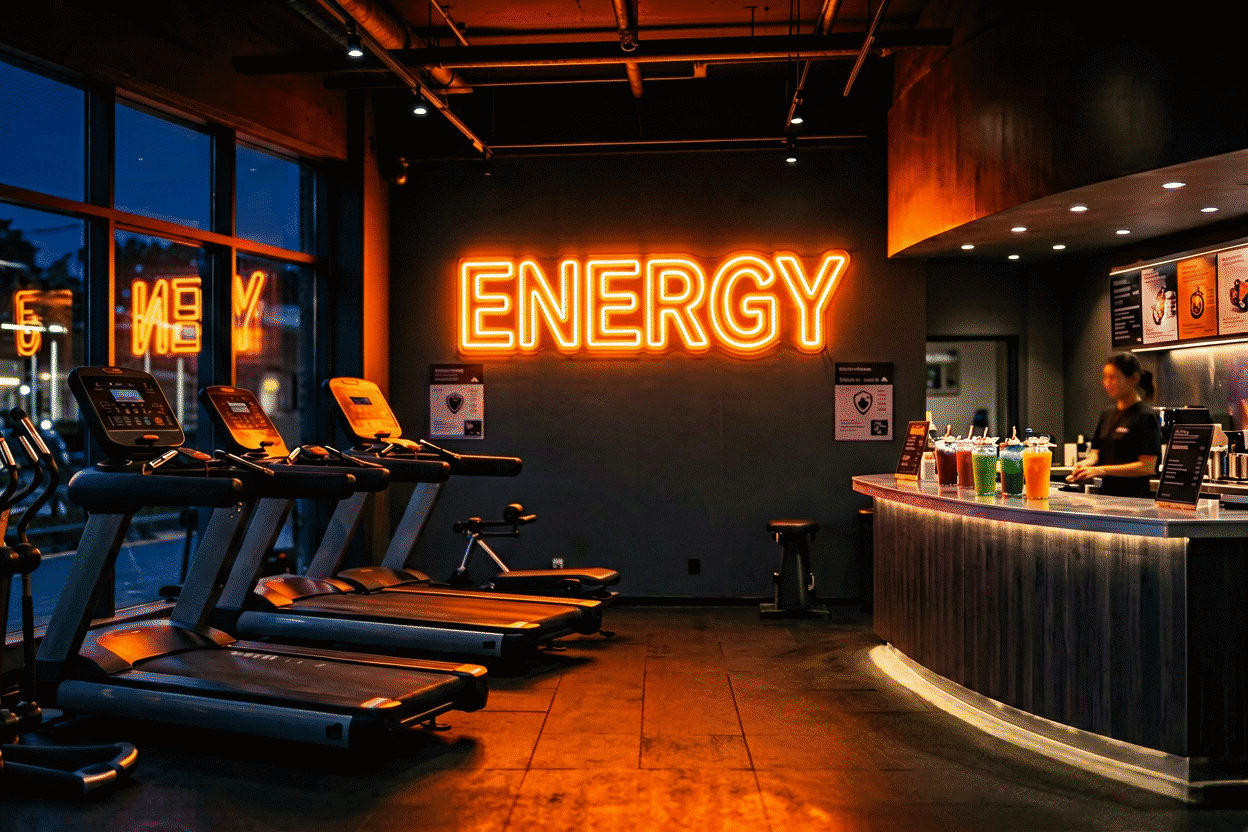
Gym marketing runs on two funnels, and neon serves both: the street funnel (the prospective member walking or driving past) and the content funnel (the existing member posting their workout). The second is the one the modern gym can’t afford to miss — the member’s post is the referral that outperforms every paid channel, and the photographable gym is the retention-and-acquisition engine that runs itself.
This is the marketing playbook: what to sign, where, and how each piece plugs into the funnel. The home-gym version lives at gym sign ideas; the shopping at gym neon signs.
The Street Funnel: Ideas 1–4
- The gym’s open sign — blue for the 24-hour register: the 5 a.m. beacon that converts the pre-work passerby, the trade’s highest-value single sign.
- The namepiece — the gym’s brand in its font (preview): the street-tier identity piece, sized for the parking approach (the B-end logic).
- The type-of-gym marker — “STRENGTH,” “CROSSFIT,” “24/7”: the format that pre-qualifies the prospect before they park.
- The offer-tier accent — the first-class-free or no-contracts message in glow: the street’s conversion tier, honest and legible (the case).
The Room Funnel: The Content Engine
The modern gym’s marketing core: the room members photograph. The pieces:
- The motivation wall — “No Excuses” over the racks (the canon): the piece that appears in every member’s lift video — the gym’s watermark on its own content.
- The Instagram corner — the logo or mantra piece with the good light: the check-in station that tags the gym in the member’s feed, the highest-ROI square footage the gym owns (the case).
- The PR-and-milestone wall — “PR CLUB” or the leaderboard-adjacent glow: the achievement tier that members photograph at their best moments — the content that recruits like nothing else.
- The zone markers — “STRENGTH / CARDIO / FUNCTIONAL” in the brand’s colors (the color logic): the wayfinding that doubles as brand and appears in every room-tour video.
The Retention Layer: Ideas 9–12
The quiet tier that keeps members: the room they want to be in.

- The identity pieces — “Hustle” and the grind-culture canon (the archive): the words that members internalize as their own — the gym’s culture, posted on its walls.
- The warm-corner piece — the recovery zone’s calm register: the stretch area’s soft glow that says the gym cares about the down-hours too (the ideas canon).
- The community piece — the gym’s own motto or founding story in light: the tier that turns members into regulars and regulars into evangelists.
- The event tier — the challenge-board glow (“6-WEEK CUT”): the program marketing that fills the calendar’s slow seasons.
The Trade-Specific Discipline: Ideas 13–15
- The sweat-and-durability spec — the pieces mounted above impact zones, out of the chalk and the kettlebell arcs (the ideas guide’s safety logic): the engineering that keeps the program running.
- The color-by-zone system — red for strength, blue for cardio, green for recovery (the business palette): the room’s wayfinding and mood-map in one system.
- The dimmer program — full for the peak hours, glow for the 24-hour nights: the member experience at 3 a.m. is a retention feature, and the lighting runs it.
The Economics
The gym’s sign budget runs the playbook logic with the trade’s multiplier: every member post is a referral, and the photographable gym generates them nightly. The working sequence: street trio first (open, name, type-marker — the acquisition tier), the motivation wall and Instagram corner second (the content engine), the identity and community pieces as the gym’s culture crystallizes — and the whole program costs less than a month of the paid-lead channels it replaces (the brackets).

The Content Funnel, Engineered
The gym’s content funnel (the member’s post as the acquisition engine) runs on engineering, not luck – and the pieces are its infrastructure.
The Instagram corner’s physics: the good light (the window-adjacent or the ring-light tier), the branded background (the logo or mantra piece – preview), and the reason to stand there (the mirror, the PR wall, the milestone board). The corner that has all three generates the posts; the corner that has one generates the photos nobody posts. The gym’s content corner is marketing infrastructure at $300-500 – the cheapest acquisition line in the fitness industry (the case).
The motivation wall’s watermark effect: the phrase over the racks appears in every member’s lift video – the gym’s watermark on its own content, the brand impression that rides the member’s feed to their network. The wall’s piece selection (the canon) is the brand-voice decision: the gym that runs “No Excuses” brands differently than the gym that runs “You Belong Here,” and both are right for their member bases.
The measurement: the tag count (the posts that tag the gym, counted monthly), the corner’s traffic (the members who use it), and the join-source question (the new member’s “where did you hear about us” – the social answer that the content funnel predicts). The gym that counts its content funnel funds its sign program from the marketing budget it replaces (the discipline).
The Boutique Versus the Box
The two gym models buy different programs, and the confusion is expensive. The boutique (the studio, the specialist): the content tier IS the brand – the aesthetic pieces, the photographed corner, the community phrases; the budget concentrates in the room the members post. The box (the big gym, the 24-hour): the street tier and the wayfinding – the open sign’s 5 a.m. beacon (the gym canon), the zone labels (the color system), the durability tier that runs the 24-hour cycle; the budget concentrates in the pieces that never turn off.
The crossover (the boutique that grows, the box that builds community) adds the other’s program – and the sequence stays the same: street first, content second, community as it earns (the playbook).
FAQ About Gym Marketing With Neon
Do neon signs actually help gym marketing? Two funnels: the street tier converts passersby (the case), the content tier turns members’ posts into the gym’s referral engine — the piece in every lift video is the watermark that recruits (the content logic).
What’s the best neon sign for a gym’s marketing? The Instagram corner piece (logo or mantra, good light) and the motivation wall over the racks: the two squares that generate the content. The open sign for the street tier.
How much should a gym spend on neon? The working program: street trio + content pair at $500–900 commercial grade (the brackets), the zone and identity tiers as the culture justifies. The jobs-per-piece metric governs (the playbook).
What about boutique studios versus big boxes? Boutiques run the aesthetic tier harder (the content engine IS the brand); big boxes run the street and zone tiers (wayfinding and 24-hour presence). The funnel logic is shared (the color system).
How do gyms use neon signs for marketing? The two-funnel program: the street funnel (the open sign, the namepiece, the type-marker – the pieces that convert the passerby) and the content funnel (the motivation wall over the racks, the Instagram corner with the good light – the pieces the members post) (the retention play above). The content funnel is the modern gym’s engine: the member’s post is the referral that outperforms every paid channel, and the photographable gym generates them nightly. The program that measures both funnels funds itself from the marketing budget it replaces.
How much does a gym neon program cost? The street trio plus the content pair – the working program – lands $500-900 (the gym budget above): the open sign, the namepiece, the type-marker, the motivation wall, and the Instagram corner. The zone labels and the identity pieces add by the room’s size; the boutique’s aesthetic program runs the content tier harder. The program’s funding logic: the content funnel replaces the paid-lead channels (the case) – the member’s post as the acquisition engine that the $500 program serves.
What should a gym’s neon sign say? The trade’s three registers (the gym canon context): the namepiece (the gym’s brand – the identity every program starts with), the motivation tier (the “No Excuses” and “Hustle” registers – the phrases the members post), and the community tier (the gym’s own motto – the culture the regulars recognize). The commercial gym’s working combination: the name at the entry, the zone labels at the wayfinding, the motivation wall over the racks, and the Instagram corner with the good light – the four-piece program that covers the street, the floor, the content, and the culture (the retention play above) at the $500-1,500 the trade’s brackets run.
Do gym neon signs belong in ad campaigns or just on the wall? They do double duty, and the cheap version is repurposing: the wall piece shot at dusk in the 9-10 p.m. slot becomes the ad creative, the class-pass backdrop, and the Google Business photo without renting anything. Chains that run location tags on their script pieces (“SWEAT \u2022 DOWNTOWN”) get the ad-tier recognition for free every time a member posts a mirror clip with the sign in frame.
How do boutique studios compete with big-box neon budgets? Not on size — on placement intimacy. A 24-inch script behind the instructor’s platform out-photographs a big box’s 8-foot lobby wall because it sits inside every class video’s frame; the box buys square footage, the studio buys proximity to the content. Add one mobile piece on a rolling mount for lobby pop-ups and partner events, and the whole program lands under $400.
The Street Funnel vs the Content Funnel
The gym’s two marketing engines, compared:
| Decision axis | The street funnel | The content funnel |
|---|---|---|
| The audience | The passerby (the prospective member) | The member (the poster and their network) |
| The pieces | The open sign, the namepiece, the type-marker | The motivation wall, the Instagram corner, the milestone board |
| The conversion | The walk-in (the tour, the trial) | The referral (the post, the tag) |
| The measurement | The walk-in count (the discipline) | The tag count and the join-source question |
| The budget tier | $200-500 (the street’s price) | $300-600 (the content’s price) |
| The compounding | Linear (the street’s steady traffic) | Exponential (the post’s network reach) |
The two funnels’ honest weightings: the street funnel converts the existing traffic (the location’s fixed asset), and the content funnel compounds the existing members (the network’s growing asset) – the gym that runs both buys the present’s conversion and the future’s (the retention play above).
The content funnel’s quiet requirement: the room worth photographing. The Instagram corner’s pieces (the branded background, the good light, the reason to stand) are the funnel’s infrastructure – and the gym that builds the corner and counts the tags runs the marketing line the paid channels can’t replicate (the case).
Sources & Further Reading
- Mercury (U.S. EPA) — federal guidance on mercury exposure and safe handling.
- Neon sign (Wikipedia) — the consolidated public record of neon-sign history and technology.
Pricing based on CustomNeon’s current catalog (2026); custom quotes come live from the sign builder.