Where Does Neon Come From? From Stars to Signs
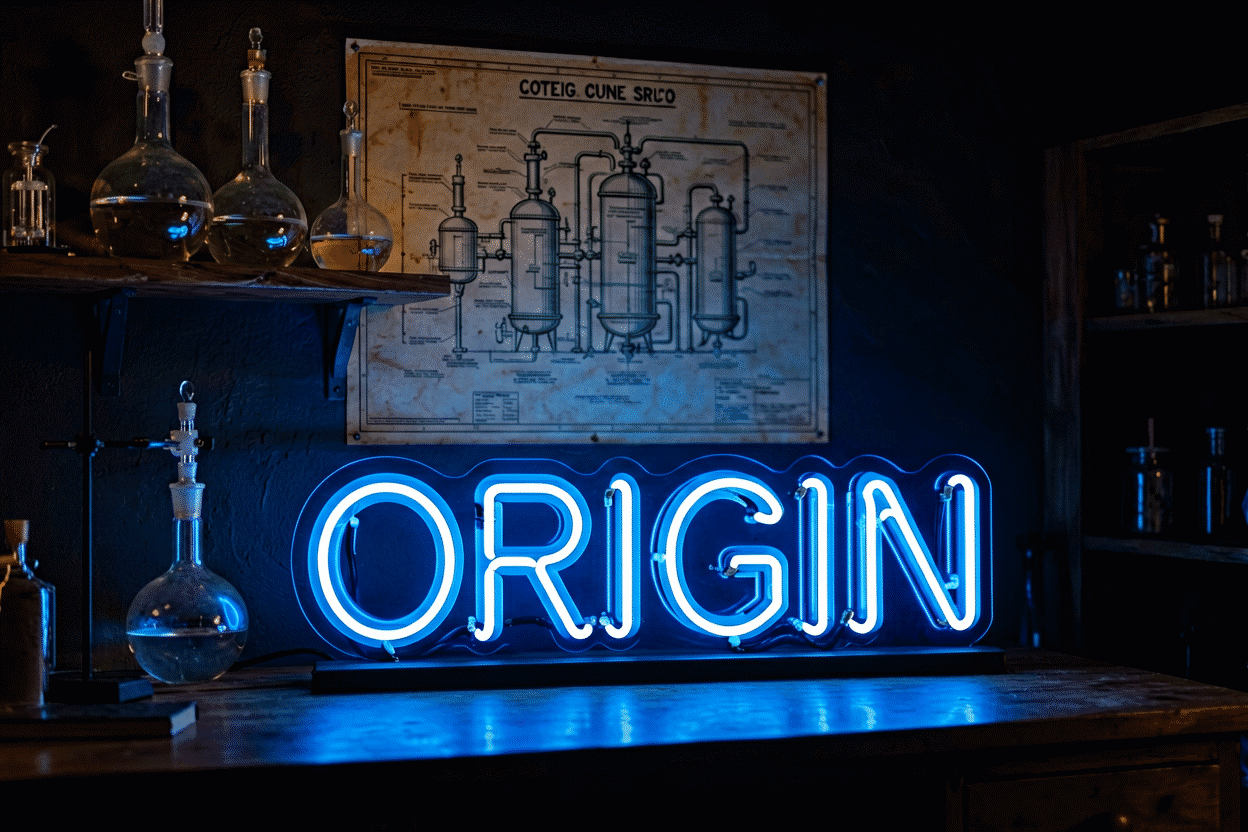
Neon comes from three places, in order of scale: stars, air, and factories. Stars forge it (neon is a major product of stellar nucleosynthesis — among the universe’s most abundant elements); Earth’s atmosphere holds a vanishing trace of it (about 18 parts per million, too light and too inert for the planet to have kept much); and industrial air-separation plants pull that trace out of liquefied air, one cryogenic fraction at a time. The gas in a neon sign began as a star’s interior, spent eons as unbound atoms in the sky, and ends bent into letters — the supply chain is cosmic, the bottleneck is a refrigerator.
The journey, stage by stage.
Stage 1: Made in Stars
Every neon atom in existence was fused inside a star. Neon-20 forms as part of the alpha-process chain in stellar cores — helium nuclei building heavier nuclei step by step (carbon, oxygen, neon, magnesium) — and massive stars synthesize it in quantity during their lives. When those stars die, supernova ejecta and stellar winds disperse the new elements into interstellar gas, where spectroscopy finds neon ranking among the top few elements by mass. The neon in your sign is, in the most literal sense, stardust that waited around.
Stage 2: Earth Kept Almost None
The young Earth inherited cosmically normal neon — and lost nearly all of it. Two properties conspired: neon is light (atmospheric escape strips light gases over geological time, especially from a young planet with a hot, energetic upper atmosphere) and inert (unlike carbon or nitrogen, neon couldn’t react into compounds and get held down in rocks and oceans). The result: Earth’s atmosphere retains roughly 0.0018% neon — about one neon atom per 55,000 air particles, most of it primordial residue rather than ongoing production.
Compare within the noble-gas family: argon, heavier and continuously produced by potassium-40 decay in Earth’s crust, is ~0.93% of the atmosphere — 500 times more abundant than neon. Helium escapes even faster than neon; krypton and xenon are heavy enough to stay in cosmic-proportioned scarcity. Neon sits at the unlucky intersection: too light to keep, too noble to bind.
For the properties behind this sorting, the companion data sheet is neon the element.
Stage 3: Extracted From Air (The Real Answer to “How Is Neon Made”)
Neon isn’t made — it’s separated. The industrial source is air separation:
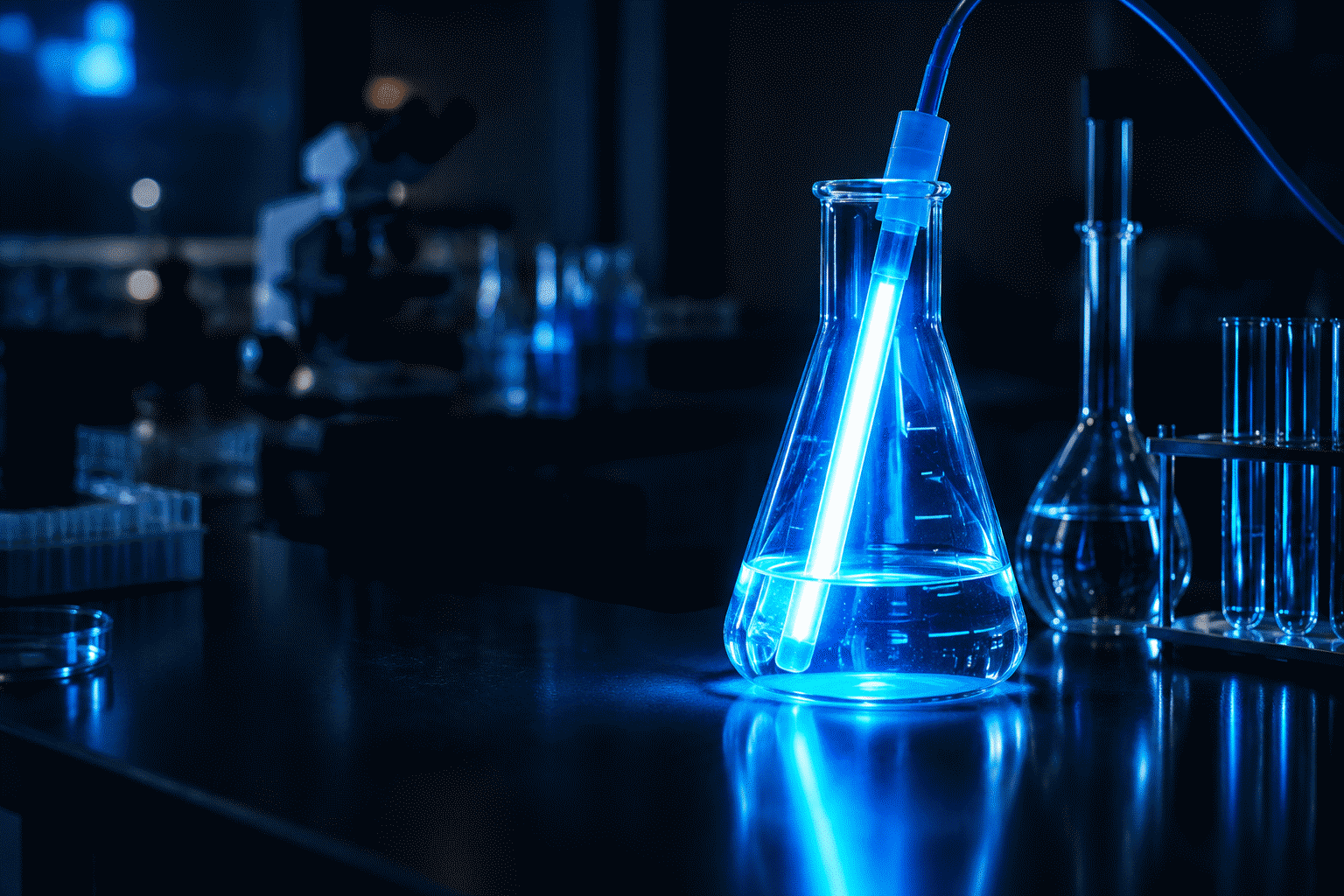
- Air is filtered, compressed, and cooled in cryogenic towers until it liquefies (around −320°F / −196°C territory).
- Fractional distillation exploits boiling-point differences: nitrogen boils off first (−320°F), argon separates at −302°F, oxygen at −297°F — and the noble-gas-rich fractions, including the tiny neon-helium stream, come off in their own cuts.
- Further purification concentrates the neon fraction from crude percentages to sign-grade purity (>99.9%).
The plants that do this exist for the big products — oxygen for steel and medicine, nitrogen for industry — making neon a byproduct economy: its supply scales with air-separation capacity, not with neon demand. When big industrial-gas users slow down, neon production slows with it, regardless of what sign shops want.
Supply geography: air-separation plants are industrial infrastructure worldwide, but the high-purity neon supply chain historically concentrated in particular regions — Eastern Europe and Russia above all, whose gas facilities long supplied a large share of world semiconductor- and laser-grade neon. That concentration became headline knowledge in 2022, when the war in Ukraine halted the inert-gas facilities in Mariupol and Odesa that supplied a major fraction of global neon, sending prices spiking and accelerating capacity building elsewhere — a neon-supply story told through semiconductor fabs, but the same market every discharge-tube industry shares. Supply diversified afterward (new purification capacity in the US, Europe, and Asia), but the episode is now part of the element’s biography.
Stage 4: Into the Sign
From industrial-gas cylinders, neon’s last journey is short: to sign workshops and glass benders, where tubes are evacuated, backfilled with the gas at just-over-atmospheric pressure, sealed, and lit. The craft sequence has its own guide at how are neon signs made; the gas’s role and the other gases that join it (argon, helium, krypton) at what gas is used in neon signs.
One quiet fact for the road: a sign holds only a few grams of neon at low pressure — the annual world production of neon, if it were only for signs, would light millions of them. The gas has never been scarce in absolute terms; only the purification chain ever is.
And Today, Mostly, the Look Continues Without the Gas
The word’s destinations multiplied while the supply story stayed narrow: most “neon” now sold is LED — silicone-clad diode strips that never met a noble gas (the technology comparison). The element keeps the signage niche, the lasers, and the cryogenic labs — what neon is in full — and the name over the whole glowing aesthetic.
From a star’s core to a fractionating tower to a bent tube above a bar: if you’d like the last stop on that supply chain glowing on your own wall, it starts in the custom builder.
The Supply Story’s Modern Chapter
The sourcing pipeline’s contemporary economics, updated:
The semiconductor connection. Neon’s highest-purity demand comes not from signs but from chip fabrication: excimer lasers (neon is a key excimer laser gas constituent) consumed a majority of world high-purity neon supply before 2022 — the sign trade rides a supply chain whose center of gravity is semiconductors (the supply geography). When fabs ramp, neon refiners follow; when the chip cycle turns, sign-grade supply loosens. The glow on your wall is downstream of Moore’s Law.
The 2022 shock, in detail. Russia’s invasion halted Ukraine’s inert-gas plants (Ingas in Mariupol and Cryoin in Odesa — together a major share of global semiconductor-grade neon), prices spiked order-of-magnitude, and the industry’s response became a case study: stockpiles bridged the gap, and new purification capacity (US, Europe, Japan, Korea) came online through 2022–24, diversifying a supply line that had quietly concentrated. Sign-grade neon felt the squeeze at the margins — the craft tier’s costs moved; the LED majority didn’t notice, which is itself the supply story’s modern punchline (the LED share).
Recycling’s quiet role. Excimer systems capture and recycle neon (the semiconductor industry’s answer to price and supply risk), damping demand growth — one reason post-2022 capacity has held. The element isn’t consumed in use; it’s contained, and containment economics now dominate extraction economics at the high-purity tier.
What it means for the sign buyer. Practically: nothing, and that’s the point — neon’s sign-market pricing is dominated by craft labor and transformers, not gas cost (a sign holds grams; even spiked prices moved material costs marginally). The supply saga explains why authentic glass carries its pricing and why the craft’s material continuity is secure: the element remains available at every purity tier from a now-diversified base. The stardust-to-sign pipeline (the journey above) survived its stress test, and the collector’s glass and the neon museum’s restorations (the heritage tier) inherit a stable material future.
FAQ: Where Neon Comes From
Where does neon come from? Stars make it (it’s among the universe’s most abundant elements), Earth’s atmosphere holds a trace (0.0018%), and industry extracts that trace by cryogenically separating liquefied air. The neon in a sign is star-forged, planet-sorted, factory-separated.
Is neon rare? Cosmically no — top-five by elemental abundance. Terrestrially yes — one atom per ~55,000 in air, because neon is too light for Earth’s gravity to retain over eons and too inert to bind into minerals.
How is neon made or extracted? It isn’t synthesized; it’s separated. Air-liquefaction plants distill liquid air into nitrogen, oxygen, argon, and noble-gas fractions; the neon-rich cut is purified to 99.9%+ for signage, lasers, and cryogenics.
Where is neon found on Earth? Almost entirely as a free gas in the atmosphere at 18 ppm — no neon minerals, no compounds, no biological role. Every practical source is air itself.
Did the Ukraine war affect neon supply? Yes — the 2022 halt of inert-gas facilities in Mariupol and Odesa, which supplied a major share of global high-purity neon, spiked prices and accelerated new purification capacity worldwide. The episode highlighted how concentrated the neon supply chain had become.
Do LED neon signs contain neon gas? No — they’re semiconductor light in silicone tubing. Gas-discharge signs (glass neon) hold the actual element, a few grams at low pressure per sign. The sourcing story’s summary for practical readers: neon remains available, affordable, and now supply-diversified — the 2022 shock was real and instructive, and the industry that absorbed it emerged with the redundancy it had lacked (the supply saga). For sign buyers, the pipeline’s stability means the craft tier’s pricing reflects labor and artistry rather than material scarcity, and for the curious, the story remains one of science’s best supply-chain dramas: stellar forge to liquefaction plant to bent glass, uninterrupted for over a century.
The Story in Six Words
Stars made it, Earth lost it, factories find it, signs display it, museums preserve it, and LEDs borrowed its name — the element’s full biography compresses to a sentence you can deploy at parties (the expanded version). For sourcing reality: the supply is stable, diversified, and adequate at every purity tier the sign trade touches, which is the quiet guarantee under every authentic glass piece glowing today. The pipeline from stellar forge to storefront runs uninterrupted — one of commerce’s oldest continuously operating supply chains, if you count the fourteen-billion-year head start.
Sources & Further Reading
- Neon: Strong Lines (NIST Physical Reference Data) — the standard reference for neon’s emission wavelengths.
- Argon: Strong Lines (NIST Physical Reference Data) — the standard reference for argon’s emission wavelengths.