Blog
Palm Tree Neon Sign: The Permanent Vacation
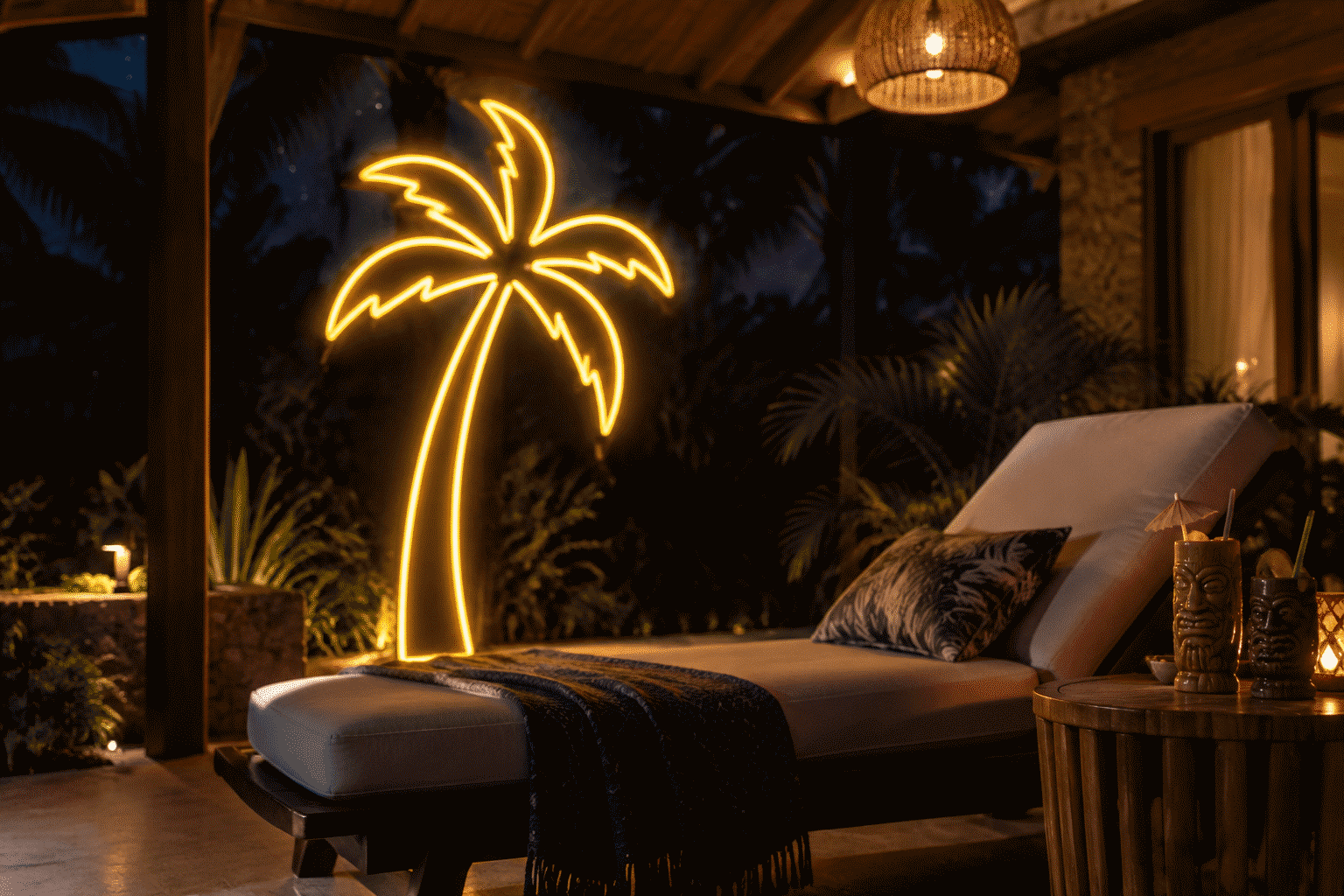
The palm is the only tree that is also a destination. Every other tree means a place; the palm means a latitude — warm, unhurried, somewhere the phone stays in the drawer. Hanging a palm on the wall is the cheapest travel that exists: the silhouette in glow, the room half a hemisphere closer to the beach.
This guide covers the palm in neon: the shape’s renderings, its two registers (the tropical and the synthwave sunset), the rooms it owns, the palette, and the custom tiers. Its frequent companion — the flamingo — has its own guide (here); together they build the tropical wall.
How the Palm Renders
- The single palm. One tree, full silhouette — trunk, crown, the fronds splayed. The classic build and the register’s anchor: the palm’s shape is one trunk line plus a burst of fronds, which renders beautifully in tube (the trunk is a single line; the crown is seven or eight short curves). Reads instantly at any size.
- The palm pair. Two trees leaning apart — the postcard composition, the frame that every sunset photo shoots through. The pair reads at 30 inches and up: the statement tier, the event wall’s backdrop.
- The bent palm. The wind-blown lean — the coastal palm doing its permanent impression of a sea breeze. The most dynamic silhouette; the piece for rooms that want the weather, not just the tree.
- The frond-only piece. Just the crown — the fronds without the trunk, the abstract botanical tier. The minimal-gamer’s palm: the shape’s upper half as a wall accent, 12–16 inches, for the room that wants the suggestion rather than the trip.
The Two Registers
The palm glows in two distinct cultural settings, and they make different rooms:
The tropical register (the tiki and beach tier). The palm as vacation: bright greens, the flamingo and hibiscus companions, the luau and poolside deployments. This is the palm’s native setting — the tree as used by the entire hospitality industry south of the thirtieth parallel.
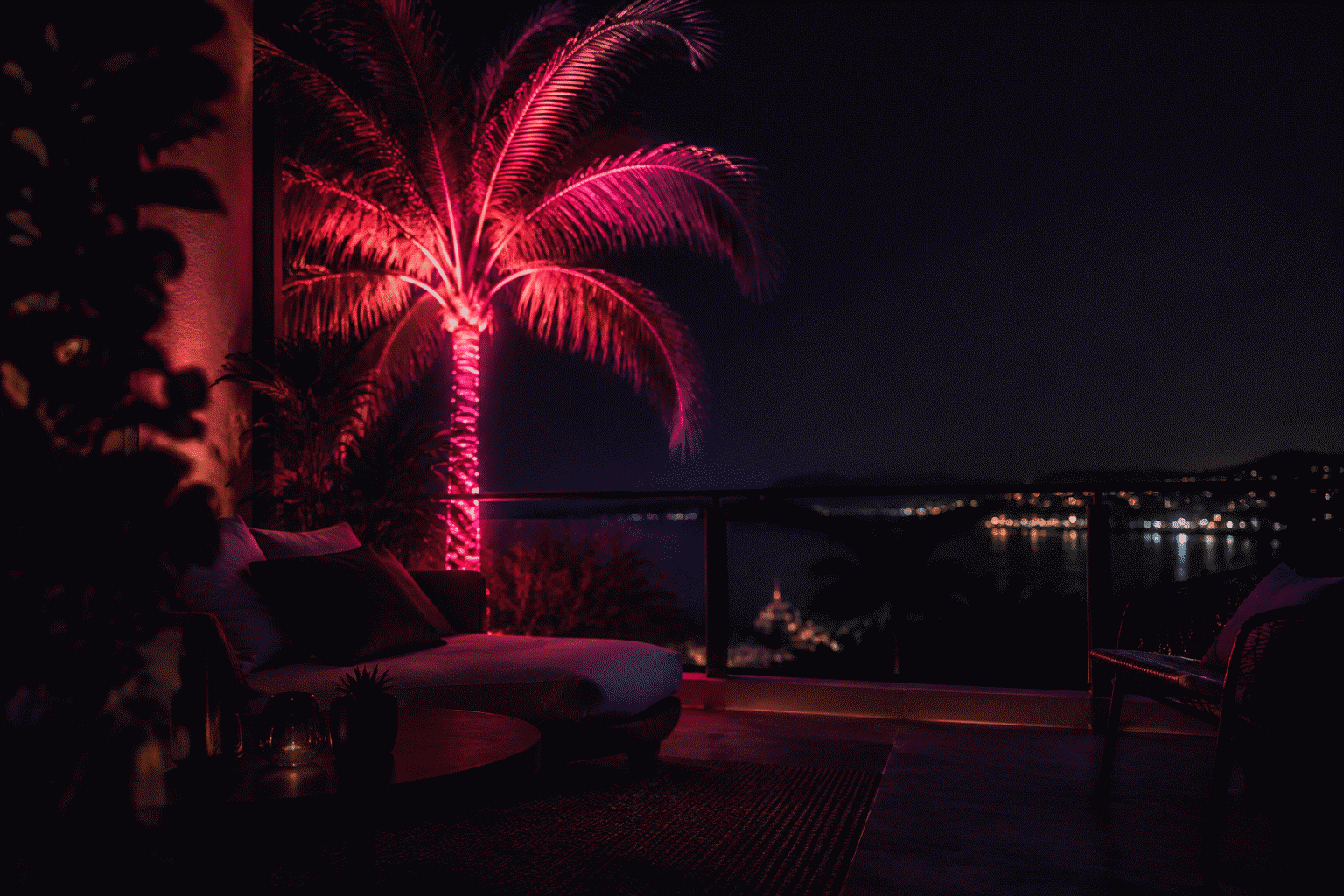
The synthwave register (the sunset palm). The palm as the eighties’ memory of itself: black silhouettes against pink-orange sunset, the chrome-and-grid world’s organic accent. Our synthwave guide builds the whole room; the palm in this register runs as silhouette (dark or warm-white outline) against the gradient pieces. Same tree, opposite hemisphere of meaning.
The register choice is the room choice: tropical (green, bright, party) or synthwave (silhouette, pink, nostalgia). The palm serves both; the wall must pick.
The Rooms
The covered patio and balcony (the natural habitat). The palm outdoors at last — the covered-patio tier, run at the evening register through the warm months. The tree that means somewhere else, hung where the weather actually is. Covered mounting only.
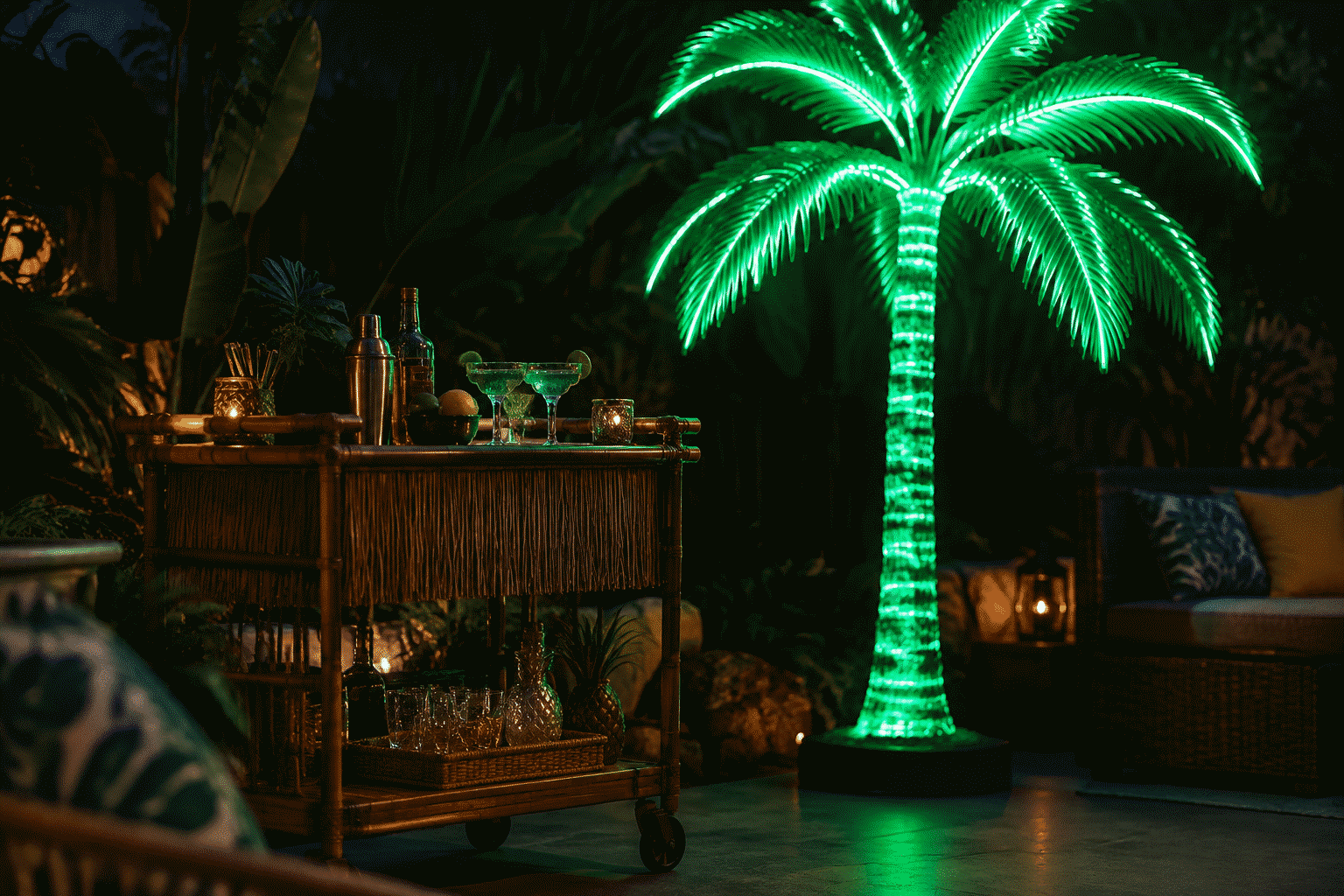
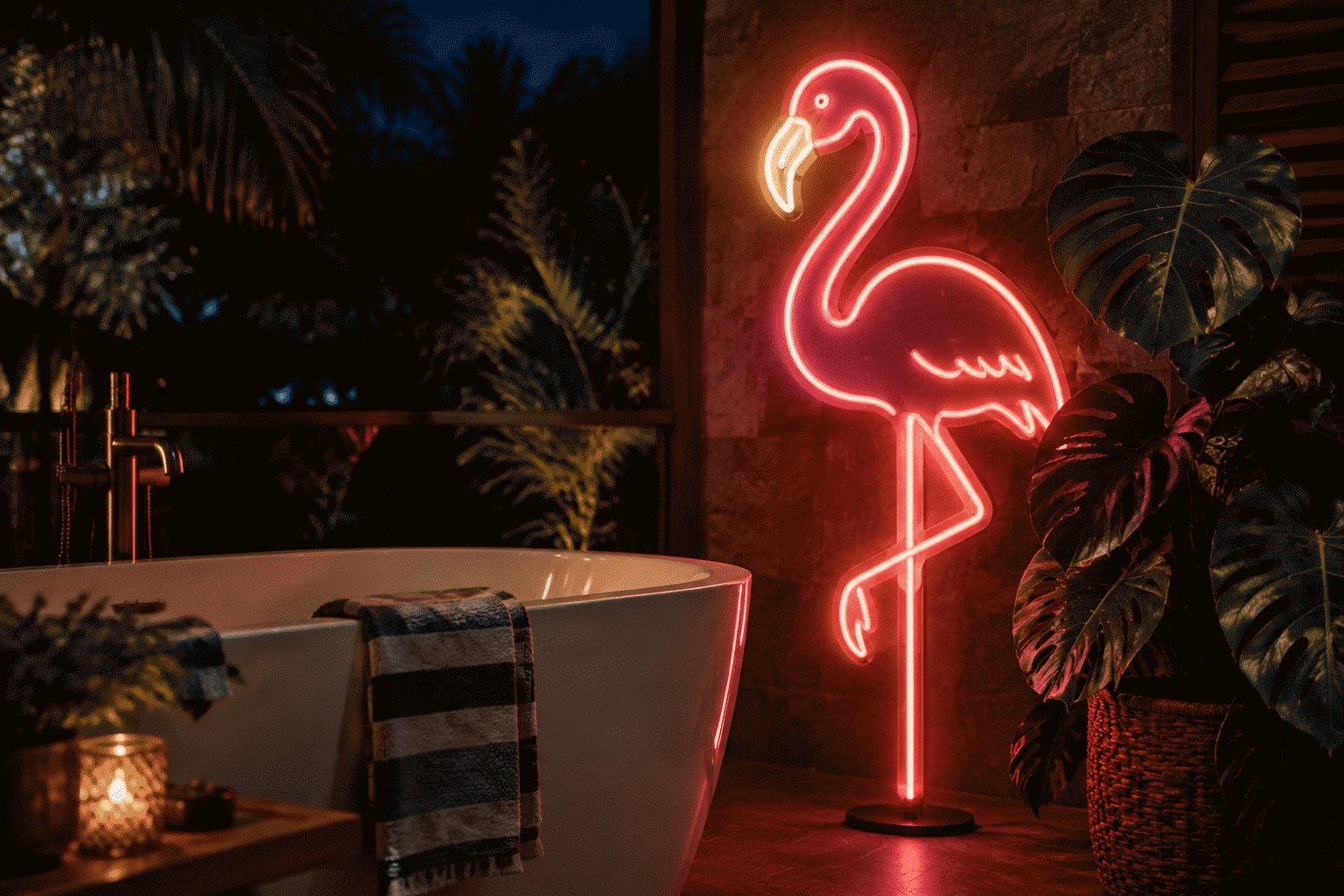
The pool and spa tier. The pool house, the spa bathroom, the hot-tub corner — the palm among the water features, in green or warm white, the resort register domesticated. The flamingo guide covers the bathroom deployment the palm shares.
The bedroom (the permanent vacation). The palm over the bed in soft green or warm white — the room that keeps the vacation all year. The dimmer’s low register is the piece’s native setting: the tree at 20% output is the night-light of the permanently relaxed.
The home bar and tiki corner. The tiki register: the palm among the rum and the rattan, the green register‘s party deployment. The bar corner the palm was born for.
The media and game room (the synthwave wall). The palm pair as the sunset wall’s frame — silhouettes flanking the gradient piece. The synthwave guide covers the full composition.
The Palette
- Palm green. The canon — the tropical register’s native hue, the color the hospitality industry votes for. The green guide covers the shade family; the palm runs its deeper, frond-green end.
- Warm white and ice blue. The understated tier — the tree as line art, the piece that survives in non-tropical rooms. The palm in ice blue is the coastal-modern build.
- Pink. The synthwave register’s palm — the silhouette in hot pink, the sunset tree. The pink guide covers the hue.
- The duo-tone custom. Trunk in one hue, fronds in another — the green-and-warm-white build is the custom tier’s most-ordered palm.
The Sizes
| Tier | Size | Register |
|---|---|---|
| The frond accent | 12-16 in | Desks, small walls |
| The single palm | 20-28 in | The standard wall piece |
| The palm pair | 30-40 in | The statement and event tier |
| Sunset compositions | 36-48 in | The synthwave wall |
The Palm’s Cultural Layer
The palm silhouette carries more history than most decor shapes, and the wall piece borrows all of it:
- The postcard era. The palm pair against the sunset is among the most-repeated images in American travel culture – the silhouette that meant Florida and Southern California for a century of postcards, tourism ads, and motel signage. The neon palm is that visual tradition continued in its original medium: the postcard image, glowing.
- The mid-century motel register. The palm and the motel sign grew up together – the roadside campaigns of the fifties and sixties ran the palm as the warmth symbol for the snow-belt traveler. The retro motel revival (the lodging guide’s heritage tier) runs the palm as its standard co-sign; the two icons are the same era’s artifacts.
- The tiki inheritance. The palm in the tiki-bar tradition – the postwar Polynesian-pop phase that gave the home bar its most durable theme. The tiki corner’s palm runs among the rattan and the mugs, the register that never fully left.
- The synthwave adoption. The palm’s third career: the eighties-memory aesthetic adopted the silhouette as its organic accent – the black palm against the pink sunset, the tree that means “the coast” in the genre’s permanent dusk. The same shape, three contexts: the palm serves them all without changing a frond.
The Custom Route
The palm’s custom canon, live-priced in the custom builder:
- The single palm in your hue at any size — the anchor build.
- The palm pair — the postcard composition, the event wall’s standard.
- The sunset trio. Palm pair plus the gradient sun between them — the synthwave wall as one composed piece.
- The name-under-palm build. The family or business name beneath the tree — the resort register, domesticated (the “our name + palm” build is the lake-house and pool-house standard).
FAQ: Palm Tree Neon Signs
What does a palm tree neon sign cost? The frond accents run $60-$100; the single palm $100-$170 at 20-28 inches; the palm pair $180-$300; the sunset compositions $250-$400. Height drives the price – palms render tall like the tree itself.
What color palm tree sign is best? Palm green – the tropical register’s canon. Warm white or ice blue for the coastal-modern understatement, hot pink for the synthwave sunset register. The trunk-and-fronds duo-tone is the custom tier’s standard.
What rooms should avoid the palm? The rooms that run cool palettes with discipline – the cyberpunk register, the all-blue setups, the strict monochrome walls. The palm means warm and coastal at its core; forcing it into a cool register reads as a category error. The cactus is the desert’s cold-blooded alternative.
What is a palm pair sign good for? The postcard composition – two trees leaning apart, the frame every sunset photo shoots through. It serves the event wall (the tropical party’s standard backdrop), the statement bedroom (the permanent-vacation tier), and the synthwave wall (the sunset silhouettes) – one composition, three registers, all of them warm.
Can a palm sign go outdoors? The covered patio and balcony yes – the tree’s natural habitat, covered mounting only. Open exposure needs the weatherproofed build tier; the standard piece stays under cover, like the vacationers it represents.
What rooms does a palm sign work in? The covered patio (native), the pool and spa tier, the permanent-vacation bedroom, the tiki bar corner, and the synthwave media wall. The register choice – tropical or sunset – sets the room.
What pairs with a palm neon sign? The flamingo (the tropical core pair), the hibiscus and flower tier, the sunset gradient pieces (the synthwave pairing). The tropical wall rule: three pieces maximum, one dominant hue – the flamingo guide covers the combo logic.
What is a palm pair sign? Two trees leaning apart – the postcard composition every sunset photo shoots through. The statement tier at 30-40 inches, the event wall’s standard backdrop, and the base of the sunset trio (palms plus gradient sun).
Plant the Vacation
The tree that means somewhere else, in the medium that keeps it green all year. Single, pair, or the full sunset trio — build the palm and let the room book the trip.
More tropical glow: flamingo, cactus, synthwave sunsets, the green register.
Sources & Further Reading
- Neon sign (Wikipedia) — the consolidated public record of neon-sign history and technology.
Pricing based on CustomNeon’s current catalog (2026); custom quotes come live from the sign builder.