Flower Power Neon: Bloom the Whole Wall
Flowers are decor’s oldest subject and its most perishable — the fresh arrangement gives a room its best week and then documents its own decline. The flower neon piece solves the perishability permanently: the bloom in tube light, at its peak, forever. And the genre’s current moment runs deeper than convenience — the daisy is back (the boho-aesthetic wave’s most-repeated botanical), the flower wall is a format, and the catalog’s whole floral tier is having its decade.
This guide covers the flower glow in general — the shapes (the daisy and its relatives), the two registers the flower serves, the rooms from the nursery to the flower shop, the palette with its sanctioned exceptions, the design history the wall inherits, and the customs. The short version: the single daisy in white or soft pink at 16-24 inches over the bed, the chain along the headboard if the room wants the full bloom. The single-bloom deep dives live next door: our rose guide covers the romantic flower; this page covers everything else that blooms.
The Shapes That Bloom in Tube
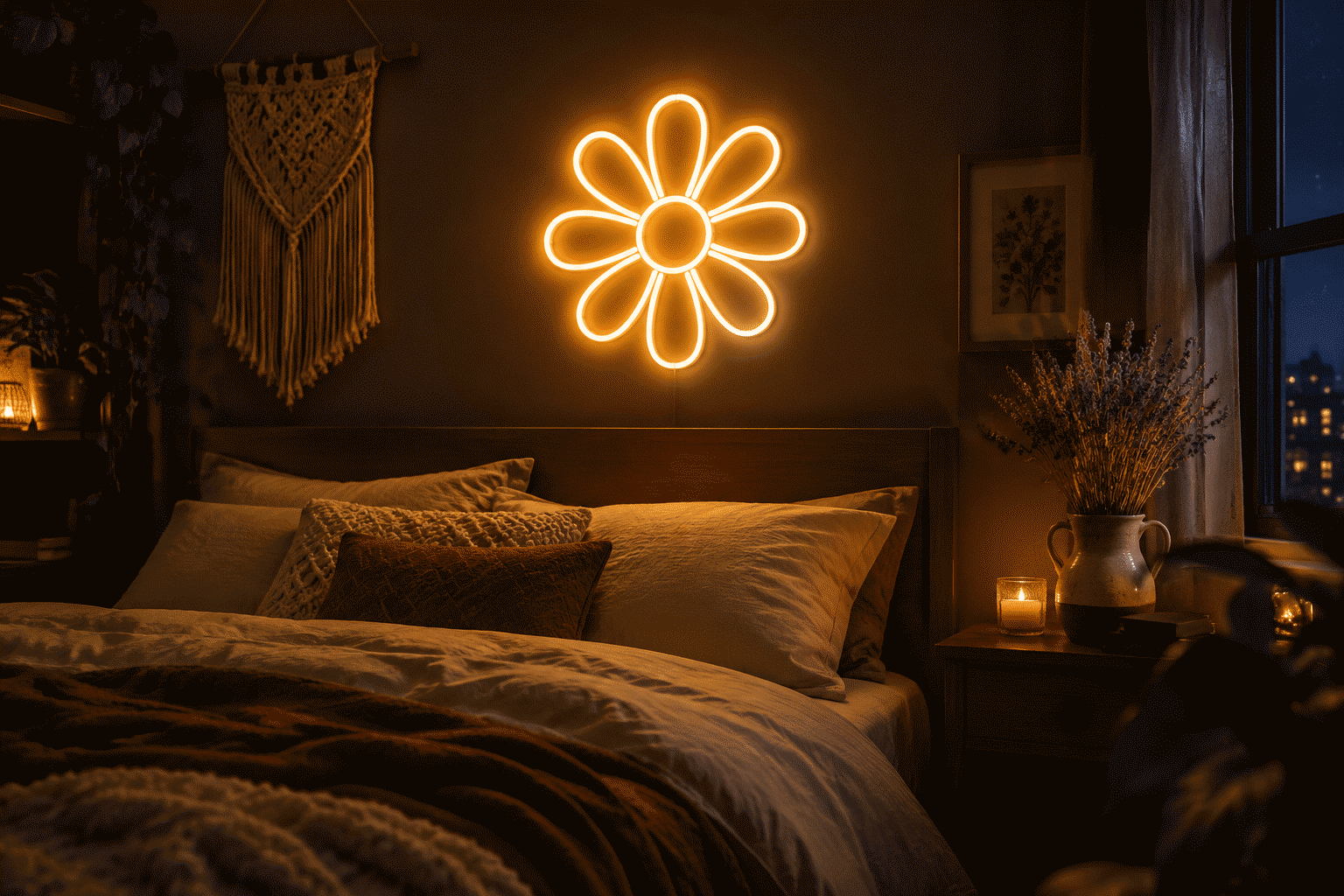
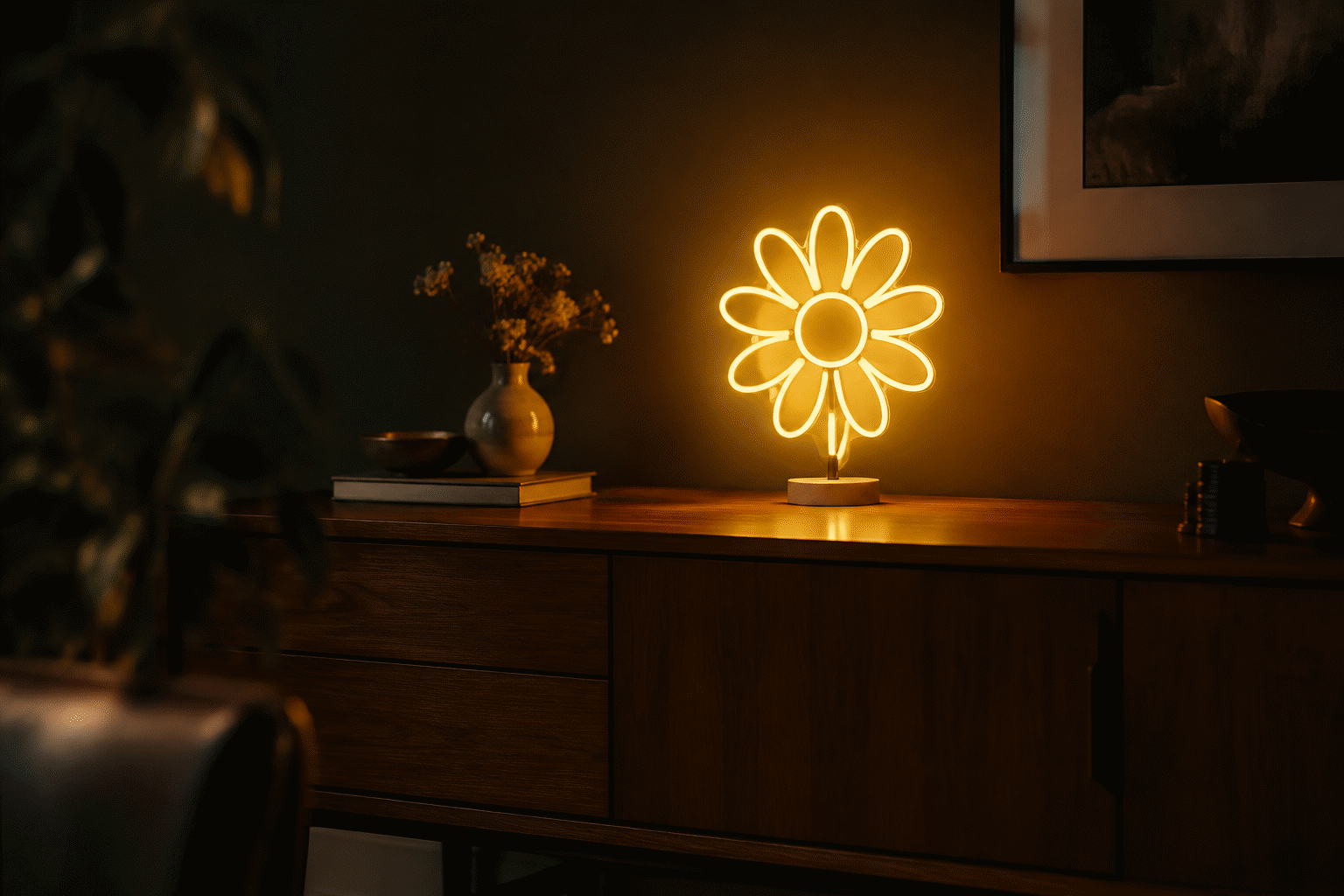
- The daisy. The current wave’s signature — the simple-petal flower (petals around a round center) that the boho aesthetic adopted as its botanical standard. In neon: one circle plus eight to twelve petal loops, one of the cleanest builds in the catalog. The single daisy at 16–24 inches is the register’s anchor and its most-gifted piece.
- The daisy chain. Three to five daisies connected by their stems — the garland format, the wall’s horizontal bloom. Runs 30 inches and up; the piece that turns a wall section into a flower bed.
- The tulip and the single-stem. The one-flower-in-a-vase silhouette — the minimal botanical, the piece that reads as line drawing. Calmer than the daisy; suits the adult room.
- The bouquet. The full composed bloom — three or more flower shapes at mixed heights, the statement tier. The wedding-and-anniversary build (the rose guide covers the romantic bouquet tier).
- The abstract bloom. The flower suggested rather than drawn — the burst shape, the mandala register. The design-forward version for rooms that want the bloom without the botany.
The Two Registers
The flower piece glows in two distinct cultural settings:
The boho register (the current wave). The daisy among the macrame and the linen, the soft-palette bedroom, the aesthetic the room guide calls the garden-core tier – the current wave’s romantic branch, the room that keeps fresh stems by the bed and dried lavender on the shelf. Runs soft pink, white, and the pastel family; the daisy is its standard-bearer and its most-gifted object.
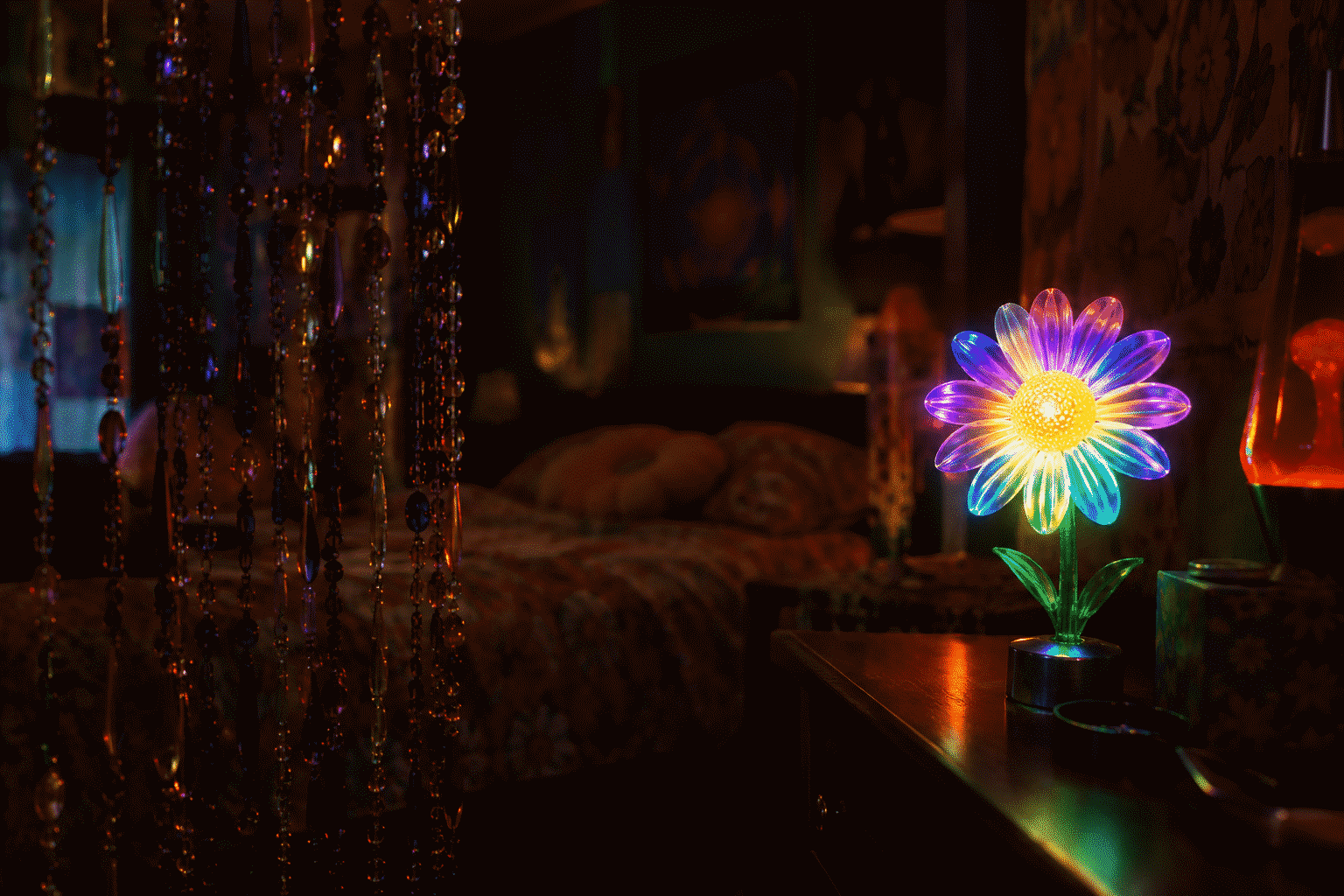
The sixties register (the vintage tier). “Flower power” in its original sense — the daisy as the peace-era icon, the retro color-daisy (each petal a different hue), the decade’s whole visual vocabulary. Runs brighter: the orange-pink-yellow family, the funk-lettering companions (“GOOD VIBES,” “BLOOM”). The vintage register pairs with the eighties next door rather than the boho bedroom.
Both registers run the same shapes; the palette and the companions decide the decade.
The Rooms
The bedroom (the boho bloom). The daisy over the bed in soft pink or white, at the evening dimmer tier — the garden-core bedroom’s standard piece. Often paired: one anchor daisy plus the chain along the headboard’s width.
The kids’ and nursery tier. The friendliest botanicals — the daisy and the round-flower family in pastels, the piece that grows with its occupant (the boho aesthetic being the teens’ current default). Pairs with the butterfly tier for the garden wall’s complete ecosystem.
The flower shop and studio (the commercial bloom). The florist’s own sign — the flower in the window that says what’s inside. The register’s most honest deployment (the sign IS the product); runs the shop’s palette at street scale.
The event wall (the wedding tier). The flower wall’s lighting layer: the neon bloom among the fresh-flower installations — the piece that photographs when the fresh tier is at hour six. The rose guide covers the romantic customs; the daisy chain is the event wall’s cheerful standard.
The cafe and boutique. The soft-commercial tier: the bloom in the window, the pastel piece that sets a shop’s register. The daisy is the current cafe-decor standard-bearer.
The Palette
- White and warm white. The daisy canon — the white-petal read, the piece that survives any room. The aesthetic guide’s neutral tier.
- Soft pink. The boho register’s hue — the pink guide’s softest end. The bedroom daisy’s default.
- The retro family. The sixties register’s orange-pink-yellow — the color-daisy custom (each petal its own hue) is the vintage tier’s signature build.
- Purple and lavender. The garden tier — the purple family’s floral end, the lavender-daisy crossover.
The Flower’s Career in Decor (Why It Never Leaves)
The flower is decor’s oldest subject and its most reliable – every era’s design language has run blooms, and each one left a styling the wall piece can borrow:
- The botanical-illustration tier. The flower drawn faithfully – the field-guide tradition, the vintage botanical print. In neon, this tier is the detailed build: petal counts that are botanically true, rendered at the sizes where detail resolves. The flower shop’s own piece usually runs this styling (the sign that takes its subject seriously).
- The sixties poster tier. The flower as the peace era drew it – flat, bright, center-dominant, the daisy with the yellow center and the bold outline. The retro register’s neighbor decade left the flower its most graphic styling, and the color-daisy custom revives it directly.
- The cottagecore tier. The current wave’s romantic branch – the flower among the linen and the dried lavender, the garden-at-home register. The soft-pink daisy and the wildflower scatter serve this room; the aesthetic that made gardening young again.
- The editorial tier. The flower as fashion uses it – the single sculptural bloom, the macro scale, the piece that reads as a magazine cover. The abstract bloom build (the burst shape) serves this room: the flower suggested at statement scale, the design-first styling.
The choice is the room’s: faithful, graphic, romantic, or sculptural – one flower, four dialects.
The Custom Route
The flower canon, live-priced in the custom builder:
- The single daisy in your hue — the anchor, $80–$140 at standard sizes.
- The daisy chain — the garland, any width; the headboard and event-wall standard.
- The color-daisy custom — the retro register’s each-petal-a-color build, the vintage tier’s signature.
- The name-in-bloom build. A name or word with the flower — the daisy framing a word (“BLOOM,” “GROW,” a name) — the custom tier’s most gifted composition.
- The bouquet custom — mixed blooms, two or three colors, the wedding statement.
FAQ: Flower Neon Signs
What does a flower neon sign cost? Single daisies run $80-$140; chains $150-$250 by width; the two-and-three-color bouquet customs $180-$320. The daisy’s simple geometry (one circle, petals in loops) makes it one of the most affordable builds in the catalog.
What is a daisy neon sign? The current wave’s signature botanical – simple petals around a round center, the boho aesthetic’s standard flower. One circle plus eight to twelve petal loops; the cleanest build in the plant tier and the register’s most-gifted piece.
What color flower sign is best? White or warm white – the daisy canon that survives any room. Soft pink for the boho bedroom; the orange-pink-yellow retro family for the sixties register; the each-petal color-daisy is the vintage signature.
What pairs with a flower neon sign? The garden ecosystem: the butterfly tier (the classic pair), the rose for the romantic bloom, the flamingo for the tropical garden. Three pieces, one dominant hue – the natural wall’s standing rule.
Is a flower sign good for a kids’ room? One of the best – the round-flower family in pastels grows with its occupant (the boho aesthetic being the teens’ default). The daisy-plus-butterfly wall is the kids’ tier’s complete ecosystem.
Are flower neon signs good for a flower shop? The register’s most honest commercial deployment – the sign IS the product. The florist window runs the shop’s palette at street-readable scale, and the botanical-styling build (petal counts that are botanically true) is the version that takes the subject seriously enough to sell it.
What is a daisy chain sign? Three to five daisies connected by stems – the garland format, the horizontal bloom. Runs 30 inches and up; the headboard standard and the event wall’s cheerful tier.
Bloom
The wall in permanent bloom, the arrangement that never declines. Single daisy, chain, or the color-petal custom — plant it in any hue the room grows.
More botanical glow: roses, butterflies, flamingo, the pink register.
Sources & Further Reading
- Solid-State Lighting (U.S. Department of Energy) — DOE reference on LED efficacy and lifetime.
- Neon sign (Wikipedia) — the consolidated public record of neon-sign history and technology.
Pricing based on CustomNeon’s current catalog (2026); custom quotes come live from the sign builder.