How Much Do Neon Signs Cost? 2026 Pricing Guide

A custom LED neon sign typically costs $100 to $500 — small one-word designs land around $100–$250, medium pieces $250–$500, and large commercial signs $500–$1,500+. Real glass neon runs two to three times the price of an equivalent LED design, with custom work commonly starting around $300 and reaching $1,000–$3,000 for business-size pieces. Pre-made signs off the shelf start as low as $50–$150.
Those are honest ranges, not teaser prices. What you actually pay depends on five or six factors, and once you know them, you can usually predict your final price within about 20% before you even request a quote. This guide breaks down every one of them — plus the hidden costs sellers don’t always mention and the legitimate ways to cut the bill.
Typical Price Ranges at a Glance
| Sign size | Custom LED neon (typical) | Custom glass neon (typical) |
|---|---|---|
| Small: up to ~24 in wide, short word | $100 – $250 | $250 – $600 |
| Medium: 24–40 in, a word or short phrase | $250 – $500 | $600 – $1,200 |
| Large: 40–60 in, phrase or logo | $500 – $1,500 | $1,200 – $3,000+ |
| Oversized / business storefront | $1,500 – $3,000+ | $3,000+ |
| Pre-made, non-custom design | $50 – $150 | (rare — mostly vintage) |
Use these as planning numbers. The final quote moves with the factors below.
What You’re Actually Paying For
When a neon sign costs $300, the money isn’t going into a magic box. It’s spread across six very real cost drivers:
Length of tubing or LED strip. Pricing in this industry is largely linear with the amount of glowing material. “LOVE” in 20-inch letters costs roughly twice what “HI” costs, because there’s about twice as much tube. Complex scripts with lots of curves use more material per letter than block fonts.
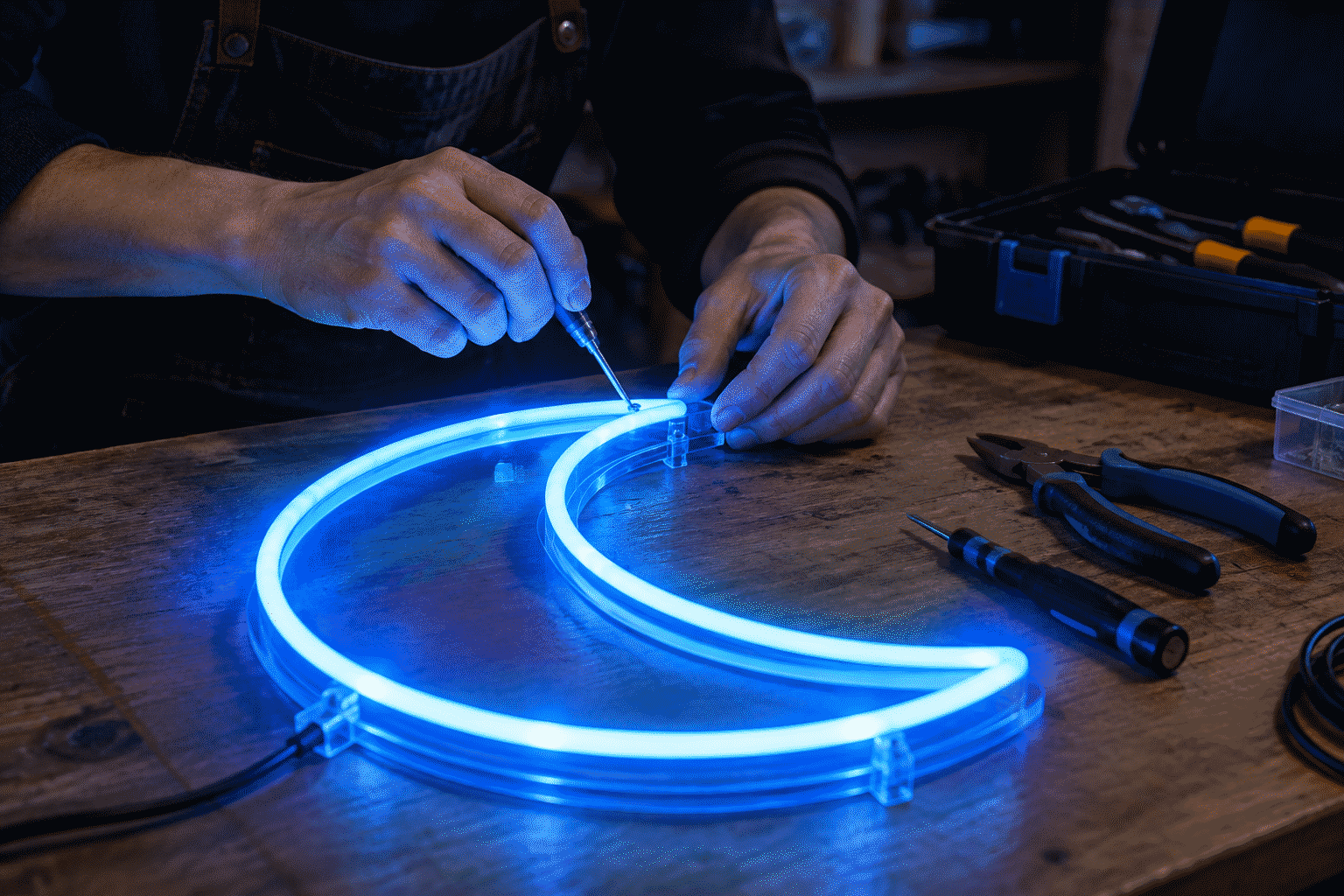
Bending labor. Every letter is bent by hand — over a pattern, with heat, by a person. LED flex neon is bent and glued by hand too; glass neon additionally requires a glassblower-level skill set, which is why glass artisans are fewer every year and their rates keep rising.
The backing. Most custom signs mount on clear acrylic, either as a full panel or “cut to shape” following the outline of the letters. Cut-to-shape looks cleaner floating on a wall and costs more because the acrylic gets routed to your exact design.
Power supply. LED signs run on a compact 12V or 24V adapter; glass signs need a high-voltage transformer (2,000–15,000 volts), which is a significant line item by itself.
Design time. Reputable shops render your concept into a bendable layout, which takes real design work even before anything physical happens. Some charge it as a fee; most fold it into the unit price.
Extras. Dimmer, remote control, color-changing RGB, wall-mount hardware, hanging chains, outdoor waterproofing — each adds a modest but real increment, typically $10–$50 per feature.
Glass Neon vs. LED Neon: Why the Price Gap?
Glass neon costs two to three times more for the same text, and it’s not price gouging. A glass sign is an artisan product: glass tubes hand-bent over a flame, electrodes fused on, the tube pumped to vacuum on special equipment, backfilled with neon or argon-mercury gas, then burned in and tested. Every sign is essentially one-of-a-kind laboratory work.
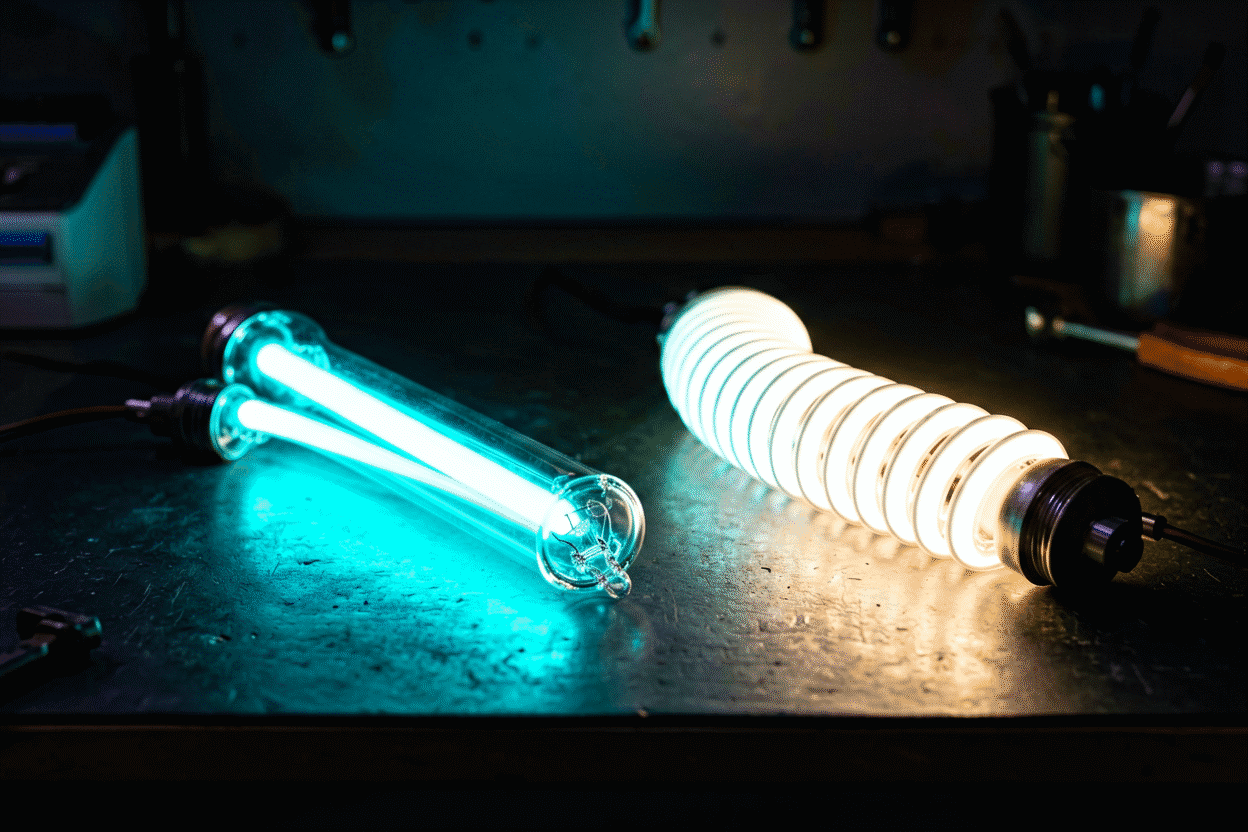
LED neon reproduces the look with factory-made components: LED chips on a flexible strip, silicone jacket, machine-cut acrylic. Less labor, no gas handling, no glass breakage in shipping — and that efficiency lands directly in the price.
The running costs diverge too. An LED sign draws roughly a quarter to a fifth of the power of a glass equivalent — we computed the monthly electric bills in do neon signs use a lot of electricity?, and the difference is a few dollars a month, not tens.
Custom vs. Pre-Made Signs
Pre-made signs ($50–$150) are mass-produced designs — “Good Vibes Only,” “Beer,” “Gamer” — usually LED, usually one size. Perfect when a common phrase works and you want it this week.
Custom signs ($100–$1,500+) carry your exact text, font, color, and size. For weddings, businesses, and gifts with a name or date, custom is effectively the only option. The premium over pre-made is smaller than most people expect: a small custom one-word sign often costs barely more than a decent pre-made piece.
A useful decision rule: if your design contains a name, a date, or your brand, price it custom from the start. If it’s a stock phrase, check the pre-made catalogs first — you may save $50–$100.
The Hidden Costs Nobody Puts in the Headline Price
Shipping. LED neon ships well — figure $15–$40 domestic. Glass neon is fragile freight and can run $50–$150+ with insurance. This is a big part of why glass totals climb.
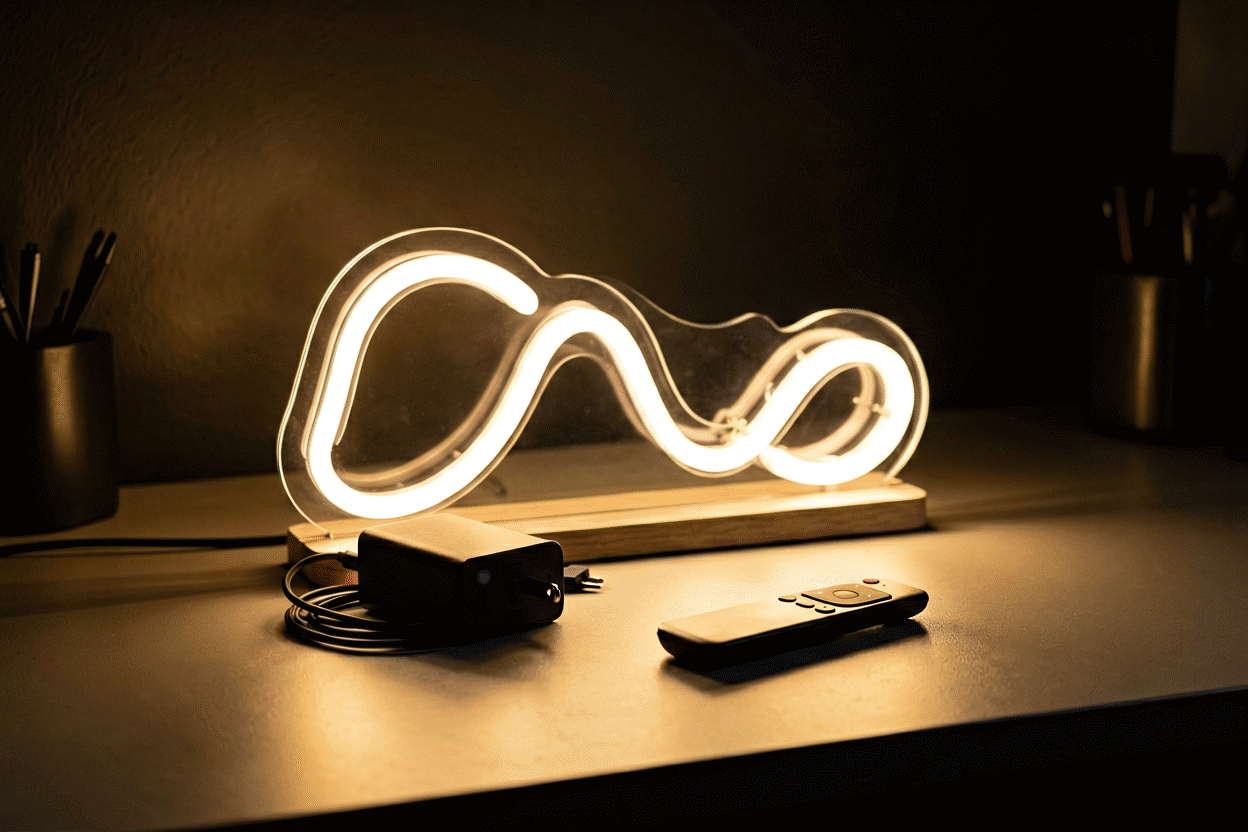
Installation. An LED sign under 10 lb hangs with screws or even adhesive strips — free if you own a screwdriver. Glass neon with a transformer often justifies professional installation, typically $100–$300 for a storefront piece.
Electricity. Small, but real: an LED sign running 8 hours a day costs roughly $1–$3 a month at average U.S. rates. (Full math in our electricity guide.)
The remote/dimmer — sometimes bundled, sometimes a $20–$30 add-on. Ask before you order.
Rush production. Standard production runs 1–3 weeks for custom LED. Compressing that to a few days typically adds 15–30%.
Three Real Budget Examples
Abstract ranges are one thing; worked examples are another. Here’s how three typical orders actually break down.
Example 1 — the bedroom sign ($150). One word, “breathe,” in warm white, 24 inches wide, clean sans-serif font, cut-to-shape backing. Length of tubing is minimal, single color, standard production. Final price lands around $130–$160 depending on letter height. Add the dimmer remote ($15–$20) if evening brightness control matters. Shipping is typically free or $15 at this size. This is the entry-level custom order most first-time buyers place, and it’s the configuration where custom beats pre-made on price more often than people expect.
Example 2 — the wedding sign ($310). “Emma + Jake” with a date underneath, hot pink, 36 inches wide, script font with a heart flourish. Two lines of text, more tubing, a decorative element, and script fonts add bend length per letter. Realistic range: $250–$400. Many couples rent instead (typically $75–$150 per event with a deposit), which makes sense for one-night use — but the sign then goes back, and the photos keep it forever. Buying keeps the sign as home decor afterward, which is why most couples who run the math end up buying. Sizing and phrase ideas are in our wedding neon signs guide.
Example 3 — the café counter sign ($740). Business name in white plus a small “est. 2024” line, 48 inches wide, mounted on a full clear panel for stability in a high-traffic area, with the outdoor-rated option for a patio-facing window. Large size, two design elements, weatherproofing upgrade, and a rush timeline compressed to one week (+20%). Realistic range: $600–$900. The utility version of this purchase — a bold “OPEN” in the window — runs a fraction of that and is covered in our open signs guide.
The pattern across all three: the text length and the physical width do most of the pricing work. Everything else is a $20–$50 dial.
How to Save Money on a Custom Neon Sign
Six levers, in order of impact:
- Cut the word count. Tube length drives price more than anything else. “Eat” instead of “Good Food Eaten Here.”
- Pick a block or clean script font. Ornate scripts add bend length and labor. Simple fonts are cheaper and more legible from across a room.
- Single color. Multi-color designs require separate circuits and more labor. One strong color is a design statement, not a compromise.
- Right-size it. A sign meant for a bedroom wall doesn’t need to be 48 inches wide. Match the sign to its viewing distance — 24–36 inches is plenty for most home walls.
- Skip the cut-to-shape backing if the sign will sit on a shelf or in a frame; the standard acrylic panel does the same job for less.
- Order early. Rush fees are pure margin. If you’re buying for a wedding or a gift, three weeks of lead time saves 15–30%.
Budget Benchmarks by Use Case
- Bedroom decor sign (one word, warm color, ~24 in): $100–$250
- Wedding monogram or names + date (~36 in, pink or warm white): $200–$450 — sizing and phrase ideas in our wedding neon signs guide
- Home bar or man cave (short phrase, red or amber, 30–40 in): $250–$500
- Business storefront or bar sign (brand name or logo, 40+ in): $500–$1,500 — see neon bar signs for what works at this scale
- “OPEN” style utility sign: usually pre-made territory, $80–$200
FAQ: Neon Sign Prices
How much do neon signs cost? Custom LED neon signs typically cost $100–$500, with large commercial designs running $500–$1,500+. Real glass neon costs two to three times more — custom pieces commonly start around $300.
How much does a custom neon sign cost? Most custom LED orders land between $100 and $500. The three biggest price drivers are the length of the text, the physical size, and single vs. multi-color.
Why are neon signs so expensive? Every sign is hand-bent to your design — there’s no assembly line for one-off text. Glass neon adds artisan glasswork, vacuum gas-filling, and a high-voltage transformer, which is why it costs multiples of LED.
Are glass neon signs more expensive than LED? Yes — typically two to three times the price for the same design, plus higher shipping (fragile freight) and often professional installation.
How much does it cost to run a neon sign? An LED sign used 8 hours a day costs about $1–$3 per month in electricity; running 24/7 is still under $5 for typical home sizes. Glass neon runs three to five times higher but stays modest for most signs.
Is a cheap neon sign worth it? Below roughly $60, corners get cut — usually in the power adapter, which is the component most likely to fail early. A better question is lifespan: quality LED signs are rated for 30,000–50,000 hours, which is where the real value sits (details in how long do neon signs last?).
Price Your Exact Design in Two Minutes
Reading ranges only gets you so far. The custom neon sign builder prices your actual design live: type your text, choose size and color, and watch the price update instantly — no email forms, no waiting for a quote. Most people find their real number in under two minutes.
Sources & Further Reading
- Cleaning Up a Broken CFL (U.S. EPA) — the federal mercury-spill cleanup procedure; we mirror it for broken glass-neon tubes.
- Neon: Strong Lines (NIST Physical Reference Data) — the standard reference for neon’s emission wavelengths.
- Argon: Strong Lines (NIST Physical Reference Data) — the standard reference for argon’s emission wavelengths.
- Solid-State Lighting (U.S. Department of Energy) — DOE reference on LED efficacy and lifetime.
Pricing based on CustomNeon’s current catalog (2026); custom quotes come live from the sign builder.