Eye Neon Sign Ideas: The Wall That Watches
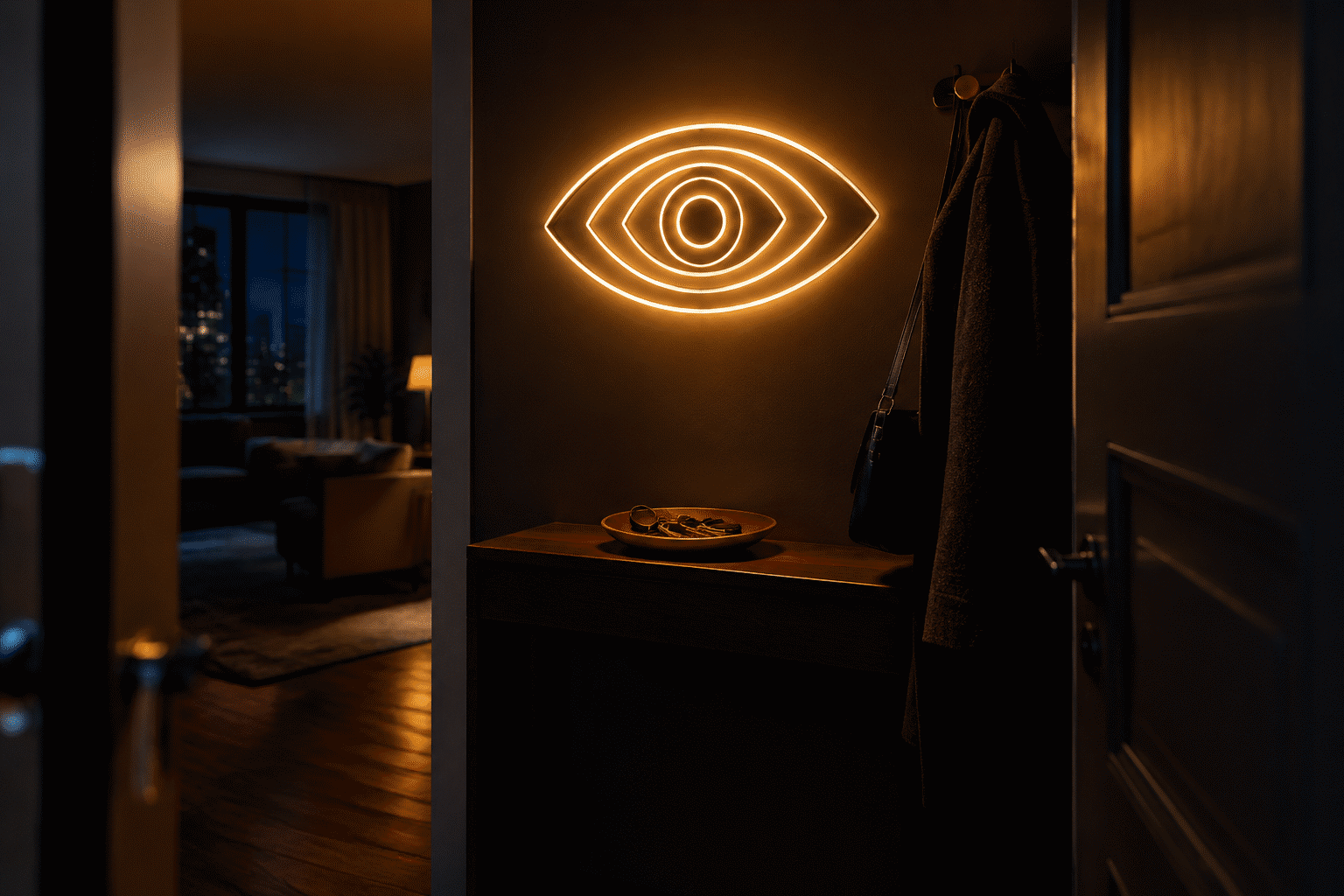
The eye is the oldest protective symbol humans drew — the watchful charm against the bad gaze, in continuous use from the Mediterranean to the Middle East for thousands of years and, in its nazar form (the blue-and-white concentric eye), still hanging in doorways, rearview mirrors, and bracelet stacks on several continents. The eye neon piece is the amulet at wall scale: the protection symbol, glowing, in the color the tradition prefers.
This guide covers the eye glow completely: the renderings (the nazar, the outline, the all-seeing tier, the guardian pair), the tradition behind them and the design economy the symbol now runs in, the rooms the piece owns, the palette, and the customs. The short version: the nazar in faithful blue and white at 16-20 inches, at the doorway the tradition itself would choose. It sits in the witchy guide’s icon stack as the register’s fifth icon — after moon, star, and the rest — and holds its own page for a reason: the eye is the only icon in the catalog that looks back.
The Renderings
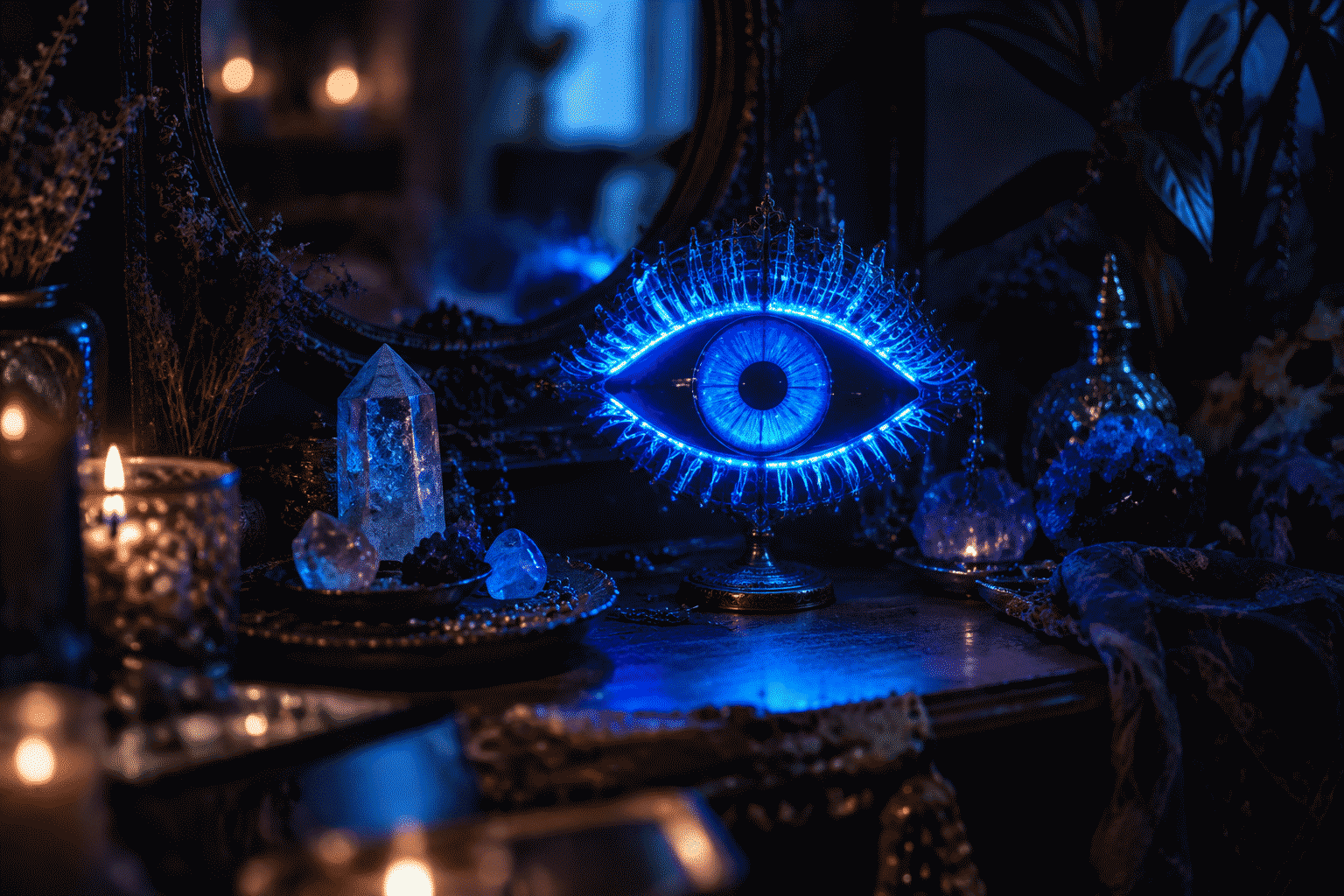
- The nazar. The concentric eye — the blue-and-white circles with the dark center, the amulet’s exact form. In neon: three or four concentric rings plus the pupil dot, the most faithful build and the one the tradition recognizes. The two-color custom (ice blue rings, white or navy center) is the register’s signature piece.
- The outlined eye. The almond shape with lashes — the eye as line drawing, the decorative register. Simpler than the nazar, friendlier, the piece that survives in non-mystical rooms; the aesthetic bedroom’s preferred eye.
- The all-seeing tier. The eye in the triangle, the eye with rays, the third-eye register — the symbol’s esoteric variants. The deep-cut builds; the custom tier’s mystic end.
- The pair of eyes. Two outlined eyes side by side — the watching wall, the doorway guardians. The composition build for entry halls and the room that wants its door watched.
The Tradition (What the Piece Actually Means)
The honest context, because the symbol carries it:
- The gaze theory. The tradition’s core belief: envy and ill will travel as a gaze, and the eye amulet meets it — absorbing or reflecting the bad look before it lands. The amulet is the decoy: the eye that takes the hit.
- The nazar’s geography. The blue-and-white form runs from Turkey through Greece to the Levant and beyond — the region’s standard protection, hung at doorways and worn as beads, and cracked (the tradition holds) when it has done its job. The neon nazar is the amulet that never cracks.
- The modern adoption. The symbol crossed into global fashion and decor decades ago — the bracelet tier, the wall-hanging tier, and now the aesthetic register’s mystic corner. The adopted use is respectful when it knows the source; this guide’s builds keep the nazar’s own colors as the default, which is the minimum courtesy.
- The pop-culture tier. The eye’s other modern lives — the album covers, the fashion logos, the watching-eye motifs of music and film — feed the register’s aesthetic pull. The eye reads as mystic even to the room that doesn’t know the tradition; the tradition gives it the depth.
The Rooms
The witchy and mystic wall (the native tier). The eye among the moon and stars — the witchy guide’s fifth icon, the reading corner’s resident watcher. Deep green or violet in that room’s register.
The entry hall (the guardian tier). The eye at the door — the tradition’s native placement, the amulet position updated to wall scale. The pair-of-eyes build or the nazar at 16–20 inches; the doorway that is watched.
The aesthetic bedroom (the decorative tier). The outlined eye in warm white or soft pink — the mystic corner of the dreamy register, the piece that reads as design to guests and as protection to you. The aesthetic guide’s mystic entry.
The meditation and reading corner. The eye at the altar or chair wall — the third-eye register, the corner’s focal point. The closed-eye variant (the eye with a lash-curve, the meditating eye) is this room’s custom of choice.
The boutique and studio. The mystic shop’s own sign — the eye in the window of the tarot reader, the crystal shop, the yoga studio. The commercial register’s most literal piece: the shop that sells looking, marked by an eye.
The Palette
- Nazar blue and white. The canon — the amulet’s own colors, the register’s faithful default. The blue guide covers the ice family; the nazar build runs its lighter end.
- Purple. The mystic register — the purple family’s deep end, the witchy wall’s native hue.
- Gold and amber. The sacred tier — the eye in the warm metallic register, the gazed-with-respect build.
- Green. The deep-watch tier — the witchy guide’s eye hue, the corner-watcher’s color.
The Amulet in the Design Economy
The eye’s position in the design world is unique among the catalog’s icons – the protective symbol that became luxury fashion’s favorite borrowing:
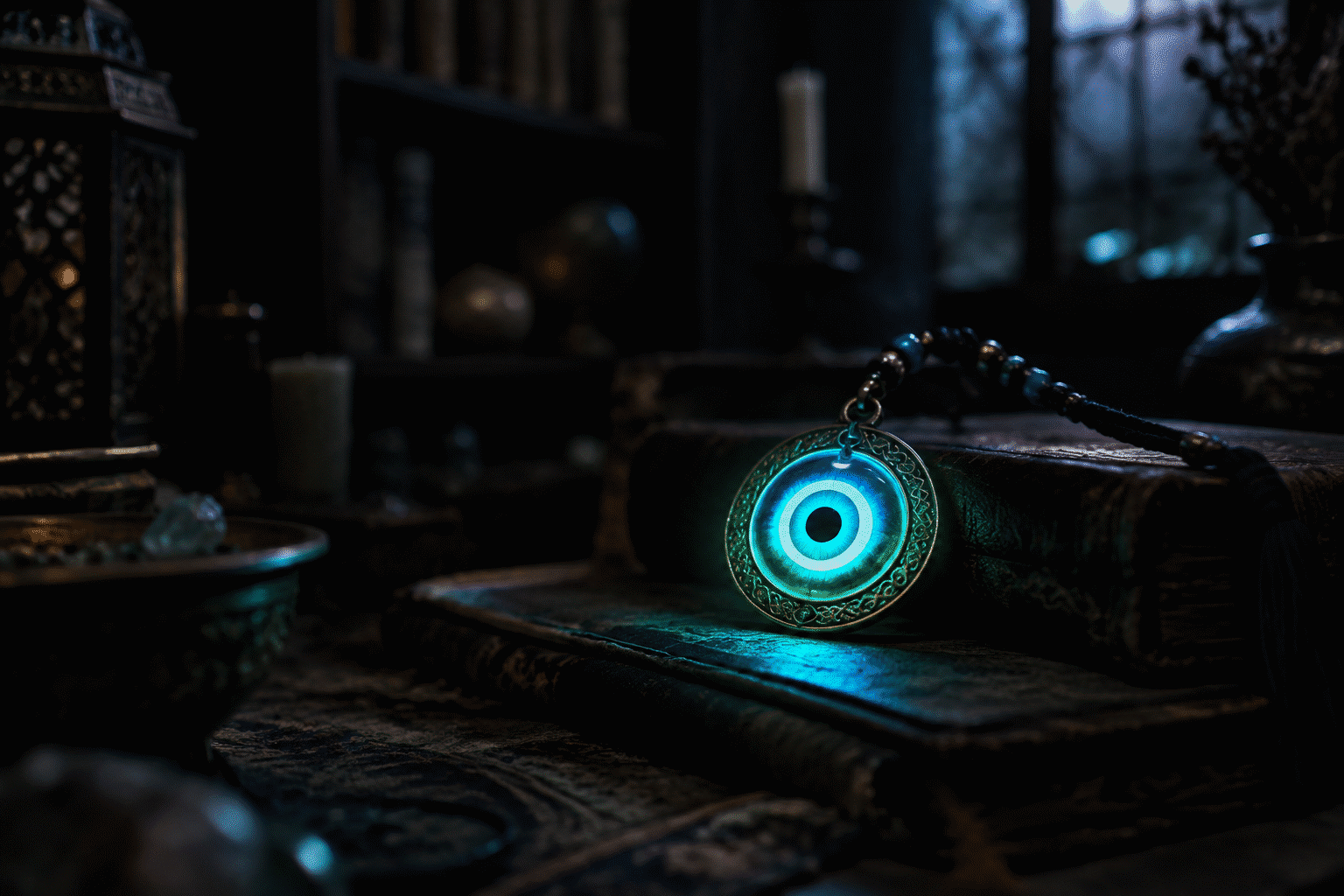
- The jewelry inheritance. The nazar and the hamsa crossed into global jewelry decades ago – the bracelet and pendant tiers that carried the amulet to every market. The wall piece is the jewelry logic at decor scale: the protection charm, worn by the room instead of the wrist.
- The fashion decade. The eye motif’s high-fashion runs (the runway seasons that put the watching eye on prints and accessories) confirmed the symbol’s design durability – the icon that reads as mystic to every audience and as heritage to the tradition’s own. The wall piece rides the same duality.
- The home-amulet tier. The door-hanging amulet’s decor-market life is older than the neon version by centuries – the hanging nazar at the entryway is the tradition’s own deployment. The neon eye is the hanging amulet electrified: the doorway guardian with a dimmer.
- The respect question. The adopted symbol’s etiquette in one line: keep the source colors available (the nazar’s blue and white as the default offering), tell the tradition correctly (this guide’s pages do), and let the meaning travel with the shape. The eye wall done right honors the amulet it plugs in.
The Custom Route
The eye canon, live-priced in the custom builder:
- The nazar in faithful colors — the two-ring custom, the signature build.
- The outlined eye in your hue — the decorative tier’s anchor.
- The guardian pair — two eyes for the doorway, the composition build.
- The closed-eye meditation custom. The eye with the curved lash, the resting gaze — the calm-corner build and the register’s gentlest piece.
FAQ: Eye Neon Signs
What does an eye neon sign mean? The amulet tradition: the protective eye that meets the bad gaze before it lands – in continuous protective use from the Mediterranean to the Middle East for thousands of years, and now the mystic register’s wall-scale form. The eye is the only icon in the catalog that looks back.
What is a nazar neon sign? The amulet’s exact form – the blue-and-white concentric eye – rendered as three or four rings plus the pupil dot. The faithful build keeps the nazar’s own colors, which the tradition has preferred for centuries; it is the register’s signature piece.
What color eye sign is best? Nazar blue and white – the canon. Purple for the mystic register, gold for the sacred tier, green for the deep-watch corner. The two-color nazar custom is the faithful default.
Where does an eye sign go? The doorway – the tradition’s native placement, now at wall scale. Then the witchy wall (the fifth icon), the aesthetic bedroom (the decorative tier), and the meditation corner (the closed-eye build).
What pairs with an eye neon sign? The witchy stack: the moon, the stars, the hand – the witchy guide builds the whole icon set. One hue family per wall; the eye is the room’s watcher, not its whole weather.
What is a hamsa-style eye sign? The hand-with-eye composition – the palm shape with the eye at its center, the tradition’s other great amulet form. It renders beautifully in tube (the hand’s contour plus the concentric rings), and it serves the doorway-guardian tier alongside the nazar; the pair is the entry hall’s full watch.
Is the eye sign a real amulet? It is the symbol at wall scale – the tradition’s form in a new medium, cracked never (the glass amulets crack when they work; the neon version’s lifetime guarantee is its own kind of joke). Hang it where the doorway would take one, and it plays the part.
Keep the Watch
The oldest protective symbol there is, glowing at the doorway it guards. Nazar, outline, or the guardian pair — build the eye and let the wall do the watching.
More mystic glow: the witchy stack, the moon, stars, the blue register.
Sources & Further Reading
- Neon sign (Wikipedia) — the consolidated public record of neon-sign history and technology.
- Neon, element 10 (Wikipedia) — element properties: density, boiling point, abundance.