21 Teen Room Neon Ideas They’ll Pick Themselves
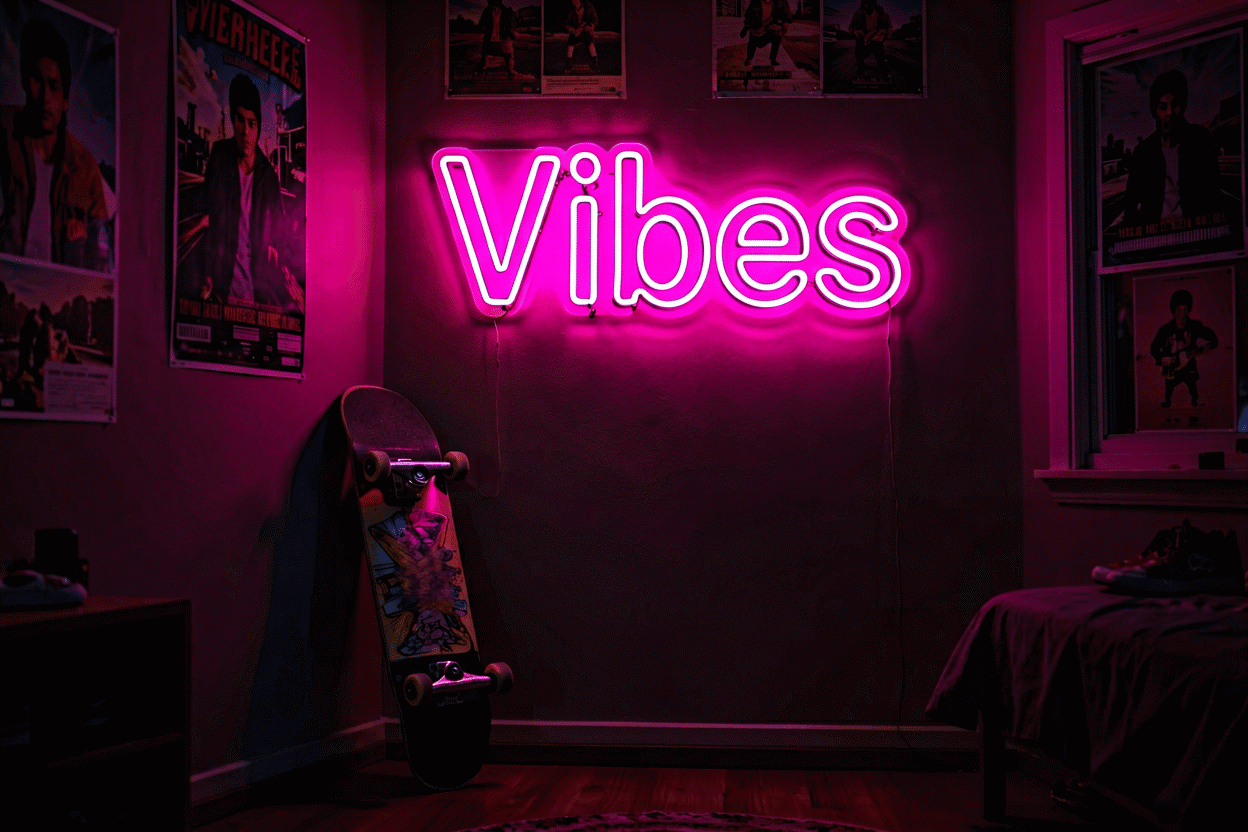
The teen room renovation has one rule that overrides every decor opinion in this guide: the room’s owner picks. A neon sign a teenager chose is identity; the same sign chosen for them is a poster. So this guide is written to be handed over — the ideas organized by the registers teens actually run (aesthetic, gaming, music, sport, study), with the parental fine print (budget, safety, the walls) at the end.
The full bedroom canon lives at bedroom sign ideas; the aesthetic deep-dives live in the room aesthetic guide.
The Aesthetic Room: Ideas 1–6
The most-photographed register of the decade — layered, soft, and built for the camera.
- You’re Like Really Pretty — the compliment register’s flagship; five years running the most-hung phrase in teen rooms, and still going.
- Good Vibes Only — the neutral-identity tier; works with every aesthetic phase and every roommate.
- The pink layered system — script + cloud + heart in layered pinks (the full treatment): the soft-aesthetic room’s signature composition.
- The purple moody system — purple decor at 30%: the dark-academia-adjacent register that carries the late-night era.
- A sunset-gradient piece — the two-tone pink-to-orange build: the sunset-lamp era’s wall piece, and the room’s whole palette in one object.
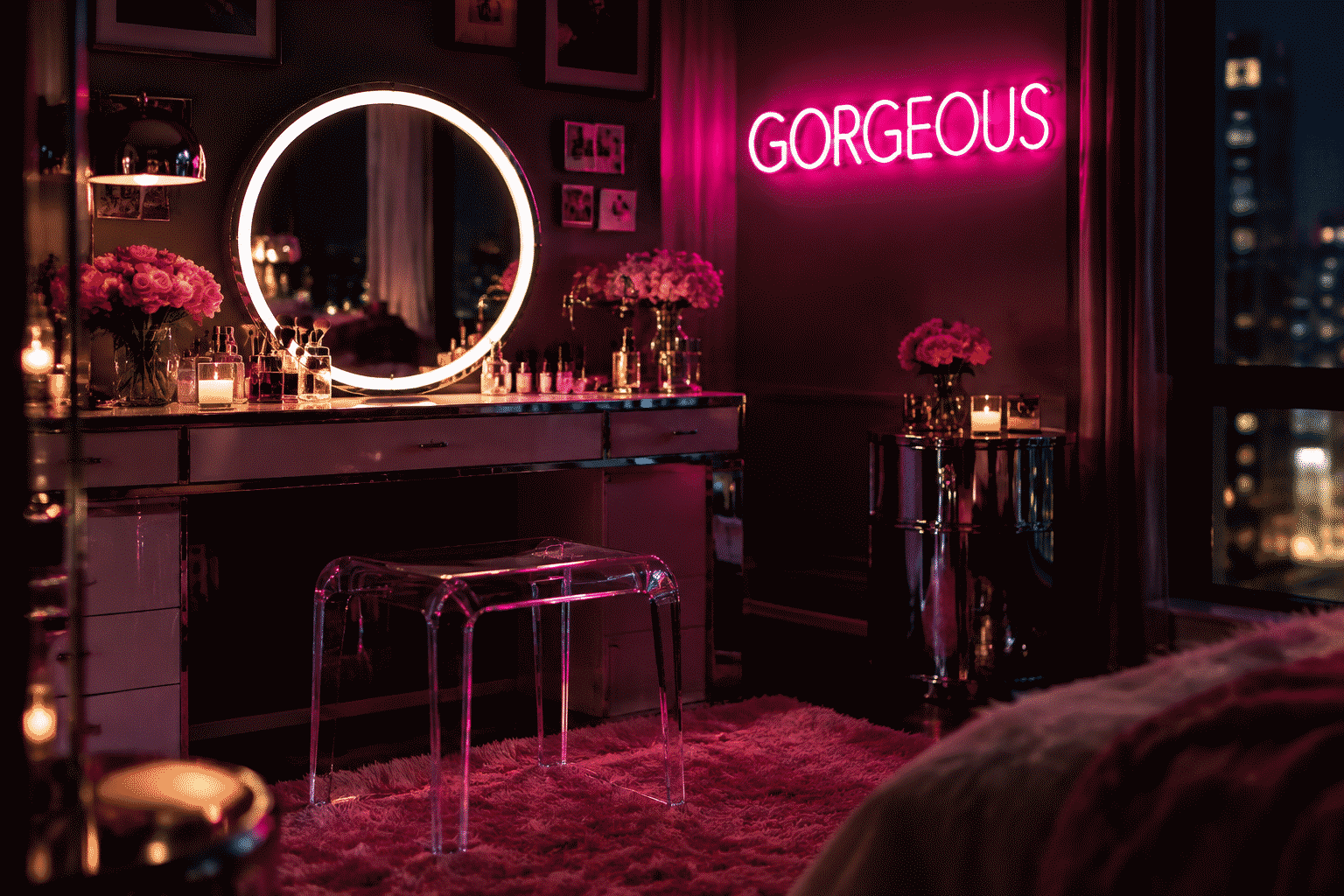
- The mirror surround — neon around the mirror: the get-ready station’s official lighting and the most-photographed corner in the house.
The Gaming Corner: Ideas 7–10
- The gamer tag — the handle in the chosen color (preview it): the identity piece that predates and outlives every game.
- “Game On” / “Do Not Disturb” — the status tier for the household treaty (the full canon).
- The console or controller piece — the icon tier; ice blue keeps it tech, purple makes it stream.
- The bias-glow strip — behind the monitor: fewer eye complaints, better clips, and the corner’s best light.
The Music & Culture Wall: Ideas 11–14
- The artist lyric — one line from the song that’s carrying the year; the piece that documents the era better than any photo.
- A vinyl or headphones shape — the music-icon tier (the full register): reads as taste, works as identity.
- The band or show piece — from the anime tier (the archive) to the concert tee era: the fandom marker, hung where the posters used to be.
- “Live Laugh Y2K” or the meme tier — the joke register for the chronically online; rotates yearly by design (the y2k system is the aesthetic version).

The Sport & Activity Wall: Ideas 15–17
- The number piece — jersey number in team color: the athlete’s marker (sports tier).
- The discipline shape — ball, boot, mat, or blade: the activity’s icon, the room’s shorthand.
- “Eat Sleep [Sport] Repeat” — the dedication register; the piece that commits the calendar in light.
The Study & Identity Tier: Ideas 18–21
- The namepiece, restyled — the upgrade from the nursery script: block, outline, or edgy font, their color, their call (customizer).
- “Future [Dream Job]” — the aspiration piece (“Future Surgeon,” “Future Director”): the register that age makes poignant, not embarrassing.
- The study-word piece — “Focus” or “Study” over the desk (the motivational canon curates the tier).
- An astronaut or galaxy piece — the space register: reads as aesthetic now, astrophysics-major later; the rare piece that works for both.

The Parental Fine Print
Budget: the phase pieces (meme, fandom, lyric) run cheap by design — they rotate. The keeper pieces (namepiece, number, monogram) justify the real budget; they’re the ones that move to the dorm (dorm canon) and the first apartment.
Safety: unchanged from the kids tier — LED neon runs cool, draws pocket change (the math), no glass. The teen-specific risk is mounting creativity: the hanging guide covers the anchor and cord systems that keep the wall and the warranty intact.
The walls: one focal piece per wall, dimmers on the keeper pieces, and the aesthetic tier’s layered looks capped at three — the photograph-vs-live-in distinction matters most in the smallest bedroom of the house.
The Teen Renovation: The Collaboration Protocol
The teen room redo succeeds or fails on one protocol: who picks. The room that the teen decorates (with the parent’s budget and the wall’s physics) becomes the identity room; the room the parent decorates (with the teen’s presence) becomes the poster wall – and the poster wall’s pieces end up behind the door by spring.
The protocol: the teen picks the register and the pieces (the customizer‘s preview is the negotiation table – every option visible, every price visible, the choices real), the parent holds the budget tiers and the safety layer (the mounting, the cords, the dimmer discipline), and the two agree on the keepers: the namepiece (the four-year piece that moves to the dorm) and the number-or-monogram (the identity marker that outlives every phase) get the real budget; the phase pieces (the meme, the fandom, the lyric of the year) run the entry tier – the rotation that keeps the room fresh and the budget sane (the transition logic).
The aesthetic-room project: the layered look (the system) is the era’s signature teen build – the mirror surround, the shelf glow, the gradient piece. The project runs as the collaboration’s centerpiece: the teen’s design (the saves folder they’ve been building since sixth grade), the parent’s engineering (the strips’ power, the mirror’s mounting), and the joint reveal – the room that gets built together gets kept together.
The Teen Budget Reality
The phase budget ($30-100 per rotation): the meme piece, the fandom tier, the year’s lyric – bought cheap, retired gracefully, the room’s content refresh that costs less than the phone case. The keeper budget ($150-400, once): the namepiece restyle, the number piece, the mirror system – the purchases that ride to the dorm (the dorm kit) and the first apartment. The aesthetic project ($200-500): the layered system, built over a summer – the era’s signature build and the room’s photographable core.
The parent’s honest math: the teen room that runs the protocol spends $400-700 total across four years, produces a room the teen loves and keeps clean (the ownership effect), and ends with $200 of pieces that move forward – the best decor ROI in the house’s whole eighteen-year run (the teen canon above sorts every tier).
FAQ About Teen Room Neon Signs
What’s the best neon sign for a teen room? The one they pick. Hand them the customizer and the register guides; fund the keeper pieces, let the phase pieces run cheap. The namepiece and number are the decades-keepers.
How much should a teen room sign cost? Phase pieces at the entry tier (they rotate yearly), keeper pieces at the custom tier (they last decades). The split budget is the parents’ version of portfolio theory, and it works.
What colors do teens actually pick? Pink-layered for the aesthetic room, purple for the moody one, ice blue for gaming, warm white for the register that outlasts phases (the style decoder has the full map).
When is a teen too old for theme pieces? Never the name or number; the fandom and meme tiers have a graduation date only the owner knows. Budget accordingly, and the rotation stays cheap enough to be fun.
How much input should a teenager have in choosing their neon sign? All of it, within the budget’s rails: the teen picks the register and the pieces (the customizer preview as the negotiation table – every option visible, every price visible), the parent holds the tiers (the keepers get the real budget, the phase pieces run entry pricing) and the engineering (the mounting, the cords, the dimmer). The protocol’s results are consistent: the room the teen decorated gets kept clean (the ownership effect), and the pieces get respected rather than resent (the collaboration protocol above). The parent who picks for the teen buys the poster wall – and the posters go behind the door by spring.
What neon sign works for a teen who keeps changing their style? The neutral keepers plus the cheap phases: the namepiece in warm white (the piece that agrees with every style change – the name logic), the monogram (the identity that outlasts the aesthetic), and the phase pieces at the entry tier bought for rotation rather than permanence. The teen who changes styles yearly runs the $80 phase piece instead of the $300 statement – the room refreshes at the phase’s pace, and the keepers hold the wall’s center while the styles orbit. The style-hopper’s ultimate piece: Good Vibes – the phrase that has survived every aesthetic the decade produced.
The Collaboration vs the Surprise
The teen room’s two renovation modes, compared:
| Decision axis | The collaboration | The surprise |
|---|---|---|
| The picker | The teen (with the parent’s rails) | The parent (with the teen’s absence) |
| The landing | The ownership effect (the room that gets kept clean) | The poster-wall trajectory (the door-closed era) |
| The pieces | The teen’s choices (the preview as the negotiation) | The guessed choices (the register risk) |
| The budget’s efficiency | Full (every dollar spent on the wanted) | Partial (the misses donate) |
| The relationship math | The trust deposit | The withdraw |
| The exceptions | None | The birthday morning (the one surprise that survives) |
The comparison’s consistent field report: the collaborative room works (the teen keeps it, respects it, and shows it), and the surprised room reverts – the pieces the teen didn’t choose become the room’s arguments rather than its identity (the collaboration protocol above). The protocol’s single exception: the birthday-morning reveal (the piece hung overnight) – the surprise that lands because the choice was still the teen’s, made earlier, in the preview.
The two modes’ shared rails: the budget’s tiers (the keepers at quality, the phases at entry), the safety layer (the cords, the dimmer – the engineering), and the keeper logic (the namepiece and the number – the pieces that ride to the dorm and the first apartment whatever the mode that bought them). How much does a teen room neon makeover cost? The full collaboration: $400-700 across the four years (the budget reality above) – the keepers at $150-400 (the restyled namepiece, the number or monogram), the aesthetic project at $200-500 (the layered system, the mirror surround), and the phase pieces at $30-100 per rotation (the meme, the fandom, the year’s lyric). The single-summer version (the one big redo): $250-500 – the restyle that carries the room to graduation. The parent’s honest math: the collaborative room gets kept clean (the ownership effect), the pieces ride to the dorm and the first apartment (the keeper rate), and the four-year total costs less than the phone’s annual upgrade – the best decor ROI the household runs.
Sources & Further Reading
- Mercury (U.S. EPA) — federal guidance on mercury exposure and safe handling.
- Neon sign (Wikipedia) — the consolidated public record of neon-sign history and technology.
Pricing based on CustomNeon’s current catalog (2026); custom quotes come live from the sign builder.