Cafe Neon Signs: A Custom Guide for Cafe Owners
A cafe neon sign works the earliest shift on the street: it catches the commuter who hasn’t decided, warms a room of laptops and conversation, and gives the counter one line of light that turns “coffee shop” into a place. Cafes don’t buy neon the way homes do — a kitchen sign decorates, a cafe sign pulls the morning. It reads from the sidewalk at seven in the evening and at seven in the morning, survives steam, milk jugs and a room that never fully empties, and ends up in more latte photos than your nicest ceramic. That’s why glowing script has hung over espresso machines for generations, and why the modern version — LED neon, the same glow at 12 volts, no glass near the bar — has quietly taken over new installs.
The buyer’s side of cafe neon, front to back: the three placements a coffee room actually offers, the sizes and dimming that fit a day that starts in the dark, the wording regulars photograph, the LED-or-glass decision, and what custom truly costs. Ready-made pieces start at cafe neon signs.
Why Cafes Run on Neon
Cafes sell a pause first and a coffee second, and the pause is purchased at the curb on the way to work. Downlights make the room usable; a single neon line makes it a place — warmth, a house color, one clear focal point: the espresso bar, the window seat or the pastry case. What sets the trade apart is the clock: a cafe opens onto a dark street more mornings than nearly any business on it, and glowing script reads from a brisk walk better than almost anything a storefront can switch on. The after-dark traffic argument is made in full in the outdoor neon sign guide.
What most cafes hang now is LED flex neon: the bent-tube alphabet recreated in low-voltage silicone that stays cool next to the espresso machine and dims through the daypart swing — full-bright for the seven-a.m. rush, softened for the afternoon laptop crowd. For the strip-light comparison (a genuinely different product), see neon signs vs LED strip lights.
Where a Cafe Neon Sign Works: Three Placements
A cafe sign lands in one of three jobs — behind the bar, in the window, or at the photographed corner — and its size, brightness and wording inherit from the job. Place it before designing it.
The espresso bar and the menu wall
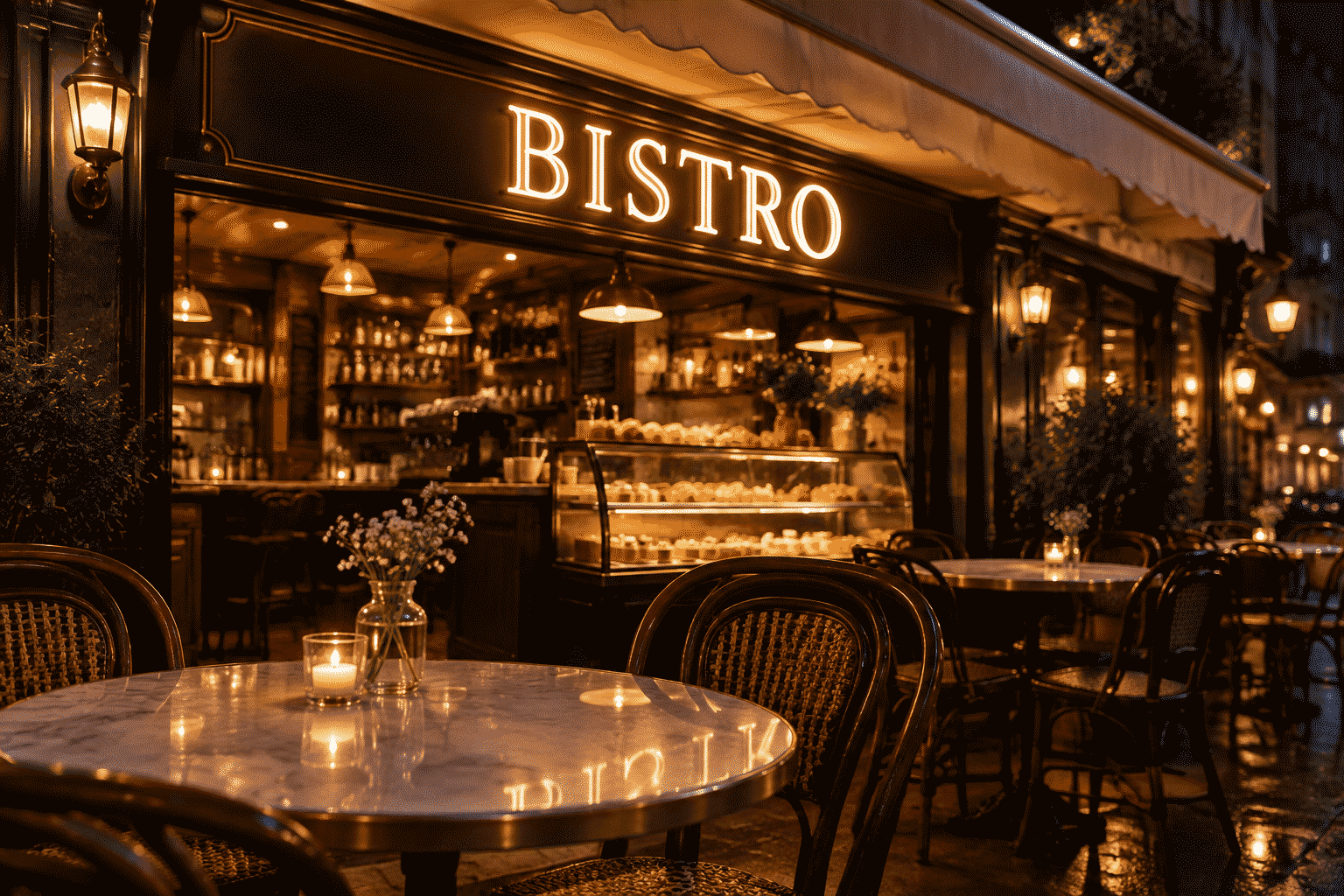
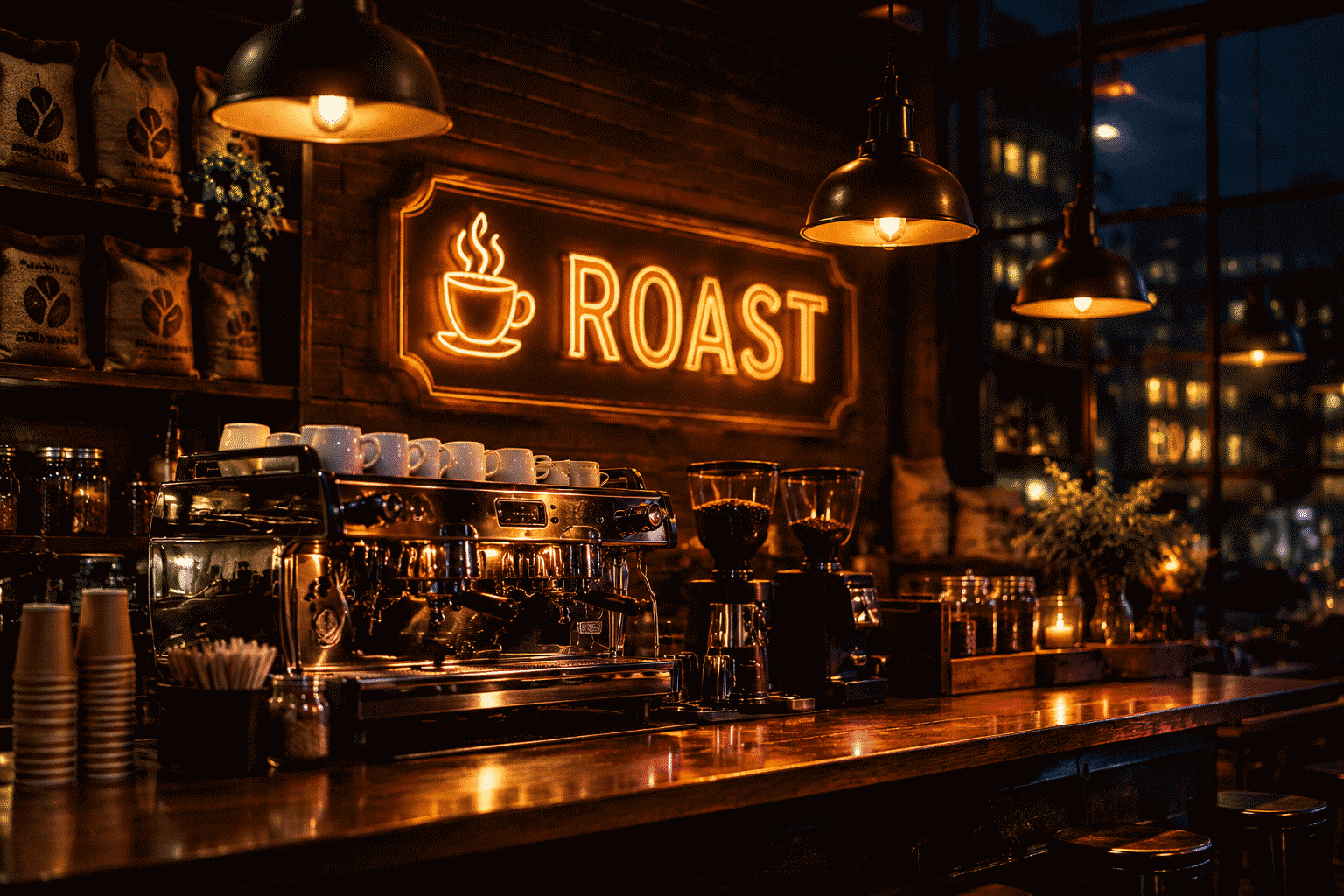
The espresso bar’s back wall is the room’s prime footage: customers face it for the whole order, and it lands behind the majority of photos taken in your cafe. Brand belongs here — the name, a monogram, the house roast in tube — and so does the roaster’s amber classic, a warm caramel glow over the machine that reads as coffee before it reads as anything; sketch yours free in the sign builder. Ordering distance runs about 4 to 10 feet, comfortable territory for mid-size script.
The window and the door
The glass carries the morning shift: telling the block, before the sun is up, that the first pour is ready. A cafe’s earliest regulars arrive in the dark most days, so the window or door piece says OPEN, posts the hours, or throws the name in script across the street. A Welcome neon sign in the entry glass works twice — half doorstep welcome for passers-by, half hello at the hand-off plane. The glass is also where dimming works hardest: full output to beat the low sun, eased off as the room settles into an afternoon office.

The seating corner and the selfie wall
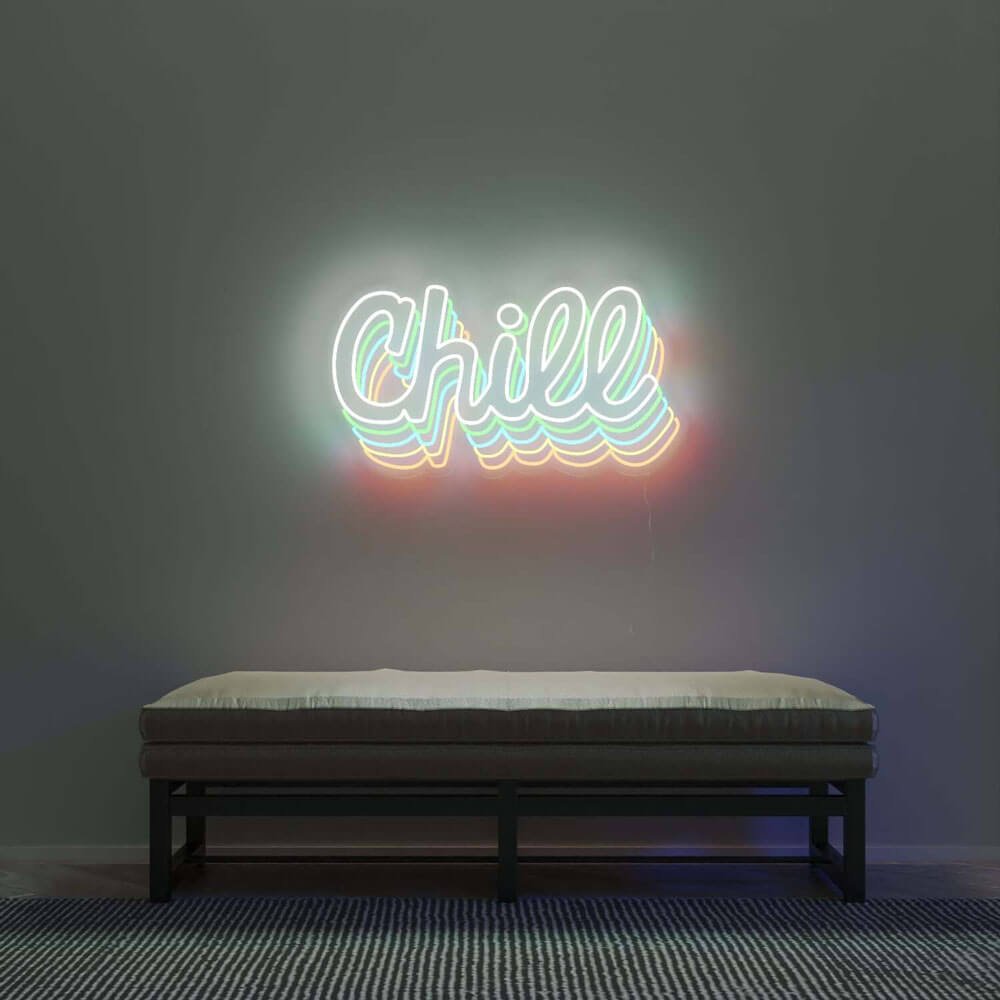
Close-up jobs come last: the window bar, the corner two-top, the one wall every visitor photographs. Seen at conversation range, a sign acts as decor — brief words, warm tones, hung at picture height. A Chill neon sign above the window bar sets house policy in one word, and it is the piece the laptop crowd sits beneath all afternoon.
Sizing and Brightness for Cafe Conditions
Size to the reader, not to the wall. Letters must clear distance, and the cafe translation runs: window lettering readable across the street, bar-back pieces cut for the 4-to-10-foot order view, seating-corner words trimmed to conversation scale, where a short phrase reads comfortably. On color, warm whites, ambers and soft golds pull the most weight here — they flatter milk, wood and morning light in one pass. The sizing method end-to-end is walked in the neon sign buying guide.
Output in a cafe follows the daypart. What suits seven on a Monday morning floods three on a Sunday afternoon, so the remote earns daily use — more than any color upgrade in practice. And with LED flex running cool, the map opens: behind the bar, beside the pastry case, anywhere the heat and high voltage of a glass tube would complicate the opening routine.
What Should a Cafe Sign Say?
Cafe wording also runs three deep. Brand first: the house name or monogram on the bar wall — every latte-art photo with the wall behind it carries the name along. Voice second: the line the room would say. Atmosphere third: mood words for the seating corner. Five phrasings that survive a full day of pours:
- The cafe’s name, plain — the bar-wall staple that catalogues never stock.
- “But First, Coffee” — the genre’s opening line, read twice by everyone.
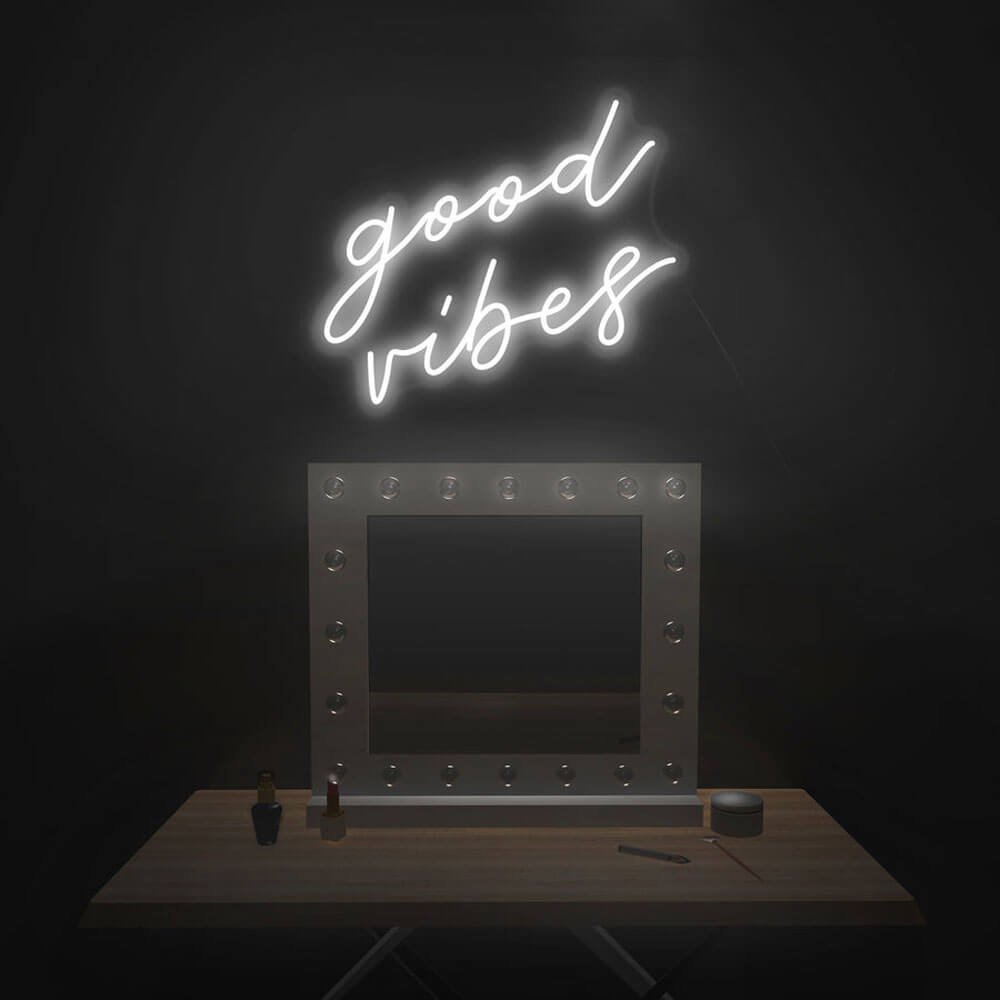
- “Good Vibes Only” — mood words that hold up through any rush.
- “Est. 20XX” — instant heritage for a room in its first year.
- “Do What You Love” — reserved for the corner the regulars claim.
Stock wording covers the mood layer — the business neon signs category is that shelf — but a name and a house phrase are one-offs by definition: your lettering, your wall’s exact size.
LED or Glass for a Cafe?
Glass keeps a claim where the concept is old-world: tube bent by hand above a vintage lever machine looks the way a Kaffeehaus should, and some rooms should have nothing less. Enter with both eyes open — glass typically prices at 3–10 times the equivalent LED piece, wants professional installation, and is, at the end of the day, glass; over a working bar, that is a maintenance conversation with a date you won’t choose.
The everyday choice for cafes is LED flex: cool, low-voltage, dimmable, and untroubled by the steam off the group heads, milk fog, or the step stool that clips it during a deep clean. The mix works here too — one glass showpiece by the door or above the roaster’s shelf, LED on the working walls — and leased storefronts get a further nudge from the renter-friendly hanging guide, whose mounts leave the wall whole at turnover. Both sides of that comparison, including lifetime and running costs, are laid out in the buying guide.

What a Custom Cafe Neon Sign Costs
The working number, from our cost breakdown: custom LED pieces for a cafe generally come in between $100–300, moved chiefly by size, letter count, color complexity and accessories. Packing and fragile-rated freight alone often claim 10–15% of a small sign’s price — every unit leaves the shop as its own run of one. Glass takes the same letterform to 3–10x.
That $200-over-a-decade, nickel-a-day frame in the cost guide was written for home use. A cafe piece is clocked in before sunrise and lands in the background of the photos that market the room for free, so the per-day math only improves. Each driver is accounted for at why are neon signs so expensive.
Simple split for the wallet. Custom name: sign builder, live quote, free preview, no commitment. Instant mood: the Chill piece on the window bar and the Good Vibes sign on the corner wall both ship today.
FAQ: Cafe Neon Signs
How much does a custom cafe neon sign cost? A custom LED piece for a cafe typically runs $100–300, with size, letter count and color complexity doing most of the moving; glass versions land at 3–10x that. Our cost guide opens the hood on each driver.
What should a cafe neon sign say? Start with the cafe’s name on the bar wall (brand), add a house line like “But First, Coffee” (voice), and let a mood word like “Good Vibes Only” finish the seating corner (atmosphere). The name tier is custom territory; mood words shop ready-made.
What size neon sign do I need for a cafe? Scale to the reader: window work clearing the street, bar-back pieces matched to the 4–10 foot order view, corner signs at conversation distance. For the full method, see the buying guide.
Are LED neon signs safe behind a coffee bar? Yes. LED flex draws low voltage and keeps a cool-to-the-touch surface — no kilovolt transformer, no hot tube above the machine — which is why bar-back installs default to it.
Can a cafe neon sign go outside? Only when the build says so. Sidewalk-facing pieces need sealed, weather-rated construction and mounting hardware meant for rain and wind — the outdoor guide lists exactly what changes.
The Bottom Line
A cafe buys its glow on the same logic as its espresso machine: the door piece works the street, the bar back works the room, the corner piece works the camera. Set the wall, size to the distance, letter the name where the pours happen — and see the design free, before any money moves, in the sign builder.
Sources & Further Reading
- Solid-State Lighting (U.S. Department of Energy) — the DOE’s Solid-State Lighting pages on efficacy and lifetime.
- International Sign Association — the Association’s resources on sign placement, permits and legibility.
All pricing per the 2026 CustomNeon catalog; current quotes issue from the sign builder.