Why Are Neon Signs So Expensive? Cost Breakdown
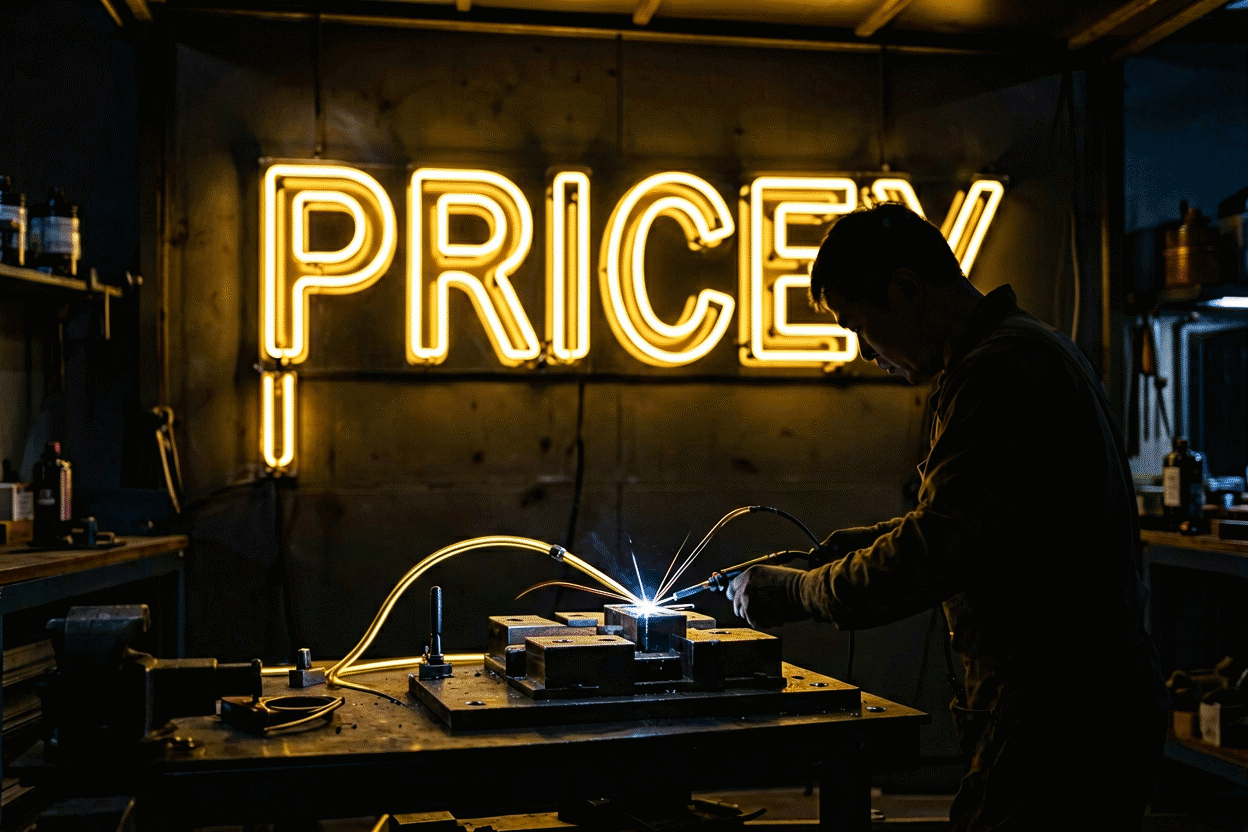
Neon signs are expensive because every one is made-to-order: custom design work, materials cut and formed for your specific words, skilled assembly, powered quality testing, and packaging engineered for fragile freight — a mini-manufacturing run of quantity one, priced accordingly. Glass neon adds a genuine craft premium (hand-bent tubes, artisan labor at 2,000–15,000 volts); LED neon delivers the same look at consumer prices, which is why the market’s center moved there. The honest surprise in the modern answer: at $100–300 for typical custom LED pieces, signs are cheaper relative to everything else than at any point in their 116-year history.
The price-tag question (“how much should I pay”) has its own guide at neon sign cost — this is the why: where the money actually goes, in both technologies.
The Six Cost Drivers (Any Custom Sign)
1. Design and pre-production. Someone renders your text, checks letter feasibility, plans the electrical layout, and prepares the pattern. It’s skilled hourly work that happens before anything physical exists — the fixed cost every “quantity of one” product carries.
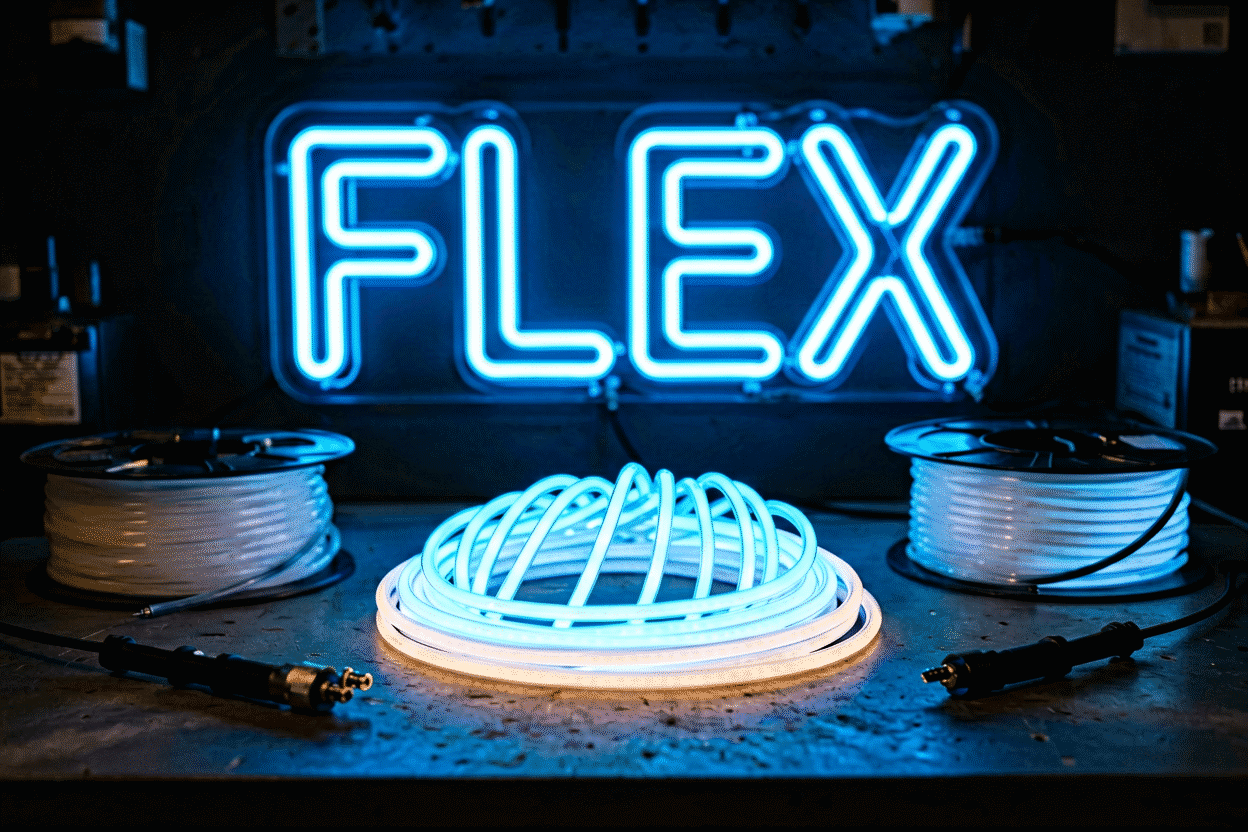
2. Materials — cut for you, wasted for you. The acrylic backing routes to your shape; the LED flex runs your letter lengths; the driver and controller match your sign’s voltage and wattage (the power math). Custom cutting means custom waste, and the premium LED densities that make quality signs glow evenly are the bill’s silent heavyweight.
3. Assembly labor. Bending flex to pattern, mounting channel by channel, wiring runs, sealing connectors — minutes-to-hours of skilled hands per sign, every sign, because no two orders match.
4. Quality testing. Every quality sign runs a powered burn-in before packing: brightness, color consistency, connector integrity, dimming range (what’s tested). Testing time is priced in — and its absence is what cheap signs are cheap about.
5. Packaging and freight. The double-box, formed-foam, fragile-rated package (anatomy) costs real money per unit — often 10–15% of a small sign’s price.
6. The vendor’s overhead. The shop, the warranty backing (what honest terms cost), the support that answers when something fails — the durable-goods economics that marketplaces with no overhead also don’t provide.
Glass Neon: The Craft Premium
On top of all six, traditional glass adds the artisan tier: hand-bending glass over flames from printed patterns (years of training — the craft), vacuum-and-gas processing per tube, transformer engineering at kilovolts, and professional installation because the finished object is genuinely high-voltage hardware. Skilled trades pricing for skilled trades work — the reason authentic glass runs 3–10x LED equivalents and why the trade’s aging workforce matters (safety context).
LED Neon: Why It Got Cheap (The Part Reddit Is Right About)
The modern grumble — “it’s just LED strips, why $200?” — deserves a straight answer. The components are indeed inexpensive; the price is the transformation: cutting strips to letterform, mounting to routed acrylic, wiring and sealing to survive years of handling, powering through matched certified drivers, testing, and warrantying the result. You’re paying for the sign, not the LED. That said, the category’s honest floor exists: simple small signs from efficient makers genuinely land near $100, and the DIY route (bend-it-yourself kits and strip builds at $50–100 in parts) exists precisely because the transformation premium is real (that route).
Where the Money Actually Sits (A Typical $200 Custom LED Sign)
- Premium LED flex and density: ~$45
- Acrylic backing, cut to shape: ~$30
- Driver, controller, remote: ~$25
- Labor (bending, mounting, wiring): ~$50
- Design, QC burn-in, packaging: ~$30
- Vendor overhead and warranty reserve: ~$20
That’s a product earning modest margins on genuine work — the pricing isn’t a scam; it’s a mini-factory running one unit at a time (buying-channel economics).
Are They Worth It? (The Honest Frame)
Value per dollar in practice: a custom sign runs 3–8 hours daily for 5–10 years (30,000–50,000 hours — longevity) at about a dollar monthly in electricity (the math). Amortized: a $200 sign costs roughly a nickel a day for a decade of your own words glowing — against the price of dinner-and-a-movie alternatives, the object outperforms most decor categories on cost-per-hour-of-enjoyment. That’s the honest worth-it math; whether the glow matters to you is the part only you price.
How to Pay Less Without Buying Junk
- Shorter text, same impact: fewer letters at the same width = bigger, bolder letters and lower cost — design economy, not compromise (sizing)
- Single color over RGB: mono-color builds skip the control-module premium
- Standard sizes and fonts: fewer custom variables, faster production
- Buy direct from makers: the channel economics — marketplaces add margin without adding sign
- Skip rush fees: patience is the cheapest line item (timeline math)
Price any configuration live — every variable above updates in real time — in the custom builder.
The Price Psychology: What Buyers Actually Compare
How the market’s buyers process sign pricing — the comparison behaviors worth understanding:
The unfair anchor: printed signs. Buyers anchor on the mass-produced alternative (a $30 canvas print, a $20 LED strip) and experience custom neon’s $200 as markup. The honest comparison is to commissioned work of any kind — framed custom art, upholstered furniture, tailored anything — where one-of-a-kind, made-to-order objects live at the $150–500 band. Custom neon prices correctly within the commissioned-objects market and reads expensive only against the mass-market anchor (the cost structure).
The fair anchor: event costs. Wedding buyers compare correctly without being told: a $250 custom sign against florist line-items and photography reads as moderate — which is why the event market converted to custom neon faster than any other segment (the wedding economics). When the comparison set is occasion-spending, the sign prices as a keepsake with a function.
The amortization blind spot. Buyers evaluate the purchase price and ignore the operating math: a $200 sign runs at dollar-per-month electricity (the energy facts) for a decade of nightly service (the lifespan data) — under ten cents per evening of glow at full amortization. Against subscription entertainment and consumable decor, the sign is the room’s cheapest recurring pleasure; the price tag just front-loads what other categories meter out.
The quality-tier discount trap. The marketplace’s $60 “same thing” teaches the lesson in reverse: the cheap sign’s failure modes (patchy glow, dead adapters, yellowed jackets) arrive on a one-to-two-year clock (the tiers), making the cheap price an installment plan on the same total spend. The buyer who prices quality once buys once.
The rational market’s shape: custom neon prices as commissioned goods, amortizes as appliances, and fails only when compared across categories — which is the buyer’s framing error, not the product’s pricing error. The guides in this library exist partly to fix the framing (start with the real numbers).
FAQ: Neon Sign Costs
Why are neon signs so expensive? Because each is custom-manufactured as a quantity of one: design, custom-cut materials, skilled assembly, powered testing, and fragile-rated packaging — with glass neon adding artisan labor and high-voltage engineering on top.
Why are custom neon signs more expensive than regular signs? “Regular” signs are mass-produced; customs are mini manufacturing runs per order. The LED components are cheap — the transformation into your words (bending, mounting, wiring, sealing, testing, warrantying) is what you’re buying.
Are glass neon signs more expensive than LED? Yes, typically 3–10x: hand-bent glass requires trained artisan labor, gas processing, and kilovolt transformer engineering, plus professional installation — a genuine craft premium over silicone-clad LED at 12 volts.
Is a neon sign worth the money? The amortization math is strong: $200 over a decade of nightly use is roughly a nickel a day, with pennies of electricity — among the best cost-per-enjoyment ratios in decor. Whether the glow matters to you is the subjective half.
How can I save money on a custom neon sign? Shorter phrases (bigger letters, lower cost), single color over RGB, standard sizes and fonts, buying direct from makers, and skipping rush fees — each trims real money without buying down quality.
Why do neon signs cost different prices at different shops? Build tiers (LED density, certified electricals, sealed connectors), warranty reserves, testing depth, and channel margins — the vendor vetting separates paying for quality from paying for markup. The cost question’s final accounting: custom neon prices as commissioned work (the six cost drivers — the breakdown), amortizes as the room’s cheapest recurring pleasure (the nickel-a-day math), and misleads only against the wrong comparison anchors. For buyers who want the glow at the honest floor: the spec-levers (shorter text, single color, standard formats, direct purchase, patience) each trim real money without buying down quality — and the price of every configuration renders live in the builder before any commitment.
The Honest Bottom Line
Custom neon costs what commissioned light-craft costs: the six drivers are real, the margins are modest, and the cheap versions cut what you cannot see until you can (the tier evidence). Price your glow honestly against the commissioned-objects category it belongs to, amortize it against the decade of service it delivers (the longevity math), and the expensive question dissolves into the value one — which every glowing bedroom in the aesthetic era has already answered with its wallet.
Sources & Further Reading
- Solid-State Lighting (U.S. Department of Energy) — DOE reference on LED efficacy and lifetime.
- Mercury (U.S. EPA) — federal guidance on mercury exposure and safe handling.
Pricing based on CustomNeon’s current catalog (2026); custom quotes come live from the sign builder.