Bakery Neon Signs: A Custom Guide for Bakeries
A bakery neon sign works the sweetest shift on the street: it catches the early walker, warms a room that smells like the morning’s first bake, and gives the display case one line of light that turns “bread shop” into a destination. Bakeries don’t buy neon the way homes do — a kitchen sign decorates, a bakery sign sells the case. It reads from the sidewalk before sunrise, survives flour dust, oven heat and a queue that forms at the door, and glows in the soft pinks and warm golds that flatter everything behind the glass. That’s why glowing script has hung over bake shops for generations, and why the modern version — LED neon, the same glow at 12 volts, no glass over the counter — has quietly taken over new installs.
This is the buying walkthrough for bakery owners: the three placements a bake shop offers, the sizing for a queue that starts before sunup, the wording that sells the smell, glass versus LED, and the honest price of going custom. The finished shelf starts at bakery neon signs.
Why Bakeries Run on Neon
A bakery sells comfort first and carbs second, and the selling starts before the sun does. Ceiling lights make the room workable; a warm neon line makes it a landmark — a mood, a brand color and a beacon over the display case, the counter or the window seat. The trade runs on the earliest light on the street: the first customers of the day arrive on the darkest, quietest block there is, and a warm glowing script reads from a cold morning walk better than nearly any sign the shop could put up. The full argument for lit signs after dark sits in the outdoor neon sign guide.
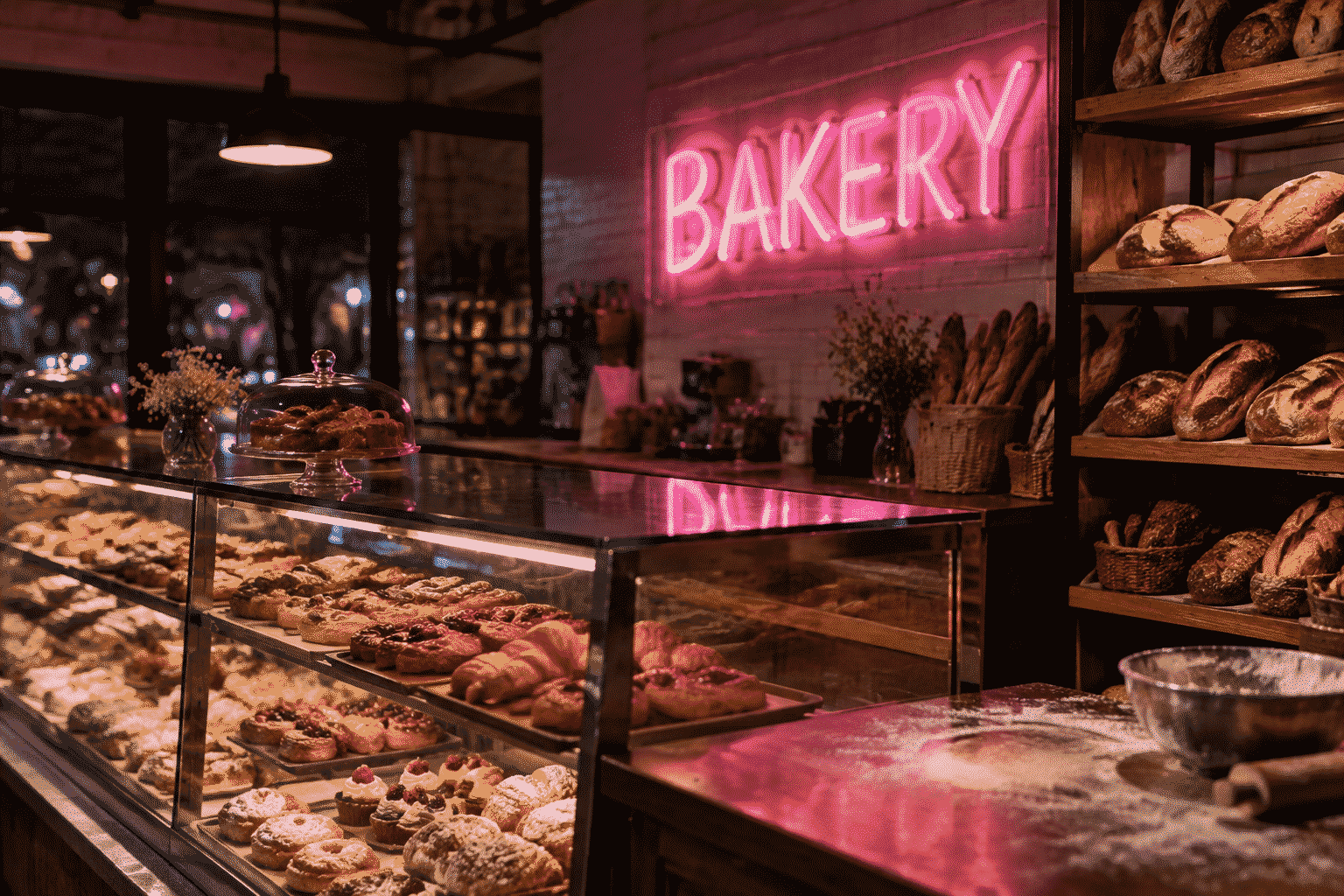
The newer tube in town is LED flex neon: it replicates the glowing script of bent glass while drawing low voltage, staying cool beside a steamy display case, and dimming as the room shifts from the bright morning queue to soft afternoon tea. How it compares with strip lighting (a separate product) is covered at neon signs vs LED strip lights.
Where a Bakery Neon Sign Works: Three Placements
A bakery sign holds one of three stations — the window, the case, or the cake corner — and size, brightness and wording all report to that station. Choose the station first.
The window and the door
The first station is the window, working the early shift: the block learns the ovens are on before the streetlights say so. A bakery’s best customers are out in the dark more mornings than not, so the glass carries OPEN, the hours, or the name in script meant for the far curb. A Welcome neon sign in the entry glass works the sidewalk before the queue forms and greets the queue once it has. Output at the glass wants a dimmer most of all — full strength against the early sun, stepped back when the afternoon turns the room into a tea room.

The display case and the counter back
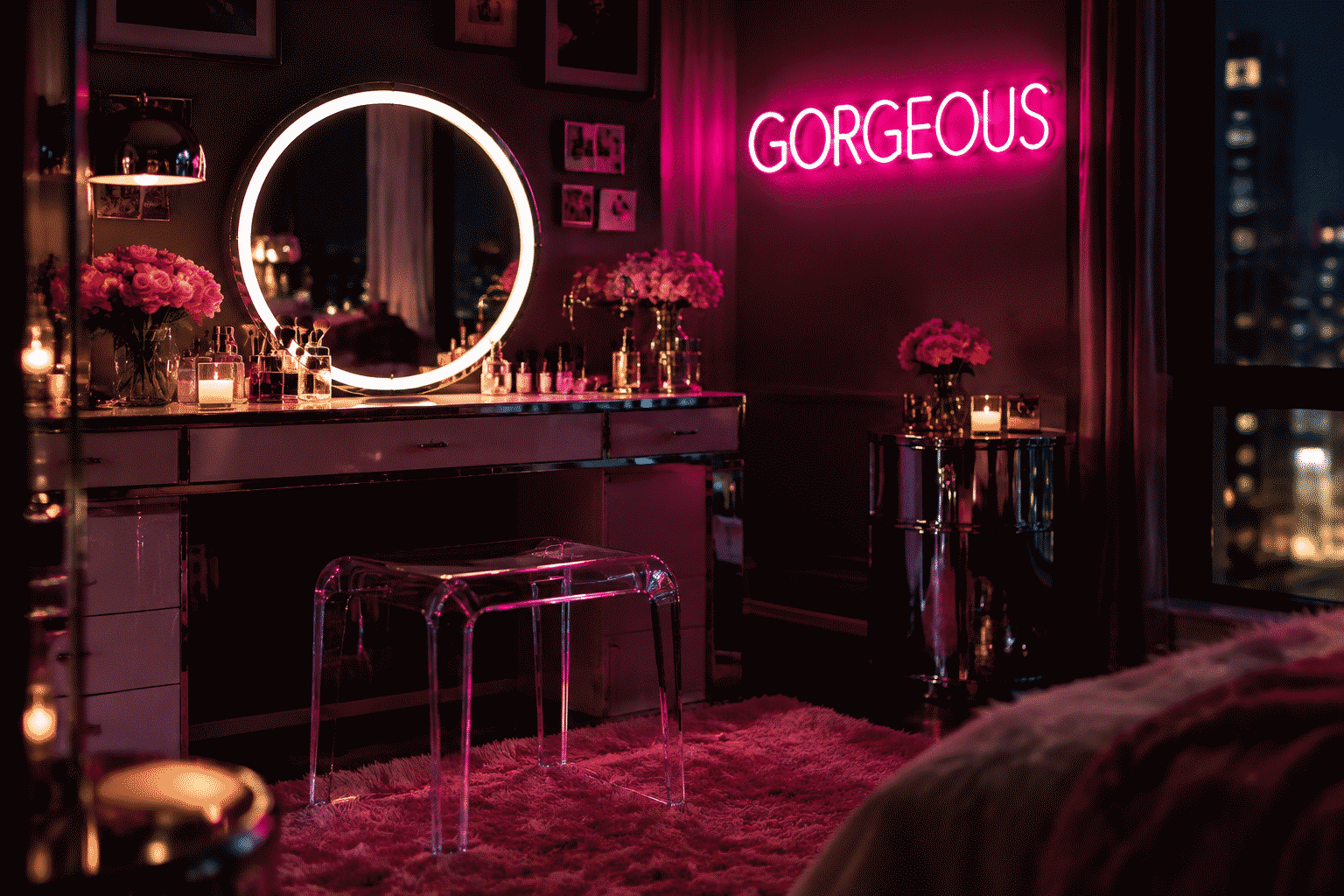
Second comes the wall the queue studies: behind the register, above the case, where the decisions get made. It backs the crumb shots, the box shots, the case shots — the photo set that markets the shop — which makes it the most-repeated selling surface a bakery owns. Brand sits here — the name, a monogram, the signature item in tube — and so does flattery for the box-buyer mid-decision, in the shape of the You’re Like Really Pretty neon sign over the counter. Reading distance from the queue runs about 4 to 10 feet, comfortable ground for mid-size script; let a piece run oversized and the case loses the frame to the sign.

The custom-cake corner and the seating nook
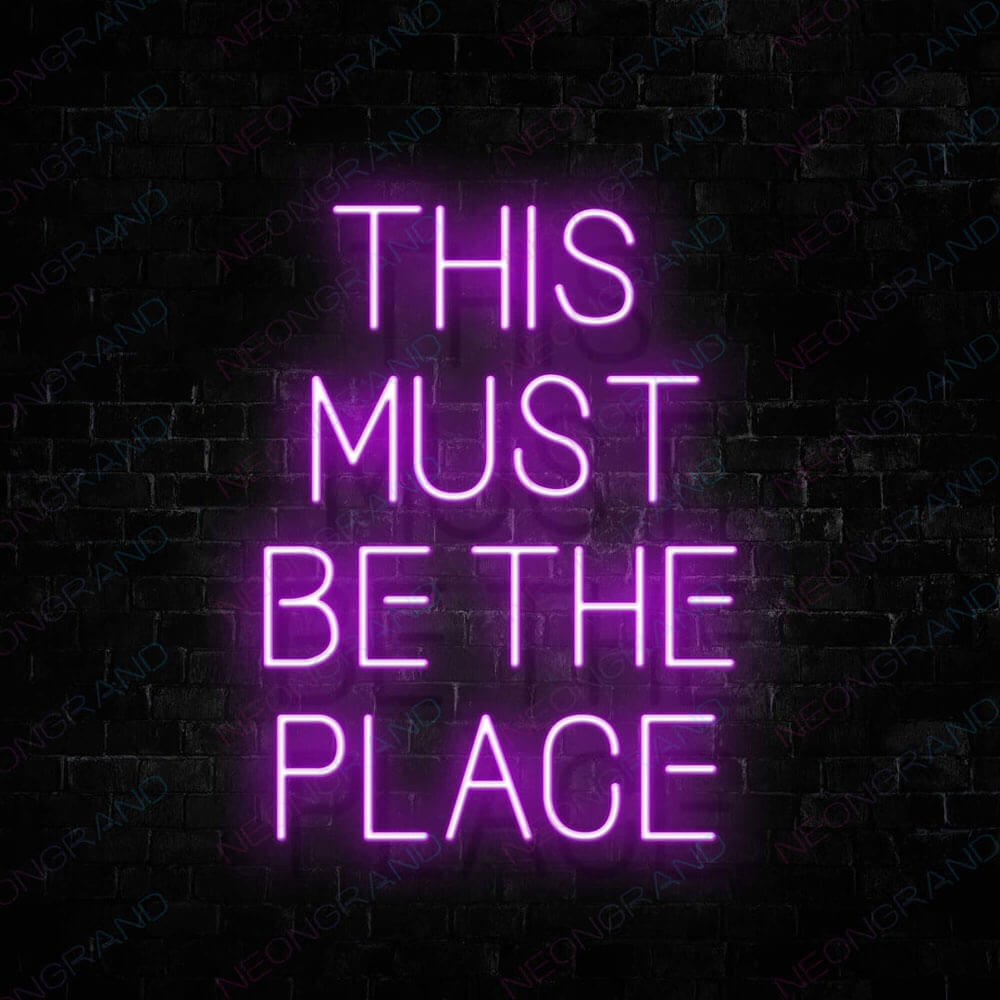
The celebration corners take the close work: where cake orders get taken, where the first coffee and pastry land, the party box that goes out on a Saturday. At conversational range a sign behaves like the room’s decor — fewer words, gentler color, hung where art would hang. This Must Be The Place above the cake table gives the celebration its caption, and it shows up in the party photos without being asked.
Sizing and Brightness for Bakery Conditions
Let the queue set the dimensions. Letters must survive distance, and the bakery rules read: window work sized to clear the street, counter-back lettering cut for the 4-to-10-foot wait in line, cake-corner and seating words scaled to conversation, where a short phrase reads comfortably. Soft pinks, creams and warm golds carry the palette here — they flatter crumb, glaze and skin together. The sizing method end-to-end is walked in the neon sign buying guide.
Output in this trade swings with the morning. Seven on a Saturday, with the queue at the door, wants everything a sign has; three on a Tuesday wants a fraction of it, so bakeries end up on the remote daily — more than on any color option. LED flex running cool keeps the map open too: above the case, behind the counter, anywhere the heat and high voltage of glass tube would crowd the morning rush.
What Should a Bakery Sign Say?
Bakery wording goes three layers deep. Brand first: the shop’s name or monogram behind the counter — it rides along every cake-box photo. Voice second: the line that sounds like the ovens. Atmosphere third: mood words for the seating nook. Five phrasings that survive a full morning of queues:
- The bakery’s name, plain — the counter-back standard that no shelf supplies.
- “Fresh Daily” — the ovens’ promise, spelled in light.
- “Rise and Shine” — the genre’s opening pun, and everyone reads it twice.
- “Est. 20XX” — instant standing for a counter in week one.
- “Hustle” — for a counter that opens before the street lights switch off.

Mood wording is shelf goods — the business neon signs category carries that layer — while the brand and voice layers are single-piece commissions: your name, your letterform, your wall’s measurement.
LED or Glass for a Bakery?
Glass argues for itself in an old-world room: hand-bent tube above a traditional pastry case looks as honest as the wooden counter, and a third-generation shop may want nothing newer. The ledger, though — glass typically runs 3–10 times the matching LED price, requires a professional install, and remains glass; hung over a working counter, that is a maintenance conversation on the schedule of accidents.
The default for a working bakery is LED flex: cool and low-voltage, dimmable, and indifferent to flour dust, oven-adjacent warmth and the tray that clips it at closing. Plenty of shops run the blend — one glass heirloom at the entrance or over the name, LED earning its keep everywhere else. And because most bakeries rent their storefronts, hanging light matters too: the drywall hanging guide covers mounts that keep the wall whole through lease after lease.
What a Custom Bakery Neon Sign Costs
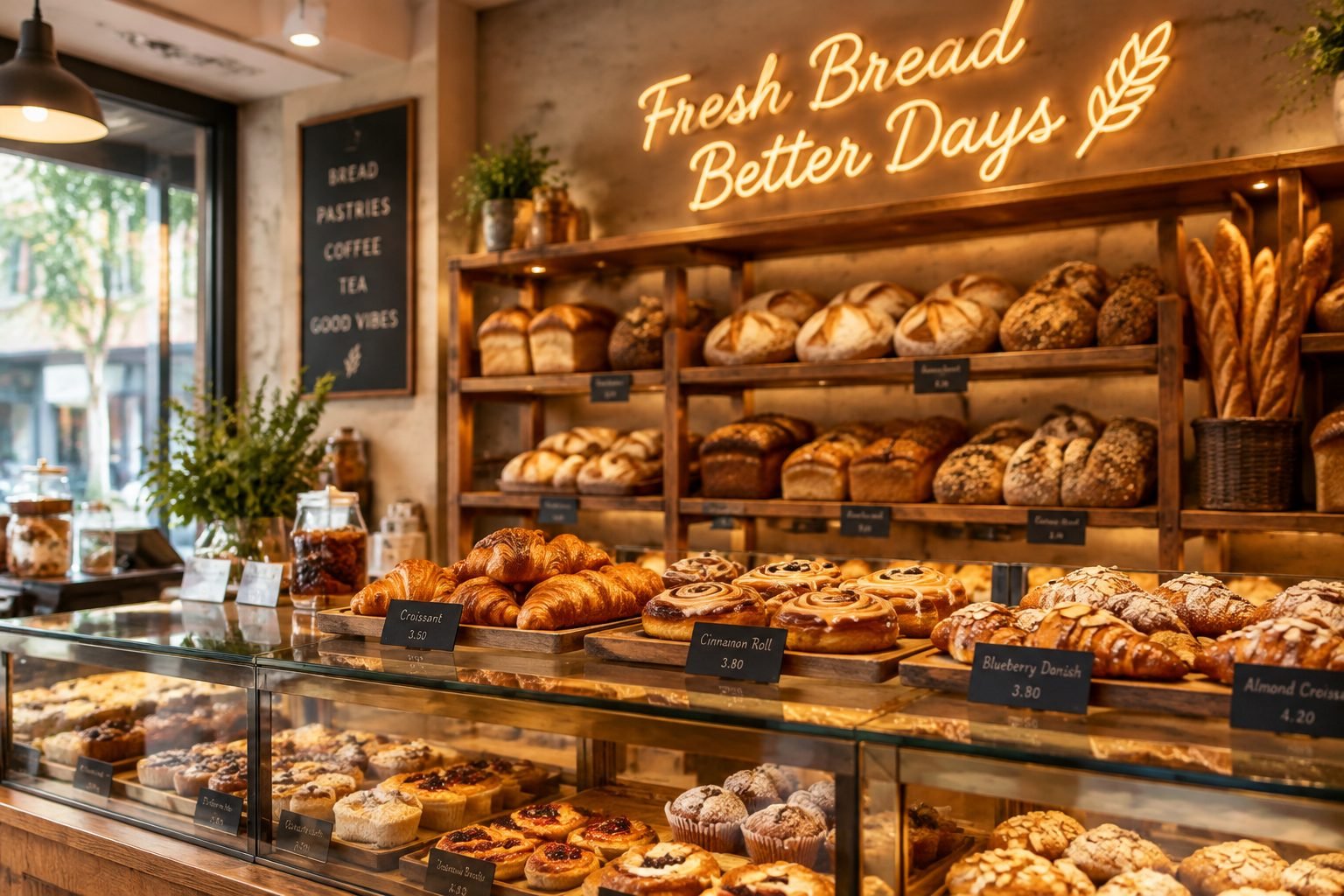
For planning, the cost breakdown gives the band: custom LED work for a bakery typically lands around $100–300, steered by size, letter count, color complexity and accessories. Crating and fragile-rated freight alone often take 10–15% of a small sign’s price, since each piece is manufactured and shipped as a unit of one. Glass — the artisan route — multiplies the figure by 3–10x.
A home decorator reads the cost guide’s $200-a-decade, nickel-a-day math and calls it fair; a bakery owner should call it conservative. The piece is lit before the first tray goes in, and it stands behind the box photos that market the shop for free. The driver-by-driver accounting is at why are neon signs so expensive.
Divide the spend along the same lines. The name behind the counter is the custom line — quoted live in the sign builder, previewed free until you commit — and the mood tier is off-the-rack: the Welcome piece on the door glass and the You’re Like Really Pretty sign behind the counter ship on the first order.
FAQ: Bakery Neon Signs
How much does a custom bakery neon sign cost? Plan for $100–300 on a custom LED build; size, letter count and color complexity do the steering, and glass versions price at 3–10x beyond. Every driver is laid out in our cost guide.
What should a bakery neon sign say? The name on the counter back (brand) comes first, then a house line like “Fresh Daily” or “Rise and Shine” (voice), then a mood word for the seating nook (atmosphere). Names are custom by nature; mood words come off the shelf.
What size neon sign do I need for a bakery? Size to the queue: window lettering across the street, counter-back pieces matched to the 4–10 foot wait, seating and cake-corner signs at conversation distance. The buying guide lays out the method step by step.
Are LED neon signs safe near a display case? Yes. Low voltage and a cool surface — no kilovolt transformer, no hot tube over the pastries — which is why counter-back and case installs have standardized on LED flex.
Can a bakery neon sign go outside? Only in a weather-rated build. A piece facing the sidewalk needs sealed construction and outdoor-grade mounting hardware; the outdoor guide details every difference.
The Bottom Line
Buy the light like you buy the oven: the door piece sells the street, the counter back sells the queue, the cake-corner piece sells the celebration. Fix the wall, size to the distance, hang the name where the boxes leave from — then preview the entire design free, before a dollar moves, in the sign builder.
Sources & Further Reading
- Solid-State Lighting (U.S. Department of Energy) — DOE material on LED efficacy and lifetime.
- International Sign Association — trade-association guidance on placement, permitting and readability.
Prices follow the CustomNeon catalog current as of 2026; live quotes live in the sign builder.