Blog
Casino Theme Neon Signs: The House Always Glows
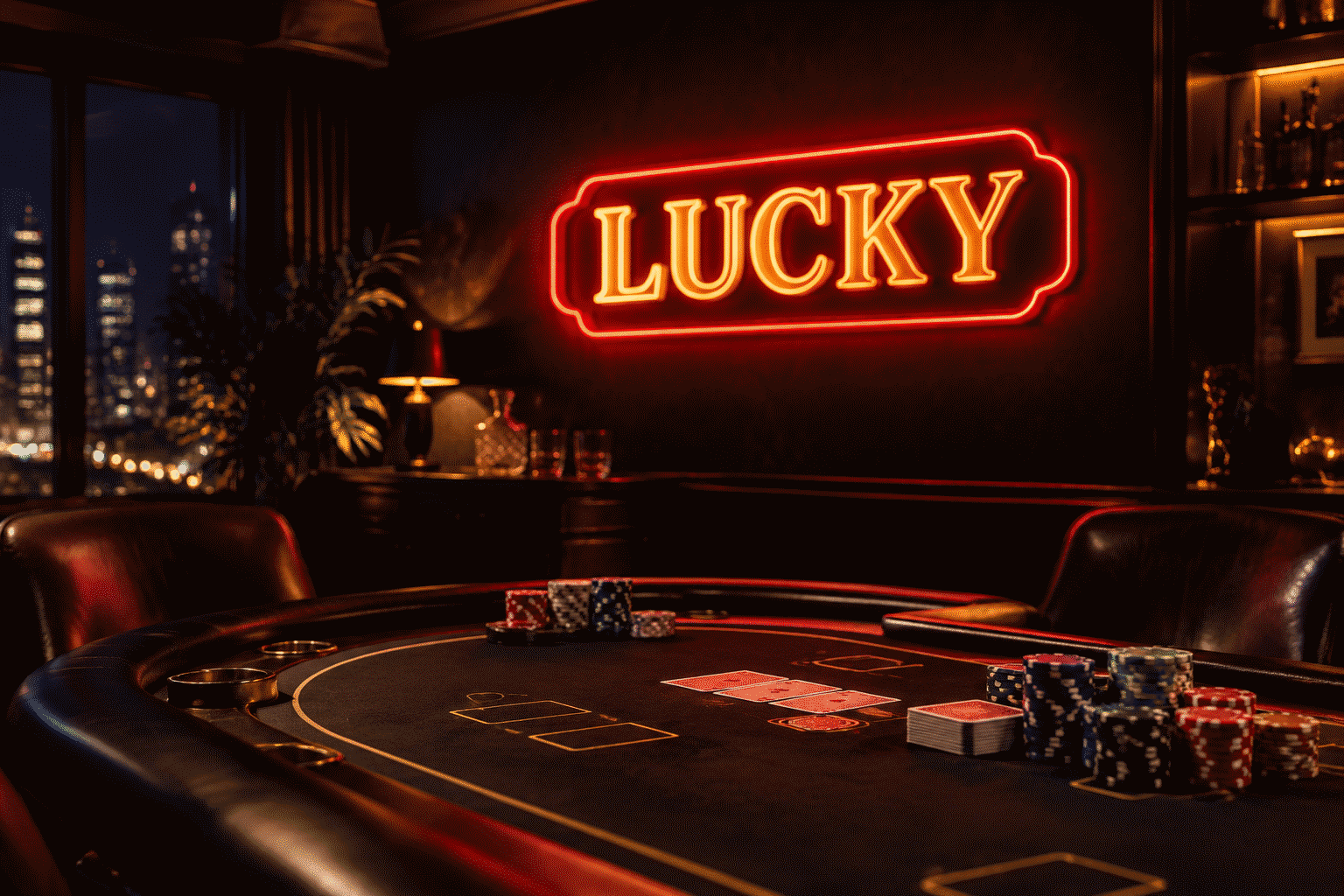
Las Vegas ran on neon for forty years before anything else did — the Strip was a corridor of tube light, the city’s entire identity bent into shapes and letters that could be read from a mile of desert. A casino-theme neon sign is that inheritance in miniature: the card suits, the dice, the roulette wheel, and the luckiest word in English, rendered in the medium the gambling capital built.
This guide covers the casino glow for the two places it actually gets hung: the home game room’s casino corner (the year-round version) and the casino-night party (the event version) — plus the icon set, the palette, and the Vegas history that makes the whole register read as glamour rather than vice.
The Icon Set: What Glows on the Casino Wall
The casino register has one of the tightest icon sets in decor — five shapes, all of them neon-perfect:
- The card suits. The four suits in a row — heart, diamond, club, spade — the register’s signature piece and its most legible. Four small shapes, four colors or one, instantly readable at any size. This is the casino wall’s anchor and the right first piece.
- The dice. A pair of dice (showing lucky seven, always) — the register’s friendliest icon. The dice pair works at desk scale, which most casino icons don’t; it’s the gift tier.
- The roulette wheel. The wheel’s circle and spokes — the most geometric piece, the abstract-design version of the theme. Reads as a target, a sun, or a wheel of fortune; the icon that survives in rooms that don’t want literal gambling imagery.
- The chips and cards. The chip stack or the royal-flush fan — the player’s still life, the detail tier for the wall that already has the anchor.
- The Vegas skyline. The silhouette of the famous signs — the nostalgia tier. The Vegas register connects to the sign-history layer (below), the city’s neon era being the medium’s own golden age.
The Palette: Three Colors, Fixed Roles
Casino decor runs a stricter palette than almost any theme — three registers, each with a job:
- Red. The action register — the felt table, the hot streak, the urgency color. The red guide covers its behavior; casino red runs the deeper end of the family.
- Gold and amber. The money register — the payout, the chandelier tier, the warmth that separates casino glamour from arcade chaos. Amber glow is the theme’s luxury signal.
- Purple. The velvet register — the high-limit room, the after-hours tier. The purple guide covers it; casino purple runs deep.
- Green: the felt exception. The card-table green appears in the felt-texture layer and occasionally as the wheel or suit accent — the one cool tone the register allows, and only in small doses.
The discipline: two of the three main registers per room (red-and-gold for the classic casino, purple-and-gold for the lounge). All three plus green reads as a carnival, and the casino is not a carnival.
Scene One: The Home Game Room’s Casino Corner
The year-round deployment — the basement or den corner that runs poker night monthly and blackjack whenever the cousins visit:

- The anchor. The four-suit row or the “CASINO” wordmark at 28–36 inches over the table — the corner’s identity piece, centered above the felt.
- The table tier. The chip-stack or dice piece at table height, beside the dealer’s position — the detail that makes the corner read as a room rather than a theme.
- The seating register. Dimmed to the 30–40% tier for the long games — the casino corner runs at lounge brightness, not arcade brightness. (The real houses figured this out decades ago: the gaming floor is dim for a reason.)
- The integration. The casino corner inside the larger man cave or gaming room — it coexists with the sports and console tiers as long as the palette holds (the red-amber casino register pairs naturally with beer-and-sports amber).
Scene Two: The Casino Night Party
The event version — the fundraiser, the birthday, the corporate party that rents the theme for a night:
- The entry piece. “CASINO NIGHT” or the suit row at the door — the event’s marquee, sized to read across a room (36 inches and up).
- The photo wall. The Vegas-skyline or giant-suit backdrop — the photo op the event is actually buying. Two or three large pieces, red and gold, full output for the cameras.
- The table markers. Small suit pieces or chip icons at each gaming table — the wayfinding tier that carries the theme through the venue.
- The rental logic. Event pieces live or die on setup speed — LED neon’s light weight and tool-free mounting is the reason the rental market moved to it. The one-time host should borrow the logic: order by width, mount with the kit, dim for the dance portion of the evening.
The Vegas Layer: Why the Register Reads as History
The casino glow carries a specific nostalgia, and it’s worth knowing what it is:

- The neon Strip (1940s-1970s). The Vegas of the famous sign era — the saguaro, the Sands, the drive-in-scale marquees — was built in neon because neon was the only medium that could be seen from a highway at speed. The city’s identity and the medium’s peak are the same event.
- The transition. The Strip moved to LED and video in the eighties and nineties; the neon era’s signs went to the museum (the city’s neon museum boneyard circuit is the register’s own heritage site — our sign-history coverage explains the pilgrimage). The home casino wall is, in part, the museum’s satellite campus.
- The gambling-neutral now. The modern casino-theme wall runs on the imagery without the wagering — the suits and dice as a design language that means “game night, elevated.” The register’s best modern deployment is exactly this: the glamour borrowed, the odds left in Vegas.
The Custom Route
The fan-styled custom tier (the register is icon-based, which makes it custom-friendly):
- The suit row in your colors — the four-suit custom at any width; house colors for the home room, event colors for the party.
- “POKER NIGHT” and the game phrases — the specific-game wordmarks: POKER NIGHT, BLACKJACK, THE DEALER. Priced by width in the custom builder.
- The est.-tier. “EST. 2015” under the suit row — the home game’s founding date, the basement’s own plaque.
- The lucky-number build. Your number on the dice or the wheel — the personal talisman tier.
The Budget Table
| Tier | Size | Range | For |
|---|---|---|---|
| Dice and chip icons | 10-14 in | $60-$100 | Gifts, table markers |
| The suit row | 20-30 in | $100-$180 | The corner anchor |
| “CASINO” and game wordmarks | 24-40 in | $120-$220 | The room, the event |
| Vegas skyline customs | 36-48 in | $200-$350 | Photo walls, statements |
Two stops for the game room: our how to decorate large walls piece covers the expanse a casino wall usually commands, and the bar neon signs page stocks the tap-wall half of the room.
FAQ: Casino Theme Neon Signs
What does a casino neon sign cost? Dice and chip icons run $60-$100; the four-suit anchor row $100-$180; game wordmarks $120-$220 by width; the big Vegas-skyline photo-wall pieces $200-$350. Event hosts should budget the photo wall first — it is the piece the party actually remembers.
What colors make a room look like a casino? Red and gold for the classic gaming floor, purple and gold for the high-limit lounge — two of the three registers per room. Green only as the felt accent; all four at once reads as a carnival.
What are the best casino neon designs? The four-suit row (the anchor), the lucky-seven dice pair (the gift tier), the roulette wheel (the abstract option), and the Vegas skyline (the nostalgia statement). The suits are the register’s most legible piece and the right first build.
How do I decorate a casino night party? Three tiers: the entry marquee (suit row or CASINO NIGHT at 36 inches), the photo wall (Vegas skyline, red and gold, full output), and table markers at each gaming table. Setup speed matters — LED’s tool-free mounting is why the rental market runs it.
Where does a casino sign go in a game room? The anchor over the poker table at 28-36 inches, the chip or dice piece at table height, everything dimmed to the 30-40% lounge register. The gaming room guide covers the wider integration with the console and sports tiers.
Why does Vegas neon look different from other neon? Because the Vegas sign era was the medium’s industrial peak — highway-scale marquee design, forty years of craft, now mostly in museums. The home casino wall borrows that visual memory, which is why the register reads as glamour rather than gambling.
Place Your Bets
The house always glows. Suit row or skyline, red-and-gold or purple lounge — build the piece and deal the room in.
More game-room glow: gaming rooms, retro gaming, man cave walls.
Sources & Further Reading
- Neon sign (Wikipedia) — the consolidated public record of neon-sign history and technology.
Pricing based on CustomNeon’s current catalog (2026); custom quotes come live from the sign builder.