Best Hair Salon Neon Sign Ideas for Chairs
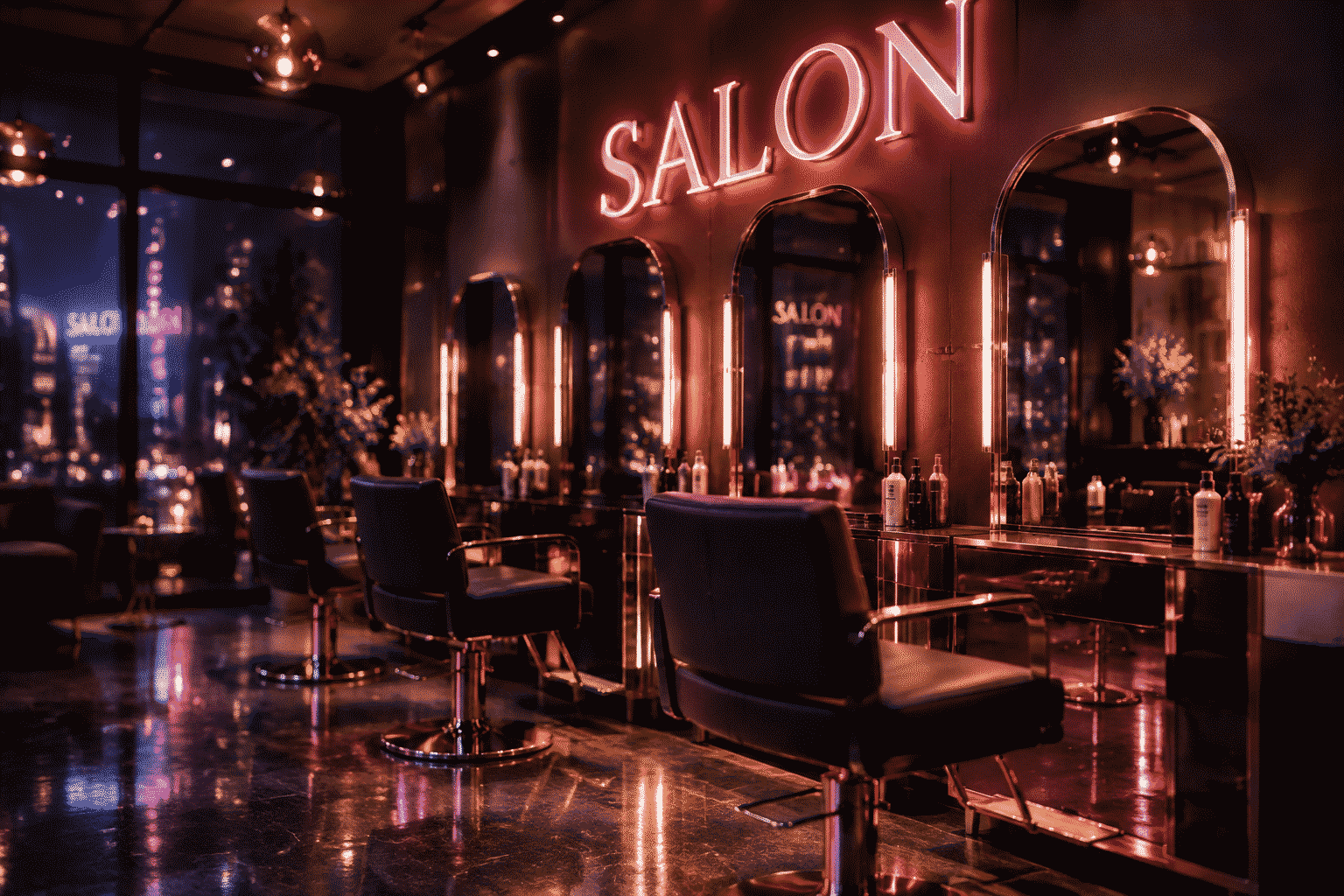
The salon is the trade where the customers come to be photographed — the chair is content, the mirror is the stage, and the glow is the lighting plan. The salon neon sign does double duty: the street tier books the appointments, the interior tier lights the content. The 2026 menu runs the compliment classics through the custom nameplate; here’s the playbook.
Why Salons Run on Glow
The salon’s business is transformation, and the glow documents it: the mirror-selfie is the trade’s whole marketing engine (every client photographs the result, the salon lights it), and the neon sign in the frame is the brand credit. The compliment phrases — hello gorgeous, you’re like really pretty — were salon-native before they were bedroom-native: the trade’s own vocabulary, the chair-side language that became the decor canon. The modern salon runs the glow as the mirror’s co-star: the light the clients photograph themselves in, the brand the tags carry. The salon industry page collects the full trade playbook; this guide is the ideas tier.
The 2026 registers: the compliment tier (the trade’s native language), the custom nameplate (the salon’s brand in its own font), and the mood tier (the good-vibes-and-welcome register the appointment book runs on).
The Ten Ideas That Book Chairs
1. Hello Gorgeous ($202) — the trade’s native greeting: the compliment the chair pays the client, the mirror’s co-star. Pink script over the mirror wall is the salon’s signature shot.
2. The custom salon nameplate. The brand in light: the salon’s name in its own font over the entry or the mirror wall; preview free in the customizer. The nameplate photographs into every client’s post — the brand credit the tags carry.
3. You’re Like Really Pretty ($368) — the compliment with the 2004 wink: the personality tier for the salons whose clients quote it.
4. The open glow. The open sign family — the walk-in tier’s beacon, the street’s first read. Salons run the warm registers (the hospitality palette) over the retail-cold ones.
5. Good Vibes ($242) — the appointment book’s mood: the shop policy in the friendliest grammar, green over the waiting tier.
6. The mirror-wall accent. The glow doubling in the mirrors — the salon’s signature shot: any phrase piece positioned to reflect, the light multiplying with the space.
7. The styling-station tier. The chair-side custom: the stylist’s own nameplate at the station, the craft-signature register the top salons run.
8. The welcome entry. Welcome ($145) — the hospitality greeting at the door: the register that sets the appointment’s tone before the cape goes on.
9. The bride-to-be tier. The wedding-party register: bride-to-be pieces for the bridal-suite salons — the glow the party photographs.
10. The color-bar custom. The trade’s own phrases — “blondes have more fun,” the balayage humor, the shop’s signature line: the personality tier the clients quote.
Placement: The Street, the Mirror, the Station
The street tier — the open glow and the window nameplate: the appointment-walk-in decision, budgeted first. The mirror tier — the compliment pieces positioned to reflect: the content engine, the light the clients photograph in. The station tier — the stylist nameplates and the chair-side accents: the craft register. The photography logic runs through all three — the salon that lights for the mirror-selfie lights for the brand, and the 2026 content math (every client a post, every post a credit) makes the glow the trade’s best-spent marketing line.

The Trade Economics: The Content Engine’s ROI
The salon’s economics run on the chair utilization and the rebooking rate — and the glow plugs into both. The booking tier: the salon’s incremental customer comes from the feed (the friend who saw the transformation post), and the glow in the post’s background is the brand credit that converts; the compliment tier’s pieces (Hello Gorgeous and family) are engineered for exactly this — the light the client photographs the result in, the credit the tag carries. The rebooking tier: the salon trade’s revenue is the 6-8 week cycle, and the room the client remembers is the room the client returns to — the glow’s warm register is the memory’s anchor. The retail tier: the glow lights the product wall’s neighborhood (the shelf the retail margin lives on), and the atmosphere that photographs is the atmosphere that shops. Run the math honestly: the three-tier glow build costs less than one month of the booking platforms’ fees, and unlike the platforms, the sign is yours — the brand credit the feed carries without a per-post toll. The salon industry page collects the full trade playbook; the content engine is the honest version of the pitch.
The Mistake File: Three Ways Salon Builds Fail
Mistake one — the mirror-blocking mount: the compliment piece hung where it covers the mirror’s working half — the vanity tier mounts above and between, never across the glass the clients use. Mistake two — the chemical-zone piece: the sign beside the color bar (the backwall’s most tempting spot) — the placement rule is above the station tier, not beside the processing zone, and the monthly pass handles the rest. Mistake three — the brand-drift palette: five pieces in five colorways reading as a clearance bin — the working salon runs one palette (the brand’s or the pink-and-warm canon) across every glow, and the room reads as designed rather than assembled.
FAQ About Hair Salon Neon Signs
What’s the best first sign for a new salon?
The compliment tier — Hello Gorgeous over the mirror wall: the trade’s native language, the content engine’s light, in stock and shipping in days. The nameplate runs second (the brand), the open glow third (the street).
How much does a salon neon setup cost?
The compliment tier runs $145–368; the custom nameplate prices by size (most salons run 30–48 inches); the cost guide has the logic. The three-tier build (street, mirror, station) budgets as a marketing line that the content math pays back monthly.
Do the signs photograph well for client content?
That’s the design brief — the compliment tier IS the mirror-selfie’s lighting: pink and warm-white glow flatters every complexion, and the piece in the frame is the brand credit. Salons running the content math report the glow as their most-photographed feature, which is the trade’s whole marketing engine lit.
Are LED signs safe around the chemical services?
The salon-specific question, answered: the LED construction runs cool and sealed — safe around color and treatment services where vintage glass never would have been — with one placement rule: above the mirror and station tiers, not beside the chemical bar, and the monthly microfiber pass (cleaning guide) handles the salon air’s product mist.
How much power does the whole salon setup draw?
Candle-grade per piece — the three-tier build (street, mirror, station) draws less than one hooded dryer; the electricity guide has the numbers. The glow runs all business day for less than the coffee station.
What sizes work for the salon’s tiers?
The nameplate runs 30–48 inches over the mirror wall or entry; the compliment pieces 24–36 at the mirrors (sized to reflect — the doubling is the shot); the station nameplates 16–20. The hanging guide covers the mirror-adjacent mounts the trade runs.
What’s the maintenance rhythm for a working salon?
The monthly microfiber pass (cleaning guide) handles the salon air — the product mist and color powder settle faster than household dust, so the monthly cadence is the trade’s version of weekly. The longevity guide rates the diodes in years of shop-hours service; the glow outlasts the styling chairs easily.
What about a move or a second location?
The LED build travels — flat in the original packaging, re-mounted at the new wall — which makes the glow the one build-out line that survives the lease; the customizer’s nameplates update (the new address tier) without replacing the pieces. The second location runs the same palette: the brand’s glow duplicated is the brand’s presence doubled.
Suite vs full salon — does the build change?
The booth-rental suites run the compressed tier: one nameplate at the suite’s entry and one compliment piece at the chair — the two-piece build that carries the full playbook at studio scale. The full salon runs the three tiers; the suite runs the essence; both read as designed.
Does the glow work for a home-studio stylist?
The home-suite tier runs the compressed build — one compliment piece at the mirror and the nameplate at the suite’s entry — the full playbook at two-piece scale. The glow is the studio’s storefront, the content engine’s light, and the brand the tags carry, all within the suite’s footprint; the customizer prices the tier at the friendly end.
The Bottom Line
The salon is the trade where the glow IS the marketing — the compliment tier the clients photograph, the nameplate the tags carry, the open glow the street reads. Start with Hello Gorgeous over the mirrors or the custom nameplate, and let the salon industry page carry the rest of the playbook. The chair is booked; the light is ready.
Sources & Further Reading
- Solid-State Lighting (U.S. Department of Energy) — DOE reference on LED efficacy and lifetime.
- Neon sign (Wikipedia) — the consolidated public record of neon-sign history and technology.
- Mercury (U.S. EPA) — federal guidance on mercury exposure and safe handling.
Pricing based on CustomNeon’s current catalog (2026); custom quotes come live from the sign builder.