Heineken Neon Signs for Bars & Kitchens
Heineken is the world’s bar-stool common denominator — the green-bottled Dutch lager that has been spreading from Amsterdam since 1864, when 22-year-old Gerard Adriaan Heineken bought a brewery called De Hooiberg and started making lager instead of ale. The green bottle, the red star, the smiling “e,” the “Brewed in Holland” pedigree: it is quite possibly the most globally distributed beer on earth, which means its neon sign is one of the most recognized bar pieces in every hemisphere.
The guide to the green register, the classic designs, and the walls it earns.
The Green Register
Heineken’s green is the brand’s entire visual identity — the green bottle against the red star and white banner. In glow form, the green renders deep and rich (the green neon sign page covers the shade mechanics — Heineken green sits at the deep end of the family), and it does something most beer signs can’t: it reads premium. Green glow in a bar corner signals the import shelf, not the domestic volume tier.
The Classic Designs
The banner and star. The signature layout: the HEINEKEN banner, the red star, the green field — the bottle label translated to the wall. The definitive piece.
The bottle itself. The green-bottle silhouette with the red star — the shape of every bar’s import shelf, rendered in glow.
The “e” and the wordmark. The typographic tier — the smiling red “e” is one of design’s little jokes; the wordmark alone carries the wall.
The silver-era pieces. Heineken’s silver-and-green cold-activation cans and modern lineups carry their own styling tier — the contemporary alternative to the classic green.
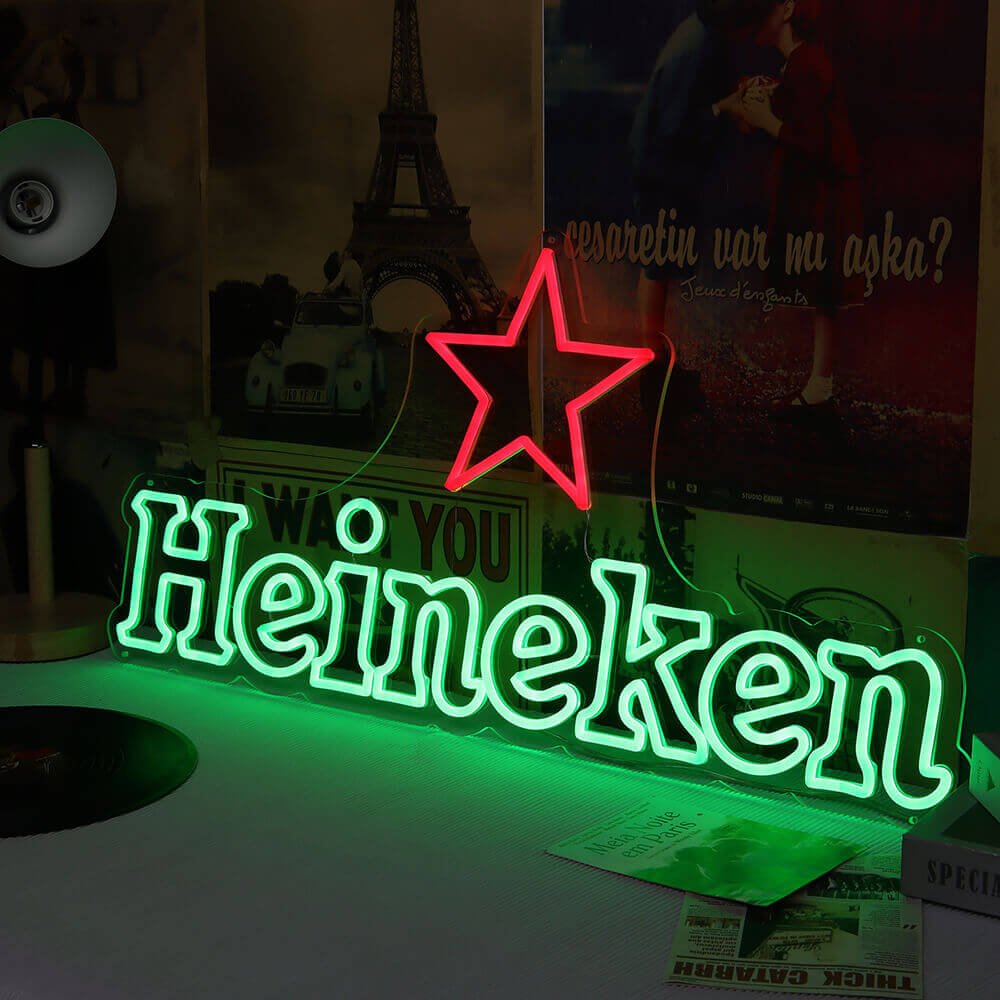
Our Heineken LED design ($221) carries the classic green-and-star register — the import tier of a beer wall, at the friendly end of brand-sign pricing.
Where the Sign Belongs
The kitchen bar. Heineken’s clean green-white styling suits kitchens better than any garage brand — the import-fridge tier, the dinner-party beer. The kitchen register pairs naturally.
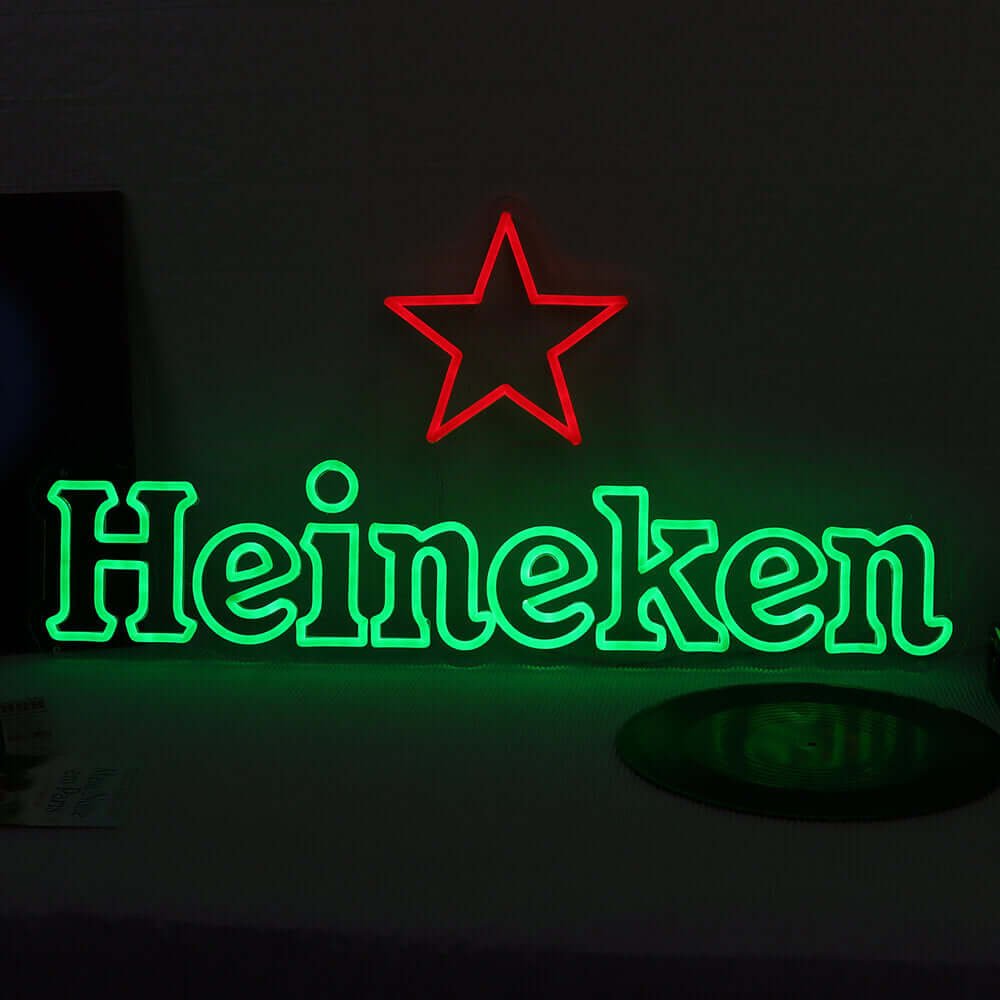
The home bar’s import shelf. The multi-brand wall’s international representative — green between the domestic blues and reds. The full wall logic is in the beer neon signs and neon bar signs guides.
TheEuropean-styled den. The bistro register — green glow, dark wood, cafe table. Heineken is the brand of the Amsterdam-cafe aesthetic, and its sign carries that room.
The apartment bar tier. The green register is compact-friendly: a small Heineken piece on a shelf reads designed, not garish — the apartment-bar answer the louder brands can’t manage.
The Vintage Market
Original Heineken glass runs older and scarcer stateside than the American brands — the European-cafe era pieces and the seventies-eighties American bar era both trade in collector channels, with premiums over domestic equivalents of the same age (import-brand scarcity). The practical note stands: buy lit, from sellers who photograph it running — and expect the green phosphor to be the tube most likely aged.
For most walls, LED is the route: the design we carry at $221 — green glow, dimmable, safely shipped.
The Custom Tier
Heineken-green glow with your own text — the bar name in the green-white register, the “Brewed Fresh” bistro piece, the import-fridge’s label (“Amsterdam Corner”) — runs as standard custom work in the custom builder.
The 1864 Story: The Green Bottle’s Century and a Half
The brand history the green glow carries — the short version every bar owner should know:
- 1864: the 22-year-old buyer. Gerard Adriaan Heineken purchased Amsterdam’s De Hooiberg brewery — a four-century-old facility — and redirected it from ale to lager (the Bavarian method, then the continental innovation). The decision made Heineken an early mover in the lager era that conquered the world’s beer glasses.
- The red star. The mark dates to the era’s brewer symbolism — stars marked beer quality in European brewing tradition (variously attributed to the alchemical elements of brewing and to medieval guild marks). The red color arrived later (and briefly changed under Cold War-era concerns before returning) — today it’s among the most recognized single marks in beverages.
- The green bottle. The bottle register that became the brand’s identity — the green glass distinguishing the import shelf for over a century. In glow form, the green reads exactly as it does on the shelf: the import tier.
- The global spread. From Amsterdam to the world’s most widely distributed beer families — the bar in every hemisphere pouring the same green bottle. The sign’s instant recognition across cultures is the distribution story in miniature.
- The modern era: Heineken 0.0 and the sponsorship machine. The brand’s F1 and Champions League sponsorships (and the non-alcoholic tier’s rise) keep the green in the current visual culture — the sign reads both heritage and current.
The Import Wall: Building the International Tier
The multi-country beer wall — the Heineken piece’s context:
- The import trio. Heineken (Netherlands), Corona (Mexico), Guinness (Ireland) — the three imports that anchor most international beer walls. The green-white Heineken register between the Mexican flag-tier and the Irish black-gold; the beer guide has the full international layout.
- The European-styled bar. The register the green was made for: dark wood, brass rails, café tables — the Amsterdam-bar translation. The Heineken piece plus the globe-and-dartboard decor completes the room.
- The bistro tier. The kitchen-bistro version: the green piece beside the wine rack and the espresso station — the “continental breakfast-and-beer” corner that European apartments actually run.
- The student-hostel register. The budget nostalgia tier: the green glow over the secondhand couch — the piece that made dorm bars look traveled. The aesthetic’s origin story, and still its most honest form.
The Light and 0.0 Tiers: The Family Register
The brand’s modern extensions — the wall’s contemporary accents:
- Heineken Silver and Light. The modern light-lager extensions — the silver-and-green registers. The family wall’s contemporary wing.
- Heineken 0.0. The non-alcoholic tier’s signature — the blue-accented 0.0 register. The piece for the sober-curious bar: the green family’s presence without the pour. The fastest-growing tier of the brand’s wall presence, and the one that modern bar builds increasingly include.
- The custom 0.0 register. The “Designated Driver” pieces, the “0.0 Club” customs — the household humor tier built on the non-alcoholic era. Mock yours in the custom builder — the green-blue register prices live.
The Star’s Quiet History: The Mark’s Story
The red star’s full biography — the wall’s best minute of trivia:
- The brewer’s mark era. The star’s origin: the brewer’s star of European brewing tradition (the alchemical-and-guild attributions vary by telling) — the brand’s version carried the star since the earliest bottles, one of the oldest continuous commercial marks in beverages.
- The color changes. The star’s red was standard until the Cold-War-era concern (the red star’s political associations) prompted a temporary shift — the brand ran neutral versions through parts of the mid-century before the red’s permanent return. The era-collector’s detail: the non-red-star pieces date the glass precisely.
- The smiling “e” typography. The wordmark’s famous detail — the final letter tilted backward, the smile that designers have credited with the label’s friendliness for a century. The typographic joke that the neon script renders in its most literal form: the smiling letter, glowing.
- The green bottle’s standardization. The bottle’s green — originally one option among period glass colors — became the law of the brand; the beer-and-bottle identity fused so completely that “a green” entered pub vocabulary in markets worldwide. The sign inherits the entire shorthand.
Complete the import shelf: the Pacifico neon signs piece covers the other bottle that earns a beach-bar wall, and our man cave neon sign ideas guide places either import in the full room.
FAQ: Heineken Neon Signs
What is a Heineken neon sign? A glow piece rendering Heineken iconography — the green banner with the red star, the bottle silhouette, or the wordmark. The import tier of beer walls, recognized in every market on earth.
How old is Heineken? The brewery dates to 1864, when Gerard Adriaan Heineken bought the De Hooiberg brewery in Amsterdam and switched it to lager. The green bottle and red star became the identity that the neon pieces carry.
How much is a Heineken LED sign? Our Heineken design runs $221 — the import tier at the friendly end of brand-sign pricing.
Is vintage Heineken glass worth more than domestic? Generally yes at equal age and condition — import-brand signs were produced in smaller volumes for the US market, and collector demand carries a premium. Buy lit, always.
What rooms suit a Heineken sign? Kitchens, import-shelf bars, European-styled dens, and apartment bars — the green register is the most interior-friendly of the major beer brands. Kitchen pairing logic on the kitchen page.
Can I get a Heineken-styled sign with my own text? Yes — bar names and bistro phrases in the green-white register run as custom work, priced live in the custom builder.
Green the Room
The most recognized green in beer, glowing over your shelf. Start with the Heineken design at $221, or run your own text in the same register through the custom neon maker. Brewed in Holland, lit at home.
Sources & Further Reading
- Neon sign (Wikipedia) — the consolidated public record of neon-sign history and technology.
- Mercury (U.S. EPA) — federal guidance on mercury exposure and safe handling.
Pricing based on CustomNeon’s current catalog (2026); custom quotes come live from the sign builder.