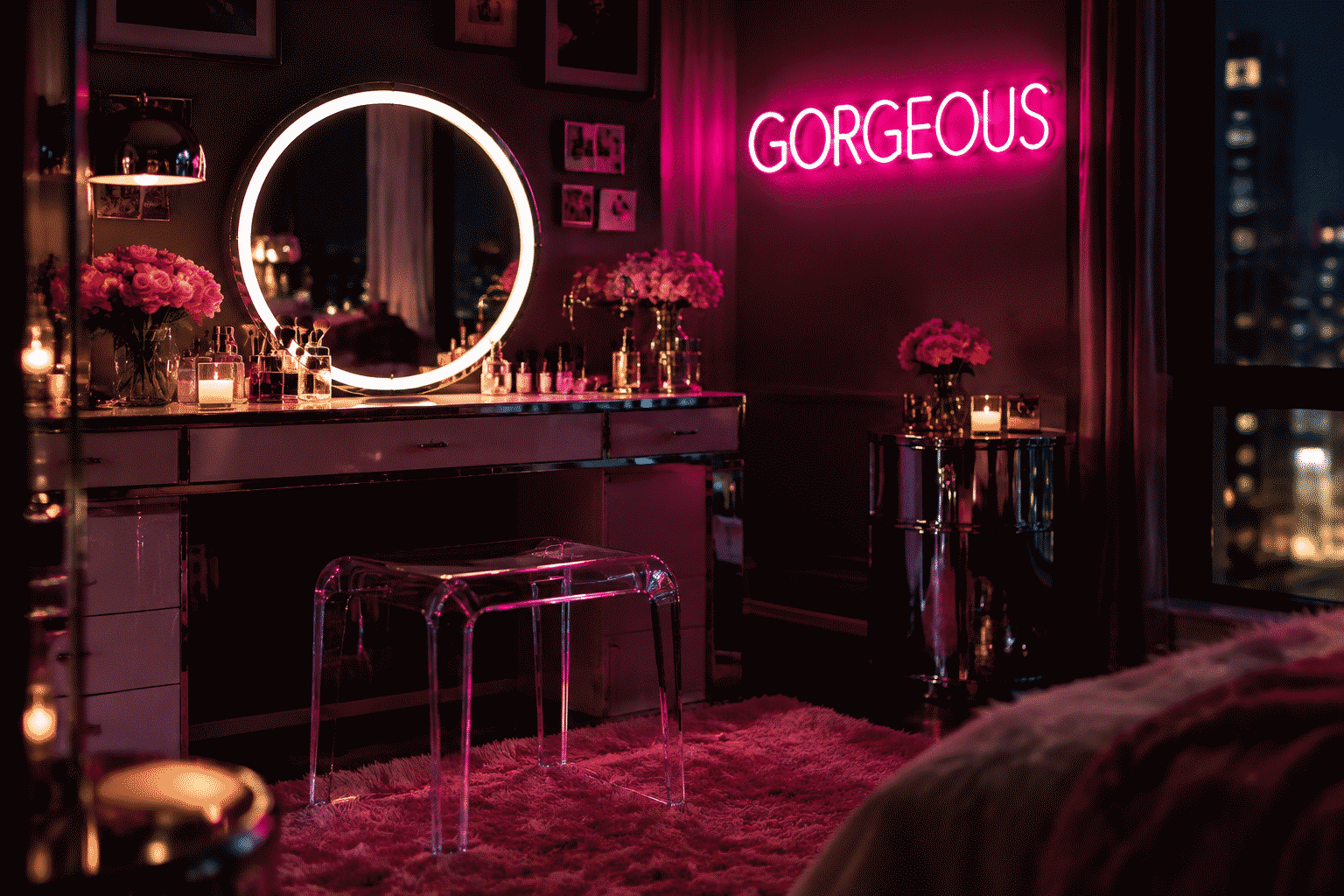
18 Neon Signs for Room Glow, Any Room Guide

“Neon signs for room” is the search that starts everything — the query run before the room is picked, the style is known, or the budget is set. It deserves a guide that works the same way: the universal pieces that work in any room, then the room-specific branches where each one specializes. Consider this the front door to the whole category.
Here are 18 ideas — the universal tier first, then the room decoder — with the sizing and brightness logic that applies everywhere. The full catalog lives at neon signs for sale.
The Universal Tier: Ideas 1–8
Pieces that work in any room of any house.
- Good Vibes — the category’s neutral: warm, unobjectionable, and somehow never boring. If one piece has to cover every room, it’s this one.
- The namepiece — your name, the family’s, the room’s (free preview): the piece that personalizes any room instantly and outlasts every trend cycle.
- The moon — the shape tier’s universal: warm white crescent, works over beds and sofas and desks with equal conviction.
- The wave or arc — the abstract form: the minimalist room’s statement and the maximalist room’s calm center.
- “Hello” — the two-word greeting (the piece): the entry, the dorm, the guest room — the friendliest object in the catalog.
- A heart outline — the universal warm icon; softened to a single line, it decorates without declaring.
- “Stay Awhile” — the hospitality register: the guest room’s standard and the reading corner’s invitation.
- The monogram — one letter, oversized: the personalization tier’s quietest entry, which is its power.
The Room Decoder: Ideas 9–16
The universal pieces specialize by room — here’s where each branches.
- The bedroom branch — dimmers, warm registers, headboard-anchored (the full guide): the room where glow means sleep-adjacent calm.
- The living room branch — one focal piece, sofa-scaled, the room’s evening identity (the ideas guide).
- The gaming room branch — the tag, the status tier, the bias-glow (the canon): the room that runs on identity and screen discipline.
- The kids’ room branch — the name anchor plus phase layer (the canon): the room where the piece doubles as a night light.
- The kitchen branch — “Eat” and the diner tier (the kitchen canon): neon’s ancestral home room.
- The office branch — the work word and the meeting wall (the guide): the room with a job.
- The bathroom branch — small, warm, splash-disciplined (the tier): the room with rules.
- The room-decor system branch — the whole-room composition: anchor, palette, halo, accents (the system guide).
The Two Rules That Travel: Ideas 17–18
- The one-focal rule — whatever the room, one piece owns the sightline and the rest defer: the single discipline that separates designed rooms from accumulated ones (the sizing logic for the ratios).
- The brightness clock — whatever the room, the glow runs the day’s clock: full daylight hours, half evening, quarter night. The dimmer is the category’s most underrated object; the room that has one lives with its neon, the room that doesn’t just hosts it.

Sizing and Placement, Universalized
The numbers that work everywhere: piece width = anchor furniture width minus 20–25% (bed, sofa, desk — the biggest thing under the wall); centerline height 57 inches for standing rooms, 48–54 for seated ones; one focal per sightline, verified from the doorway and the primary seat. The size guide carries the complete chart, and the hanging guide covers every wall from drywall to cinderblock with the cord systems that keep the installation clean.
The palette rule that travels: warm registers (warm white, amber, blush) for rooms that host sleep or conversation; cool registers (blue, purple) for rooms that host screens; multi-color for rooms that host parties. There are exceptions to every one of these, and they’re all in the room-specific guides above — but as defaults for the undecided, they’ve never failed.
The Decision Flowchart: From Query to Wall
The “for room” search starts undecided – and the undecided buyer runs one flowchart to a decision.

Step one: which room? The decoder above (bedroom through bathroom) – each room’s guide carries its own physics. The undecided buyer’s default: the bedroom (the room that glows nightly) or the living room (the room that glows for everyone) – the two rooms where any piece works and every piece shows.
Step two: which register? The palette question – warm (the calm registers: warm white, amber, blush) or cool (the tech registers: blue, purple), bold (the party registers: red, multi) or soft (the sleep registers). The room’s existing colors answer: match the bedding, agree with the walls (the decoder).
Step three: which piece? Within the register: the namepiece (identity, permanence – preview), the phrase (voice – Good Vibes the default), or the shape (the wordless statement – the art tier). The undecided run the phrase; the decided run the name; the minimalists run the shape.
Step four: which size? The anchor furniture minus 20-25% – the bed, sofa, or desk decides (the chart). The one universal warning: buyers undersize (the piece that looked right in the catalog reads small on the wall); when torn between sizes, the larger one wins.
The First-Piece Budgets
The under-$100 entry: the small phrase or shape – the room’s test piece, bought to learn the register before the anchor budget moves. The $100-250 standard: the properly-sized anchor – the piece that defines the room (the system logic), bought once, hung focal. The $250-500 commission: the custom namepiece or the personal commission (the personalized tier) – the piece that no catalog carries and no redesign retires.
The first-piece advice that outranks every guide: buy the anchor, not the accent. The room that spends its first $150 on one right piece (sized, focal, palette-agreed) has a system; the room that spends it on three small pieces has a collection – and collections need anchors before they need members (the whole-room logic).
FAQ About Neon Signs for Rooms
What’s the best neon sign for a room? The namepiece or “Good Vibes” — the two pieces that work in any room, any style, any decade. The namepiece personalizes (preview); the phrase neutralizes. Everything more specific lives in the room decoder above.
How do I choose a neon sign for my room? Room first, register second, piece third: pick the branch (bedroom through bathroom), match the palette to the bedding or walls, then size to the anchor furniture. The room-decor system walks the full sequence.
Where should a neon sign go in a room? Over the anchor furniture, centered, at the heights above — the bed, sofa, or desk decides. One focal per sightline; the doorway check confirms it.
What size neon sign do I need? Anchor furniture minus 20–25%: queens carry 36–48 inches, sofas similar, desks smaller. The size guide has every room’s chart.
What is the most popular neon sign for a bedroom? The namepiece and “Good Vibes” – the two pieces that lead every room-type survey the category runs: the name (the personalization that outlasts everything) and the phrase (the register that fits everywhere) (the universal tier above). The moon runs third (the shape tier’s leader), the heart fourth, and the monogram fifth – the five-piece canon that covers the undecided buyer’s whole consideration set. The bedroom’s specific ranking skews warm and dimmable: the pieces that work at the sleep-adjacent brightnesses win the room that spends its hours at them (the bedroom canon for the full placement logic).
How long do LED neon room signs last? 30,000-50,000 hours of service (the lifespan facts) – at the typical room’s evening schedule, that is a decade or more of nightly glow. The failures that happen early almost always happen at the power supply rather than the tubing: the adapter in open air (not inside a cabinet), the surge protector in the lightning regions, and the dry-method cleaning that keeps the room’s dust from baking on. The room sign that gets its five minutes a month outlives the room’s next two redecorations – and moves to the following room with its reputation intact.
Can I hang a neon sign without drilling the wall? Yes – the no-drill toolkit covers every rental and every landlord: the heavy command strips rated for the piece’s weight (the two-strip-per-piece rule), the over-door hooks for the vertical formats, and the leaning tier for the shelves and mantels (the hanging guide’s damage-free methods). The cord runs the furniture’s back (the channel-free route that rentals favor), and the plug-in dimmer (no wiring, no switches) completes the brightness protocol on the rental-safe plug. The room that glows without the deposit’s sacrifice glows happier – the renter’s version of the same physics.
Do neon room signs use a lot of electricity? No – the room-size piece draws a few watts, roughly a phone charger’s appetite (the electricity math): the evening-glow habit costs about a dollar a month, and the all-night dimmed night-light version costs the same. The room’s lamp, the TV’s standby, and the charging phone all outdraw the sign; the whole three-piece room program rounds to pocket change. The electric bill will not notice the glow – which is the quiet argument that lets the room keep it.
The Bedroom Pick vs the Living Room Pick
The undecided buyer’s two default rooms, compared:
| Decision axis | The bedroom pick | The living room pick |
|---|---|---|
| The piece’s hours | The nightly (the sleep-adjacent glow) | The evening’s social (the shared hours) |
| The register | The warm-dim (the calm tier) | The statement (the room’s voice) |
| The sizing | The bed-width math (36-48) | The sofa-width math (36-48) |
| The audience | The one or two who sleep there | Everyone who visits |
| The brightness | The 15-40% band | The day’s full through evening’s half |
| The keeper weight | The namepiece’s home | The family charter’s home |
The two picks’ shared default – the universal tier’s pieces (Good Vibes, the name, the moon) work in both rooms – and the undecided buyer’s real question: whose room is the piece for? The private answer (the bedroom’s nightly glow, the name’s intimacy) or the public one (the living room’s shared statement, the charter’s announcement) – the audience picking the room, the room picking the register (the room decoder above).
The honest tiebreak: the bedroom. The room that glows nightly compounds its pleasure faster than the room that glows socially – the 10 p.m. calm the bedroom’s piece serves is the house’s most-needed register, and the buyer who serves it first rarely regrets the priority. What is the best neon sign color for a bedroom? Warm white – the register that wins the bedroom for the same physics that wins its sales: it flatters the sleep-adjacent hours, agrees with every bedding, and glows at the dimmed bands without reading dim (the color logic). The accents follow the room’s palette (the blush for the soft registers, the purple for the moody ones – the style decoder maps the full range), and the cool registers (the blue, the ice) serve the tech-adjacent bedrooms at their own hours. The choosing rule that outperforms the catalog: match the bedding’s undertone – the warm-warm agreement reads calm, the warm-cool mismatch reads unsettled, and the bedroom’s whole register rides the wavelength.
Sources & Further Reading
- Neon: Strong Lines (NIST Physical Reference Data) — the standard reference for neon’s emission wavelengths.
- Solid-State Lighting (U.S. Department of Energy) — DOE reference on LED efficacy and lifetime.
- Mercury (U.S. EPA) — federal guidance on mercury exposure and safe handling.
Pricing based on CustomNeon’s current catalog (2026); custom quotes come live from the sign builder.