
22 Neon Signs for Home Decor, Room by Room
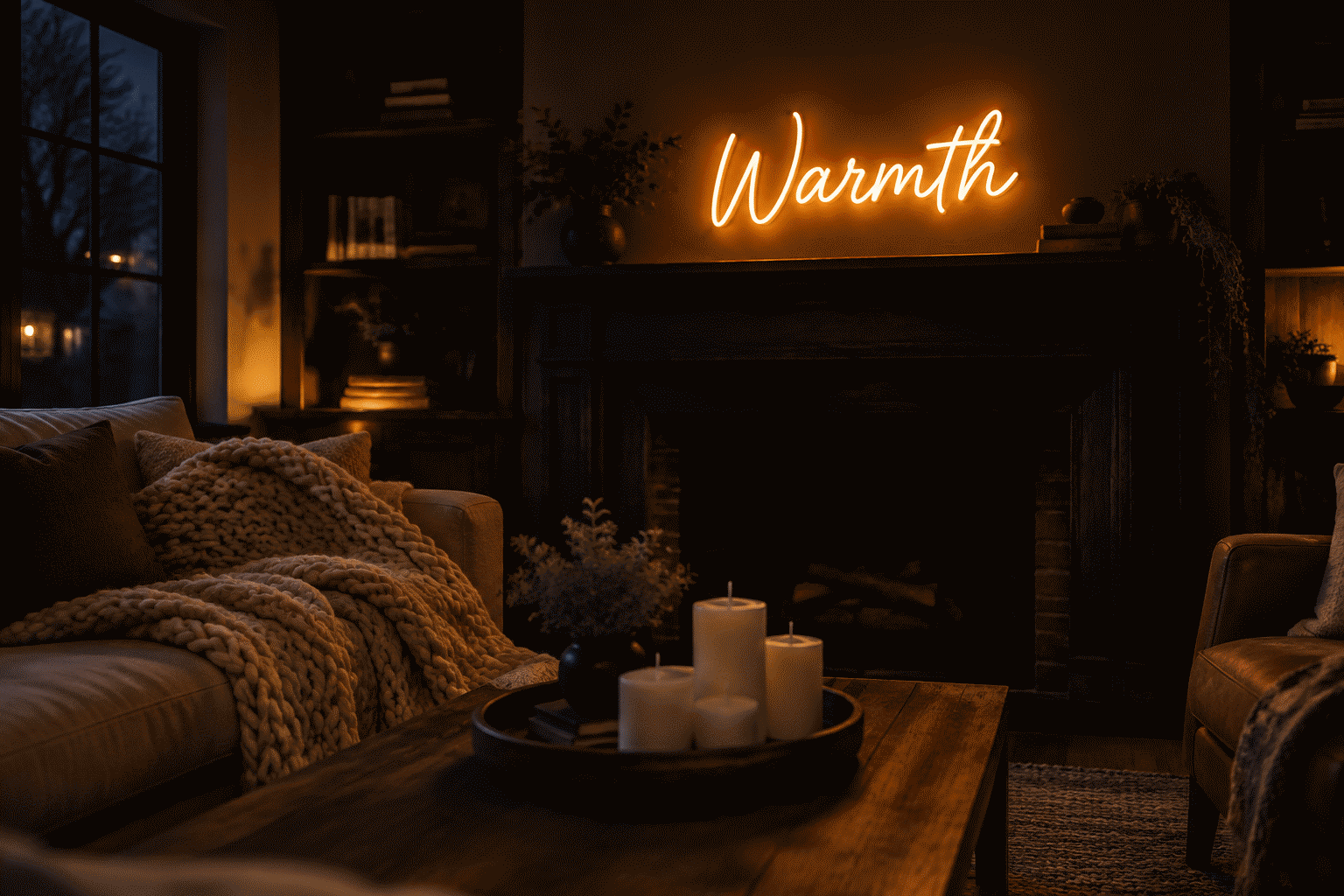
Neon spent its first century lighting businesses and its second decade lighting homes — and the home won. Somewhere between the apartment-therapy era and the work-from-home decade, the neon sign crossed from “novelty” to “legitimate home decor,” and the reason is physical: it is the only decor category that is simultaneously art, color, and light. A framed print needs a lamp; a neon sign brings its own.
Here is the room-by-room guide — 22 ideas across the whole house, with the logic that keeps a home glowing coherently instead of accreting randomly. The full catalog lives at neon signs for sale.
The Entryway: Ideas 1–3
The home’s first word.
- Hello or Welcome — the greeting register; the piece every guest reads first and every photo includes.
- The family namepiece — “THE [NAME]S, EST. 2018” (free preview): the home’s deed in light; the most classic house-warming build there is.
- A small shape on the entry table — a moon or initial leaning on the console: the no-commitment entry tier for rentals and first homes.
The Living Room: Ideas 4–7
- This Must Be The Place — the main room’s perfect sentence; warm, domestic, true nightly.
- The statement shape — an oversized arc or wave over the sofa (the wall-art tier): the room’s focal without a single word.
- Good Vibes — the neutral blessing; the buy-once piece that survives every redesign.
- The gallery anchor — neon within the frame wall: the glow object that makes the prints read curated (full ideas guide).
The Kitchen: Ideas 8–10
- “Eat” — the room’s whole vocabulary in three letters (the full kitchen canon).
- The diner tier — era script and brand-red registers: the kitchen is neon’s ancestral home, and it still shows.
- The coffee corner piece — “But First, Coffee”: the morning station’s signage, softened to warm white.

The Bedrooms: Ideas 11–14
- The master’s phrase piece — “Stay” or a single warm script over the headboard (the style-mapped guide decodes the registers).
- The guest-room welcome — “Stay Awhile”: the room that hosts gets the sign that says so.
- The kids’ namepiece — the nursery-to-teen keeper (the full canon): the piece that moves to college.
- The dimmer discipline — bedrooms run 15–40% (the bedroom guide covers the brightness logic): the whole-house rule is bedrooms dim, common rooms glow.
The Office & Study: Ideas 15–16
- The work word — “Hustle” or “Do What You Love”: the room’s contract, lit (the home-office canon).
- The meeting-wall piece — the name or logo shoulder-mounted: the work-from-home era’s most-viewed wall (the composition rules).

The Basements & Bonus Rooms: Ideas 17–19
- The bar piece — “Cold Beer” or the fictional-establishment charter (the full bar canon): the basement’s flagship register.
- The game-room tier — the gamer tag and the “Game On” status pair (the gaming canon).
- The home-theater piece — “NOW SHOWING” or a film-reel shape: the screening room’s marquee, dimmed to movie hour.
The Outdoor & Utility Tier: Ideas 20–22
- The covered-porch piece — “PORCH RULES: RELAX”: the outdoor room’s constitution, under cover (the placement rules cover the weather logic).
- The garage classic — vintage “GARAGE” script or the workshop humor tier (the garage canon).
- The laundry-room joke — “Laundry Today or Naked Tomorrow”: the utility tier that made small-room neon a category; humor scales down better than art does.
The Whole-House Logic
The one-focal rule: every room gets one focal piece; the house reads designed when each room has exactly one voice and the voices differ. The living room’s sentence, the kitchen’s verb, the bedroom’s whisper, the basement’s shout — variety by room, restraint within them (the room-decor system develops the hierarchy).
The palette thread: one warm thread (warm white, amber, blush) through the common rooms, with each private room free to run its own register. The house that threads coherently photographs like a magazine; the house that doesn’t photographs like a sign shop.
The engineering layer: dimmers on every bedroom and living piece; the power math means the whole house glows for the cost of one lamp; and the hanging guide covers every wall type you’ll meet from plaster to cinderblock. The homes that glow best aren’t the ones with the most signs — they’re the ones where each sign has a job, a room, and a brightness that respects the hour.
The Whole-House Budget: The Three Programs
The first-piece program ($100-250): one room, one anchor – the entry’s namepiece or the living room’s sentence. The first piece teaches the house’s palette thread (warm or cool, bold or soft), and the thread teaches every later purchase. The first-piece mistake is buying small: the anchor at entry-quality sets the tone; the anchor at accent-size sets nothing (the anchor logic).
The three-room program ($300-700): the entry, the living room, the bedroom – the house’s three anchor rooms, each with its one voice (the greeting, the sentence, the whisper). The three-room program is where the whole-house coherence emerges: the palette thread connecting the rooms, the brightness protocols differentiating them, and the style registers varying by room while the quality stays constant – the house that reads designed rather than accumulated (the room-by-room logic).
The whole-house program ($700-1,800): every room with its piece, the seasonal rotations, the wall-lights layer – the house that glows as a system, running on the power of one lamp (the math) and the maintenance of an occasional dusting (the routine). The whole-house program’s discipline: one focal per room stays absolute – the nine-room house with nine focal pieces reads curated; the nine-room house with twenty pieces reads sign shop.
The Home’s Glow Calendar
The whole-house program runs the day’s clock and the year’s calendar. The daily arc: the common rooms full through the afternoon, half through the evening, the bedrooms at their low registers by ten – the house’s brightness telling the day’s story (the protocol). The seasonal layer: the holiday rotations (Christmas, the summer porch tier) on the same mounts – the house that plans its rotation stays fresh without re-commissioning. The event overlay: the party pieces that arrive for the occasions and retire after – the calendar’s peaks on the system’s baseline.
The engineering spine under all of it: dimmers everywhere (the ten-dollar dial that doubles every piece’s range), the hanging methods by wall type, and the palette thread that keeps nine rooms reading one house. The homes that glow best aren’t the biggest budgets – they’re the ones where every piece has a room, a job, and an hour.
FAQ About Neon Signs for Home Decor
Are neon signs good home decor? They’re the only decor that is art, color, and light at once — which is why the category crossed from novelty to standard in a decade. The legitimacy lives in restraint: one focal piece per room (the logic).
What’s the best first neon sign for a home? The family namepiece for the entry or “This Must Be The Place” for the living room — the two pieces that name the home and never age out. Both preview free at the customizer.
How do I make neon look classy, not tacky? Warm registers, generous sizing, one focal per room, dimmers after dark. Tacky neon is small, cold-colored, at full power, and everywhere; classy neon is the opposite on all four counts (the room guides carry the full range).
Do neon signs use much electricity in a whole house? No — a full-house setup draws less than one old lamp (the math). The electric bill will not be the reason the house stops glowing.
What rooms should have neon signs in a home? The rooms that earn glow by their hours: the bedroom (the nightly room – the glow’s native habitat), the living room (the evening room – the household’s shared hours), and the kitchen (the morning room – neon’s ancestral register). The entry joins them at the namepiece tier (the home’s first word), and the specialty rooms (the bar, the gaming corner, the office) follow their own canons. The rooms that don’t: the hallway (passes through, doesn’t stay), the formal dining room (twice a year doesn’t earn glow), and the laundry room (unless the joke tier is mandatory there – the “Laundry Today or Naked Tomorrow” exception stands).
How do I choose neon signs that flow through the whole house? The palette thread: one warm register (warm white, amber, blush) through the common rooms, with each private room free to run its own – the thread that makes nine rooms read one house rather than nine purchases (the whole-house logic above). The style thread runs second: the consistent quality tier (the matched-voltage look) rather than the mixed bargain-and-custom pile. The house that threads its glow reads designed at every doorway; the house that doesn’t reads shopped – and the difference is one decision made before the second purchase.
The One-Room Start vs the Whole-House Program
The home’s two budget architectures, compared:
| Decision axis | The one-room start | The whole-house program |
|---|---|---|
| The first purchase | The room’s anchor (the statement) | The entry’s namepiece (the home’s word) |
| The budget | $100-250 (the room’s price) | $700-1,800 (the house’s price) |
| The palette thread | The room’s own (the thread starts) | The whole-house warm spine (the logic above) |
| The learning curve | The one room’s lessons (cheap) | The house’s lessons (amortized) |
| The failure recovery | The one room’s re-do | The thread’s correction |
| The next step | The second room (the thread extends) | The seasonal layers and the calendar |
The two architectures’ shared rule: the anchor-first discipline – the room’s statement or the house’s namepiece, but the anchor before the accents in both scales (the program logic above). The one-room start learns the thread (the palette, the brightness, the register) at the room’s price; the whole-house program runs the learned thread at the house’s scale.
The honest recommendation for most households: the one-room start. The living room’s anchor (the “This Must Be The Place” or the family charter – the living-room canon) teaches the house’s thread in one purchase, and the whole-house program that follows runs on the lesson rather than the guess – the sequencing that saves the budget its tuition. Are LED neon signs good for everyday home use? They are the home’s best everyday ambience: the cool-running tubing (the facts) that goes where the old neon never could (the nurseries, the bedrooms, the paper-backed walls), the few-watt draw (the math) that runs the whole house for the price of one lamp’s habit, and the decade lifespan (the longevity) that amortizes the decor budget by the year rather than the season. The everyday use’s one discipline: the brightness clock (the day’s full through the night’s dim – the protocol above), because the everyday glow lives at the settings the occasion glow borrows. The home that runs its LED tier daily gets the medium’s whole value – the ambience that outlasts the trends it glows through.
Sources & Further Reading
- Solid-State Lighting (U.S. Department of Energy) — DOE reference on LED efficacy and lifetime.
- Neon sign (Wikipedia) — the consolidated public record of neon-sign history and technology.
Pricing based on CustomNeon’s current catalog (2026); custom quotes come live from the sign builder.