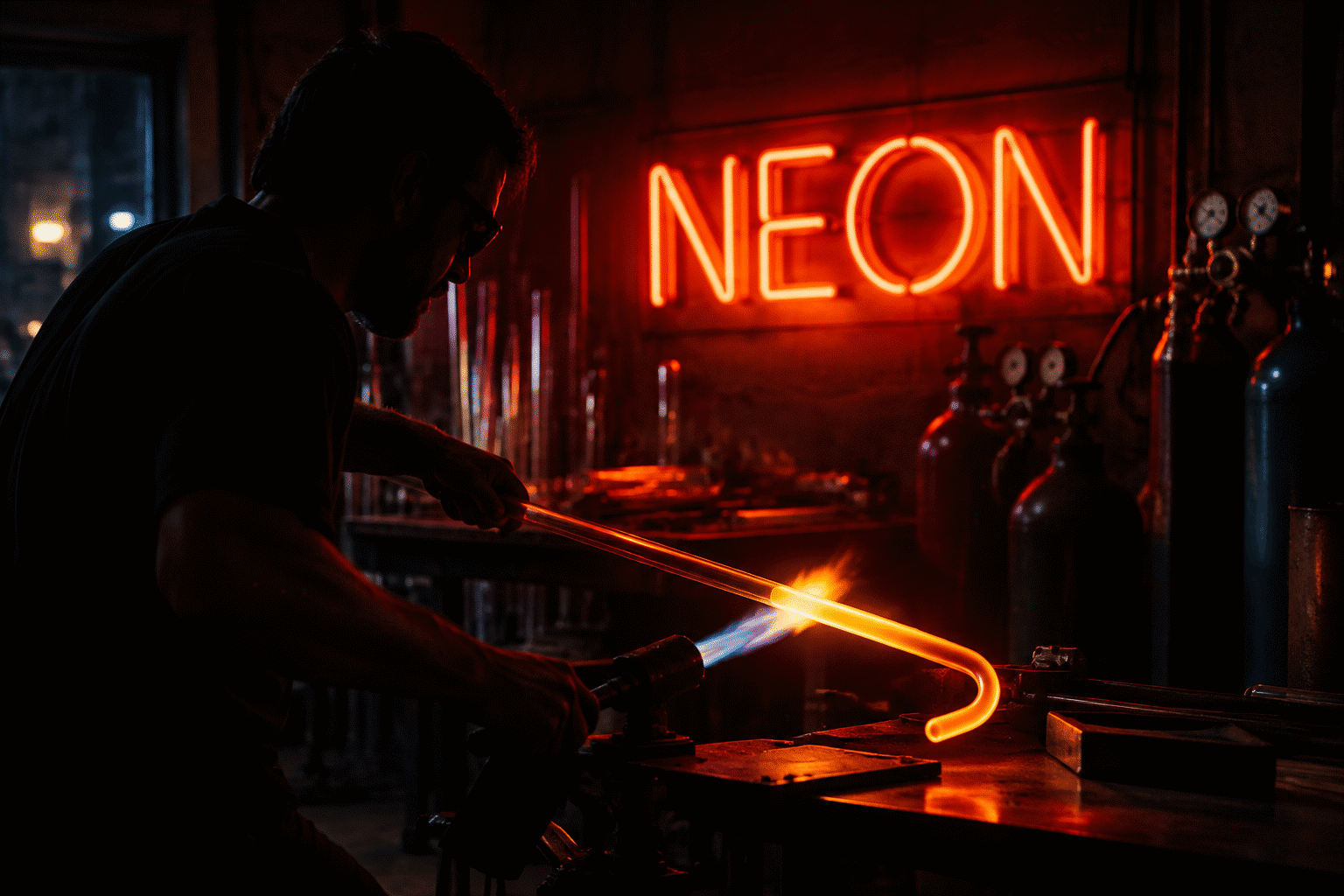
Do Neon Signs Get Hot? Glass vs. LED Heat Facts
Short answer: glass neon gets warm, LED neon barely gets warm, and neither should ever get hot enough to burn you. The physics are clean: traditional glass neon warms its tubes gently from the ionized gas discharge (warm to the touch after hours, not scorching), while LED neon’s heat stays concentrated in its low-voltage adapter rather than the sign itself. A sign that’s genuinely hot to the touch has a fault — and that distinction (warm = normal, hot = problem) is what this guide gives you the tools to judge.
Glass Neon: Warm Tubes, by Design
A traditional neon sign passes a high-voltage discharge through gas-filled glass tubes. The process is efficient at making light but not perfectly so — some energy becomes heat in the tube walls and the electrodes:
- Tube temperature: a working glass sign’s tubes run warm — typically in the 40–55°C (roughly 100–130°F) range after extended running. That’s “uncomfortable to keep your hand on,” never “instant burn.”
- The electrodes run warmest — the metal caps at each tube end where the wiring enters. This is normal physics, not a defect.
- The transformer is the real heat source. The high-voltage transformer driving glass neon does the heavy electrical lifting and runs warm by design — it belongs in a ventilated spot, not buried behind insulation or fabric.
What’s NOT normal for glass neon: tubes too hot to touch within minutes, a burning smell, discoloration around the electrodes, or a transformer too hot to rest a hand on. Those are fault signatures — see the troubleshooting section.
LED Neon: Cool Running, by Design
Modern LED neon (what nearly all custom signs sold today are) is a different machine: low-voltage DC (12V or 24V) passing through LED chips embedded in silicone tubing.
- The sign itself runs barely warm — the silicone may reach hand-warm after hours of full brightness, nothing more. You can safely touch it, and children and pets regularly do.
- The heat concentrates in the adapter — the small power supply that converts wall voltage to low-voltage DC. The adapter running warm is normal (it’s doing the conversion work); the sign staying cool is the design’s whole point.
- This is why LED neon can go where glass can’t: against fabric headboards, inside shelving, in kids’ rooms, wrapped around display areas — see our LED neon guide for the full capability picture.
The Comparison Table
| Glass neon | LED neon | |
|---|---|---|
| Tube/sign temperature | Warm (40–55°C) after hours | Barely warm (~hand temperature) |
| Touch safety | Warm, not burn-hot | Safe, including for kids |
| Heat source | Tubes + transformer | Adapter only |
| Burn risk when touched | Low but real after long runs | Effectively none |
| Fire-risk behavior | Requires fault + flammable contact | Requires fault; runs cooler by design |
The physics context for both: this is why LED neon draws about a quarter of glass’s electricity for the same output — less energy wasted as heat. The full energy math is in our electricity-usage guide.
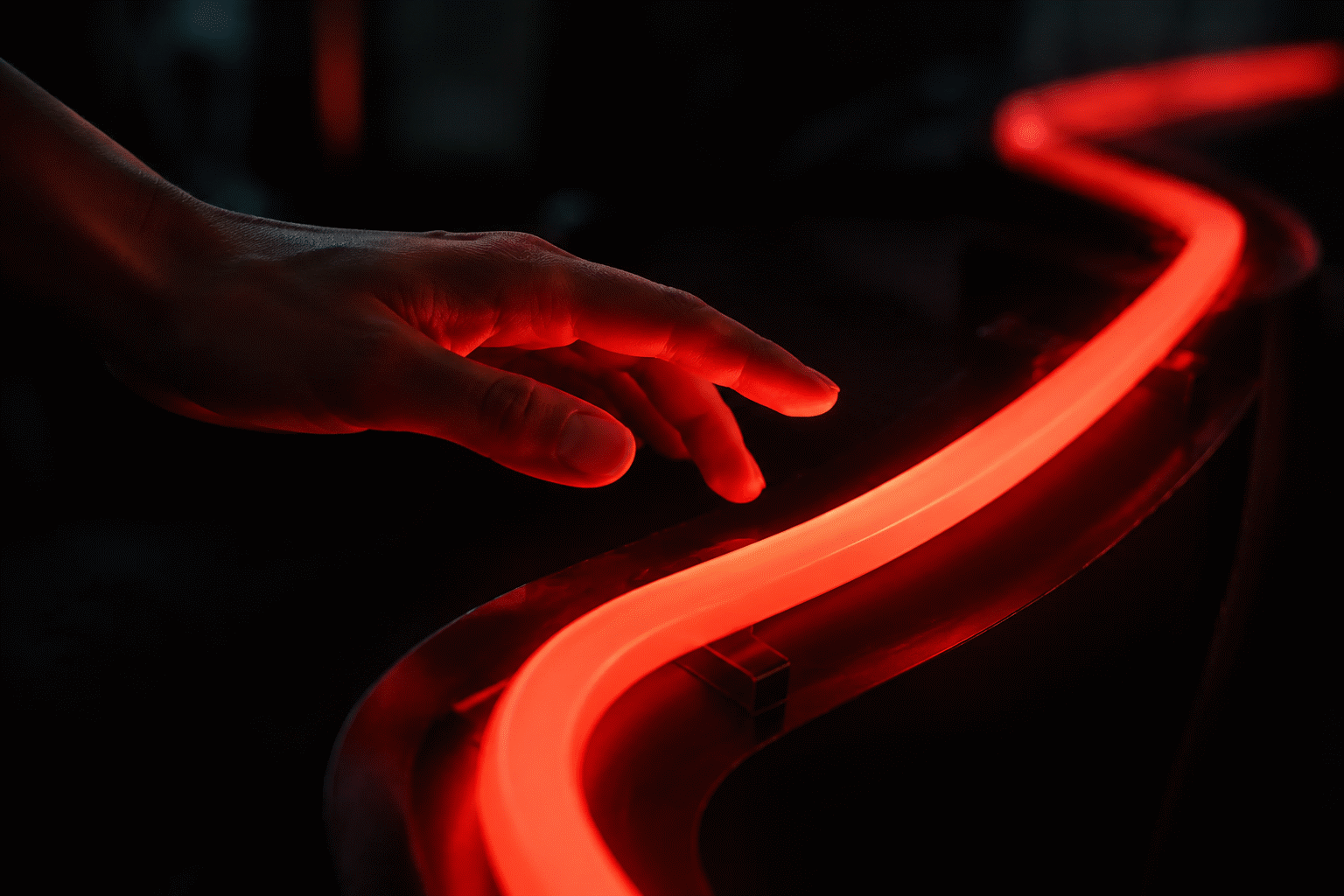
Why a Sign Would Run TOO Hot (and What to Do)
A sign that’s genuinely hot is telling you something. The fault shortlist:
- Wrong or failing adapter (LED). An under-spec or aging adapter overworks and overheats — replace it with the correct voltage/rating, never a random spare. This is the #1 LED fault mode.
- Overdriven or failing transformer (glass). A transformer mismatched to the tube load runs hot — an electrician or sign technician should match-spec the replacement.
- Blocked ventilation. Adapter or transformer buried in insulation, fabric, or an enclosed box with no airflow. Free the airflow; heat drops immediately.
- Dust buildup (glass). Heavy dust on tubes and transformer insulates heat in. Regular gentle cleaning — our neon sign cleaning guide covers the safe method — keeps temperatures in spec.
- Failing tube sections (glass). A tube struggling near end-of-life can run irregular and warm. Flicker plus heat together means it’s time for a technician.
The universal rule: warm = physics, hot = fault. Act on the second.
Heat and Placement: The Practical Rules
Where heat behavior should shape your install:
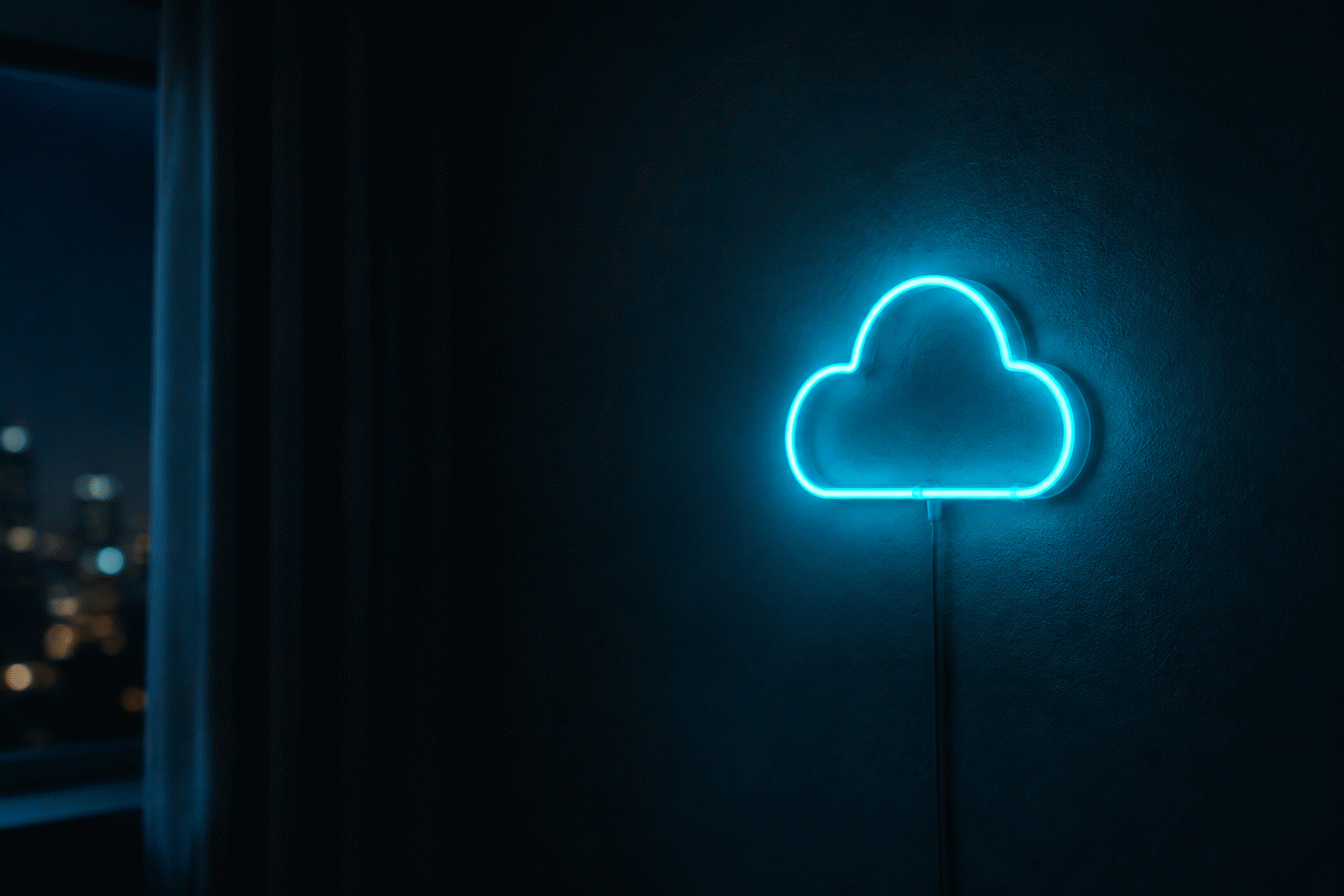
- Near fabric: LED only. Headboards, curtains, tapestries — the cool-running design is the entire safety case.
- Kids’ and pets’ rooms: LED only, dimmed — for touch safety more than heat.
- Enclosed spaces (shelves, cabinets, boxes): LED only; give the adapter airflow even then.
- Display cases with merchandise: LED only — cool enough to sit near any product.
- Wall mounting behind the sign: either technology is fine on drywall, wood paneling, or brick — glass’s “warm” tier doesn’t reach ignition temperatures against standard wall materials in normal operation. The fire-safety details (distance rules, cord condition) are covered in our dedicated safety guide.
- The adapter’s home: never enclosed in fabric or insulation, never covered, never on carpet — for either technology.
The Misconception Cleanup
“Neon signs are fire hazards because they get hot.” No — they’re warm-tier devices whose fire risk comes from faults (damaged cords, wrong adapters, DIY wiring), not from normal operation temperature. The physics and the fire math are separate questions; our safety guide separates them properly.
“You can’t touch a neon sign.” You shouldn’t habitually touch a running glass sign’s tubes (oil from skin plus warmth isn’t good for glass long-term), but an incidental touch won’t burn you. LED signs are touch-safe outright.
“LED signs don’t produce any heat.” They produce a little — concentrated in the adapter. That’s why the adapter placement rules exist even for the cool sign.
“Heat means the color is degrading.” No — color behavior is a gas-and-phosphor story (glass) or a chip story (LED), covered in our what are neon colors guide. Temperature doesn’t shift the color; age and phosphor chemistry do.
Heat Across the Lifespan: What Warmth Does Over Years
The long-term view — how heat behaves as the sign ages:
Glass neon’s aging heat profile. Glass signs run their warmest in their first weeks (new tubes, full gas pressure) and settle slightly cooler as they season. The aging signals to watch: tubes running progressively warmer than they used to (a sign the gas or transformer is drifting out of spec), and electrode-end discoloration paired with heat (end-of-life approach). A glass sign that suddenly runs hotter is a glass sign asking for a technician.
LED’s aging profile. Quality LED neon runs essentially the same in year five as in week one — the chips’ heat output barely drifts. The aging component is the adapter (its capacitors age; its warmth increases as efficiency drops) — the replaceable part, which is the design’s wisdom: the wear item is the $15 component, not the sign. Replacing a warm adapter at year four is routine maintenance, not a repair.
The dimming dividend. Running any sign below full brightness extends life and reduces heat proportionally — the sign that lives at 70% runs cooler and lasts longer than the one at 100%. For displays that don’t need maximum output (bedrooms, hallways, the ambience tier), the dimmer is the longevity tool as much as the mood tool.
The storage question. Signs in storage don’t care about heat — but signs stored hot (attics in summer) age their adapters and acrylics faster. Climate-stable closets over attic rafters; the decade-sign is the one stored gently.
The Safety-Certified Perspective
The regulatory view on neon temperatures — the official context:
- Certified signs (UL/ETL) are tested to touch-temperature standards. The certification marks on a quality sign aren’t decoration — they certify, among other things, that accessible surfaces stay below burn-threshold temperatures in normal operation. The uncertified import tier skips exactly this testing.
- The clearance code for commercial glass. Professional glass-neon installs carry clearance requirements (distance from flammables, transformer housing specs) precisely because the high-voltage tier demands respect. The residential LED tier needs none of this — one of its quiet advantages.
- The fire-safety linkage. Heat and fire-safety intersect only at the fault tier (covered in our fire-safety guide) — normal-operation warmth is a comfort topic, not a hazard topic. Keeping the two questions separate is the accurate way to think about both.
Practical Experiments You Can Run
The ten-minute home diagnostics — measuring your own sign’s health:
- The five-finger test. After an hour of running: rest your hand on the sign’s face (LED) or near-but-not-on the tubes (glass). Comfortable warmth = healthy. Can’t-hold-it = investigate (adapter first, then the seller).
- The adapter palm test. The adapter should be warm, not painful. A hot adapter (uncomfortable to hold for five seconds) is a failing or under-spec unit — match-replace it.
- The dusk comparison. Photograph the sign at full brightness monthly; a dimming comparison over months (same camera settings) catches phosphor or chip aging early — dimming plus rising warmth together is the diagnostic pair for several fault modes.
- The sniffer test. Any burning-plastic or ozone smell: unplug immediately and contact the seller — smell is the earliest fault warning both technologies give.
FAQ: Neon Sign Heat
Do neon signs get hot? Glass neon gets warm — tubes reach roughly 40–55°C after hours of running, warm but not burn-hot. LED neon runs barely warm at the sign itself; its adapter does the warming. Neither should ever be genuinely hot to the touch.
Do LED neon signs get hot? Barely — the silicone tubing reaches about hand-warmth at full brightness. The power adapter runs warmer (it’s doing the voltage conversion), which is why it needs airflow but the sign doesn’t.
Can a neon sign burn you? Normal operation: no — warm at worst. Fault conditions (overdriven transformer, wrong adapter): a hot component could burn on sustained contact. The rule: warm is physics, hot is a fault — fix or replace.
Can I put a neon sign near fabric or curtains? LED neon, yes — its cool running is the design case for headboards and fabric walls. Glass neon needs breathing room from flammable materials; keep tubes off direct contact with textiles.
Why is my neon sign’s adapter hot? Warm is normal (conversion work); hot is a warning — usually an under-spec or aging adapter, or blocked ventilation. Match-replace the adapter and free its airflow.
Does heat affect a neon sign’s lifespan? Chronic overheating (blocked ventilation, overdriven components) shortens both technologies’ lives. In normal installs, other factors dominate lifespan — our lifespan guide has the full curve.
Buy Cool, Run Cool
If touch safety or fabric proximity matters to your install, the answer is LED — the cool-running architecture is the modern medium’s quiet advantage. Every piece in the custom builder is LED: type your text, pick your color, and the only thing that gets warm is the adapter in its ventilated corner.
Sources & Further Reading
- Solid-State Lighting (U.S. Department of Energy) — DOE reference on LED efficacy and lifetime.
- Mercury (U.S. EPA) — federal guidance on mercury exposure and safe handling.