
The LED Neon Guide
Custom LED Neon Signs
What flexible LED neon actually is, how it differs from real glass neon, and how to pick a sign that still glows years from now – explained without the marketing fog.
The Material
What Is an LED Neon Sign Made Of?
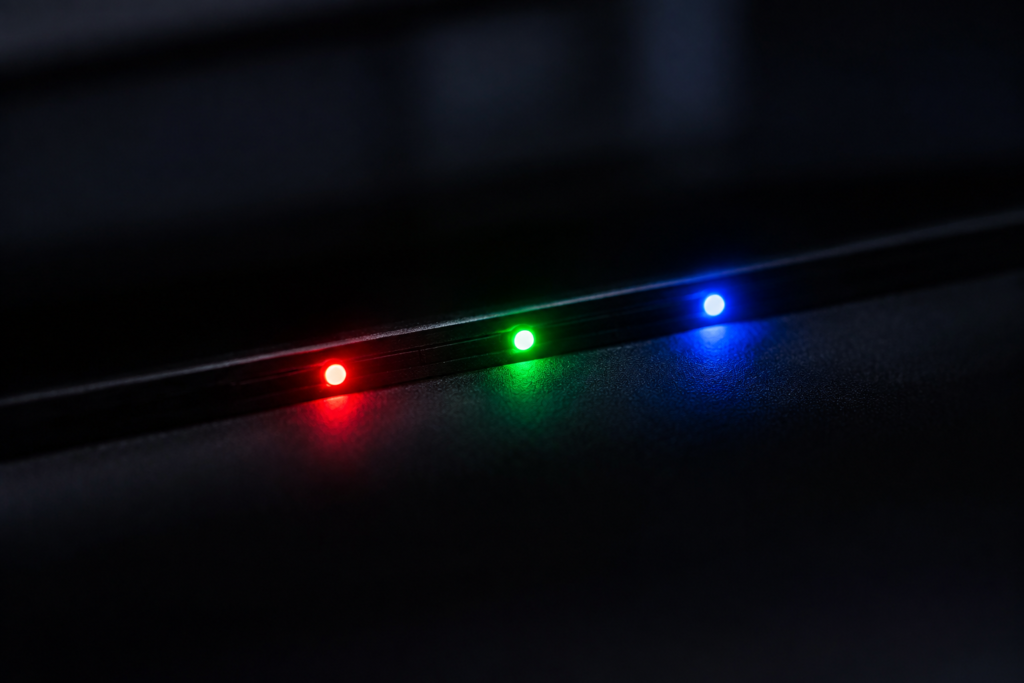
A custom LED neon sign is built from five parts: LED chips mounted on a flexible circuit strip, a dense silicone tube that diffuses the glow, a low-voltage power adapter, a controller for dimming and color, and a cut-to-shape acrylic backing board.
No gas, no glass, no high voltage. Where a traditional glass sign pushes a discharge through hand-bent tubes – typically 8-15 mm in diameter – driven at 2,000-15,000 volts, an LED sign runs at a safe 12-24 volts DC. That is phone-charger territory, which is exactly why it can go where glass never could.
The part worth checking is the silicone jacket: dense, UV-stable silicone ages gracefully, while cheap tubing can yellow within a couple of summers. The full materials breakdown, layer by layer, is in what a neon sign is made of.
Head to Head
LED Neon vs Glass Neon: The Honest Comparison
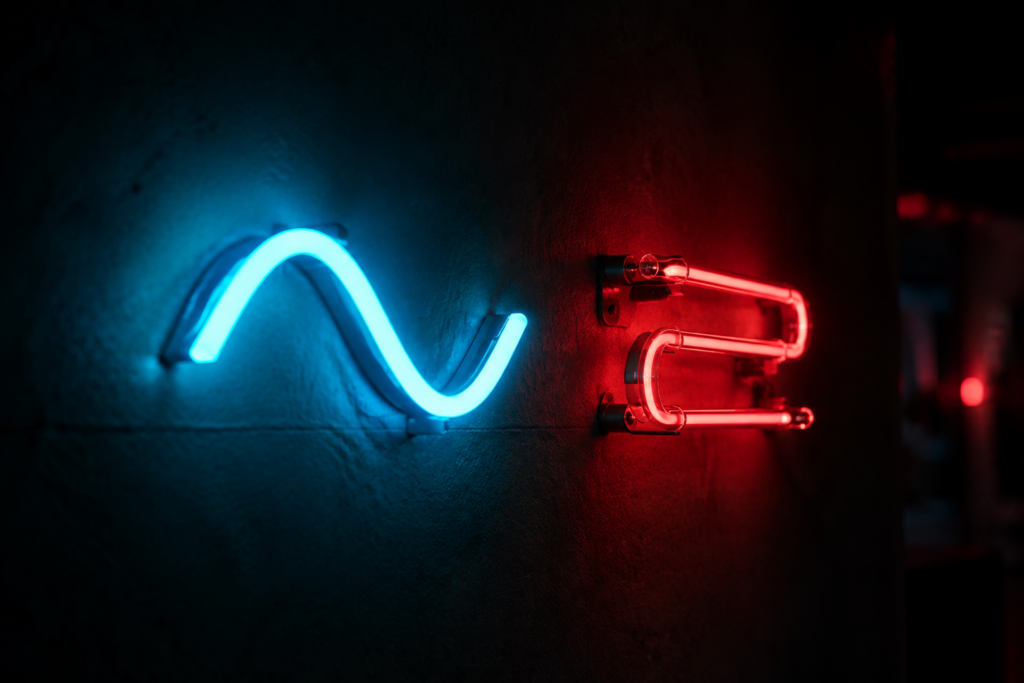
Both technologies make light that reads as “neon” – but they get there through completely different physics, and the differences land exactly where buyers care: safety, price, lifespan and upkeep.
| LED Flex Neon | Glass Neon | |
|---|---|---|
| Light source | LED chips on a flexible strip, housed in silicone tubing | Gas discharge through hand-bent glass tubes |
| Voltage | 12-24 V DC – safe to touch, self-install | 2,000-15,000 V – professional installation |
| Heat | Tube barely warms; heat stays in the adapter | Tubes run warm, around 40-55°C after hours on |
| Typical price | Custom pieces commonly sit in the $100-300 band | Typically 3-10x the LED equivalent |
| Lifespan | 30,000-50,000 hours before meaningful fade | Kept alive for decades through artisan servicing |
| Running cost | About a dollar a month in electricity for a typical sign | Higher draw, plus transformer losses |
| Control | Native dimming, RGB color changes, remote and app | Limited by the gas and the glass |
| Maintenance | $20-60 DIY fixes for connectors, adapters, dimmers | $100-300 professional service visits |
The honest footnote: glass still wins on light quality. Gas discharge throws a deeper, warmer glow with genuine 360-degree tube emission, and collectors, museums and flagship storefronts keep commissioning it for exactly that reason. For homes, events and most businesses, LED delivers convincingly the same look at a third of the cost or less – which is why nearly every custom sign sold today, including ours, is LED.
For the full side-by-side, including photos and the dimming and RGB details, read LED neon vs glass neon: the real differences. Curious why either version is priced the way it is? That is a separate honest answer.
Choose by Placement
Bedroom, Storefront or Outdoors?
The same sign is not the right sign everywhere. Match the build to where it will live and what it must survive.
Bedrooms & Kids' Rooms
Low voltage and a cool-running tube make LED flex safe against fabric headboards and around children and pets - the exact places glass neon can't go. Warm white or soft pink glows read best here.
Storefronts & Bars
Brightness that reads at street level, native dimming for the evening mood, and the script wordmark in classic red or warm white - the vocabulary that has always worked on doorways and back bars.
Outdoors & Covered Patios
Check the ingress protection rating before you buy: IP44 shrugs off splashes, IP65 handles rain and hose-downs. Rate the whole power chain - adapter and connections included - not just the tube.
Before You Buy
The 6-Point Buying Checklist
Six checks that separate a sign you forget about from a sign you have to think about – for all the wrong reasons.
1. Silicone Quality
Ask for dense, UV-stable silicone. It is the difference between a sign that ages gracefully and one that yellows in two summers - the single most telltale quality marker.
2. Brightness & Dimming
Quality LED neon dims without color shift and supports RGB color changes natively - the medium was born with electronics. A sign with no dimming is a sign cut short.
3. Color Temperature
Warm white (around 2700K) reads cozy in bedrooms; cooler whites pop in retail and gyms. Match the tone to the room before you match the color.
4. Backing Board
Cut-to-shape acrylic keeps the floating look; full panels are sturdier behind big designs. Either way it should arrive with pre-drilled mounting holes.
5. Certified Adapter
The power brick is the component your wall electricity actually meets. A UL or ETL mark is the difference between a tested appliance and an anonymous brick.
6. Ingress Protection
IP44 for splash zones like bars and bathrooms, IP65 for real outdoor exposure. The rating must cover the connections and adapter, not only the tube.
Myths, Debunked
Three LED Neon Myths to Stop Believing
"LED looks cheap next to glass"
At close range in a dark room, the difference is real - glass has a deeper, 360-degree radiance. At normal viewing distance, in most rooms and most storefronts, the look is convincingly the same.
"LED signs get hot"
The sign itself barely warms - the heat concentrates in the low-voltage adapter, and warm-not-hot there is normal. A genuinely hot tube has a fault; that rule holds for both technologies.
"Expensive signs are better made"
The price is the transformation - custom cutting, assembly, testing - not exotic materials. Typical custom LED pieces run $100-300 and amortize to about a dollar a month in electricity.
FAQs
Custom LED Neon Sign FAQs
What is an LED neon sign?
A display made of LED chips on a flexible strip, housed in silicone tubing and mounted on a cut-to-shape acrylic board – shaped to the classic neon look with no gas, no glass and no high voltage. The five-part breakdown is in what a neon sign is made of.
How long do LED neon signs last?
Quality LED flex runs 30,000-50,000 hours before meaningful fade. At 3-8 hours a day, that is 5-10+ years of nightly service before you would even notice a difference.
Are LED neon signs safe for bedrooms and kids' rooms?
Yes. LED flex runs at safe low voltage (12-24 V DC), stays cool to the touch, and contains no gas or breakable glass – which is exactly why it can hang on fabric headboards and in kids’ rooms where glass neon never could.
Do LED neon signs get hot?
Barely. Glass tubes run warm at around 40-55°C; LED tubing stays hand-warm, with the heat concentrated in its low-voltage adapter. Warm-but-not-hot is normal – genuinely hot means a fault. The full temperature picture is at do neon signs get hot?
LED vs glass neon - which should I buy?
For homes, events and most businesses: LED – a third the cost or less, safe voltage, native dimming and RGB, silicone durability and self-install. For heirloom light quality and commissioned statement storefronts: glass still earns its place. The full comparison is here.
What does IP44 or IP65 mean on a neon sign?
Ingress protection against water. IP44 resists splashes – enough for bar backs and bathroom-adjacent walls. IP65 resists direct jets of water, which is the level outdoor exposure calls for. The rating needs to cover the whole power chain, connections and adapter included.
How much does a custom LED neon sign cost?
Market-wide, typical custom LED pieces sit in the $100-300 band. At our maker, signs start at $210 for a short 10-inch design, and the live maker shows your exact total as you design – no quote request needed.
The Material Check
Know What You’re Buying. Now Design Yours.
Pick your text, font, color and size in the live maker – the price updates as you type, and every sign is handmade to order from flexible LED neon on cut-to-shape acrylic.