What Is a Neon Sign Made Of? Full Materials List
A glass neon sign is made of five materials: glass tubing, noble gas, metal electrodes, a high-voltage transformer, and a mounting frame or backing. An LED neon sign is made of a different five: light-emitting diodes, a flexible circuit strip, silicone extrusion, a low-voltage power adapter, and an acrylic backing. Neither contains anything exotic — the magic is in the arrangement, not the substances. Here’s every material in both technologies, what each one does, and which ones you actually interact with as an owner.
The gas itself (which gas, which color, how it behaves) has a dedicated guide at what gas is used in neon signs; the parts-as-systems view (how components work together) lives at neon sign components.
Glass Neon: The Five Materials
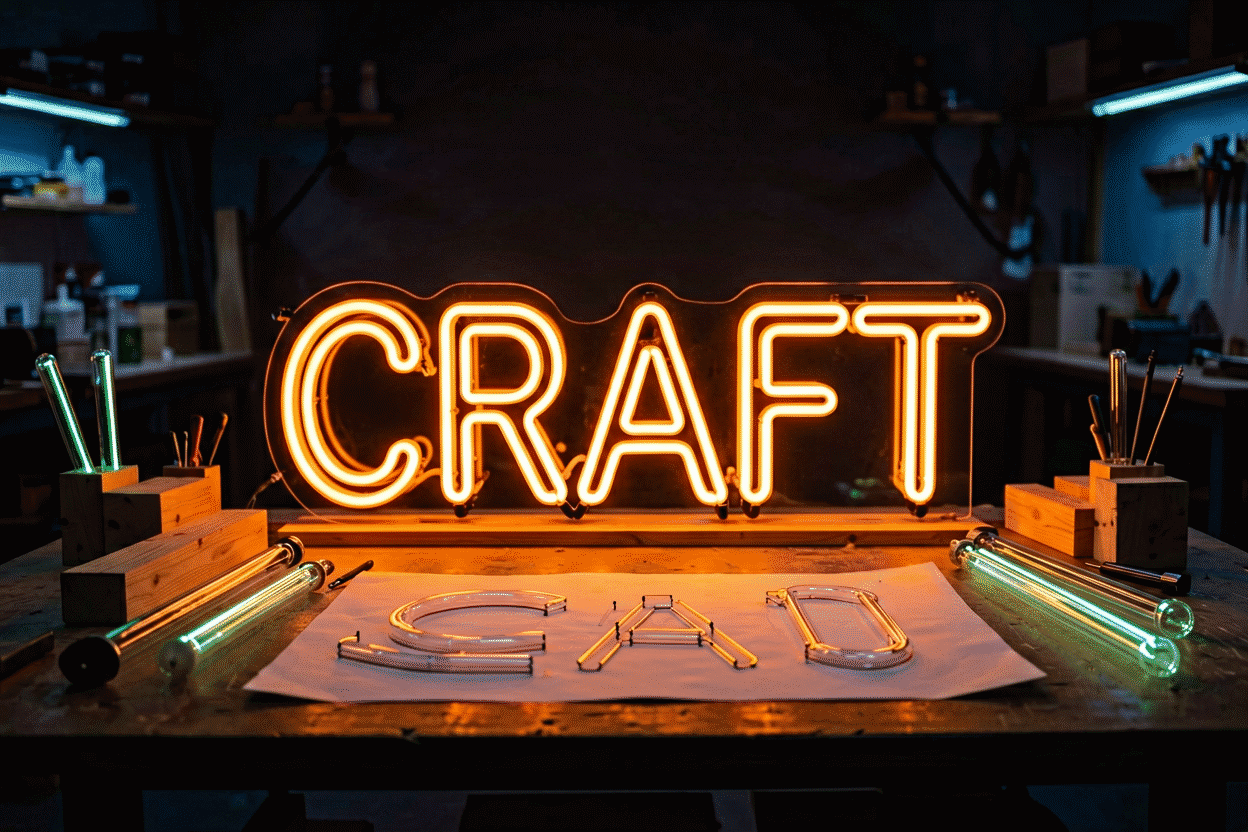
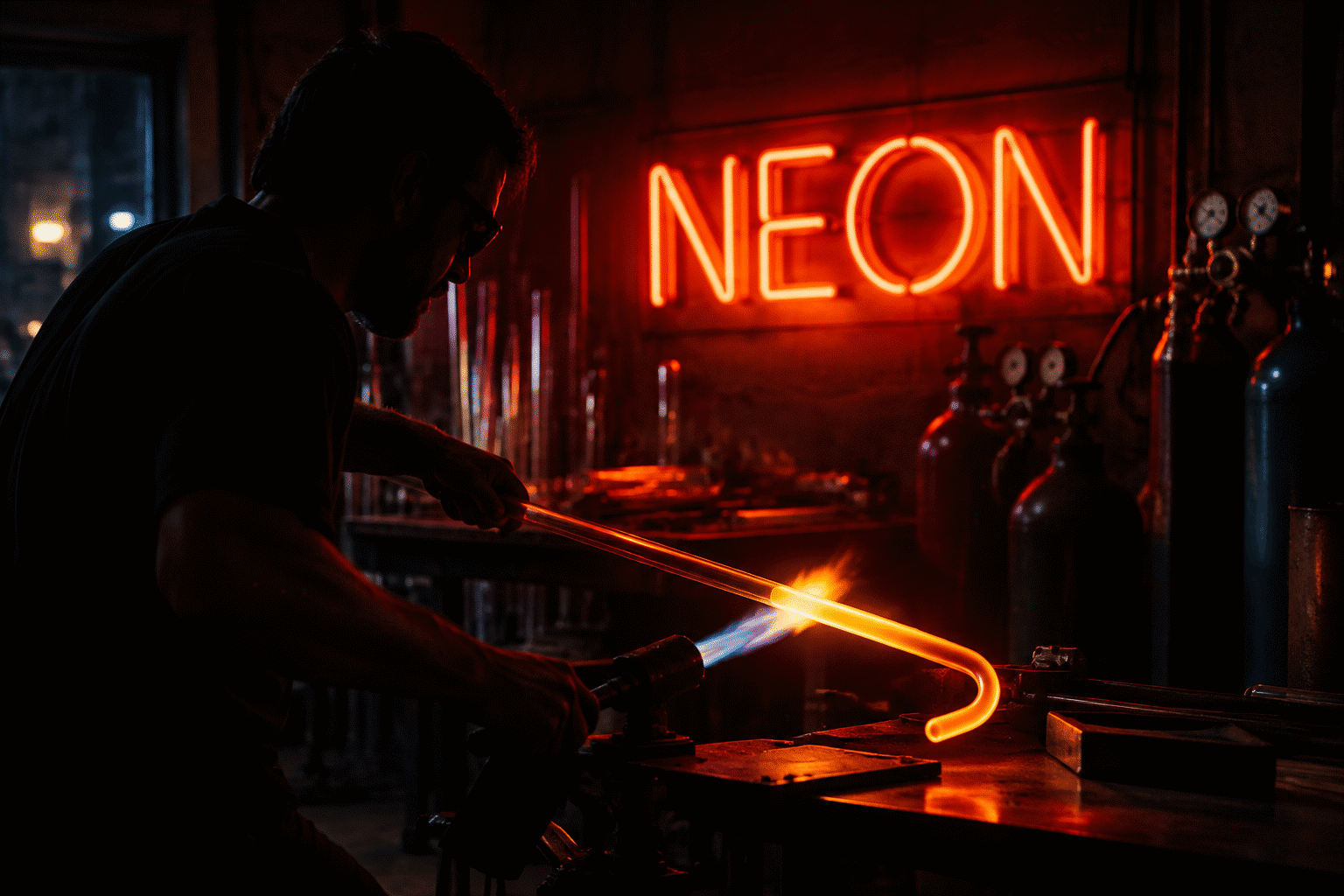
1. Glass tubing. Lead glass or soda-lime glass, typically 8–15mm diameter, hand-bent over a flame into letters and shapes. The glass is the structure, the gas container, and (when tinted or phosphor-coated) a color-shaping layer all at once — one material doing three jobs, which is the craft’s elegance.
2. Noble gas fill. Neon (red-orange), argon usually with a trace of mercury (blues), helium, krypton, xenon — at pressures just above atmospheric after a hard vacuum evacuation. The gas is the light source: electrically excited atoms emitting photons. It never depletes; a healthy tube’s gas outlives its owner’s interest (the chemistry: gas guide).
3. Electrodes. Metal terminals sealed into the tube’s ends — the entry and exit points for the current that ionizes the gas. Electrode metallurgy and their emission coatings are quietly most of a tube’s lifespan story.
4. The transformer. The high-voltage power supply (2,000–15,000V) that drives the discharge — the heaviest, warmest, most electrical-trade component on the bill of materials, and the reason glass installs are professional work (safety).
5. Backing and frame. The structure the tubes mount to: historically wire grids and transparent acrylic; the modern standard is acrylic backing with standoff mounts. In LED-era terms this layer became a whole design decision (backing guide).
The historical footnote in the list: mercury — used in argon fills for blues and whites through most of the 20th century, largely engineered away in modern production. Vintage glass in blue/white hues should be handled as possibly mercury-bearing at breakage and disposal (the toxicology detail: is neon gas toxic).
LED Neon: The Five Materials
1. Light-emitting diodes. Semiconductor chips (GaN family chemistry) that emit fixed-wavelength light at the junction — the light source, and the color decision, manufactured in. 60–120 diodes per meter of flex in typical signage grades.
2. The flexible circuit strip. A thin printed circuit board carrying the diodes and their power bus — what lets “glass-like” letters bend at factory scale. The strip’s copper traces and solder joints are the real-world reliability frontier (repair economics).
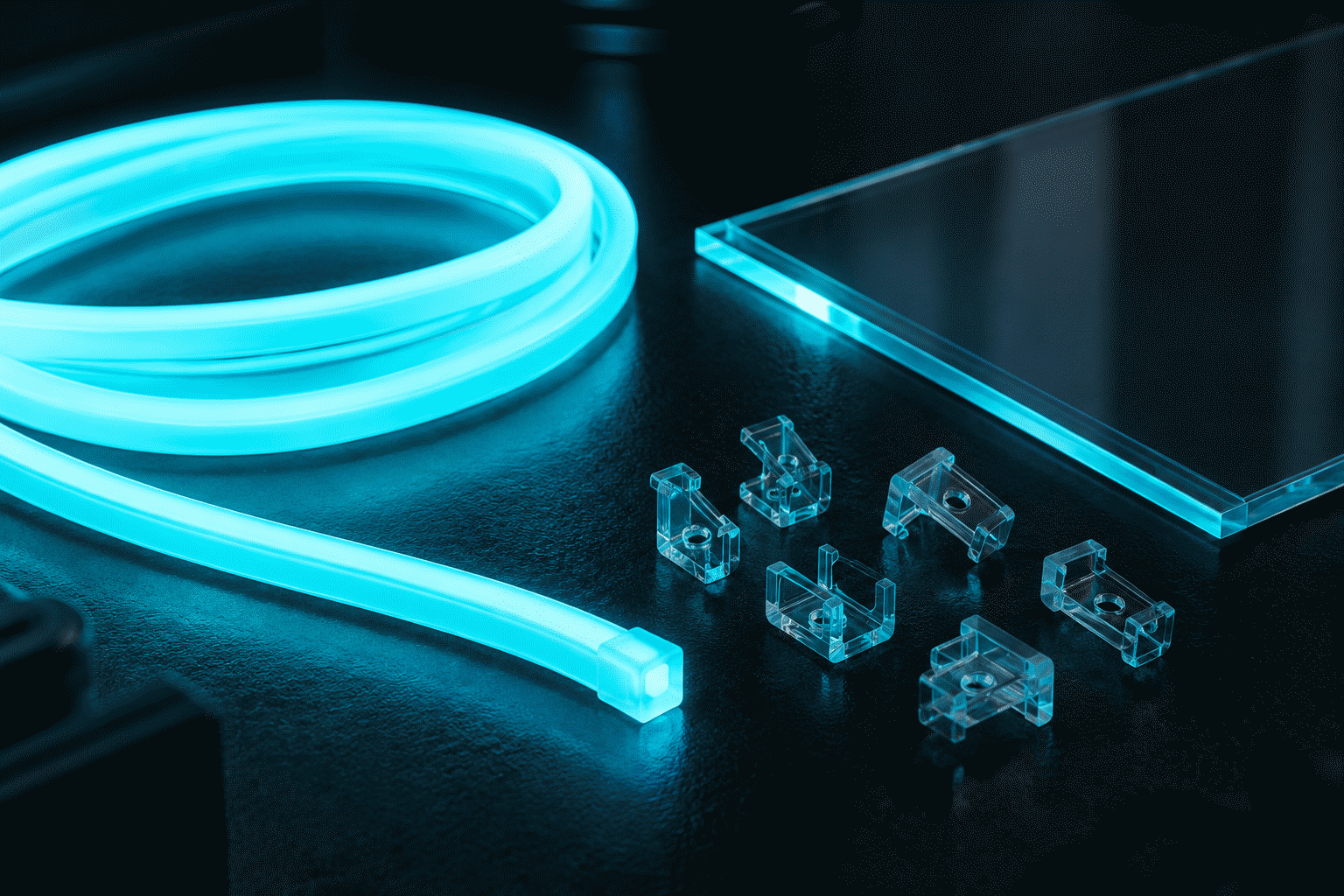
3. Silicone extrusion. The “tube”: solid or co-extruded food-grade silicone shaped into the dome profile, housing the strip, diffusing the light, and providing the weatherproofing that outdoor ratings hang on (IP ratings: waterproofing). Dense, UV-stable silicone is the difference between signs that age gracefully and ones that yellow in two summers.
4. Power adapter and controller. The 12–24V adapter (the certified brick — the component your wall electricity actually meets) and the controller module adding dimming, remote, and RGB logic (the power chain).
5. Acrylic backing. Cut-to-shape or full-panel — the chassis and mounting surface, carrying the pre-drilled holes every install method uses (hanging guide).
What the Two Lists Tell You at a Glance
| Glass neon | LED neon | |
|---|---|---|
| Light source | Gas atoms | Semiconductor diodes |
| Voltage domain | 2,000–15,000V | 12–24V |
| Structure | Hand-bent glass tubes | Factory-formed flex on acrylic |
| Weather resistance | Possible but engineering-heavy | Material property (rated silicone) |
| Colors | Gas + phosphor + tinted glass | Diode chemistry + RGB mixing |
| Owner-touched parts | Transformer, frame | Adapter, controller, backing |
| Historical toxic material | Mercury (some blues/whites) | None |
The materials are why the ownership experience differs so completely: glass asks you to live around a high-voltage gas apparatus (beautifully), LED asks you to live around a wet-rated appliance (the full comparison).
Materials You Actually Touch as an Owner
The owner-facing material list is short: the backing (mounting, cleaning — acrylic scratches, treat accordingly: cleaning), the adapter and connectors (the failure points and the parts you match on replacement: power), the cord (routing and hiding: wire management), and the remote (its coin cell). Everything else is sealed behind the silicone or the glass and speaks only through the warranty (terms decoded).
Materials as Buying Signals
When you’re evaluating a sign, the material specs that predict experience:
- UV-stable silicone (for any sun exposure) — stated, or it isn’t
- Certified adapter (UL/ETL/CE marks) — the safety-critical component, non-negotiable (why)
- LED density (diodes per meter) — the smoothness of the line, i.e., the “cheap dots vs. continuous glow” difference (quality checklist)
- Acrylic thickness/backing type — the durability of the chassis and the look against your wall (backing types)
- IP rating where relevant — two digits that determine outdoor legitimacy (IP decoded)
Every one of those is specifiable at order — the custom builder prices each materials tier live, which makes “what is it made of” not a trivia question but the actual decision interface for the sign you’ll own.
Material Safety and Handling, Owner’s View
The materials lists translated into the handling facts owners actually need:
Handling the LED sign’s materials. The silicone jacket is the care-relevant surface: inert, skin-safe, and cleaning-friendly with nothing harsher than a damp microfiber (the cleaning rules) — solvents and abrasives are the only realistic threats, both owner-inflicted. The acrylic backing is the fragility budget: it scratches (never paper towels), cracks under overtightening (the mounting discipline), and survives everything gentler. The adapter is the certification-bearing component — its UL/ETL mark is the difference between a tested appliance and an anonymous brick (why it matters).
Handling glass neon’s materials. The tube itself wants distance and respect: no touching in operation (heat and high voltage — the temperature facts), no cleaning without power-off, and moves only with professional involvement (the service reality). The transformer cabinet is trades-territory forever: it’s the component whose 2,000–15,000 volts justify every caution the medium carries (the voltage domain). Vintage pieces add the mercury-era awareness for blues and whites — intact display is safe; breakage follows the protocol (the toxicology).
Disposal, material by material. LED signs are standard e-waste: the circuit strip, adapter, and acrylic all route through electronics recycling (the responsible path). Modern glass wants the collector’s market before the dumpster — restorers actively want working pieces (the vintage economy). Mercury-era vintage glass goes to hazardous-waste drop-off, sealed and labeled. Nothing in any category belongs in household trash, and nothing requires heroic effort to dispose of correctly — the channels exist and are free at the municipal level almost everywhere.
The materials-to-buying bridge. Every material on both lists appears on spec sheets (the quality checks): silicone grade (UV-stable or not), acrylic thickness, adapter certification, LED density, connector sealing. The buyer who can read the materials list can read the listing — which is the entire difference between hoping a sign is well-made and knowing it is.
FAQ: Neon Sign Materials
What is a neon sign made of? Glass signs: bent glass tubing, noble gas fill, metal electrodes, a high-voltage transformer, and a backing frame. LED signs: diodes on a flexible circuit strip, silicone tubing, a low-voltage adapter, and acrylic backing. Five materials each, no exotics.
What gas is inside neon signs? Neon, argon (with or without a mercury trace, historically), helium, krypton, and xenon — chosen per color. The gas-by-color breakdown and safety notes live in our gas guide.
What is LED neon made of? Light-emitting diodes (the color-fixed light source), a flexible printed circuit strip, a silicone extrusion that diffuses and weatherproofs, a certified 12–24V adapter, and an acrylic backing chassis.
Do neon signs contain mercury? Vintage glass blues and whites commonly did; modern quality production has largely eliminated it, and LED neon contains none. Treat vintage glass breakage and disposal with mercury protocols.
What part of a neon sign fails first? In LED signs, the power chain — adapters, connectors, controllers — not the diodes or silicone. In glass signs, transformers and aging tube joints. Both failure landscapes map to the materials lists above.
Which neon sign materials matter for outdoor use? UV-stable silicone, IP65–67 sealed connectors, a rated adapter in protected placement, and stainless mounting hardware — the materials tier that outdoor legitimacy hangs on, detailed in the waterproofing guide.
The Materials FAQ
Which neon sign materials are recyclable? The LED sign’s core materials route cleanly: circuit strips and adapters through e-waste recycling, acrylic through plastics channels where local programs accept it (the disposal path). Glass neon’s tubes resist standard glass recycling (phosphor coatings and embedded electrodes), which is why intact pieces route to collectors and restorers first (the vintage channel) and broken pieces to sealed-container disposal per local rules.
Do neon sign materials off-gas? Quality silicone and acrylic are stable at room temperature — the faint new-sign smell is factory residue curing off in the first days, not ongoing emission. Persistent chemical odor beyond week one indicates substandard jacketing and is a legitimate return-ground (the arrival checks).
Are the materials fire-safe? The power chain is the fire conversation, not the body materials: certified adapters and intact cords are the prevention layer (the fire analysis), while silicone jackets and acrylic backings are ignition-resistant at the temperatures a functioning sign produces (the temperature facts) — cool-running by design, which is the material-level answer to the question.
Sources & Further Reading
- Cleaning Up a Broken CFL (U.S. EPA) — the federal mercury-spill cleanup procedure; we mirror it for broken glass-neon tubes.
- Neon: Strong Lines (NIST Physical Reference Data) — the standard reference for neon’s emission wavelengths.
- Argon: Strong Lines (NIST Physical Reference Data) — the standard reference for argon’s emission wavelengths.
- Solid-State Lighting (U.S. Department of Energy) — DOE reference on LED efficacy and lifetime.