Blog
How to Decorate Large Walls: Neon-Led Ideas That Scale
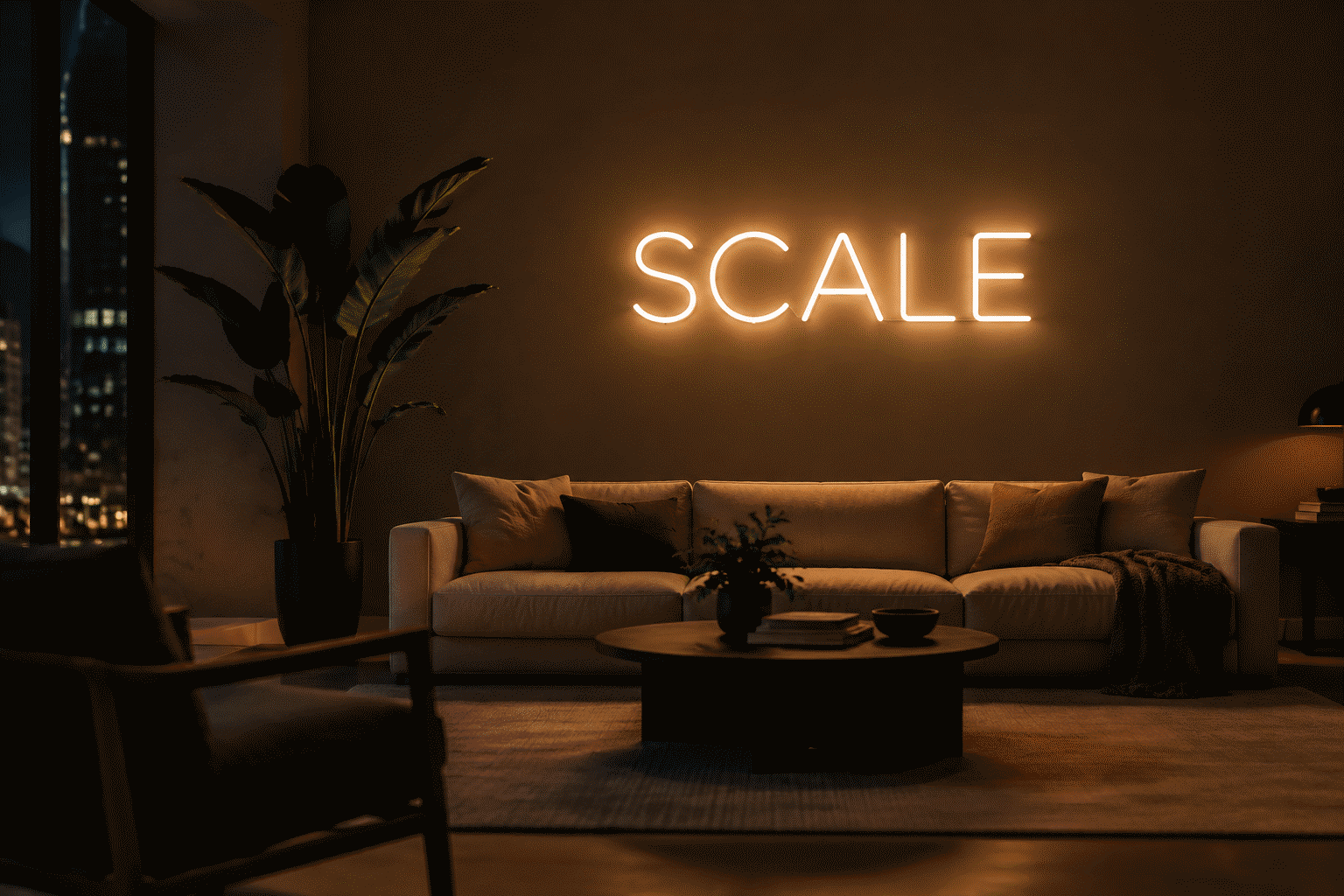
A large wall fails for one of two reasons: it gets one small thing (the lonely 16-inch frame floating in eight feet of drywall) or it gets everything (the gallery of forty objects with no order). The fix is not more ideas — it is a system. Measure the wall into zones, give it one hero object that is actually big enough, layer two supporting registers around it, and control the rhythm so the eye travels instead of stumbles.
This is the guide to that system, built around the one decor category genuinely engineered for large walls: the LED neon sign. A neon piece solves the large-wall problem at its root — it ships at 40 to 70 inches wide, weighs a fraction of framed art at that size, needs no stud-finding for a gallery grid, and lights the wall instead of just covering it. The same system works with any hero object; neon simply makes the math easy to see.
First: Measure the Wall Into Its Three Zones
Before choosing anything, split the wall into its working regions:
- The sightline zone — the horizontal band between roughly 48 and 72 inches from the floor. This is where the eye lands standing. The hero object’s center of mass belongs here, or slightly above it.
- The anchor zone — the lower quarter of the wall, usually occupied by furniture (sofa, console, headboard). Decor here is either part of the furniture story or deliberately empty breathing room.
- The crown zone — the top 15 inches below the ceiling. Decorating it pulls the eye up and makes ceilings feel taller; leaving it empty keeps the composition grounded. Pick one behavior per room, not per wall.
The three numbers to actually write down: wall width in inches, wall height, and the width of the furniture against it. Every decision that follows is a ratio of those three.
The Hero Rule: One Object at 40–60% of Wall Width
The single most useful number in large-wall decorating: your hero object should span 40 to 60 percent of the wall’s width, or a third at minimum. That is the span where an object stops being “a thing on a wall” and becomes “the wall’s content.”
Run the math on the classic problem wall — 12 feet of empty drywall behind a sofa:
- A 24-inch framed print covers 17% of it. The wall wins; the frame disappears.
- A trio of 16-inch frames spans about 25% with spacing. Better, still quiet.
- A 60-inch neon sign spans 42%. The wall has a subject.
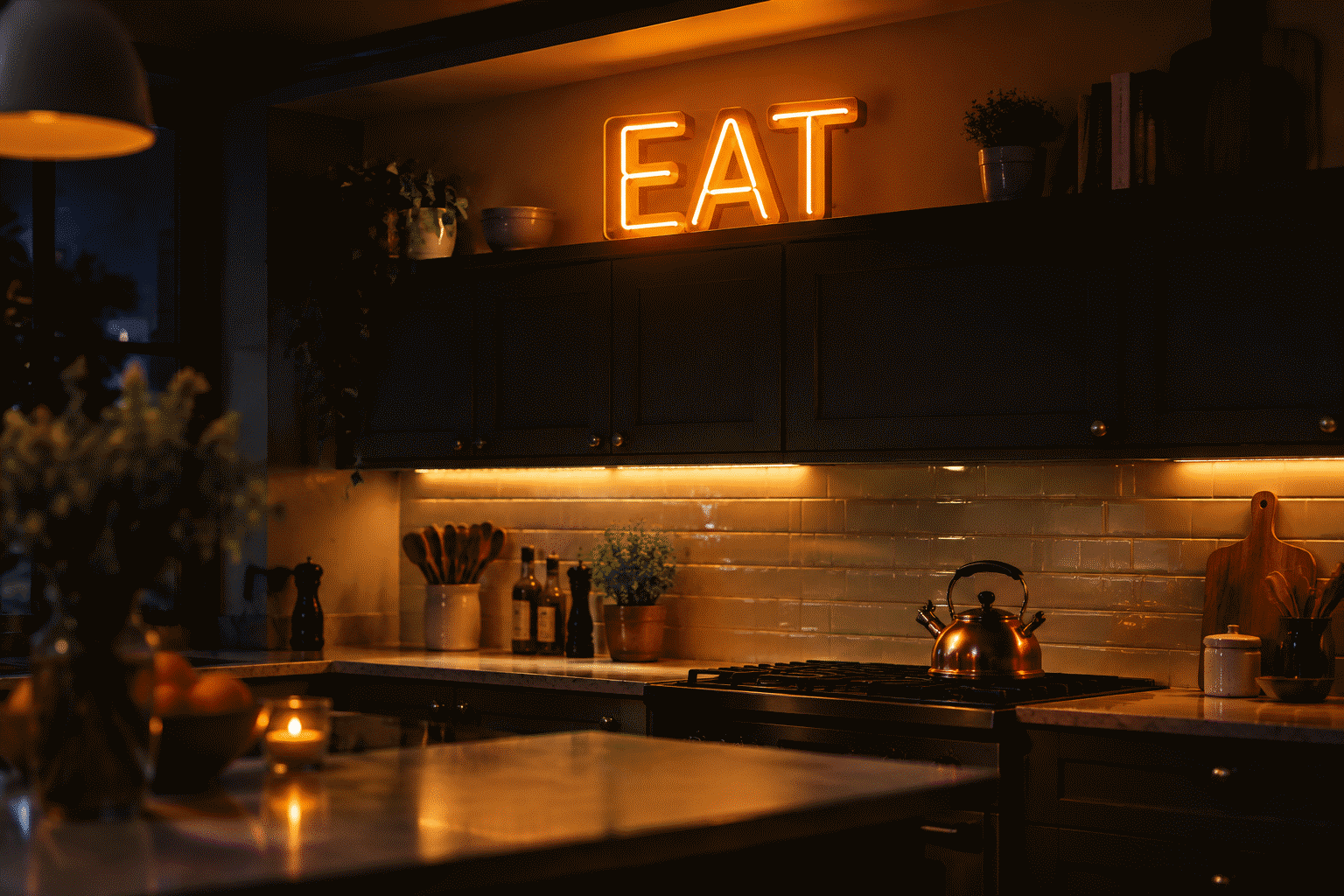
This is why large walls keep drifting toward neon: it is the only mainstream decor category whose standard sizes routinely reach 40, 50, 70 inches — custom text renders at any width, and the physics scale. A 70-inch canvas is a structural project; a 70-inch neon piece weighs a few pounds and hangs from four screws. The complete proportion tables (including multi-sign layouts) are in the neon sign size guide.
What the hero says is the identity decision. On a large wall, short text wins: a single word or a short phrase reads across the room, while a sentence compresses the lettering until it mumbles. The large-wall canon is one to four words — a name, a mantra, a place — set at a size the room can’t ignore.
Layer Two: The Supporting Registers
A hero alone on a large wall is a poster, not a composition. Add two registers:

The secondary layer (60–80% of hero width). One or two objects that echo the hero without competing — a mirror leaning against the wall, a shelf run, a second smaller sign at a different scale. If the hero is a 54-inch word in warm white, the secondary might be a 20-inch symbol piece (a shape, a date, initials) in the same hue family, hung low and off-center. Different scale, same register — that’s the whole trick.
The texture layer. The large wall’s secret weapon: a material that changes how light behaves across the blank remainder. This is where a neon hero quietly outperforms framed art — it lights its own texture layer. Set a glowing sign near wood slats, a linen drape, or a plant cluster and the glow turns flat drywall into a lit surface. The sign does double duty as object and as the room’s lamp.
The anti-pattern to delete: symmetric everything. A 60-inch hero flanked by two identical 20-inch pieces at equal heights reads as a hotel corridor. Move one support lower, overlap a plant into the frame’s edge, and the wall stops being arranged and starts being designed.
Rhythm: The 60/30/10 of Large-Wall Light
With a lit hero in play, the wall’s final layer is brightness rhythm — the schedule of glow across the evening:
- 60% of the visual energy in the hero sign, set at its full output for evenings when the wall is the room’s show.
- 30% in the secondary layer — a dimmed accent, a lamp, a reflected glow. This register should never match the hero’s brightness.
- 10% in surprises — a small piece at floor level, a reflected edge on the ceiling. The detail tier guests discover on their second visit.
Every quality LED sign ships with a dimmer for exactly this reason: the same 60-inch hero at 100% is a party wall, at 40% is a movie-night wall, at 15% is a nightlight architecture. You are not decorating one wall — you are decorating the wall’s three or four evening modes. Budget the dimmer the way you’d budget a lamp.
The Room-by-Room Large-Wall Playbook
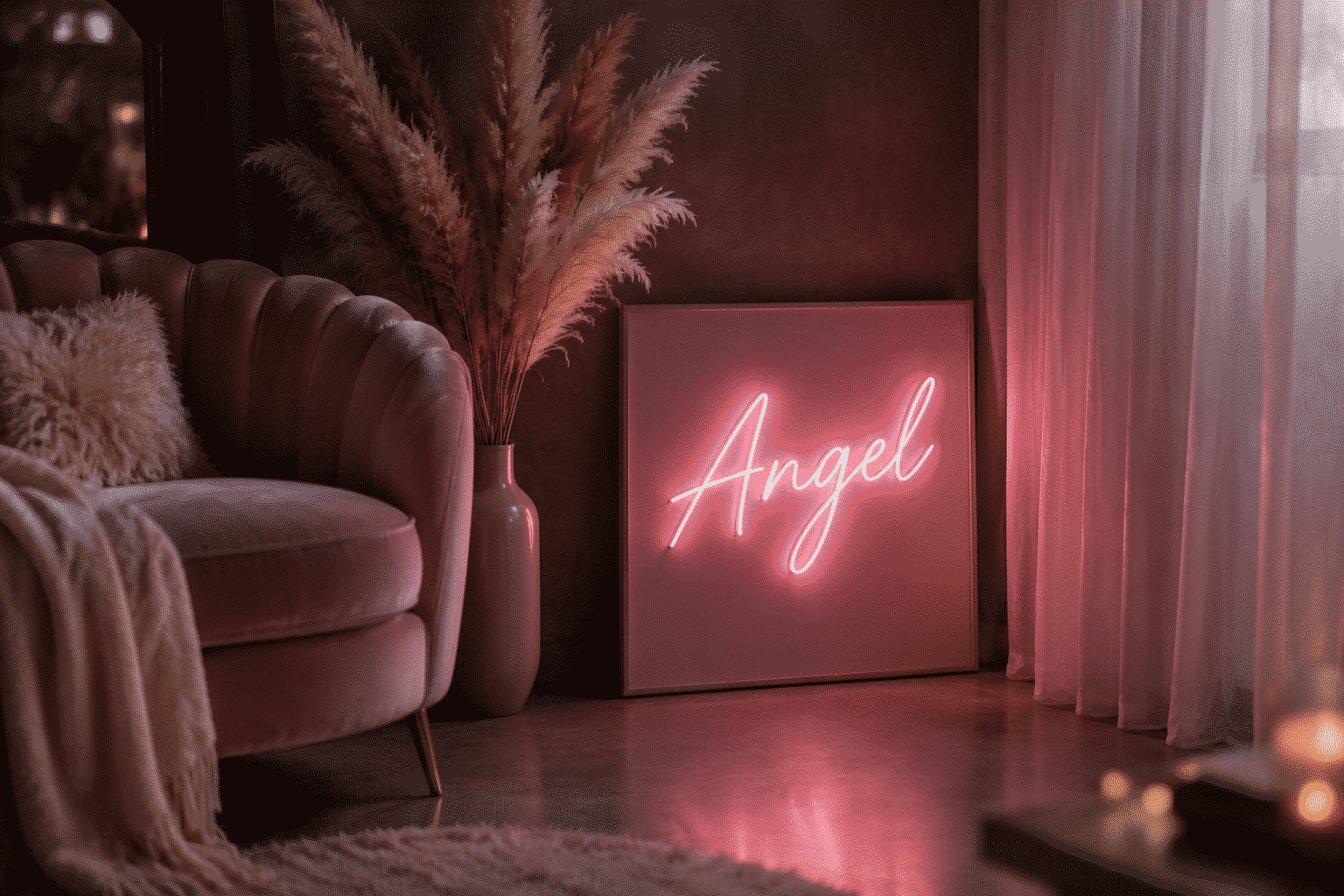
The living room wall behind the sofa. The canonical case. Hero at 50–60% of sofa width (a 60-inch sign behind a 96-inch sofa is the classic ratio), hung 8–12 inches above the sofa back. Texture layer: one large plant breaking the horizontal, or a slat run behind the sign. Skip the gallery grid — behind a sofa, grids fight the sofa’s own grid of cushions.

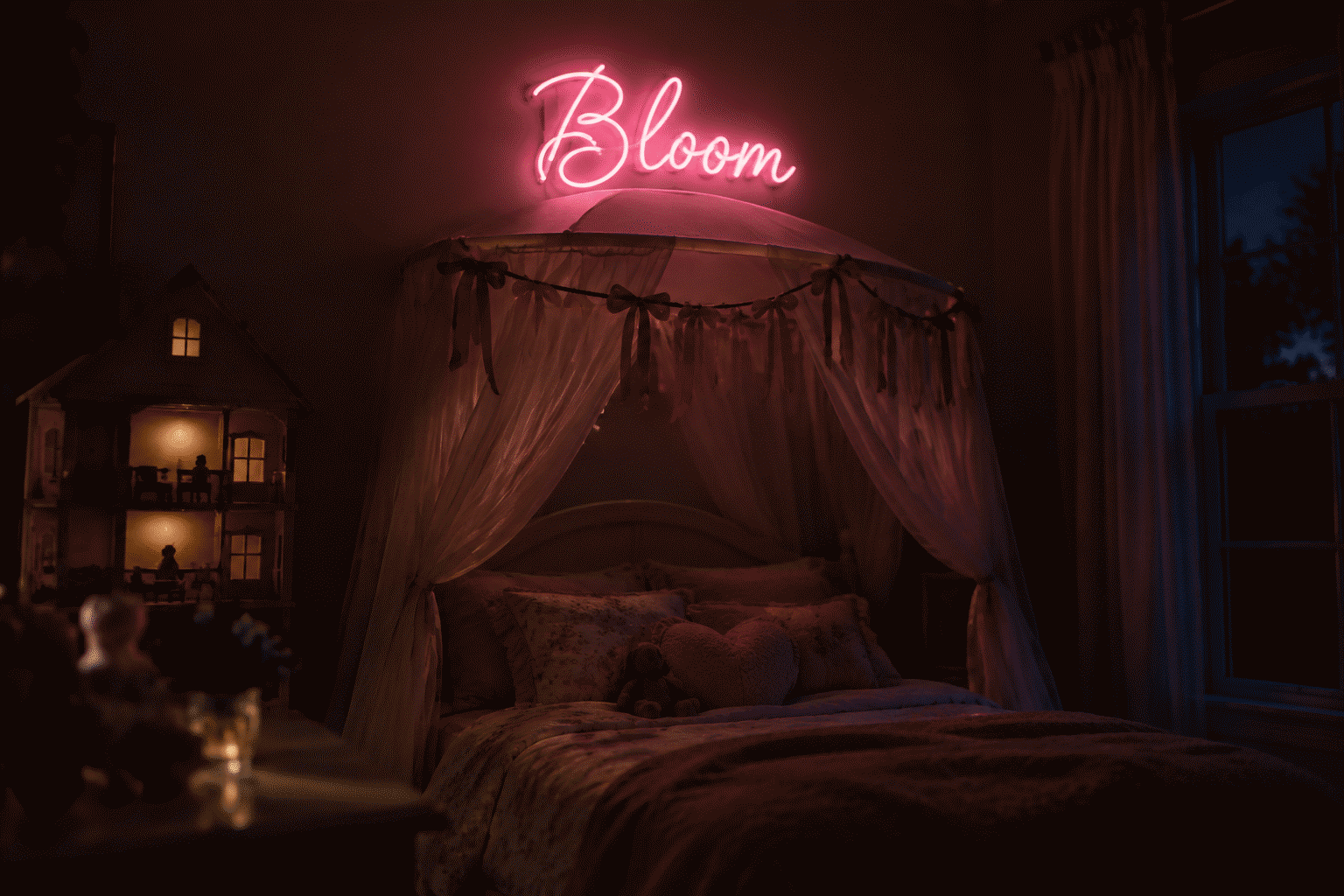
The bedroom wall behind the bed. The headboard is already the anchor; the hero spans 60–100% of headboard width and floats 8–10 inches above it. Names and short phrases are the bedroom canon — the planning specifics are in our bedroom guide. The 15% brightness mode is the tier that replaces a bedside lamp.
The game room and den. The one room where two heroes work — a big word over the setup and a symbol piece on the adjacent wall. The multi-wall layouts (and the brightness etiquette between two lit pieces) are in the gaming room guide.
The basement bar and cave. Large walls, low ceilings, zero daylight — the room neon was invented for. The man cave layouts pair a hero beer or sports piece with a running gag secondary at knee height.
The two-story foyer wall. The exception zone: vertical beats horizontal. Stack a hero sign over a secondary at different scales down the wall’s vertical line, or run one tall custom script floor-to-ceiling. This is the one wall where the 40–60% rule bends — go taller, not wider.
The Four Ways Large Walls Fail (and the System’s Answer)
Every disappointing large wall traces back to one of four patterns:
- The postage stamp. One undersized object on an oversized wall — the 16-inch frame on the 14-foot wall. The system’s answer: the 40–60% hero rule, enforced before anything is bought.
- The stamp collection. The overcorrection: a dozen small frames evenly spaced, filling the wall without composing it. The answer: one hero at scale, supports at a different scale — never a second uniform grid.
- The TV-and-nothing wall. The screen becomes the de facto hero, but only when it is on. The answer: treat the TV wall as a two-element composition — a neon hero run beside or above the screen that gives the wall a subject even on dark days.
- The height error. Everything mounted at standing-eye level reads low from across the room and high from the sofa. The answer: the 57–60 inch center-of-mass rule, checked from the room’s actual sitting positions, not from where you happen to stand.
The Renter’s Large Wall (and the No-Drill Tier)
The large-wall system survives lease agreements intact:
- Weight is the whole ballgame, and neon’s is trivial — the 60-inch hero hangs from adhesive anchors rated far above it, no drill required. The no-drill route is covered step-by-step in the hanging guide.
- Wire management is the renter’s real question. One raceway strip from sign to outlet, painted to match, leaves no trace at move-out. The full set of clean-exit tactics is in our wire-hiding guide.
- Damage math: two screw holes (filled with putty) or one paint-matched raceway. Compare to the forty holes of a large gallery grid.
Two stops for the big blank wall: the how to hang a neon sign on a brick wall piece covers the expose-brick case this guide keeps running into, and our neon room aesthetic guide fills the composition around whatever piece you commit to.
FAQ: Large Wall Decor
How big should decor be on a large wall? The hero object should span 40–60% of the wall’s width (a third at absolute minimum). On a 144-inch wall, that means a 58–86 inch object — the size range where neon is often the only practical category.
How do you decorate a large wall on a budget? One custom neon word at 40+ inches replaces the multi-piece budget spread — one object, full coverage, no gallery hardware. Layer free texture (plants, textiles, existing lamps) rather than more frames.
Should a large wall have one big piece or many small ones? One hero plus two supporting registers. Many small pieces at even spacing is the corridor pattern — it fills the wall without composing it. If you love the gallery look, cap it as the secondary layer and keep the hero.
How do you fill a two-story wall? Stack vertically: a mid-size hero at standing sightline, a secondary above it, and let the top quarter breathe or run one tall floor-to-ceiling script. Horizontal spreading makes tall walls feel like a lobby.
Is a neon sign big enough for a large wall? Custom builds render at any width — 40, 50, 70 inches is standard territory, and the weight stays in the few-pound range at every size. It is the one decor category whose sizing is built for exactly this problem.
How high should a large wall piece hang? Center of mass at 57–60 inches from the floor for standing walls; 8–12 inches above furniture lines. The complete hanging height tables (per wall type) are in the size guide.
Start the Wall’s Hero
Type the word, set the width, and watch the price scale live in the custom builder — the hero object for your largest wall, sized to the 40–60% rule by default. The system does the rest.
More wall systems: bedroom walls, gaming room layouts, man cave walls.
Sources & Further Reading
- Neon sign (Wikipedia) — the consolidated public record of neon-sign history and technology.
- Neon, element 10 (Wikipedia) — element properties: density, boiling point, abundance.