Cactus Neon Sign Ideas: Desert Bloom Glow
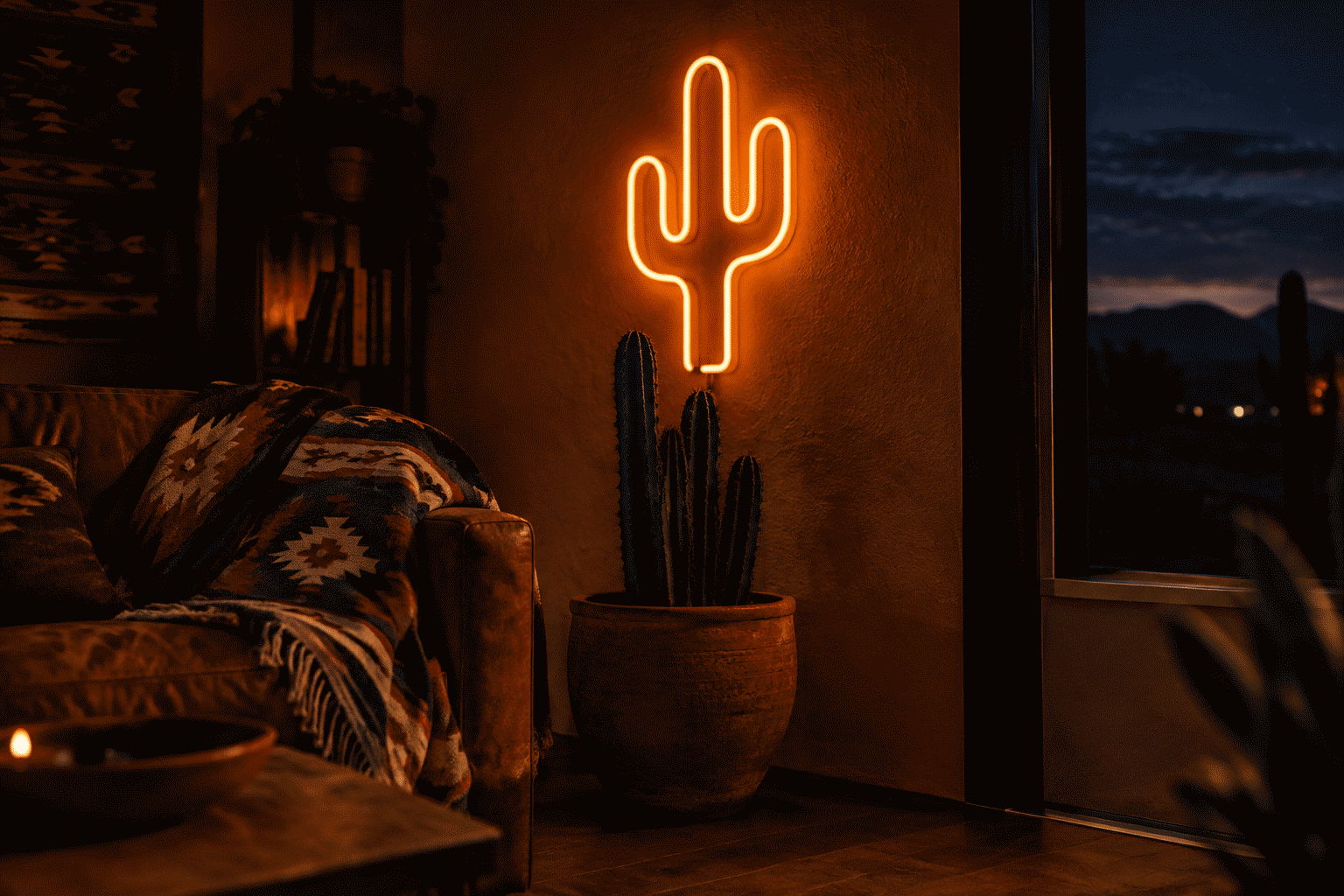
The cactus is decor’s most practical plant — the one that thrives on neglect — and its neon version inherits the trait completely: the silhouette that never needs water, never outgrows its wall, and blooms the same bloom every night. The shape is also one of the medium’s gifts: the saguaro’s three-column silhouette (the two arms raised) is drawn in five strokes, recognized by everyone, and rendered in a single unbroken line of tube.
This guide covers the cactus glow in full: the shape’s renderings (from the five-stroke saguaro to the blooming two-color custom), the desert register it anchors and the design movement behind that register, the rooms it owns from the covered patio to the cantina corner, the palette with its one sanctioned two-color signature, the sizing tiers, and the custom route. The short version for the impatient buyer: the single saguaro in palm green at 20-26 inches, on the wall’s open section, blooming variant if the room runs warm. Its opposite numbers — the palm and the flamingo, the humid tropics to its desert — build the warmer walls on the other side of the catalog.
How the Cactus Renders
- The saguaro. The classic — the two-armed giant, the desert’s signature silhouette. In neon: three vertical lines, two bends, done — the most recognizable plant shape in America in the fewest possible strokes. The register’s anchor piece at every size from 14-inch desk accent to 40-inch wall statement.
- The round cactus. The barrel and the prickly-pear registers — the rounder, friendlier shapes. The cutest member of the catalog’s plant tier; the kids’-room and gift build.
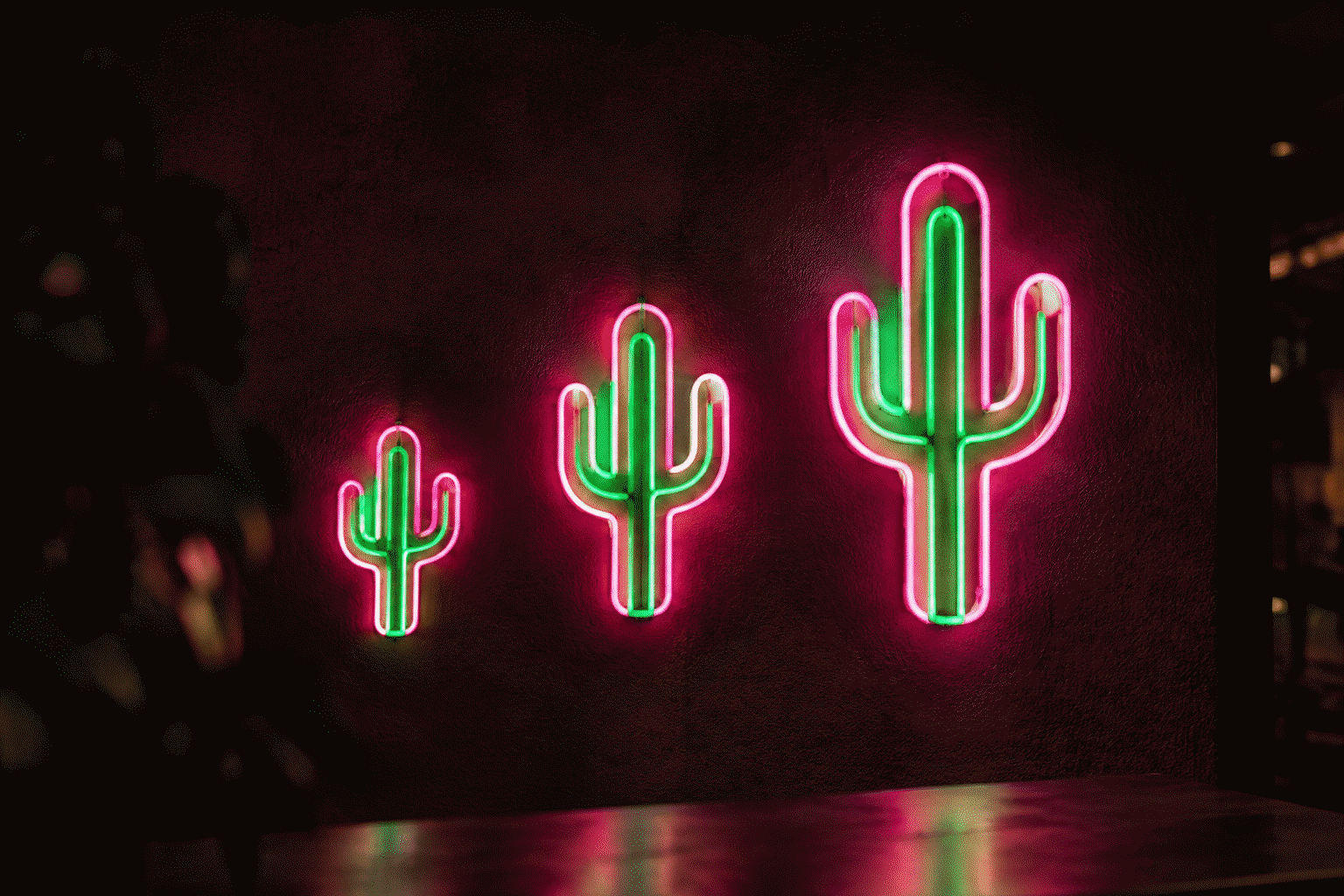
- The blooming cactus. The flower on the crown — the desert’s once-a-year event rendered permanently. The two-color custom (green body, pink bloom) is the register’s most-ordered build and its most beautiful: the flower that never wilts, on the plant that never needed help.
- The cactus garden. Three shapes at three heights — the composition build, the shelf and windowsill tier, the wall’s small desert assembled.
The Desert Register (and Its Opposite)
The cactus anchors the catalog’s dry-side aesthetic — the register the aesthetic guide calls the desert boho tier:
- The Southwest grammar. Terracotta, woven textiles, the sun-bleached palette — the room the cactus is native to. The saguaro among the earthenware, the sunset band, the coyote-and-moon pieces: the wall that means the Sonoran hour.
- The tropical opposite. The catalog’s humid side — palm and flamingo and hibiscus — runs bright greens and pinks and means vacation. The desert side runs deeper greens, earth tones, and means permanence: the vacation that stayed. The two registers can share a house, not a wall (the flamingo guide covers the other side).
- The modern-plant crossover. The cactus as pure geometry — the silhouette’s clean lines suit the modern-minimal room better than any other plant shape. The saguaro in warm white on a gallery wall is the plant piece that isn’t botanical illustration; it’s design.
The Rooms
The covered patio (the obvious). The cactus outdoors, among the real ones if you keep them — the silhouette and its living models sharing a wall. The drought-friendly patio’s signature piece; covered mounting, same as the category standard.
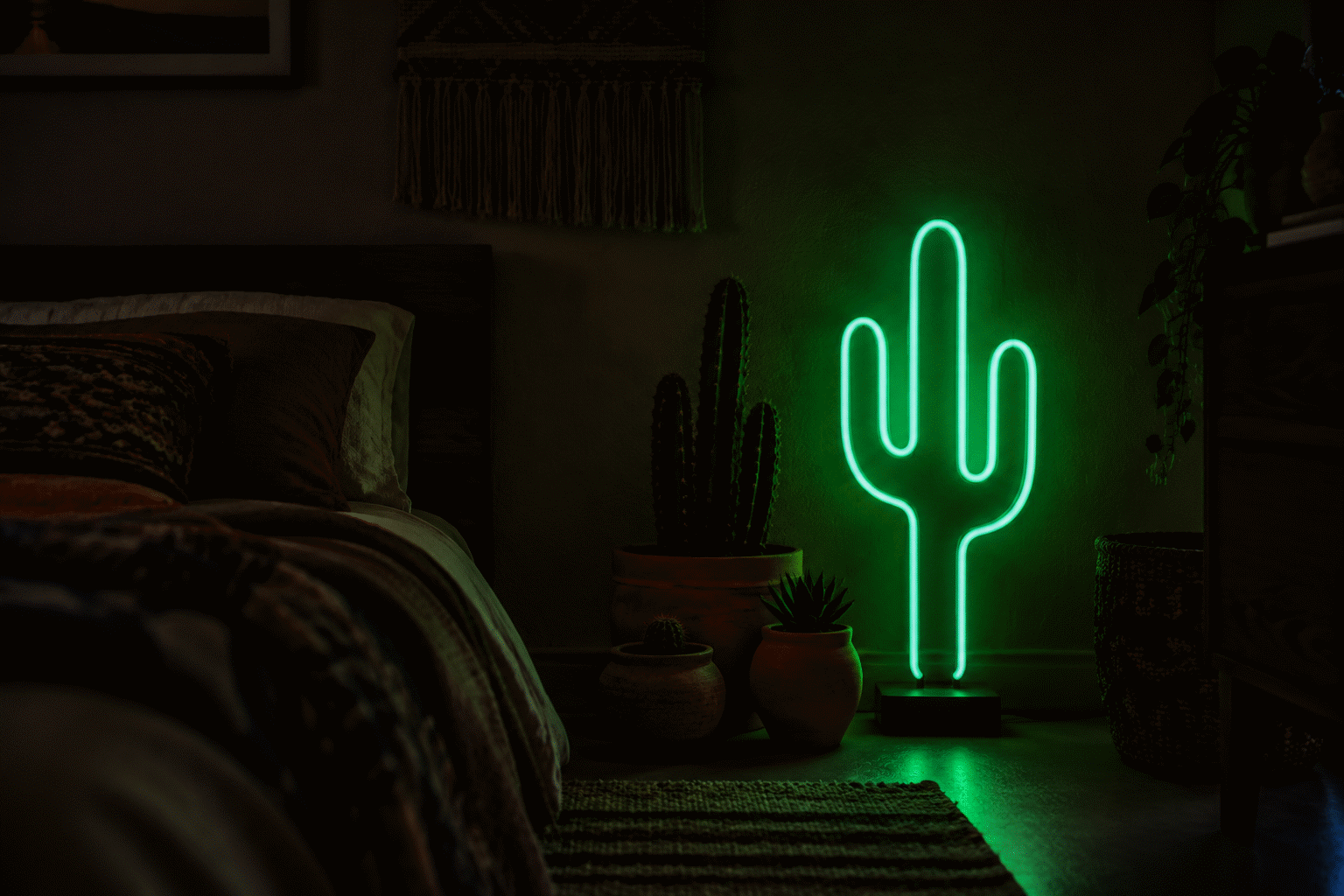
The Southwest living room. The saguaro over the console, among the textiles and the terracotta — the room’s anchor silhouette. Runs 24–36 inches in palm green or warm white.
The kids’ room. The round cactus tier — the friendly shapes, the soft green, the piece that teaches the room’s occupant which plants forgive neglect. Often paired with the sun-and-moon pieces for the desert-night wall.
The bathroom (the spa crossover). The cactus in the spa bathroom — the eucalyptus register’s Southwestern variant. The green glow at the vanity, the desert-spa palette; runs smaller (14–20 inches) at the calm brightness tier.
The bar and cantina tier. The tequila register: the cactus among the agave-and-lime pieces, the cantina wall’s signature. The two-color blooming build at bar height — the wall that means the margarita hour.
The Palette
- Palm green. The canon — the deep cactus green, the shade the living plants wear. The green guide covers the family; the cactus runs its deepest end.
- The pink bloom. The flower register — the blooming build’s crown color, the pink family’s soft end. The two-color green-and-pink cactus is the register’s signature piece.
- Warm white. The design tier — the silhouette as line art, the modernist’s cactus. The piece that survives in rooms with no other plant reference.
- The sunset duo. The cactus against or beside a sunset band — the desert’s own postcard register, the rose guide’s sunset neighbors in the flower family‘s warmer latitudes.
The Sizes
| Tier | Size | Register |
|---|---|---|
| The desk barrel | 10-14 in | Desks, shelves, gifts |
| The standard saguaro | 18-26 in | The room’s anchor |
| The blooming custom | 20-30 in | The two-color statement |
| The garden trio | composed | The shelf and windowsill |
The Desert Aesthetic, Honestly
The cactus wall sits inside a bigger design movement – the desert register – and knowing the movement’s rules makes the piece choices sharper:
- The drought-tolerant decade. The Southwest-and-adjacent aesthetic spread nationwide as water-wise design became climate-smart: the gravel garden, the terracotta palette, the architectural succulents. The cactus piece is the register’s icon precisely because the real plants led the trend – the wall shape documents the garden revolution.
- The cowboy-coastal crossover. The register’s current fashion phase runs the desert icons with a coastal ease – the cactus beside the straw hat, the suede and the turquoise, the “desert bohemia” that mixes Phoenix with Tulum. The wall piece serves this exactly: the saguaro in warm white, among the woven textures, the register at its most current.
- The terrarium-and-plant-parent tier. The houseplant wave’s collector branch – the succulent shelves, the propagation stations, the plant corner that became a room. The cactus garden piece (the trio) is this room’s own sign: the plant wall, labeled in light.
- The anti-fussy argument. The desert register’s deepest appeal: everything in it survives neglect. The cactus piece is the decor equivalent of its own subject – the wall shape that never needs water, never drops a leaf, never outgrows its pot. The aesthetic and the maintenance philosophy are the same philosophy.
The Custom Route
The cactus canon, live-priced in the custom builder:
- The saguaro at any height — the anchor build, $90–$160 at standard sizes.
- The blooming custom — the green-and-pink two-color, the register’s most gifted build.
- The garden trio — three shapes, one composition, the shelf tier.
- The name-on-the-desert build. The family or business name beneath the saguaro — the Southwest register’s est.-tier.
FAQ: Cactus Neon Signs
What does a cactus neon sign cost? Desk barrels run $60-$100; the standard saguaro $90-$160; the two-color blooming customs $140-$220; the garden trio $200-$280. The saguaro’s five-stroke simplicity makes it one of the plant tier’s most affordable builds.
What color cactus sign is best? Palm green – the deep cactus green the living plants wear. The pink-bloom two-color custom is the register’s signature; warm white is the modernist’s line-art version.
Is a cactus sign good for a kids’ room? The round-tier shapes are among the friendliest pieces in the catalog – soft green, forgiving silhouette, often paired with sun and moon pieces for the desert-night wall. The plant that forgives neglect, teaching its lesson early.
What pairs with a cactus neon sign? The Southwest grammar: sunset bands, sun and moon pieces, the terracotta-and-textile room. The flower family and the flamingo build the warmer latitudes; the palm is the humid opposite that stays on its own wall.
Can a cactus sign go on the patio? The covered patio yes – among the real cactus if you keep them, silhouette and models sharing the wall. Open exposure needs the weatherproof tier; the standard build stays covered.
What is a cactus garden neon sign? Three shapes at three heights in one composition – the saguaro, a barrel, and a round tier, arranged as the shelf-and-windowsill desert. The plant-parent room’s own sign; the trio runs $200-$280 and serves as the shelf tier’s complete statement.
What is a blooming cactus sign? The two-color custom – green body, pink flower on the crown – the desert’s once-a-year event rendered permanently. The register’s most-ordered and most-gifted build: the flower that never wilts on the plant that never needed help.
Water the Desert
The plant that thrives on neglect, in the medium that needs none. Saguaro, barrel, or the blooming custom — build the desert and let the wall bloom year-round.
More natural glow: flamingo, palm trees, roses, the green register.
Sources & Further Reading
- Neon sign (Wikipedia) — the consolidated public record of neon-sign history and technology.
- Neon, element 10 (Wikipedia) — element properties: density, boiling point, abundance.
Pricing based on CustomNeon’s current catalog (2026); custom quotes come live from the sign builder.