Space and Galaxy Neon Signs: The Wall as Cosmos
The night sky is the oldest wall decor there is — humanity’s original ceiling, and still the best. The space-and-galaxy register is its modern form: planets, rockets, astronauts, and nebulae in tube light; the cosmos compressed to wall scale; the room that carries the largest subject any wall can hold and the oldest ceiling decor can name.
This guide covers the cosmic tier completely: the register’s three layers (the solar system, the deep-space tier, and the spacefarers), the rooms it owns from the kids’ wall to the office desk, the palette with its one honest rainbow, the border with its fictional cousin (the star-wars wall), the cultural currents driving the register’s moment, and the customs from the planet row to the pale blue dot. The sky family’s nearer members — the moon and stars — have their own guides; this page is where the wall leaves the solar system.
The Three Layers of the Cosmic Wall
Layer one: the solar system (the neighborhood). The planets in a row — the sun-to-Neptune lineup, each planet at its relative size and hue. The build the kids’ room and the classroom tier love: the row runs 30–48 inches, each planet a small shape in its color, the asteroid belt optional. The educational register’s one genuinely beautiful piece.
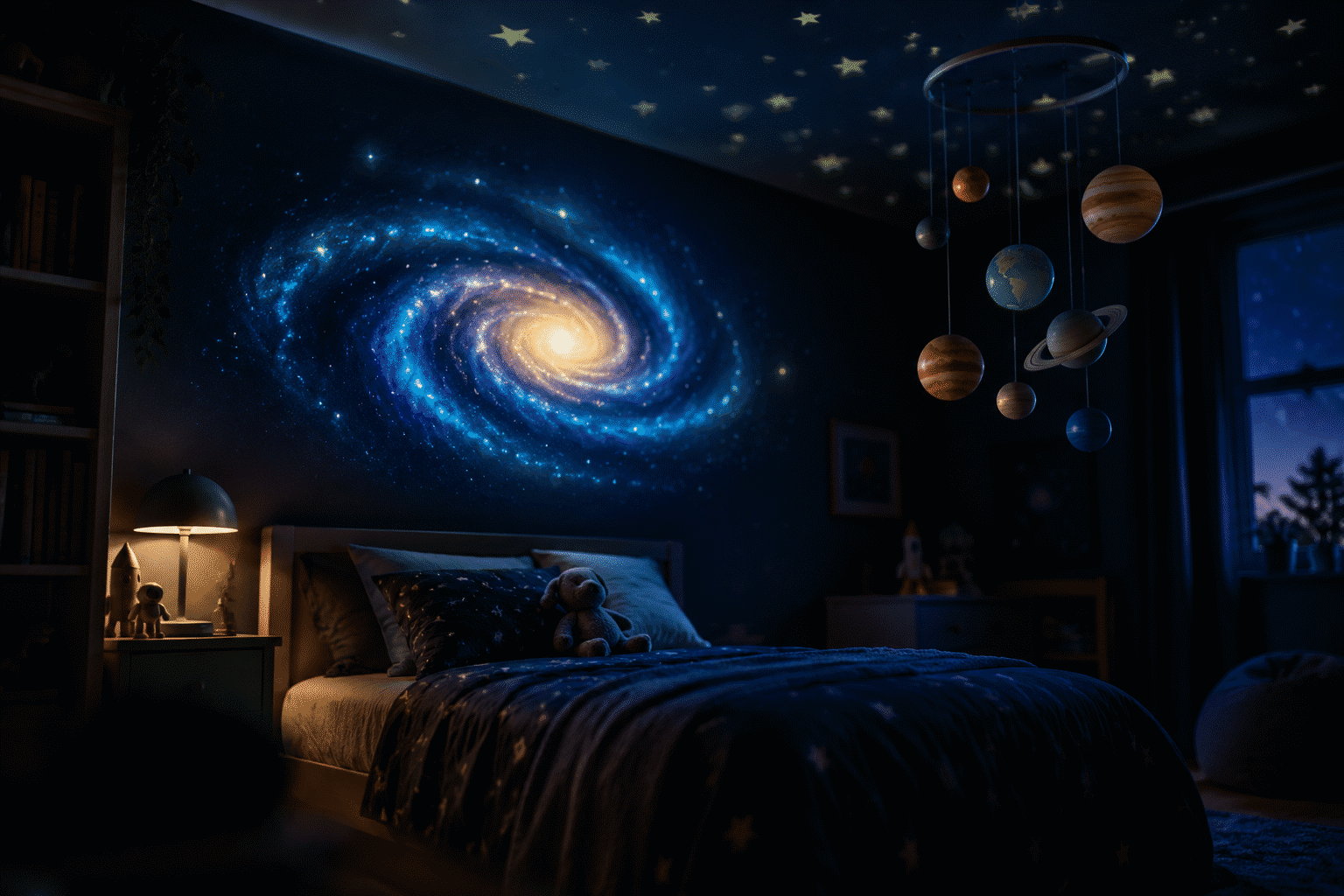
Layer two: deep space (the nebula tier). The galaxy spiral, the nebula cloud, the starfield with depth — the abstract cosmic register. These pieces render as scatter-and-curve compositions: the spiral galaxy in purple and blue, the nebula in a three-color wash. The design tier’s cosmic statement; the wall that reads as scale itself.
Layer three: the spacefarers (the narrative tier). The rocket, the astronaut, the lander — the human part of the story. The astronaut piece carries the register’s most-loved build (the floating figure, the visor reflecting a galaxy — the astronaut ideas guide covers the whole floating tier); the rocket at launch is the kids’ tier’s action piece.
The Palette
- Deep purple and blue. The deep-space canon — the purple and blue families’ deep ends, the colors the actual sky photographs trained everyone to expect. The galaxy tier’s default.
- The nebula rainbow. The sanctioned multicolor — the nebula and galaxy builds run three or four hues (purple, blue, pink, white) because the real objects do. The register’s one honest rainbow, and it reads as astronomy rather than carnival.
- White and warm white. The starfield tier — the deep-space neutral, the constellation charts’ register.
- Orange and red. The Mars tier — the planet register’s warm end, the rocket-exhaust build’s hue.
The Rooms
The kids’ room (the future-astronaut tier). The solar-system row, the rocket, the astronaut — the room’s whole ceiling-and-wall program. The kids’ guide covers the wall logic; the cosmic register is the kids’ tier’s most educational glow (the planet row in order being the rare decor piece that teaches something accurate).
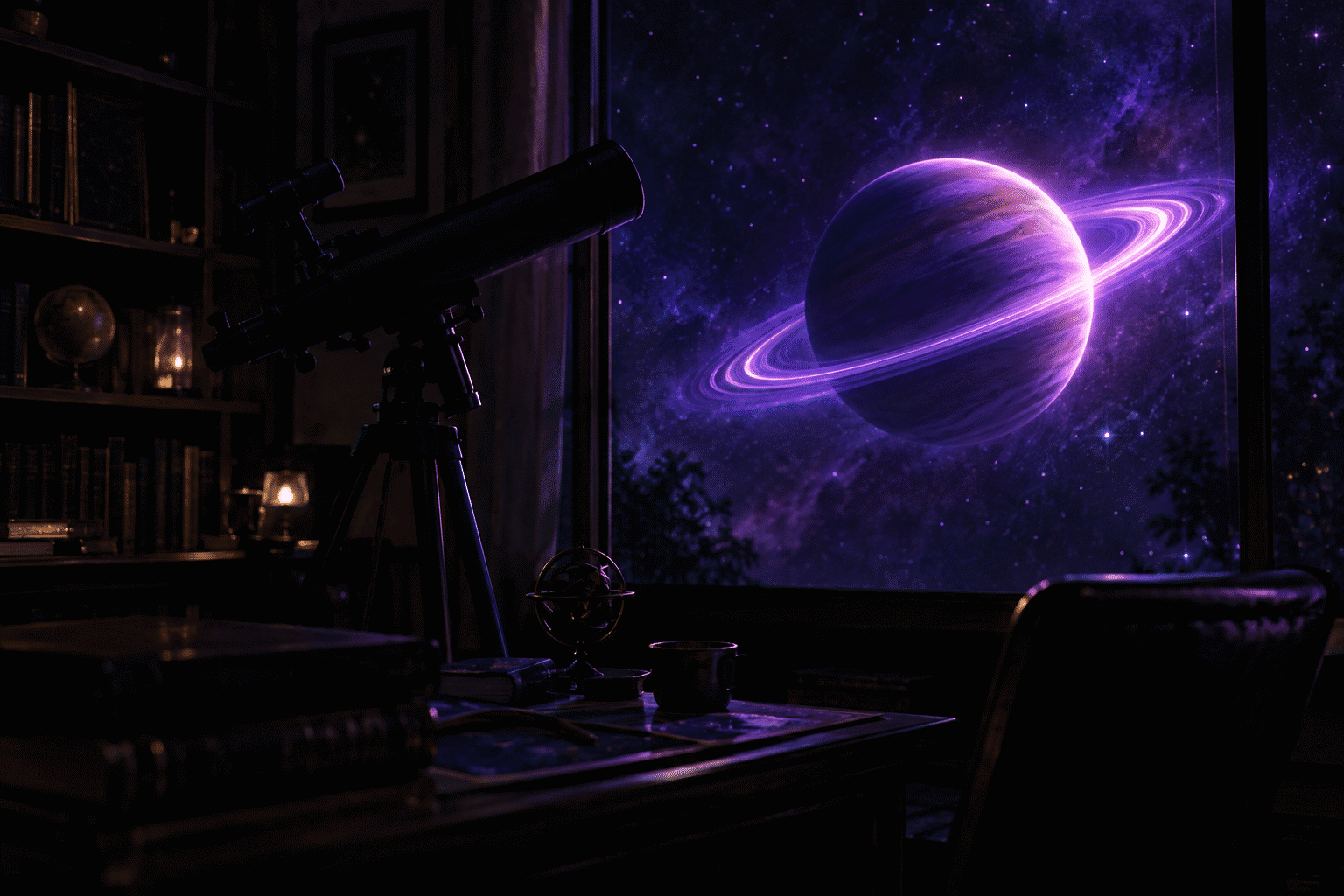
The gaming and sci-fi room. The cosmic wall behind the setup — the deep-space tier’s purple-blue register sharing the room with the machine glow. The gaming layouts cover the integration; the galaxy piece is the sci-fi room’s most honest anchor (the real cosmos instead of the fictional one).
The bedroom (the deep-space calm). The galaxy spiral or the starfield at the lowest dimmer tier — the cosmic register’s calmest deployment, the room’s night sky at true scale feeling. The nebula in purple at 15% output is one of the best sleep-register pieces in the catalog.
The office and studio (the perspective tier). The pale-blue-dot register — the small earth-and-space piece for the desk, the wall that keeps the work in proportion. The cosmic tier’s smallest and wisest build.
The Border: Real Cosmos vs. Fictional Galaxy
The space wall and the star-wars wall share a palette and split a universe:
- The real cosmos (this page): planets, nebulae, astronauts — the actual sky’s register, the educational and contemplative tier. The wall that means scale.
- The fictional galaxy (the star-wars guide): the saga’s iconography — sabers, starships, the phrases. The wall that means story.
- The crossover wall. The two share a room well: the real cosmos as the deep layer (the nebula tier), the fictional icons in front of it — the fan wall with actual perspective. The astronaut floating in front of a galaxy piece is the crossover’s signature composition (and the astronaut guide’s most-built custom).
The Space Register’s Moment (Why Cosmos Decor Runs Hot)
The cosmic tier’s current popularity is not random – it rides three converging currents worth naming:
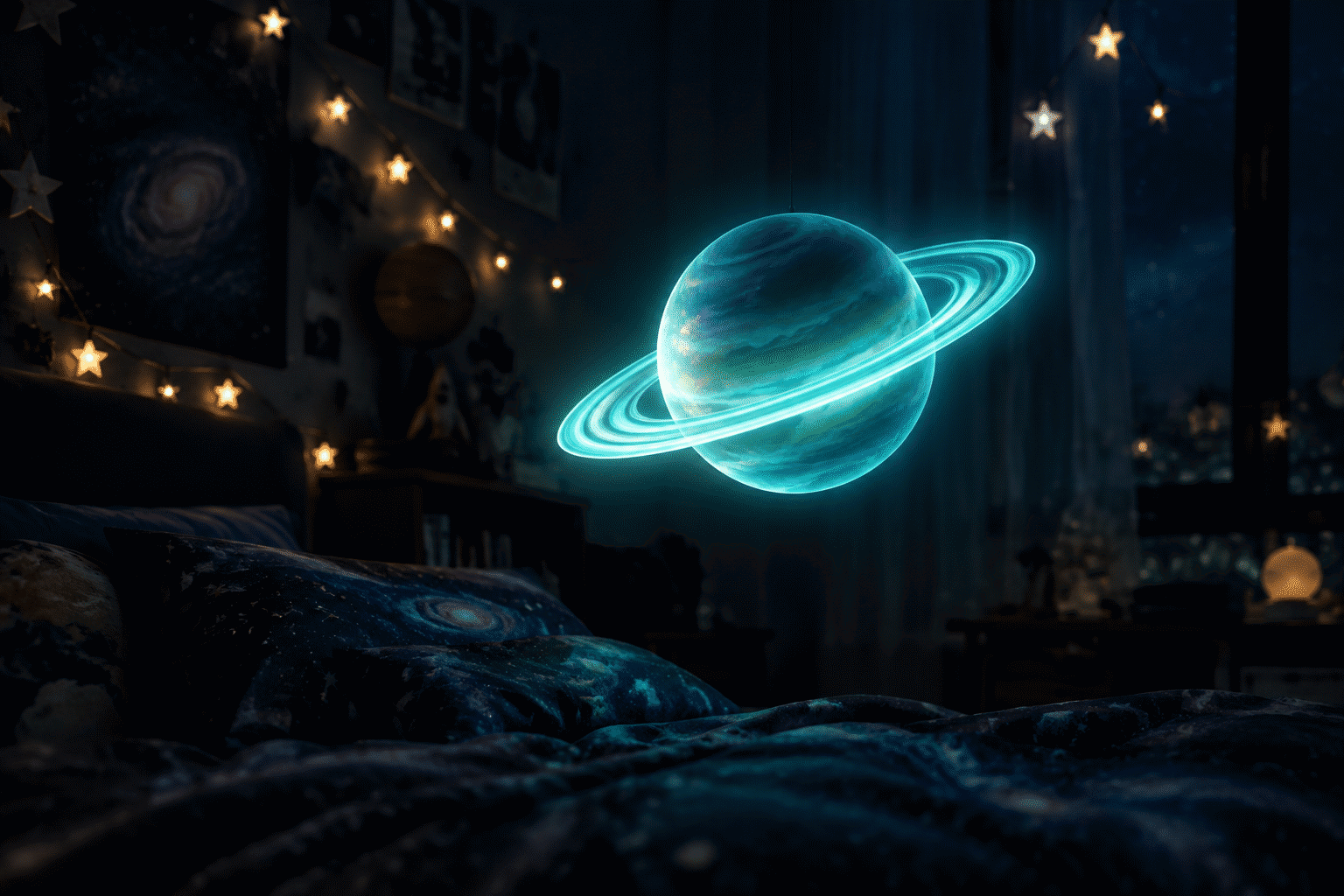
- The imagery windfall. The last decade’s telescope and mission photography (the deep-field surveys, the rover and probe imagery, the black-hole portraits) gave the public the most beautiful sky pictures ever taken – and the design world translated them immediately. The nebula palette (purple, blue, pink, white) is literally the new telescope imagery’s palette; the wall pieces are the photography’s decor-scale children.
- The spaceflight renaissance. The reusable-rocket era put launches in the weekly news and the space economy in the culture – the rocket and astronaut registers gained a contemporary edge they hadn’t carried since the sixties. The kids’ room’s astronaut tier is both the classic revival and the current-events register.
- The perspective aesthetic. The cosmic register’s deepest draw: the scale feeling. The “pale blue dot” perspective – the wall that keeps the day’s problems in proportion – is the register’s philosophical product, the piece that means humility at 15% output. The cosmic wall is the catalog’s only decor that ships with a worldview.
The Custom Route
The cosmic canon, live-priced in the custom builder:
- The solar-system row — the planet lineup at any width; the kids’ and classroom standard, $200–$350 on the planet count.
- The galaxy spiral — the nebula statement, the three-color custom, $250–$400.
- The rocket at launch — the action build, $120–$200.
- The floating-astronaut custom — the figure with your choice of reflected galaxy; the register’s most-loved build.
- The pale-blue-dot tier. The tiny earth in the great dark — the smallest custom and the register’s wisest.
FAQ: Space and Galaxy Neon Signs
What is a solar system sign good for besides kids? The classroom tier (the accurate planet order teaching on the wall), the office’s perspective register, and the astronomy hobby’s own display wall – the row is the register’s most-educated build, and it serves every room that wants its decor to know something.
What does a galaxy neon sign cost? The nebula and spiral statements run $250-$400 (three-color builds, priced on the color count); the planet row $200-$350; the rocket and astronaut builds $120-$220. The scatter starfields are the affordable tier – small units under $80.
What colors are the space register? Deep purple and blue – the deep-space canon the actual sky photographs trained everyone to expect. The nebula builds run the sanctioned multicolor (purple, blue, pink, white – the real objects’ palette); orange and red carry the Mars and rocket tiers.
What is a solar system neon sign? The planet row – sun to Neptune at relative sizes and hues, the educational register’s one genuinely beautiful piece. The kids’ and classroom standard at 30-48 inches; the rare decor that teaches something accurate.
Where does the astronaut sign go? The kids’ room and the crossover wall: the floating figure in front of a galaxy piece is the composition the astronaut guide builds most. The ready design carries the figure; the custom tier adds the reflected galaxy of your choice.
What is a pale blue dot sign? The smallest custom in the register – the tiny earth as a single point in a great field of dark, the famous photograph’s philosophy rendered at desk scale. The piece that keeps the work in proportion; the cosmic tier’s smallest and wisest build, usually under $100.
Is a galaxy sign good for a bedroom? One of the best sleep-register pieces in the catalog – the spiral or starfield in deep purple at 15% output reads as the night sky at true scale feeling. The cosmic tier’s calmest deployment.
What pairs with a space neon sign? The sky family (the moon and stars as the near layers), the fictional galaxy tier for the crossover wall, and the gaming room’s machine glow for the sci-fi integration. One deep hue family; the nebula rainbow is the sanctioned exception.
Leave the Atmosphere
The largest subject any wall can hold, at the scale the room can afford. Planet row, spiral, or the floating figure — launch the build and give the room its cosmos.
More cosmic glow: the moon, stars, astronaut ideas, the fictional galaxy.
Sources & Further Reading
- Neon sign (Wikipedia) — the consolidated public record of neon-sign history and technology.
- Neon, element 10 (Wikipedia) — element properties: density, boiling point, abundance.
Pricing based on CustomNeon’s current catalog (2026); custom quotes come live from the sign builder.