Restaurant Neon Signs: A Custom Guide for Owners
A restaurant neon sign does its work in the two places a restaurant lives: the street and the table. From the sidewalk it tells a dark block that dinner is being served; inside, it warms a dining room the way candlelight warms it — a line of color that turns four white walls into a room people want to sit in for two hours. Restaurants don’t buy neon the way homes do, either. A dining-room sign decorates; a restaurant sign works the dinner rush, five nights a week, in the background of every photo your guests take between ordering and dessert. That’s why neon has hung over diners, pizzerias and fine-dining rooms for the better part of a century, and why the modern version — LED neon, the same glow at 12 volts, no glass over the seating area — has quietly taken over new installs.
What follows is the practical half of the decision for dining rooms big and small: which walls earn a sign, how large and how bright each should run, what the lettering ought to say, whether LED or glass suits the room, and the money question answered plainly. Running a truck instead? The build playbook is food truck neon signs; the full shelf of finished pieces starts at restaurant neon signs.
Why Restaurants Run on Neon
A restaurant sells the evening first and the meal second, and the evening opens at the curb. Overhead fixtures make the room functional; one neon line makes it a destination — mood, brand color, a focal point pointed at the host stand, the bar or the pastry case. Timing is the trade’s wrinkle: dinner revenue peaks after the block has gone dark, and glowing lettering reads from a slow drive-by or a wandering stroll more cleanly than almost any alternative. What a lit sign does for walk-in traffic after dark gets its own write-up in the outdoor neon sign guide.
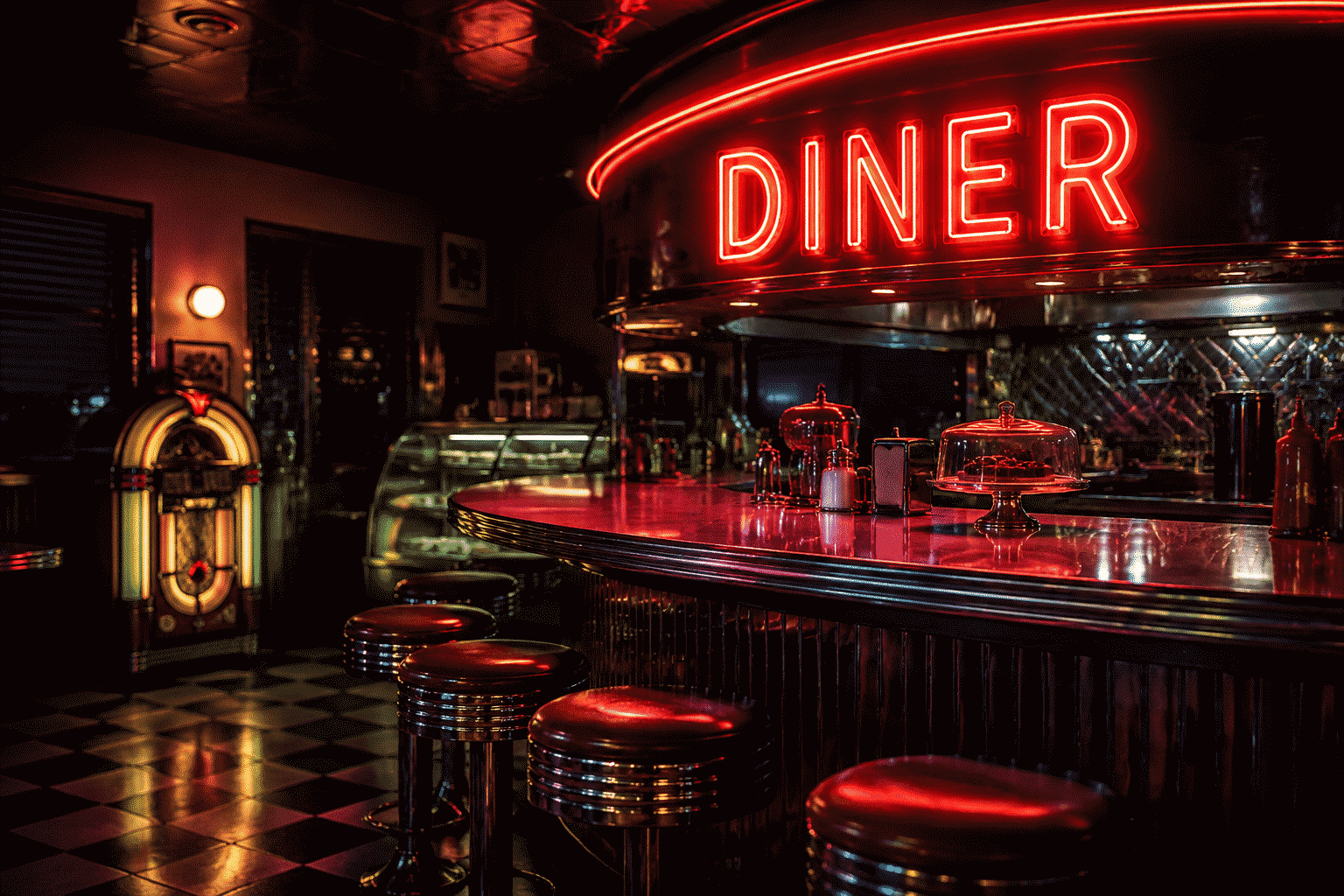
Nearly every new dining-room install now uses LED flex neon — flexible tube that fakes the hand-bent glass look while running on low voltage, keeping its surface cool around guests and servers, and dimming on cue as the room slides from aperitivo to last seating. The two comparisons worth reading — flex versus strip (a different product) and flex versus glass — start at neon signs vs LED strip lights.
Where a Restaurant Neon Sign Works: Three Placements
A restaurant sign does one of three jobs — curb, room, or table — and once the job is fixed, size, brightness and wording fall in line. Decide the placement before the design.
The entrance and the street window
Job one is the curb: convincing a dark block that dinner is being served and worth the door. The hours when a restaurant makes its money are the hours visibility collapses, so the entry or window piece carries OPEN, the hours, or the name in script sized for the far sidewalk. A Welcome neon sign in the entry glass doubles up — wayfinding for the valet line, and a warm first frame for the evening. Dimming matters most at this glass: full output against dusk glare, eased back as the room turns intimate.

The bar back and the host stand
Next, the wall guests study longest: behind the bar, behind the host stand, behind the register where the card machine lives. Almost every photo your guests shoot carries this wall, which makes it the marketing you run most often. Brand sits here — the name, a monogram or the house specialty spelled in tube — and so does the full-house joke: the No Vacancy neon sign, borrowed from hotel marquees, lands as “packed tonight” pride rather than apology.

Booths, private rooms and the celebration table
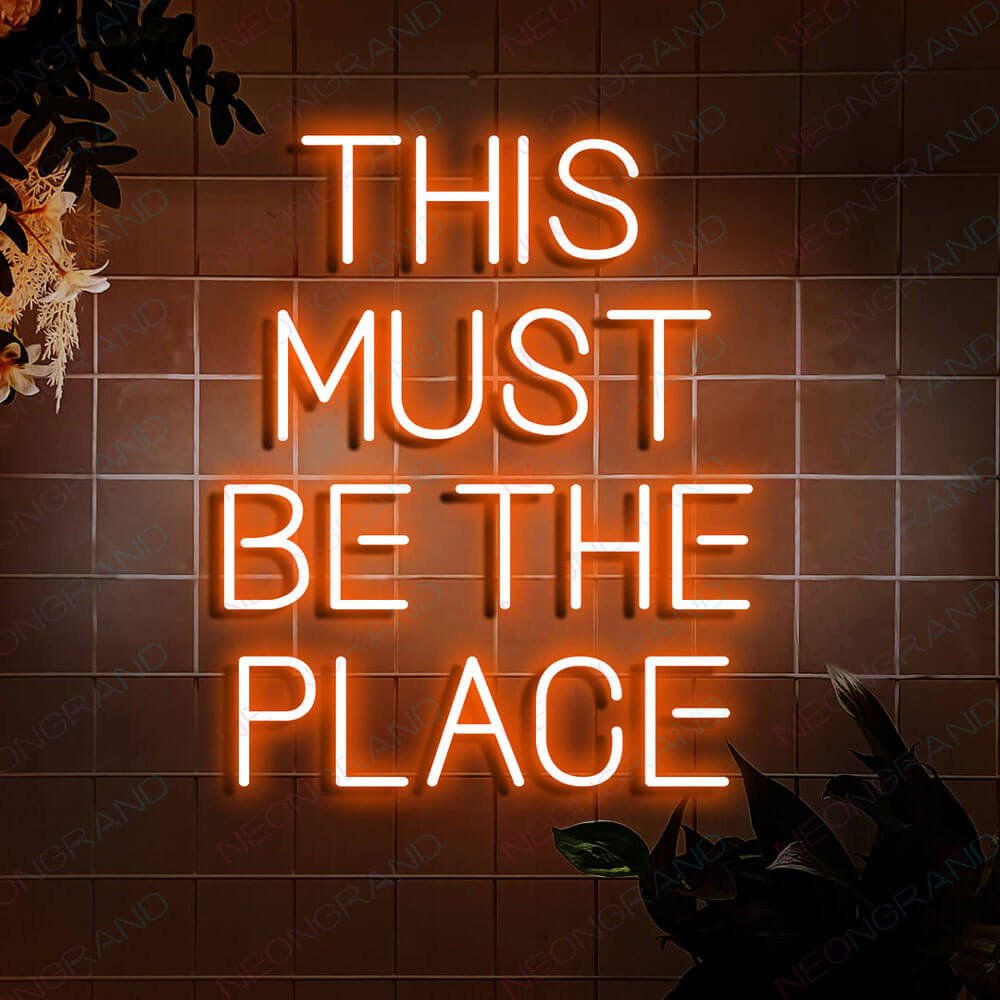
The close-range job belongs to the booths, the private room and the corner two-top where the anniversaries happen. Read at conversation distance, a sign here works as decor — shorter phrasing, warmer color, mounted at art height. This Must Be The Place over a banquet corner gives the room’s best seat a closing line, and it walks into the birthday photos on its own.
Sizing and Brightness for Restaurant Conditions
Let the viewer’s position set the dimensions; the blank wall you own comes second. Bigger letters for bigger distances is the rule, and the restaurant translation reads: curb and window work sized to clear a two-lane street, bar-back and host-stand lettering built for the 8-to-15-foot wait, booth and dining-room pieces trimmed to conversation scale, where legible-at-arm’s-length is the pass mark. Street pieces run larger, table pieces smaller — the wall placement question and the sizing method are both walked end-to-end in the neon sign buying guide.
Lighting level is a conversation with the dimmer that lasts the whole service. Six on a Saturday wants a different output than nine on a Wednesday, which is why dining rooms end up using the remote more than any color option. Cool-running LED flex widens the map too — above the bar, along the entry glass, anywhere the heat and high voltage of glass tube would sit too near the guests.
What Should a Restaurant Sign Say?
Menu boards have sections; sign wording should too. Brand first: the restaurant’s name or monogram behind the bar — each photo of the room that travels is your logo traveling with it. Voice second: the one line the room would say if it could talk. Atmosphere third: mood words that warm booths and corners. Five phrasings that hold up through a full service:
- Your restaurant’s name, unadorned — the bar-back essential that ready-made shelves never carry.
- “No Vacancy” — the hotel joke that turns a full room into a brag.
- “Good Vibes Only” — proven mood-tier material, working at any volume of service.
- “Est. 20XX” — instant provenance for a brand-new dining room.
- A house in-joke — the sign diners photograph so they can explain it later.

The shelf covers the mood layer — browse the business neon signs category for that — but brand and voice are custom work by nature: a name, a letterform and a wall size that exist nowhere in stock.
LED or Glass for a Restaurant?
Glass tube still wins where the concept is built on heritage: bent glass over a bistro’s back bar looks like the real thing because it is, and a hundred-year-old diner should glow the way it did under its first owners. Price it honestly — glass typically costs 3–10 times the LED equivalent, expects professional installation, and remains breakable tube; above a full dining room, that is a maintenance conversation on a schedule you don’t set.
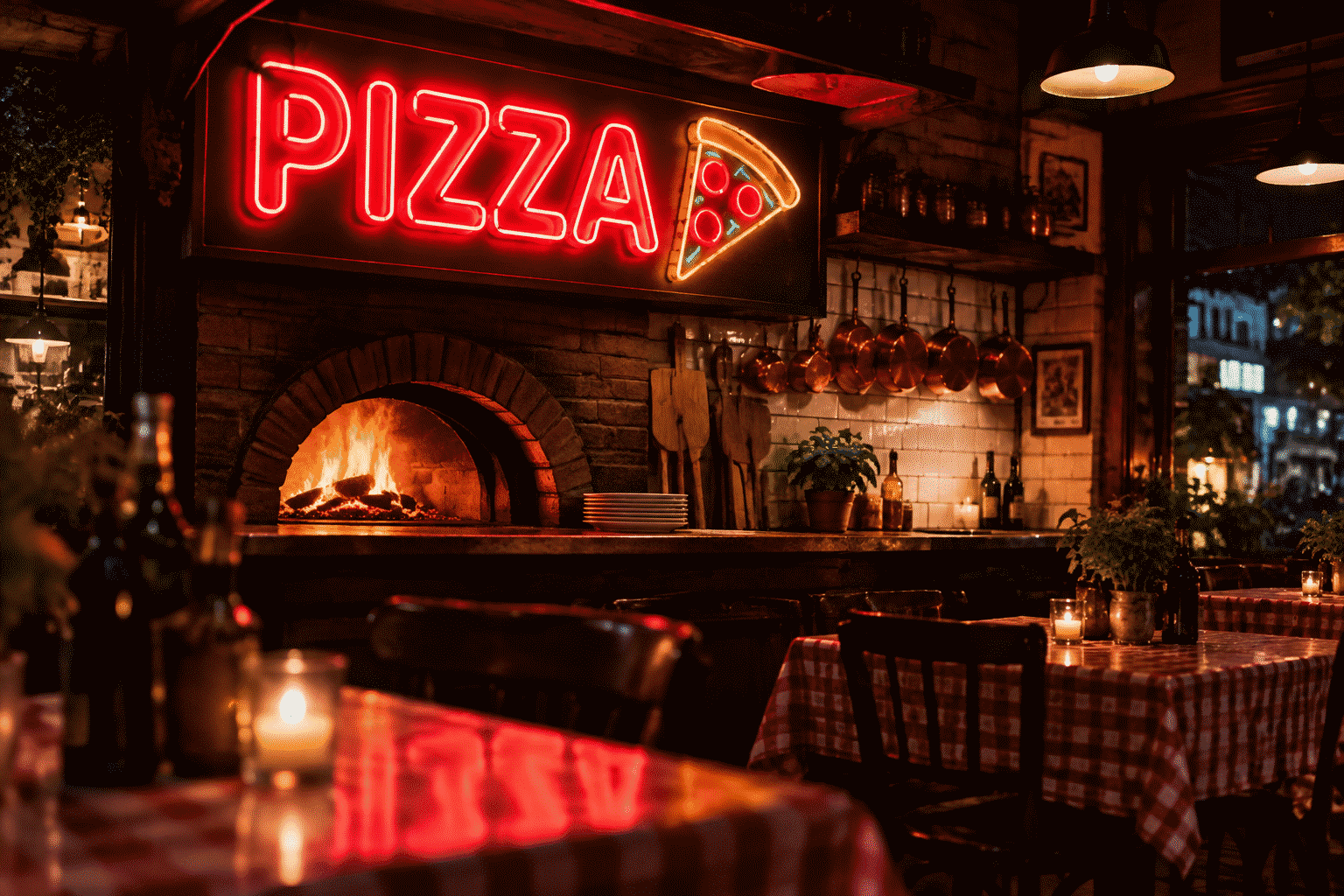
For rooms that run service every night, LED flex is the workhorse: low-voltage, cool-running, dimmable, unbothered by the humidity that drifts out of the kitchen or the ladder that grazes it during redecoration. Many owners split the difference — one glass showpiece by the entrance or over the bar, LED doing the daily labor elsewhere. The pizzeria look, from tomato-red script to a whole pie outlined in tube, renders beautifully in LED flex — and mounting is standard drywall work, walked in the drywall hanging guide. Sketch yours free in the sign builder.
What a Custom Restaurant Neon Sign Costs
Set expectations with the cost breakdown: a custom LED piece for a dining room generally lands in the $100–300 band, and what moves it is measurable — dimensions, letter count, color count, accessories. Budget an extra 10–15% of a small piece’s price for crating and fragile-rated freight, because every sign is built and boxed as a single unit. Hand-bent glass pushes the same letterform to 3–10x.
The nickel-a-day framing in the cost guide — $200 stretched across a decade of nightly use — was written for living rooms. A dining-room piece clocks in through dinner five to seven nights a week and backs every guest photo that advertises the room gratis, so the amortization runs in the restaurant’s favor. Every driver is itemized at why are neon signs so expensive.
Spend on the name, shop for the mood. Your lettering goes into the sign builder for a live quote — previews cost nothing until you say go. Meanwhile the atmosphere tier ships now: the No Vacancy piece above the bar back, the This Must Be The Place sign in the banquet corner.
FAQ: Restaurant Neon Signs
How much does a custom restaurant neon sign cost? For a dining-room piece, plan on $100–300 in custom LED; the levers that move the total are size, letter count and color complexity, with artisan glass at 3–10x beyond. Our cost guide itemizes every driver.
What should a restaurant neon sign say? Work down the ladder: the restaurant’s name on the bar back (brand), a house line like “No Vacancy” (voice), a warm word like “Good Vibes Only” for booths (atmosphere). Names are custom by nature; mood words shop ready-made fine.
What size neon sign do I need for a dining room? Match the lettering to the reader’s distance: curb pieces clearing the road, bar-back pieces scaled to the 8–15 foot standing wait, booth pieces at conversation range. The full method, wall by wall, is in the buying guide.
Are LED neon signs safe near dining tables? Yes. Low voltage and a cool-to-the-touch surface mean no kilovolt transformer, no hot tube over the seating — which is exactly why dining rooms and bar areas default to LED flex.
Can a restaurant neon sign go outside? Only if the build is rated for exposure. Patio and sidewalk pieces need sealed, weather-rated construction and mounting hardware built for the elements — the outdoor guide spells out every difference from an indoor unit.
The Bottom Line
A dining room should buy light like it buys furniture: the door piece sells the street, the bar back sells the room, the booth piece sells the photograph. Fix the wall, size to the distance, put the name where tables turn — and see the whole design free, before a dollar leaves, in the sign builder.
Sources & Further Reading
- Solid-State Lighting (U.S. Department of Energy) — DOE’s reference set on LED efficacy and lifetime.
- International Sign Association — the trade association’s guidance on signage placement, permitting and readability.
Prices track the CustomNeon catalog (2026); for live numbers, use the sign builder.