Barber Shop Neon Signs: A Custom Guide for Barbers
A barber shop neon sign is the modern half of a pairing that’s over a century old: the striped pole tells the street what you do, and the glowing script tells it who you are. Barbershops don’t buy neon the way homes do — a den sign decorates, a barber sign holds the corner. It reads from the sidewalk at six in the evening, survives a room full of clippers, capes and conversation, and gives the mirror wall the one line of light every regular can quote. That’s why glowing script has hung over barber chairs since the main-street era — often in the same red, white and blue as the pole itself — and why the modern version, LED neon at 12 volts with no glass near the chairs, has quietly taken over new installs.
Everything a barber needs before ordering: the corners of the shop worth lighting, the sizes and brightness levels that suit a cut, the words that belong on the wall, the glass-versus-LED call, and the true price of custom work. Finished pieces live on the shelf at barber shop neon signs.
Why Barber Shops Run on Neon
A barbershop sells a ritual before it sells a fade, and rituals start at the door. Recessed lighting makes the work visible; neon gives the room its attitude — a color identity and a focal point aimed at the mirror wall, the bench or the tonic shelf. The trade-specific fact is the walk-in: a barber’s book fills from the sidewalk, and by the time the after-work crowd starts walking, the street has already gone dim. Glowing script reads from a slow drive-by better than almost anything else a shop can hang, and the right piece on a dark corner converts “maybe tomorrow” into a chair filled tonight.
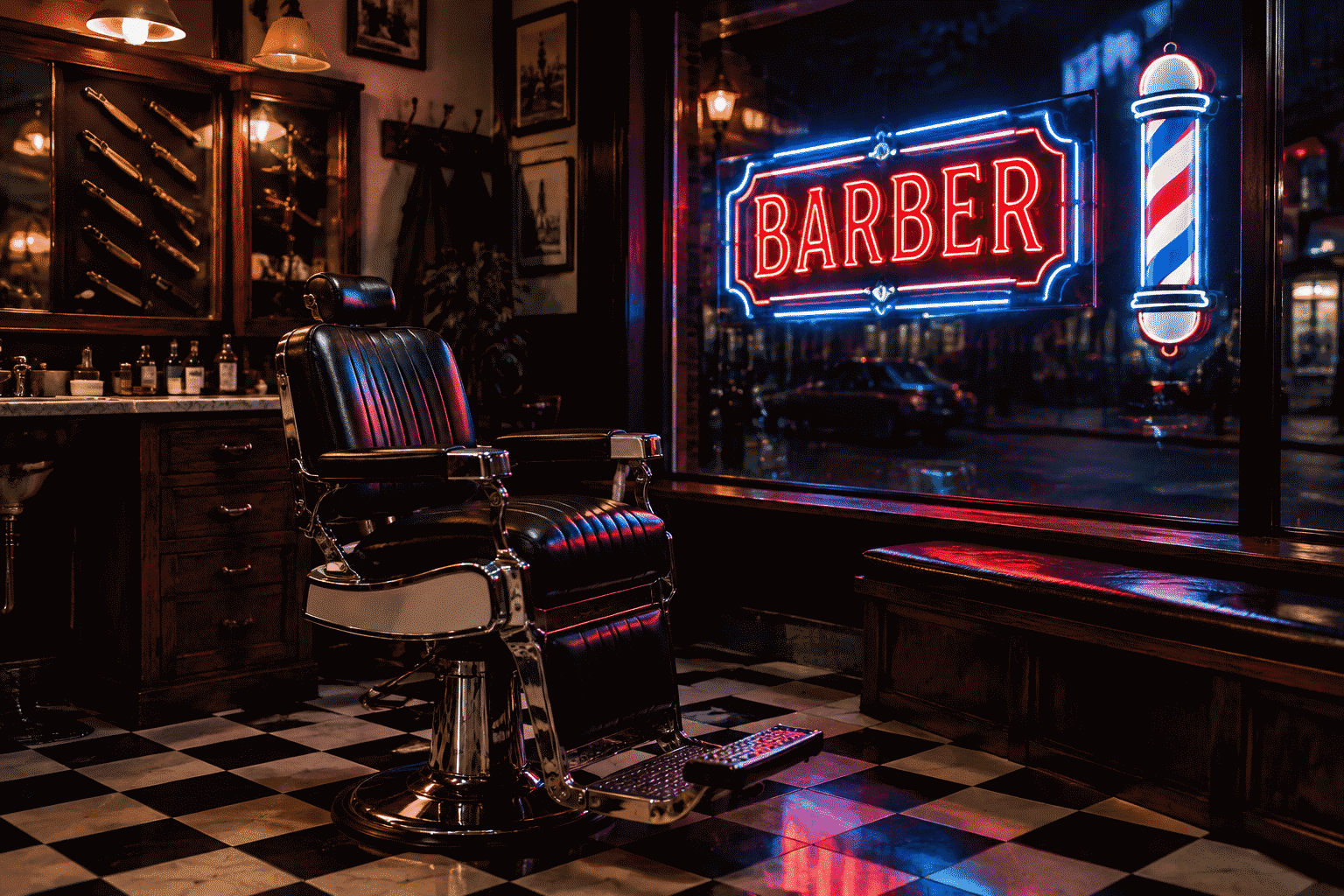
The modern default is LED flex neon — silicone tube bent into the same letterforms as glass, drawing low voltage, running cool through a working day, and dimming when the shop goes from a bright morning line-up to an evening fade. Whether it beats strip lighting (a different beast) is settled at neon signs vs LED strip lights.
Where a Barber Shop Neon Sign Works: Three Placements
In a barbershop a sign holds one of three posts — the mirror wall, the window, or the bench corner — and everything about size, output and wording keys off that assignment. Fill the wall position first.
The mirror wall and the chairs
Claim the mirror wall first — the stretch of wall every client faces for a whole cut, and the backdrop of the after-photo that proves the work. This is where brand lives: the shop’s name, the barber’s monogram, a creed in script. The Hustle neon sign is the genre’s natural — a single word over the mirrors carrying the whole ethic of the chair. Reading distance from the chair sits at roughly 3 to 8 feet, right for small and mid-size lettering; push oversized and the piece starts quarrelling with the mirror instead of backing it up.

The window and the door
At the glass, the message is the business model: open, and cutting. Walk-ins are how a barbershop pays its rent, so the window or door piece says OPEN, lists the hours, or throws the shop’s name in script across the street. A Welcome neon sign in the entry glass doubles the job — flagging walkers down, then saying hello to everyone through the door. Dimming matters most at the glass: full output to beat the evening glare, stepped back while the last fades of the day run long.

The waiting bench and the detail corner
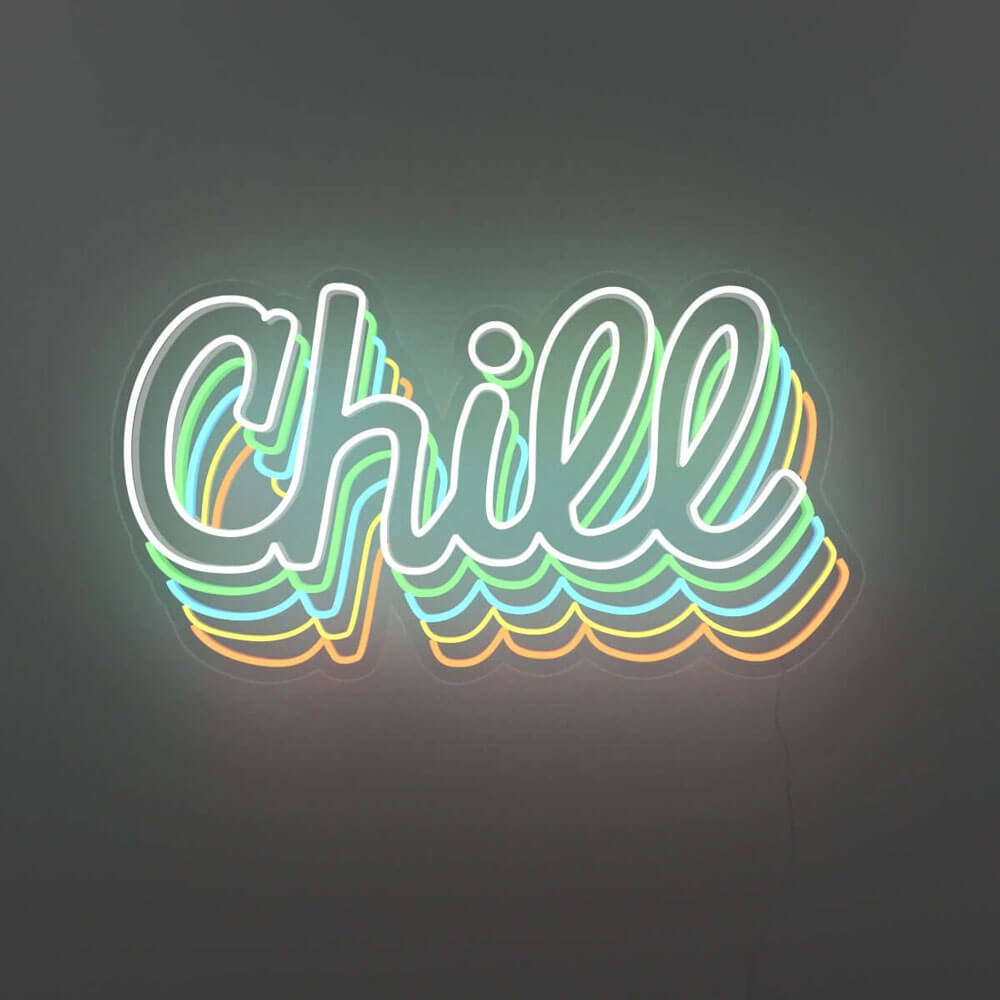
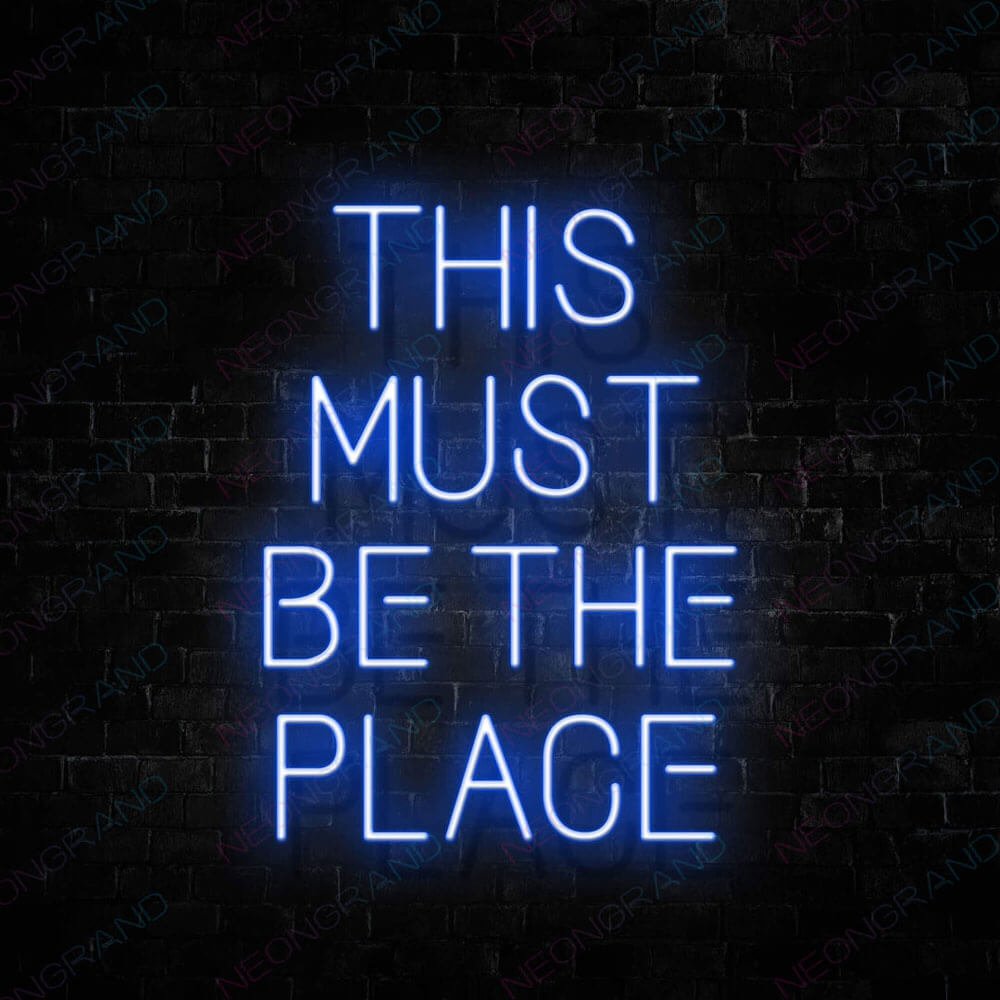
The third job is the room’s personality, one bench and shelf at a time: the waiting-bench wall, the tonic and powder shelf, the corner where the hot towels live. Up close, a sign reads as part of the shop’s character rather than its signage — short phrases, warm colors, posted the way a poster is posted. Chill over the bench tells the room what to do while it waits; This Must Be The Place over the corner chair crowns the shop’s best seat.
Sizing and Brightness for Barber Shop Conditions
Sizing starts at the client’s chair, not at the sheet of empty wall. Letters scale with reading distance, and the barbershop shorthand runs: window work sized to clear the street, mirror-wall lettering built for the 3-to-8-foot view from the chair, bench and corner signs trimmed to conversation distance, where a short word reads comfortably. The red-white-and-blue tradition wants a caveat — tri-color pieces show their craftsmanship at larger sizes, so classic barber colorways tend to run bigger — and the full letter-height-by-distance method is walked in the neon sign buying guide.
Light level runs on the shop clock. Eight on a Saturday morning wants one output, six on a Thursday evening another, so working shops lean on the remote daily — more than on any color choice. Cool-running LED flex widens the map as well: beside the mirrors, over the bench, anywhere the heat and high voltage of glass tube would sit too close to a squirming kid in the chair.
What Should a Barber Shop Sign Say?
Barbershop wording runs three layers deep. Brand first: the shop’s name or monogram on the mirror wall — it rides every client’s post-cut photo. Voice second: a phrase that carries the shop’s ethic. Atmosphere third: mood words for the bench and corner. Five phrasings that survive a full day of cuts:
- The shop’s name, plain and bold — the mirror-wall standard no shelf carries.
- “Hustle” — one word carrying the whole ethic of the chair.
- “Walk-Ins Welcome” — the business model, spelled in light.
- “Est. 20XX” — borrowed age for a shop still finding its regulars.
- “Good Vibes Only” — reliable mood material for the bench and corner.
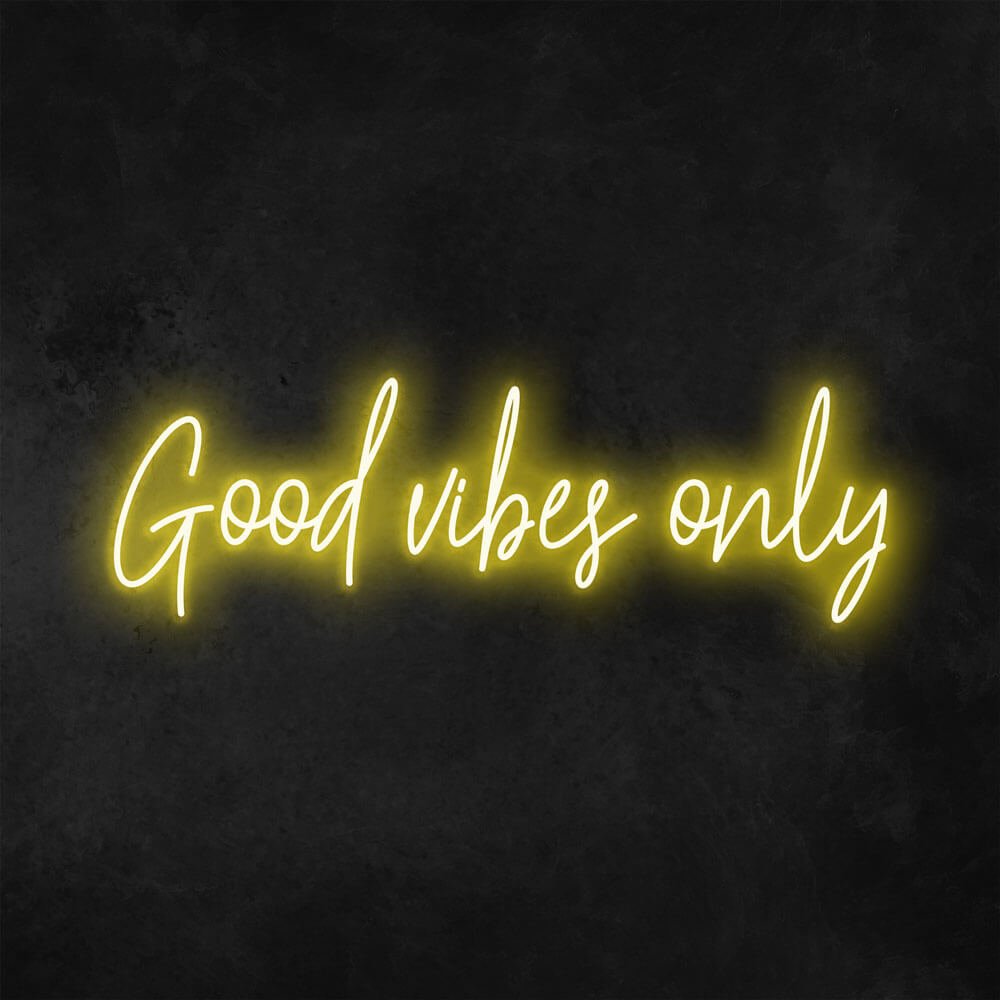
The atmosphere layer is shelf stock — the business neon signs category carries it — while brand and voice are single-piece commissions: your name, in your letterform, at your wall’s exact size.
LED or Glass for a Barber Shop?
Glass keeps a strong claim here, because barbershops trade on heritage more than most rooms. Tube bent by hand over an antique mirror reads as material honesty, and a century-old shop wants the real thing the way it wants its pole. The honest ledger: glass typically runs 3–10 times the price of an equivalent LED piece, wants professional installation, and is glass — over working chairs, that is a maintenance conversation you will have eventually.
The everyday install in working shops is LED flex: cool and low-voltage, dimmable, and indifferent to clipper dust and the ladder bumped during a reset. Plenty of shops mix — one glass showpiece at the entrance or over the name, LED earning its keep everywhere else. And because most shops lease their corners, the hang-it-light question matters: the renter-friendly hanging guide and the drywall hanging guide cover mounts that leave the wall whole.
What a Custom Barber Shop Neon Sign Costs
For a working number, open the cost breakdown: custom LED pieces for a shop generally land around $100–300, with size, letter count, color complexity and accessories doing the steering. Packing and fragile-rated freight alone often claim 10–15% of a small sign’s price — every unit leaves as its own manufactured run of one. Glass takes the same letterform to 3–10x.
The $200-over-a-decade, nickel-a-day frame in the cost guide was written for a house den. A shop piece works six days a week holding the corner that fills the chairs, so the per-day arithmetic only improves on the owner’s side. Driver-by-driver, the accounting sits at why are neon signs so expensive.
The wallet splits cleanly in two. The name on the mirror wall is the custom half — quoted live in the sign builder, previewed free until you commit. The mood half ships today: the Hustle piece over the mirror wall, the Welcome sign on the door glass.
FAQ: Barber Shop Neon Signs
How much does a custom barbershop neon sign cost? Expect $100–300 for most custom LED builds; size, letter count and color complexity steer the total, and artisan glass prices at 3–10x beyond. Our cost guide opens the hood on each driver.
What should a barbershop neon sign say? The name on the mirror wall (brand) leads; a creed like “Hustle” or “Walk-Ins Welcome” (voice) follows; a mood word like “Good Vibes Only” fills the bench and corner (atmosphere). Names are custom territory; mood words come off the shelf.
What size neon sign do I need for a barbershop wall? Let the chair set the scale: window work legible across the street, mirror-wall lettering built for the 3–8 foot view from the chair, tri-color classics running larger to show the colorwork. The buying guide maps the whole method.
Are LED neon signs safe near barber chairs? Yes. Low voltage and a cool-to-the-touch face mean no kilovolt transformer and no hot tube beside the chairs — why mirror-wall installs have standardized on LED flex.
Can I hang a neon sign in a leased shop space? Usually it is fine: a flex panel adds little weight and goes up on hardware that peels off clean at hand-over. No-damage mount options are catalogued in the renter-friendly hanging guide.
The Bottom Line
Staff the walls the way you staff the chairs: the door piece works the street, the mirror wall works the camera, the bench piece works the mood. Set the wall, size to the distance, letter the name where the cuts happen — then mock the whole design up free, before a dollar moves, in the sign builder.
Sources & Further Reading
- Solid-State Lighting (U.S. Department of Energy) — DOE reference covering LED efficacy and service life.
- International Sign Association — the trade body’s notes on sign placement, permitting and readability.
Costs cited reflect CustomNeon’s catalog, 2026 edition; live figures come from the sign builder.