Blog
21 Beer Neon Sign Ideas for Bars and Beer Dens
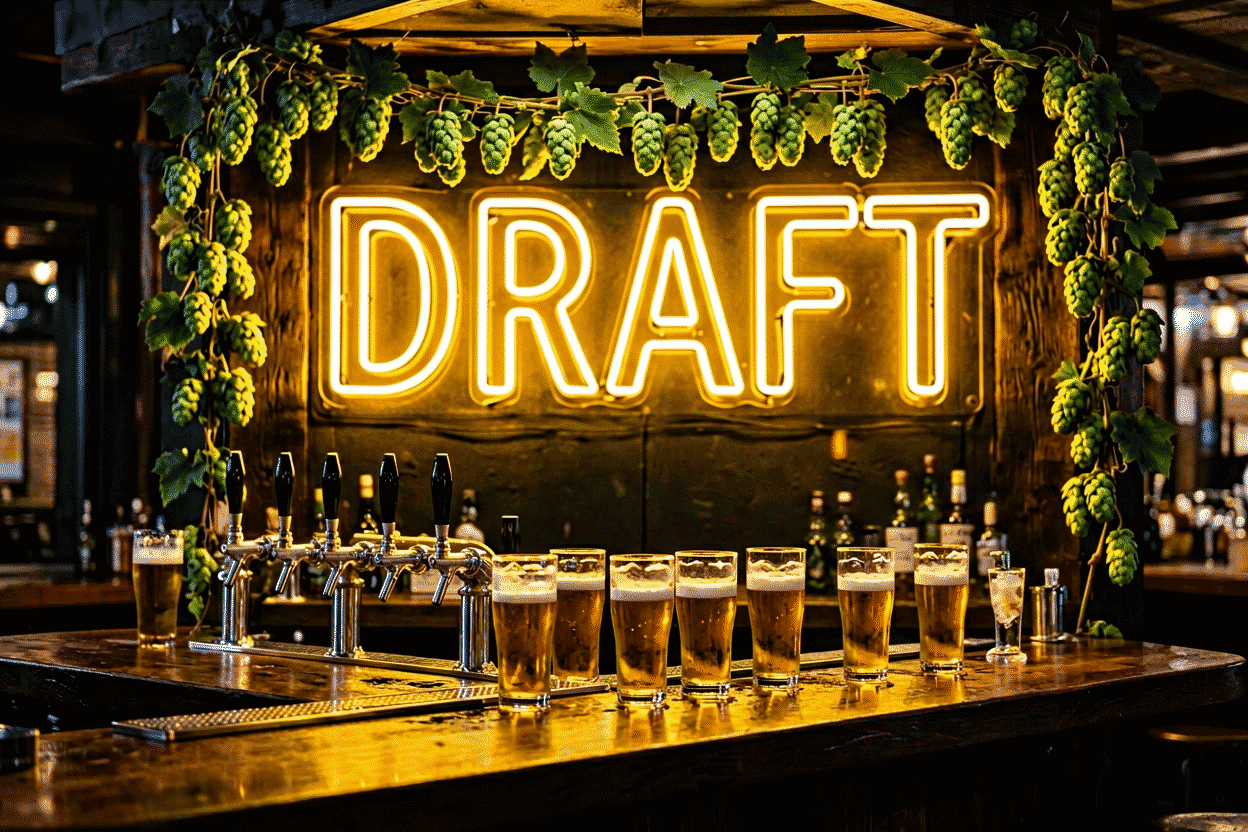
Beer neon is the reason neon exists. Before there were custom nameplates for bedrooms and engagement-party signs, there was a glowing sign over a bar — the brewery’s name in bright glass, telling a dark street exactly what kind of night was available inside. A century of that history means the beer sign wall is the most developed, most collectible, most photographed neon category there is.
Here are 21 ideas for the home bar and the beer den, organized by tier — the brand builds, the phrase pieces, the shape tier, and the customs — with the collection logic that keeps a wall from becoming a cooler door. The shopping tier lives at beer neon signs.
The Brand Builds: Ideas 1–8
The icons, in working order.
- The Budweiser script — the most-hung beer sign in American history (the lineup); the red script reads from across any room, and its century of bar-wall presence means it flatters every interior from dive to finished basement.
- The Budweiser bowtie — the emblem-only build for the wall that wants brand without script; the cleanest design in the category.
- The Budweiser guitar — the tall-wall piece; the format for the jukebox-and-pool-table corner.
- Bud Light — the modern-service companion piece; blue and white, the 90s-sports-bar register.
- Miller Lite — the Midwest standard; the script-and-moon format hangs anywhere the pint glass is a proper one.
- Coors Light — the silver-bullet register; ice blue belongs in the beer-sign palette because Coors put it there.
- Corona — the beach tier’s flagship; the sun-and-wave composition reads vacation in any latitude (the full treatment).
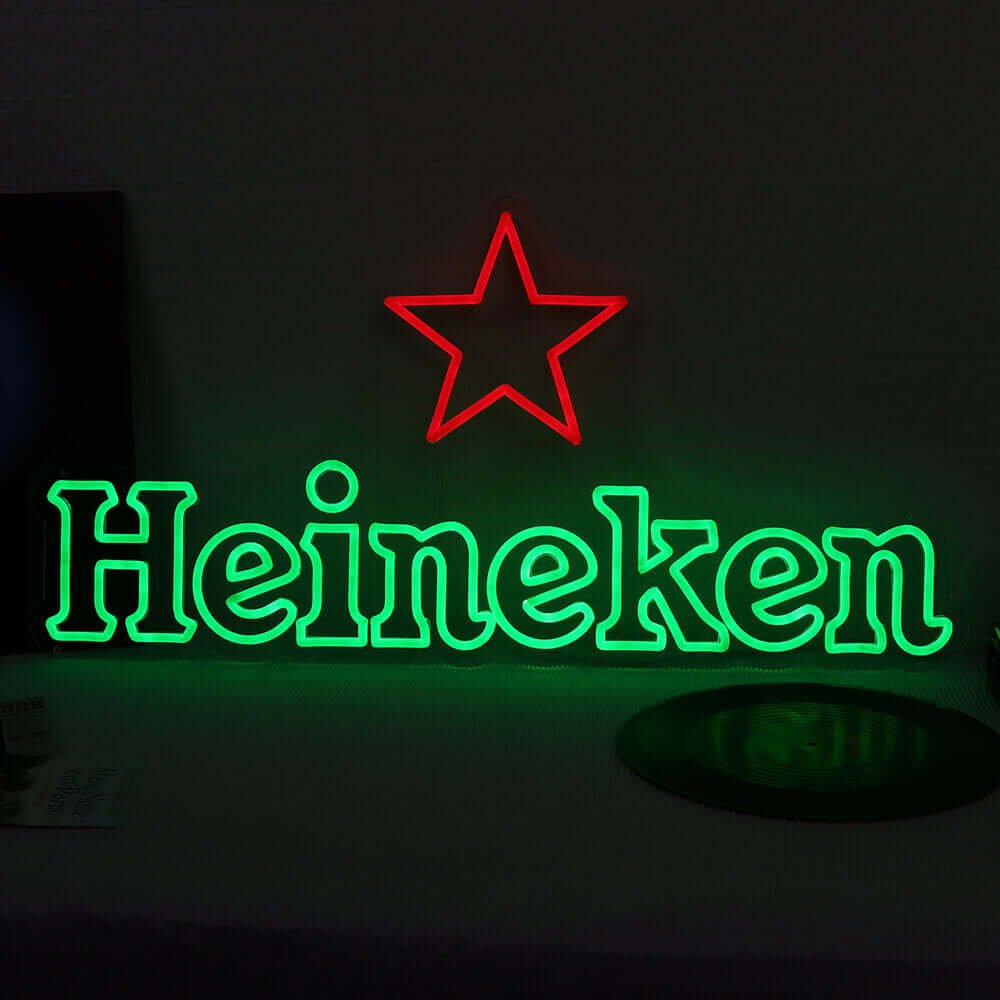
- Heineken — the import tier; star and script in green, the lager shelf’s most recognizable color-block.
The Craft & Import Tier: Ideas 9–12
- Modelo — the decade’s fastest-rising bar piece; the lion-and-script format carries the glass-booth cantina register home.
- Pacifico — the Baja-calm tier; the understated alternative for walls where Corona already lives.
- Your local brewery’s logo — the craft tier runs on custom: most breweries never made neon, so the piece gets built for you (customizer, logo upload included). The result is a beer wall no catalog can duplicate.
- A vintage import piece — the collector tier covers the originals; the honest budget note lives there too.
The Phrase Pieces: Ideas 13–17
- “Cold Beer” — the two-word constitution of every beer den; ice blue or red, hung where thirst makes the decisions.
- “Beer Garden” — the outdoor-patio register; the piece that makes a deck officially a destination.
- “It’s 5 O’Clock Somewhere” — the daytime-permission classic; strongest in the afternoon-light rooms.
- “Eat, Drink & Beer” / “In Dog Beers I’ve Only Had One” — the joke tier; guests quote these back for years.
- “Beer Me” — the two-word request; the command register for the fridge-adjacent wall.


The Shape & Custom Tier: Ideas 18–21
- A pint-glass shape — the zero-word piece; pairs with any phrase tier or stands alone.
- A hops shape — the craft-brewer’s botanical; green and understated, the home-brewer’s marker.
- “The [Name] Tap Room” — the fictional-establishment custom: your surname + Tap Room, House of Beer, or Brewing Co.; the piece that names the room’s institution.
- A flight-of-beers board — five small shapes in a row (pint, mug, boot, stein, glass); the collection joke that fills a narrow wall properly.
Building the Wall: Collection Logic
One beer sign is decor; three is a bar; six is a shrine — and the difference between a shrine and a mess is one rule: odd numbers, one hero, era-consistent color. The hero piece (the largest brand script or the room’s custom nameplate) takes the center at eye level; the supporting pieces cluster around it at descending sizes; the shapes and jokes fill the edges last. The bar-wall playbook covers the full system, including the two-sided wall and the corner-wrap.

Color-wise, beer neon is forgiving: the category’s palette (reds, ambers, golds, ice blue, green) was built over a century to flatter wood, brass, and dim rooms. The one modern rule: mix warm and cool deliberately. An all-warm wall reads dive bar (which may be exactly the goal), an all-cool wall reads convenience store. One cool piece (Coors blue, Heineken green) against three warm ones is the classic ratio. And for the home-bar tier specifically, the home bar guide covers the fridge-run and kegerator-adjacent placements.
The Collection Logic: From First Sign to Full Wall
Beer neon collects, and the collectors who build the good walls follow the same path. Stage one, the anchor ($100-300): the brand script you actually drink, in the era register your room runs – the single piece that makes the wall a beer wall. Stage two, the supports ($150-400): the second brand (the import or the craft tier), the phrase piece (“Cold Beer”), and the first shape. Stage three, the wall ($400-1,000+): four to six pieces in the era-consistent composition – one hero at center, the supports at descending sizes, the shapes filling the edges. Past six per sightline, the wall becomes storage; the shrine tier (the vintage guide) is its own hobby.
The era discipline is what separates the designed wall from the accumulated one: the mid-century pieces hang with the mid-century pieces, the 80s-90s sports-bar register with its own, and the modern craft builds with the moderns. The mixed-era wall works only when the palette agrees – the all-warm collection spans decades gracefully; the warm-and-cool mix reads as two walls fighting.
The brand-versus-phrase balance runs 2:1 for the collector (two brand scripts per phrase piece) and 1:2 for the decorator (the room that wants the beer register without the beer loyalty). The phrase tier (“Cold Beer,” “It’s 5 O’Clock”) carries the wall’s voice; the brand tier carries its identity – the walls that run only phrases read generic, and the walls that run only brands read the distributor’s showroom.
Sizing, Brightness, and the Bar-Wall Physics
The bar-wall sizing table: the hero script at 36-48 inches (sized to the bar’s width, never wider), the supports at 24-32, the shapes and jokes at 12-18. The composition hangs in the triangle – hero center at 66-72 inches, the supports flanking at slight descents, the small tier scattered at the edges. The two-sided wall (visible from two rooms) runs heroes on both faces; the corner wrap runs the hero on the flat and the supports around the bend.
Brightness runs the bar’s hours: full for the party’s first hour, 60% for the conversation hours, and the 20-30% glow for the last two guests – the beer wall’s real work happens in that last band, when the room’s light is the glow and the conversation runs long (the home-bar system covers the full protocol). The power draw of the whole wall rounds to a rounding error (the math) – the six-piece shrine costs less per month than the fridge it advertises.
Variations and Pairings
The beer canon’s variants. The word-face variants: “beer neon sign ideas,” “neon beer signs,” and “beer signs for bar” serve the tier; the vintage face carries the collector lane (the vintage guide), the brand faces carry the single-brand guides (the Budweiser canon through the lineup). The setting faces: the home bar (the home-bar canon) and the commercial bar (the B-end canon) split the tier by audience – the same pieces at different scales and disciplines.
The pairing logic: the beer wall pairs the brand with the phrase – the script (the loyalty) with “Cold Beer” (the menu) – and the shape with the joke at the edges. The pairings that work run the warm-dominant ratio (three warm scripts, one ice-blue accent); the pairings that fail run the same-size-same-height grid that reads the distributor’s showroom (the collection logic above).
The gift pairing: the beer pieces gift in the loyalty order – his actual brand first (the dad logic), the generic phrase second, the craft custom third – the gift’s accuracy to the loyalty determining the landing (the gift canon).
FAQ About Beer Neon Signs
What’s the best first beer sign for a home bar? The brand you actually drink, in the script format. The Budweiser/Miller/Coors scripts are the category’s working trio (start here); if your brand is local or craft, the custom logo route builds the same wall with a piece nobody else has.
How many beer signs should go on one wall? One hero plus two to four supports is the classic bar wall. Past six per sightline, the wall stops being a collection and starts being storage — the collection logic section covers the museum tier for those going further.
Do beer neon signs use a lot of electricity? No — modern LED builds draw a few watts (the math); a full wall costs less per month than the fridge it advertises.
Are brand beer signs the real thing? The builds sold for home bars are LED neon-style reproductions of the brand designs — built for living rooms, not taverns. The century-old originals are a separate market, and the vintage guide covers it honestly, prices included.
How many beer signs should go on one wall? The working ceiling is six per sightline – one hero (the largest script or the charter), two to four supports at descending sizes, and the shapes and jokes filling the edges last (the collection logic above). Past six, the wall stops reading as a collection and starts reading as storage; the shrine tier beyond six belongs to the dedicated collector running the vintage lane with its own display discipline. The bar wall’s honest test: stand across the room and squint – if one piece leads and the others follow, the wall works; if six pieces compete, the wall needs demotion, not addition.
Do beer neon signs need special electrical care? Standard household power and standard outlets – the LED tiers draw a few watts each (the electricity guide) and the whole six-piece wall costs less per month than the fridge it advertises. The care that matters: the power supplies in open air (not inside cabinets or behind the bottles), the surge protector in the lightning-prone regions, and the dry-method cleaning that keeps the bar’s airborne residue off the tubes (the cleaning guide). The glass-neon tier adds the professional-installation conversation (the transformer and the wiring deserve an electrician’s blessing – the comparison covers the full decision).

The Home Wall vs the Commercial Wall
The beer canon’s two audiences, compared:
| Decision axis | The home wall | The commercial bar |
|---|---|---|
| The program | The collection logic (one hero, odd numbers) | The trade playbook (street, room, camera) |
| The budget | $100-800 by depth | $400-3,000 by venue grade |
| The anchors | The personal loyalty (the brand you drink) | The establishment (the name, the era) |
| The era tier | The collector’s lane (the vintage guide) | The heritage register’s commission |
| The discipline | The warm-dominant ratio | The trade palette (the business logic) |
| The B-end rules | None (the basement’s own laws) | The codes, the distributor economy, the hours |
The two walls’ shared canon: the brand scripts, the phrase pieces (“Cold Beer”), the shapes – the same pieces at the different scales and disciplines. The home wall runs the collection’s logic (the collection section above); the commercial wall runs the conversion’s (the B-end playbook) – and the pieces travel between them with the scale’s respect.
The crossover buyer’s note: the home bar that hosts the neighborhood is running a semi-commercial program (the home-bar guide covers the hybrid) – the domestic wall with the trade’s hours, the collection with the crowd’s durability expectations.
Sources & Further Reading
- Solid-State Lighting (U.S. Department of Energy) — DOE reference on LED efficacy and lifetime.
- Neon sign (Wikipedia) — the consolidated public record of neon-sign history and technology.
Pricing based on CustomNeon’s current catalog (2026); custom quotes come live from the sign builder.