Blog
15 Clothing Store Neon Signs That Move Merchandise
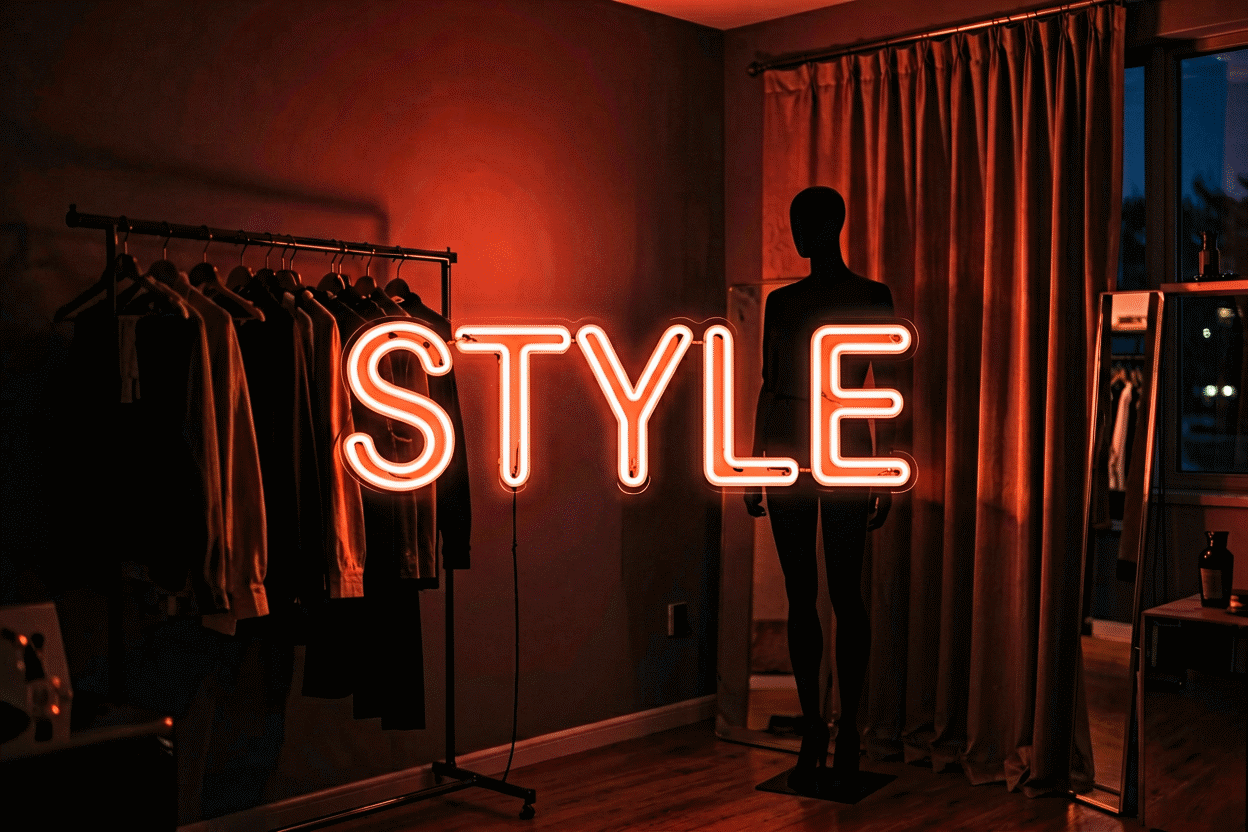
The clothing store is retail’s most register-sensitive room: the sign that works in streetwear reads absurd in bridal, and the boutique’s script would die on the outlet wall. The good news is that fashion’s sign canon is well-developed — the pieces that make shoppers browse longer, try on more, and post the room — and this guide organizes them by the store’s register and zones.
The all-retail playbook lives at retail store signs; this is the apparel deep-dive.
The Streetwear & Youth Register: Ideas 1–4
- The block-type brand piece — the shop’s name in heavy block, bold color (the retail canon): the register that matches the merchandise — the drop-culture font in glow.
- “NO RESTOCKS” — the scarcity tier: streetwear’s own marketing language, posted in light — the sign that converts the hype.
- The graphic-tee tier — the phrase pieces that echo the merch (“STAY WOKE,” “OVERPRICED & WORTH IT”): the humor-and-identity register the youth trade photographs.
- The color-wall glow — the accent behind the rainbow-stacked tees (the merchandising logic): the shelf as display, the glow as the frame.
The Boutique & Lifestyle Register: Ideas 5–8
- The script namepiece — the boutique’s name in elegant script, warm white or blush (the palette logic): the register that says the merchandise deserves its price.
- The fitting-room compliment — “You Look Amazing” at the mirror: the apparel-sign canon’s single most effective piece — the compliment that converts the try-on and photographs the sale (the content logic).
- The mantra piece — the brand’s own line (“Wear What You Love”): the voice tier that makes the store’s curation legible (the retail canon).
- The pink aesthetic wall — the beauty-adjacent boutique’s signature: the photographable corner in the register the customers already run.
The Vintage & Secondhand Register: Ideas 9–11
- The era script — “VINTAGE” in a 70s font, amber glow: the register-matched signage that doubles as merchandising — the sign says the era before the racks do.
- “PRE-LOVED” / “SECOND LIFE” — the sustainability register: the vocabulary tier that frames the inventory’s story.
- The deadstock-humor piece — “OLD CLOTHES, NEW FRIENDS”: the vintage trade’s own comedy — the piece that gets the regulars.

The Bridal & Formal Register: Ideas 12–13
- The champagne piece — “Say Yes” in champagne glow (the wedding canon adjacent): the fitting-room drama tier — the sign that photographs the moment.
- The script elegance tier — warm-white script throughout: the formal register’s restraint — the signage that never outranks the gowns.
The Department & Multi-Brand Tier: Ideas 14–15
- The category wayfinding — “WOMENS / MENS / KIDS” in the brand’s registers (the retail logic): the floor’s navigation and brand-glue in one system.
- The brand-shop markers — the in-store brand corners’ own glows: the shop-in-shop tier that signals the partnership (and the brands often supply).

The Register Discipline
The apparel-sign failure is register mismatch — the novelty piece in the couture room, the elegant script over the skate wall. The discipline: the signage’s register must match the merchandise’s, and the fitting-room compliment is the one universal (the case). The palette follows (the trade logic): warm-white for premium, bold for street, amber for vintage, champagne for formal, pink for the beauty-adjacent.
The budget sequence: namepiece + fitting-room piece first (the conversion and content core, $300–500 — the brackets), the register pieces and category wayfinding second, the photo corner as the content engine matures (preview).
The Register Table: Apparel’s Five Styles
The clothing store’s register-matching in one table – the store type, the register, the pieces.
| Store type | The register | The anchor pieces |
|---|---|---|
| Streetwear | Bold-block | The brand piece, “NO RESTOCKS” (the canon) |
| Boutique-lifestyle | Warm-script | The namepiece, the fitting-room compliment |
| Vintage-secondhand | Era-amber | The 70s script, “PRE-LOVED” |
| Bridal-formal | Champagne-restraint | “Say Yes,” the elegant scripts |
| Department-multi | Brand-neutral | The wayfinding, the category markers |
The table’s discipline: the signage’s register matches the merchandise’s – the font and color the clothes would choose for themselves. The failure mode reads instantly (the novelty piece in the couture room, the elegant script over the skate wall) and the customers feel it before they name it (the retail logic).
The universal exception: the fitting-room compliment (“You Look Amazing” – the mirror-side piece) works at every register in the table – the apparel canon’s one style-proof piece, and the first purchase after the open sign at every apparel store (the content logic).
The Fitting Room and the Content Corner
The apparel store’s two highest-ROI squares: the fitting room’s mirror piece (the compliment that converts the try-on – the direct-sale tier, $100-250) and the content corner (the store’s hashtag wall or signature piece with the good light – the organic-post engine, $150-400). Together they run $250-650 and outperform the same spend on the window tier for the store with existing foot traffic – the funnel’s later stages converting what the earlier stages deliver (the retail funnel).
The fitting-room piece’s register note: the compliment runs warm at every store type, but the phrasing varies – the streetwear store’s version runs cooler (“Fit Check” over the mirror), the bridal store’s runs sincere (“You Found It”) – the register-matching applied to the universal piece (the decoder above).
FAQ About Clothing Store Neon Signs
What’s the best neon sign for a clothing store? The fitting-room compliment piece — the apparel canon’s most effective single sign — plus the register-matched namepiece (the retail canon). The open sign runs beneath both.
How do clothing stores use neon to sell? The try-on conversion (the mirror compliment), the browsing atmosphere (the register glow), and the post-the-room content tier (the case): the three layers that move apparel specifically.
What color neon for a fashion boutique? Register-matched (the palette): warm-white premium, blush and pink for the lifestyle and beauty-adjacent tiers, bold for streetwear, amber for vintage.
Do fitting-room signs actually work? The mirror-adjacent compliment is the trade’s best-documented piece: it converts the uncertain try-on and photographs the confident one — the content and conversion in one square foot (the clothing-tier logic).
What is the best neon sign for a clothing store? The register-matched namepiece plus the fitting-room compliment – the identity piece in the store’s own aesthetic and the mirror-side “You Look Amazing” that converts the try-on (the apparel canon above). The register table runs the matches: the streetwear block, the boutique script, the vintage amber, the bridal champagne. The open sign runs beneath both (every store’s first purchase); the photo corner completes the content engine – the three-piece program that covers identity, conversion, and content at the apparel trade’s whole range.
How much does a clothing store neon sign cost? The register-matched namepiece runs $150-400 (the boutique script, the streetwear block – the apparel budget above); the fitting-room compliment runs $100-250 (the trade’s most effective single sign); the category markers and the photo corner complete the program at $500-900 total. The register table’s discipline saves more than the budget spends: the sign that matches the merchandise’s register converts; the mismatch costs the credibility no price recovers (the retail logic).
Can boutique neon handle window-display rotations? Build for rotation from the purchase order: lightweight acrylic backing (under six pounds for a typical script), quick-mount bracket pairs that stay screwed to the window frame, and a generous service loop on the cord so the piece lifts out without unplugging. Stores that rotate displays monthly should own two bracket sets per window position and treat the sign like merchandise — handled on a schedule, never muscled in and out.
What glow temperature flatters fitting-room mirrors? Warm-neutral around 3500K is the boutique sweet spot — cool whites make mirror lighting honest but harsh on skin tones and wash out warm fabric palettes, while full warm starts lying about whites and pastels. The trick several fitout designers use: keep the sign’s color as the accent, not the room’s main light, so the mirror sees the fitting lamp and the customer’s eye sees the glow.
LED vs Glass for the Clothing Store
The apparel store’s medium decision, compressed:
| Decision axis | LED neon-style | Traditional glass |
|---|---|---|
| Upfront cost | $60-500 across the program | $300-3,000+ |
| Power draw | A few watts (the math) | Ten times and up |
| Fragility | Survives the fitting-room chaos | The fitting-room chaos is its nemesis |
| Register | Modern-warm (the boutique default) | Heritage-craft (the vintage store’s tier) |
| Maintenance | Wipe-and-forget | Periodic professional attention |
| The buyer | Every store, every budget | The era-authentic registers |
The apparel-specific call: the fitting room and the browsing floor run chaos-adjacent physics (the bags, the strollers, the tried-on armfuls) that forgive the LED tier and punish the glass – the boutique that hangs glass over the rack section is underwriting a loss event. The glass tier’s remaining apparel lane: the vintage and heritage registers, where the era piece IS the store’s thesis (the vintage logic adjacent) – the display-case treatment rather than the open-floor one.
The medium decision’s interaction with the register table (above): the warm-script boutique and the streetwear block run LED in their native look (the modern registers), while the vintage amber store runs glass as the authenticity anchor with the LED supports – the hybrid that most era-forward stores converge on (the comparison covers the full decision matrix).
Sources & Further Reading
- Solid-State Lighting (U.S. Department of Energy) — DOE reference on LED efficacy and lifetime.
- Neon sign (Wikipedia) — the consolidated public record of neon-sign history and technology.
Pricing based on CustomNeon’s current catalog (2026); custom quotes come live from the sign builder.