Blog
Business Signage Trends 2026: What’s Winning Streets
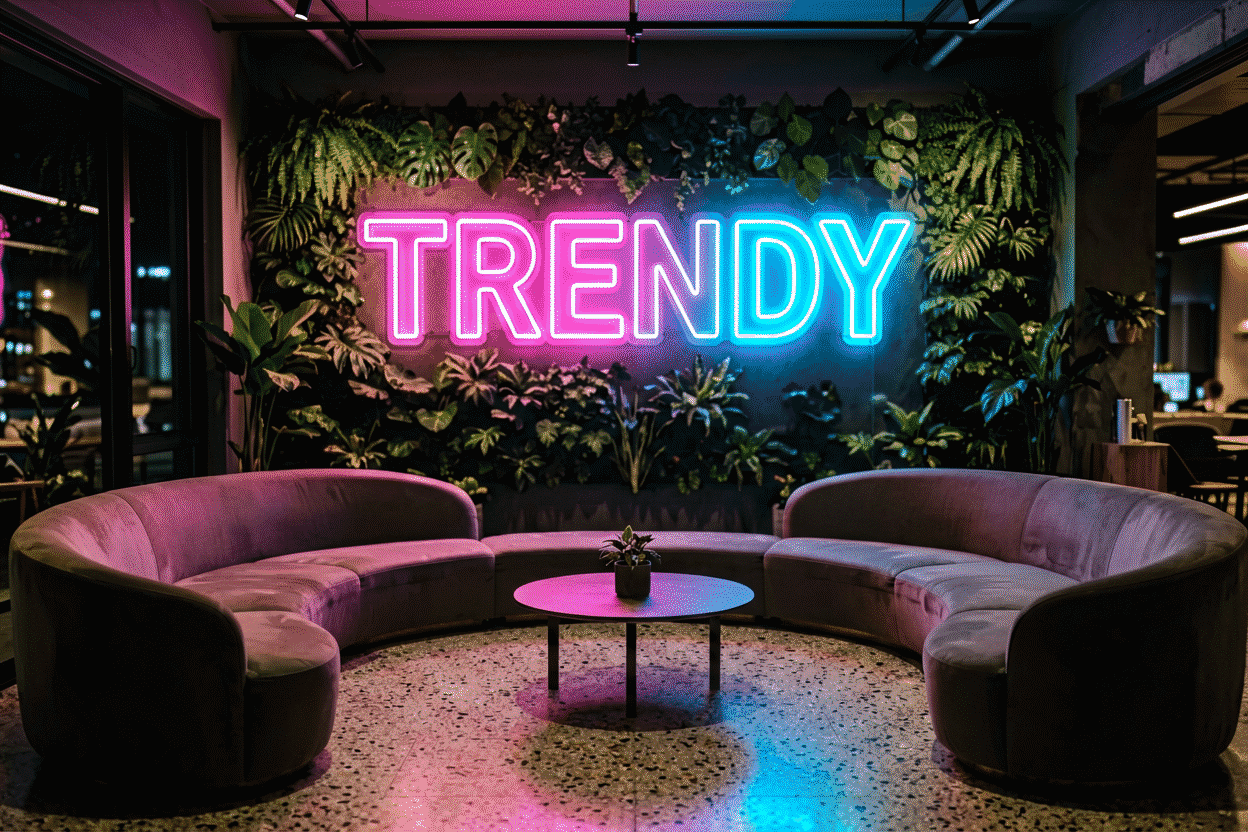
Signage trends move slower than fashion and harder than architecture — the street’s medium changes at the pace of LED engineering and content behavior. But 2026’s street does look different from 2016’s, and the differences cluster: warmer color temperatures, interactive and color-changing formats, the content-era priority (signs built to be photographed), and the craft revival that brought real glass back to premium storefronts.
This is the state of the street in 2026 — what’s winning, what’s fading, and what’s quietly compounding. The evergreen tiers live at the storefront canon and the business playbook; this is the year’s overlay.
Trend One: Warm White Everywhere
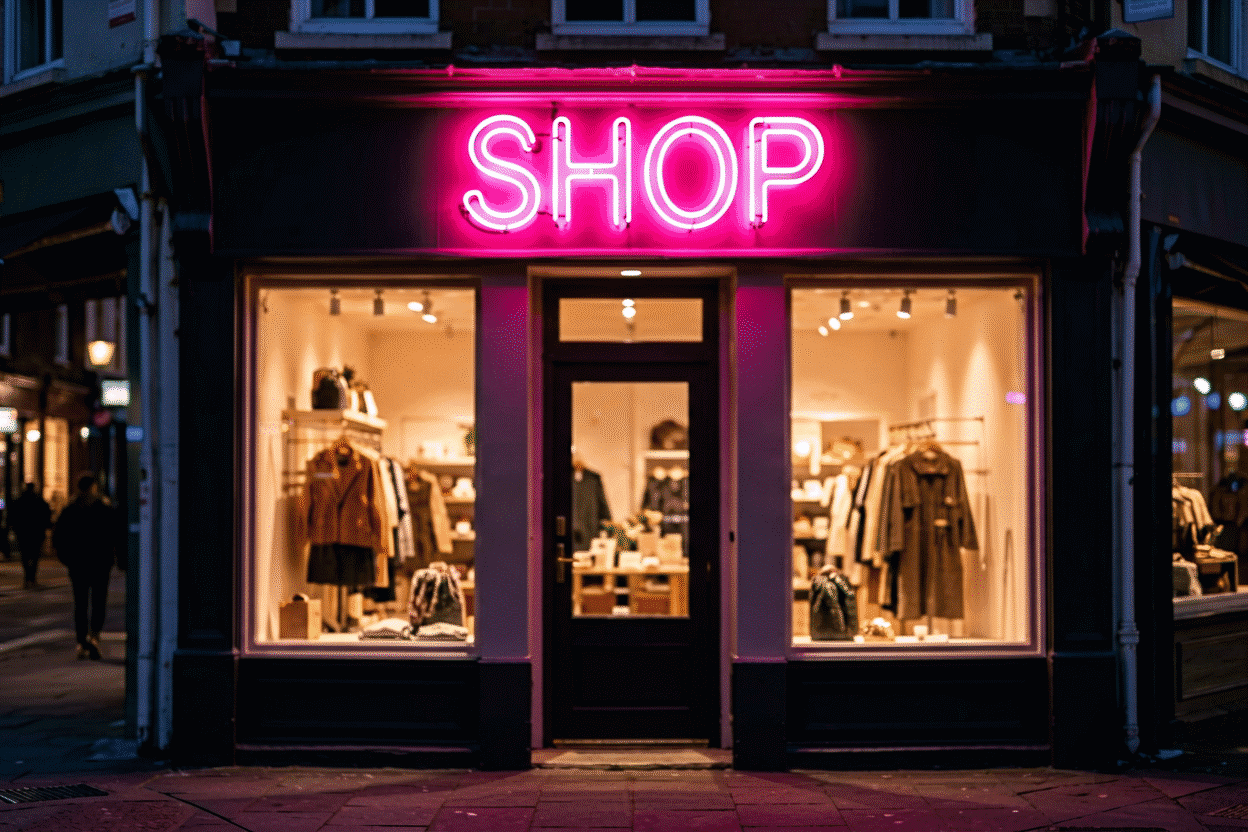
The decade’s biggest visible shift: the cold-blue LED era is giving way to warm-white registers (2700–3000K glow) across retail, café, and salon streets. The warm temperature photographs better (the content-era driver), flatters faces and food, and reads premium against the bargain-register cold blue. The exception proves the trend: pure blue survives where its job is distance-readability (the open-sign physics) and in the tech-trade registers (the color logic).
Trend Two: The Photogenic Wall as Infrastructure
The sign program’s center of gravity has moved from the street to the camera: interior pieces designed to be photographed — the mirror-framed phrase in salons (the salon canon), the menu-wall glow in cafés, the fitting-room compliment in retail (the retail case). The 2026 signage budget increasingly includes a “content corner” line item: one wall, one great piece, the right light — the organic-post engine that paid channels can’t replicate.
Trend Three: Color-Changing Goes Mainstream
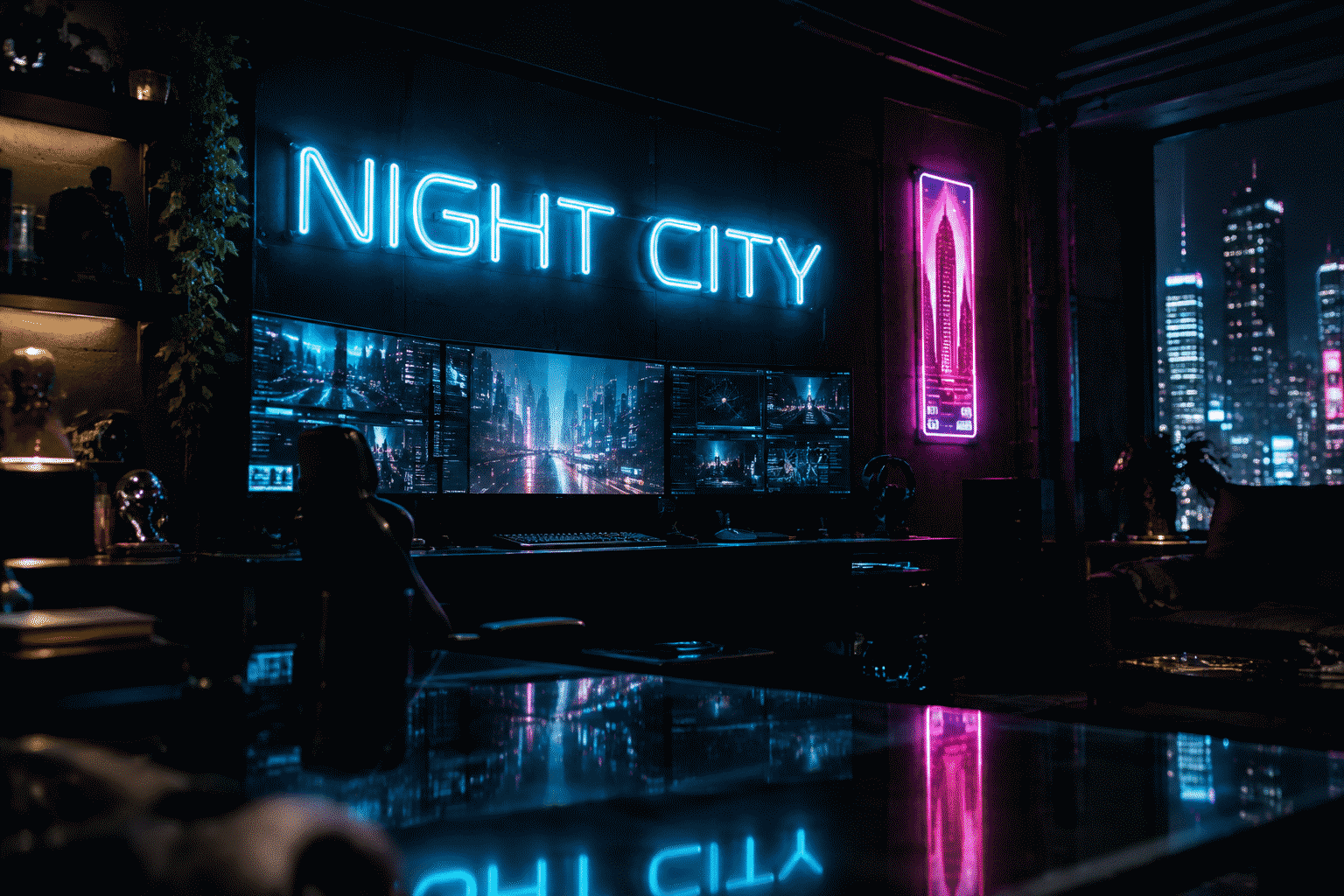
The RGB tier’s maturation: affordable, app-controlled, and scheduled (the color-changing guide) — the sign that runs the brand palette on weekdays, the team colors on game days, and the seasonal registers without re-mounting. The venues adopted it first (the nightclub canon); the retail and service trades are following for the calendar-content flexibility. The discipline that keeps it premium: one mood at a time, changes on schedule not on whim.

Trend Four: The Craft-Glass Revival
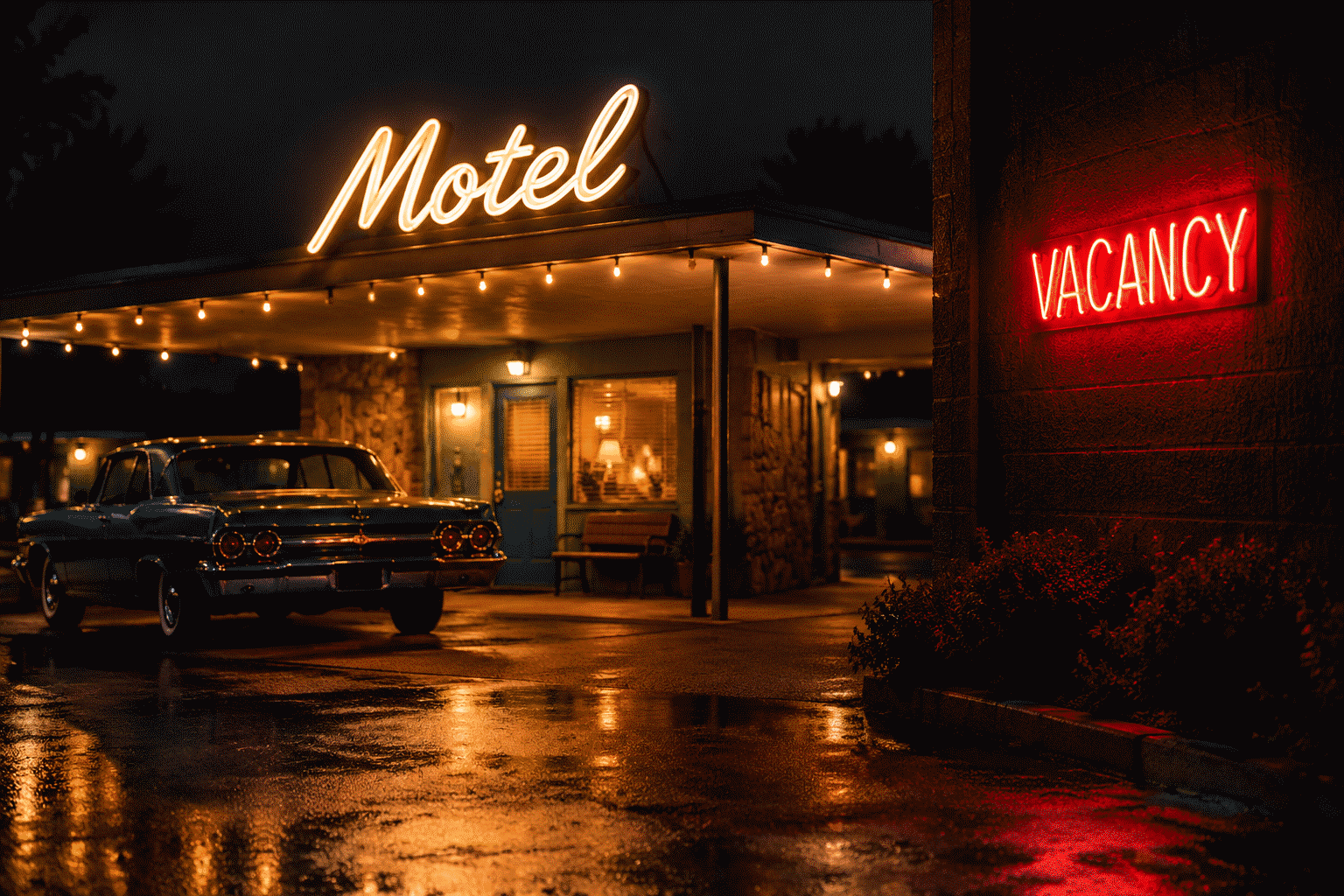
The premium street’s counter-trend: real bent glass returning to the bars, barbershops, and heritage storefronts whose registers demand authenticity (the vintage archive is the reference tier). LED’s dominance of the volume market made glass scarce enough to signal craft again — the 2026 premium logic in one line: the medium is the message, and glass is the luxury medium. The commission economics (the cost brackets) keep it the minority tier, deliberately.
Trend Five: Typography Gets Personal
The font wave: script-and-handwriting commissions replacing the catalog block — the businesses running their own logos, their founders’ handwriting, their trade’s era fonts (the fonts logic). The customizer economy (preview any font) made the personal tier affordable, and the street’s differentiation logic rewarded it: the sign no other shop can order.
Trend Six: Sustainability Reads
The quiet tier: buyers asking about power draw and lifespan (the math, the longevity facts) — and the LED answer (a few watts, years of service) becoming a purchasing criterion rather than a footnote. The visible-sustainability sign (“solar-assisted” marquees, the low-power claims) remains niche; the invisible version (efficient LED as default) is already complete.
Trend Seven: The Interactive Edge
The early-adopter tier: QR-integrated pieces (the neon-above-the-code hybrid), the motion-responsive formats in nightlife venues, and the social-tied displays (the storefront ideas‘ modern tier). The honest 2026 read: interactive remains the exception — the conversion still runs on the century mechanics (glow, legibility, honesty) — but the QR-companion format has crossed into practical for menu-and-review businesses.
What’s Fading
The inverse list, equally useful: the blinking-bargain register (animated borders reading discount-store), the stock-catalog look (the same three phrases every franchise bar ran), the cold-blue interior wash, and the sign-as-decoration mistake (the art piece with no job). Each fades for the same reason: the street’s attention economy rewards the legible, the honest, and the distinctive — and 2026’s trends are the current best answers to those three demands.
The 2026 Program
Collapse the year’s overlay into the working program: warm-white base registers (the palette), one photogenic wall (the retail logic), color-changing where the calendar justifies it, script-or-logo typography for identity, and glass where the register earns it. That’s the 2026 street — and the mechanics underneath it (the case) are the same ones the century always ran.
The Trend-Proofing: What to Buy That Won’t Date
The trends report’s practical counterweight: the purchases that ride the trends without dying with them. The warm-white anchor (the decade’s trend, and also the category’s most timeless register – the piece that reads 2026 and 2036 equally); the photogenic wall’s infrastructure (the hook systems and the power plan that survive every content trend’s piece-rotation – the wall stays, the pieces swap); the color-changing tier (the RGB logic) where the trend-chasing runs in software rather than hardware – the piece that re-trends itself by schedule; the typography commissions (the trend-tier fonts at the entry price, the classic scripts at the anchor price – the dating risk priced into the purchase).
The trend-proofing’s principle: date the trendy, marry the timeless – the same discipline the style guides run for homes, applied to the street. The storefront that runs one timeless anchor plus one trend-tier accent refreshes annually at the accent’s price; the storefront that buys the trend-tier everything re-fronts every three years at the everything price.
The 2026 Buyer’s Summary
The year’s guidance compressed: buy warm-white, build the photogenic wall, schedule the color changes, commission the typography, and verify the efficiency tier (already default). Skip the blinking-bargain register, the stock-catalog look, and the cold-blue interior wash. The trends are the current best answers to the permanent questions (legible, honest, distinctive) – and the buyer who answers the permanent questions well is buying the 2036 trends early, which is the best any trend report can do (the permanent case).
FAQ About Signage Trends 2026
What’s the biggest signage trend in 2026? Warm-white color temperatures and the photogenic-wall priority — the content era’s two visible wins (the storefront logic). The craft-glass revival is the premium counter-trend.
Are color-changing signs still trendy? Maturing rather than trending: the app-controlled tier is mainstream for venues and calendar-driven businesses (the guide), with the discipline (one mood at a time) separating the premium from the novelty read.
Is traditional glass neon coming back? In the premium registers — bars, barbershops, heritage storefronts — where authenticity is the product (the vintage archive). LED owns the volume market; glass owns the signal.
What signage is going out of style? The blinking-bargain animations, the stock-catalog phrases, the cold-blue interior wash — the registers that read 2016 discount (the fading list above). The counters are the year’s whole trend report.
What signage style is trending for 2026? Warm white and the photogenic wall – the content era’s two visible wins (the 2026 report above): the warm color temperatures that photograph and flatter, and the interior pieces built to be posted. The color-changing tier’s mainstreaming (the RGB logic) and the craft-glass revival (the vintage register) run the next tier. The fading: the cold-blue wash, the stock-catalog look, the blinking bargain register – the 2016 reads that 2026’s street has retired.
What is the signage color of 2026? Warm white – the 2700-3000K register that owns the year’s streets (the 2026 report above): the temperature that photographs best (the content era’s driver), flatters faces and food, and reads premium against the cold-blue decade that preceded it. The trade exceptions hold: blue for the distance-readability jobs (the open-sign physics) and the tech registers. The year’s second color story: the RGB mainstreaming (the color-changing logic) – the scheduled moods that make one piece run every season’s register.
What are businesses spending on signage in 2026? The year’s working numbers (the budgets context): the small business’s year-one program at $500-1,000 (the trio and the first interior pieces), the established program at $1,000-3,000 (the storefront identity and the content wall), and the premium commissions (the glass tier, the full facades) at the trades’ specific brackets. The 2026 spending pattern (the trends above): the content-wall line item’s arrival (the photographable interior joining the storefront in the budget), the RGB tier’s mainstream spend (the flexibility’s premium shrinking), and the warm-white register’s dominance (the year’s look at every bracket).
Which 2026 signage trends will look dated by 2028? The gimmick tier cycles fastest — animated novelty scripts, meme-phrases-as-branding, and the oversized single emoji pieces are already showing venue saturation in late-2025 tag counts and will read as period pieces inside two years. The safer bets of the same era (dimmable warm-white scripts, framed gallery mounting, running-years date marks) have structural legs because they answer behavior — evening atmosphere, photo backdrops, milestone culture — rather than borrowing a moment’s vocabulary.
Is the retro scoreboard register still climbing? Peaking, not climbing: split-flap displays and scoreboard-styled pieces had their sharpest adoption through 2024-2025 in breweries and sports bars, and the venues still adding them now are arriving late to a look. That doesn’t make it a bad buy — a scoreboard piece in an actual sports context has permanent relevance — but cafés and studios chasing the register in 2026 are buying the tail of the curve.
The Trend Piece vs the Timeless Piece
The 2026 buyer’s core comparison:
| Decision axis | The trend-tier piece | The timeless-tier piece |
|---|---|---|
| The register | The year’s look (the warm-white wave, the RGB schedule) | The century’s look (the classic scripts, the era glass) |
| The dating risk | Real (the trend cycles run 3-5 years) | Minimal (the classics carry the decades) |
| The budget placement | The entry tier (the rotation’s price) | The anchor tier (the keeper’s price) |
| The refresh economics | Annual at the accent’s cost | Never – the anchor survives |
| The 2026 examples | The color-changing anchor, the meme register | The logo custom, the warm-white script |
| The rule | Date the trendy | Marry the timeless |
The comparison’s application to the year’s report (above): the warm-white register is the rare double (the trend AND the timeless – the year’s look that the classics already ran), the photogenic wall is the infrastructure that outlives its pieces’ trends, and the RGB tier is the trend-chasing done in software – the piece that re-trends itself by schedule (the color-changing logic).
The storefront’s working portfolio: one timeless anchor (the identity piece at the commission tier), one trend-tier accent (the year’s register at the entry price), and the swap-mount system between them – the program that refreshes annually at the accent’s cost and re-commissions never (the trend-proofing logic above).
Sources & Further Reading
- Solid-State Lighting (U.S. Department of Energy) — DOE reference on LED efficacy and lifetime.
- Neon sign (Wikipedia) — the consolidated public record of neon-sign history and technology.