24 Home Bar Neon Sign Ideas for the Pour Wall

The home bar is the most honest room in the house: nobody builds one by accident. You built it because you take the pour seriously, because you wanted the good bottle to have a good address, and because every party you’ve ever enjoyed happened around someone’s bar. The neon above it is the bar’s sign-off — the piece that tells guests the tap is open and the evening has officially started.
Here are 24 ideas for the home bar specifically (the commercial-bar playbook lives separately), organized by what the wall needs to say: the name, the drinks, the jokes, and the glow management that keeps the room right after midnight. The shopping tier lives at neon bar signs.
Name the Institution: Ideas 1–6
- “The [Name] Bar” — the foundational custom: your surname + Bar, Pub, Saloon, or Tap Room. The fictional establishment is a home-bar tradition going back generations; the neon makes it chartered. Free preview in the customizer.
- “Est.” + the year — the bar’s founding date (house purchase, first kegerator, whatever counts); pairs with the name piece or stands alone.
- “Members Only” — the private-club register; the joke that makes every guest feel like they passed an audition.
- No Vacancy — the roadside register repurposed: when the bar stools are full, the sign announces the standing-room era.
- “Public House” or “Speakeasy” — the era registers; strongest behind a bookshelf door or basement stairwell.
- The family crest or monogram — the old-money version; oversized initials in gold over the back-bar mirror.
The Drinks Menu: Ideas 7–13
- “Cold Beer” — the pour wall’s constitution; see the beer wall guide for the full brand-script tier.
- “Cocktails” or “Cocktails & Dreams” — the two-register choice: the word is classic, the phrase is cinema.
- “Whiskey Business” — the brown-spirit pun; the most-hung joke in bourbon households.
- “Wine Down” / “Sip Happens” — the wine-corner pieces; soft pink or warm white for the room’s gentler wing.
- “Espresso Martini Club” — the decade’s signature cocktail gets its own sign; the piece that dates a bar to the 2020s, proudly.
- A cocktail-glass or martini shape — the zero-word pour piece; the silhouette every guest recognizes at any brightness.
- “ON TAP” with arrows — the functional menu: custom arrows pointing at the actual taps, updated with each keg change. The utilitarian tier that bartenders respect.
The Jokes & Culture: Ideas 14–18
- Hotel California — the rock register; “you can check out any time you like” over a bar is a joke that has never once not landed.
- “It’s 5 O’Clock Somewhere” — the all-hours permission slip.
- “In Dog Beers I’ve Only Had One” — the pet-household crossover; the joke that gets photographed most.
- “Drink Local” — the craft tier’s motto; pairs with the local brewery’s logo piece.
- “Cheers to [X] Years” — the anniversary bar piece; the room’s own calendar entry.

The Brand & Era Tier: Ideas 19–21
- A vintage-style brand script — the classic American builds anchor the era register; one strong brand piece does the work of three.
- A retro “OPEN” on the entry side — the bar’s hours posted on the basement door or the shed’s inside face: the joke that runs the room’s business hours.
- The red statement piece — red is the bar’s native color: appetite, energy, and the visual temperature whiskey wants; the linked treatment covers the full case for the red-led pour wall.
Glow Management: Ideas 22–24
- The dimmer tier — every home bar piece deserves one: full glow for the party’s first hour, 40% for the conversation hours, 20% for the last two guests who won’t leave. The power cost of dimmed running rounds to zero.
- The back-bar mirror play — neon mounted in front of a mirror doubles the glow and the shelf’s depth; the single best-value placement in the room.
- The smart-plug ritual — the bar “opens” with one tap: sign on, lamps low, music up. The home bar as theater, which is what it always was.
Placement and the Room Logic
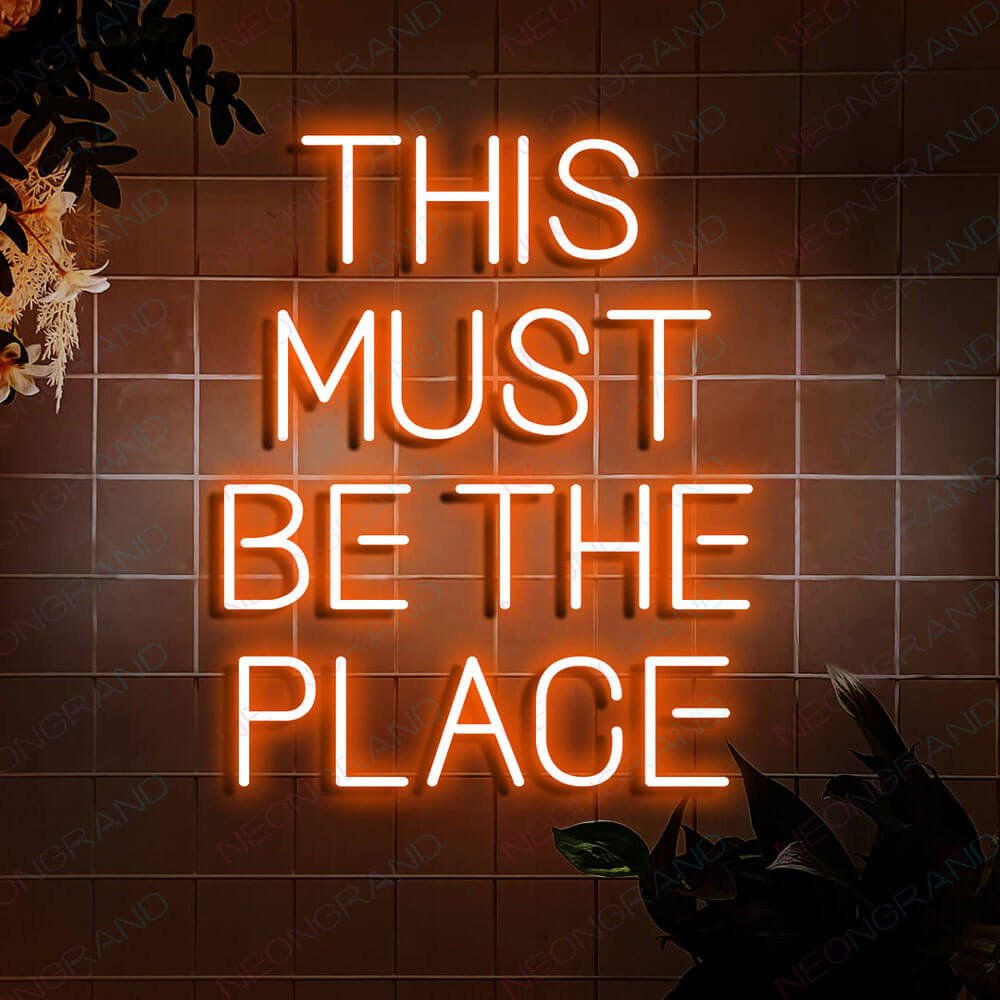
The pour wall (behind the bartender, facing the room) is the home bar’s stage: the namepiece or hero brand script goes there, centered at standing eye level — roughly 66 to 72 inches to centerline — sized to the bar’s width, never wider. The guest-side walls take the jokes and phrase tier at seated eye level (54–60 inches), where the stools’ occupants live. And the glow layer wants dark paint or wood: neon against a dark wall is the room’s whole lighting plan after sundown, which is why basement bars photograph better than any other room in the house.
For the shelving question — neon and bottles — the working rule is separation: the sign above the top shelf, not behind it. Backbar glow through bottle glass looks great until a cord meets a dripping jigger; keep the electrical run above the spill zone and the power supply in open air (the hanging guide covers the cord-routing that keeps the pour wall clean). The man-cave crossover tier handles the sports-and-beer hybrid walls.
The Pour Wall’s Blueprint
The home bar builds around one composition decision: what hangs behind the bottles. The pour wall wants a hierarchy, and the hierarchy wants numbers.
The namepiece tier: the bar’s charter (“The [Name] Bar,” “Est.” + year) runs the pour wall’s center at 36-54 inches, sized to the bar’s width minus 20% – a six-foot bar carries a 48-54 inch piece, a four-foot bar carries 32-40. The custom charter (preview) is the budget’s center because it is the room’s identity: the piece that survives every brand phase and beer-loyalty change the bar goes through.
The brand tier: the era scripts and brand pieces flank the charter at descending sizes – the classic builds at 24-32 inches on either side, the shapes and jokes at 12-18 filling the edges. The composition rule from every classic bar: odd numbers, one hero, warm-dominant with one cool accent. The wall that runs three warm pieces and one ice-blue (the Coors register) reads tavern; the wall that runs all-cool reads cooler display case.
The glow layer: the back-bar mirror doubles everything – the piece mounted in front of the mirror’s bottom third reflects the bottles and doubles the glow, the single best-value placement in the room. Dimmers on the charter and the brand tier separately: the name glows all night, the brands run with the crowd.
The Room’s Calendar and the Budget Map
The home bar’s year runs seasons, and the sign program can too: the everyday tier (the charter, the drink menu, the glow layer) runs year-round; the seasonal tier (the Christmas pieces, the party calendar) rotates on the same mounts; and the event tier (the birthday and anniversary markers) arrives per occasion. One hook system, three calendars – the bar that plans the rotation spends its decor budget once.
The budget map: the starter bar ($100-250) runs the charter-small and one phrase piece (“Cold Beer”) – the room’s identity and its menu, enough; the working bar ($250-600) adds the brand tier and the mirror play – the room that hosts regularly earns its glow layer; the destination bar ($600-1,200) runs the full wall, the seasonal rotation, and the custom commissions – the neighborhood’s actual destination, built over years, not weekends.
The honest sequencing note: the bar itself, the good bottles, and the chairs come before the signs – the room earns its signage the way the taverns did, one round at a time (the beer wall’s collection logic runs the same discipline).
Variations and Pairings
The home-bar canon’s variants. The word-face variants: “home bar neon sign ideas,” “neon signs for home bar,” and “basement bar neon” serve the tier; the “bar neon signs” face (the produced canon) carries the general tier, the “for guys” face (the guys’ guide) carries the demographic skew. The setting faces: the garage bar inherits the workshop register (the garage canon); the commercial bar runs the trade program (the B-end guide).
The pairing logic: the home bar pairs the charter with the pour – the namepiece (the room’s identity) with the drink tier (the room’s function) – and the glow layer underneath both. The pairings that work run odd numbers with one hero; the pairings that fail run the even grid, the matched heights that read the catalog page rather than the bar.
The entertainment pairing: the bar that hosts pairs the party tier (the party canon) with the everyday tier – the “Let’s Party” that arrives with the guests, the charter that stays – the room’s two modes sharing the walls in shifts (the calendar logic above).
FAQ About Home Bar Neon Signs
What’s the best first sign for a home bar? The namepiece. “The [Name] Bar” or “Est.” piece makes the room an institution before any other decor arrives, and it outlives every beer-brand phase the bar goes through. The drink-menu tier (“Cold Beer,” “Cocktails”) builds out from there.
How do I light a home bar with just neon? One hero piece plus dimmers. The namepiece at full power lights the whole pour wall; dimmed to 30–40% with a couple of low lamps, the room runs on neon alone after 10 p.m. — the exact lighting plan most cocktail bars charge a designer for.
Where’s the worst place to hang bar neon? Behind the sink and ice-machine zone (splash and cords), directly above the tap handles (drip), and anywhere the morning sun hits full-strength (wasted glow, sun-faded backing over years). The pour wall’s center and the guest-side walls do everything right.
Can I mix beer brands and cocktail pieces on one wall? Yes — the room’s register keeps it coherent. One hero (namepiece or biggest brand), the drink-menu tier in consistent color temperature, and the jokes in the smallest size: mixed walls work when the hierarchy is visible from the stool.
What is the best first sign for a new home bar? The charter – “The [Name] Bar” or “Est.” + the year (preview) – because it names the institution before the institution stocks its shelves. The charter sets the room’s register (the scripts and jokes that follow agree with it), survives every brand-loyalty change the bar goes through, and photographs as the bar’s identity rather than its inventory. The budget’s logic: the charter takes the real money (the $200-400 custom tier), the pour tier follows (“Cold Beer” at the entry price), and the glow layer arrives when the room earns it (the budget map above sequences the full program).
How bright should a home bar neon sign be? In three shifts: full for the party’s first hour (the arrival glow), sixty percent for the conversation hours (the register where the good bars live), and the twenty-to-thirty percent closing glow for the last two guests (the brightness protocol above). The dimmer is the program’s most-underrated ten dollars – the bar that shifts by dial does more with five pieces than the full-power room does with ten. The mirror-backed pieces read brightest (the doubled glow), so they run the lowest settings; the window-facing charter runs the highest (the street’s read).
Sources & Further Reading
- Neon sign (Wikipedia) — the consolidated public record of neon-sign history and technology.
Pricing based on CustomNeon’s current catalog (2026); custom quotes come live from the sign builder.