16 Stoner Room Decor Ideas With the Right Glow
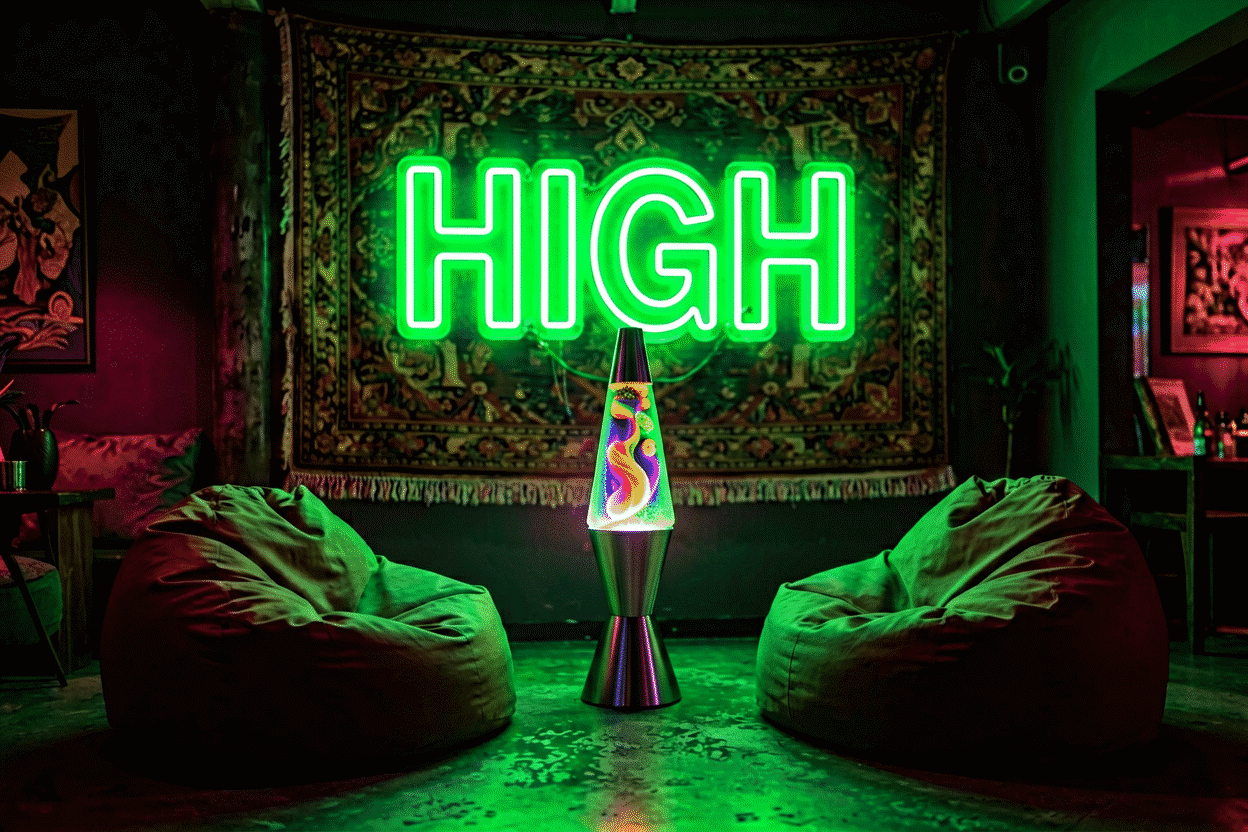
The chill room is a decor genre with its own physics: low light, deep seats, soft everything, and one glowing object that holds the room’s mood together. Whether it’s the basement corner, the garage’s finished half, or a whole apartment dedicated to the cause, the stoner room runs on atmosphere — and neon is its native medium, because nothing else produces color without brightness the way a dimmed sign does.
Here are 16 ideas by the room’s layers — the glow core, the seating halo, the iconography, and the finishing comfort — with the palette logic that keeps the room chill instead of busy. The sign-specific tier continues at weed neon signs; the broader man-cave context at man cave neon signs.
The Glow Core: Ideas 1–5
- Chill — the room’s thesis in five letters (the phrase’s full treatment): ice blue at 30%, the word that is the room’s entire floor plan.
- Good Vibes — the blessing register; the multi-color piece that works at every brightness and every hour.
- A mushroom or leaf shape — the icon tier’s quietest members: soft green, organic form, the room’s botanical register without the botany.
- A sunset-gradient piece — the pink-orange arc: the eternal-6 p.m. register, and the genre’s most-photographed single object.
- The lava-adjacent color-morph — the slow color-cycling piece doing the lava lamp’s job at modern brightness (the palette logic): the ambient anchor your parents’ version of this room swore by.
The Seating Halo: Ideas 6–8
- The couch-back wash — a warm strip behind the seating: the halo that makes a bean-bag kingdom read designed.
- The corner-uplight — a small neon in the room’s coziest corner at 20%: the reading-chair orbit, the nap zone’s sun.
- The reflection play — neon placed to catch in glass and chrome: the doubled glow that deep-water-feels the room for free.
The Iconography: Ideas 9–12
- The 70s earth-tone tier — burnt orange and harvest gold pieces against wood paneling (the retro guide): the era the aesthetic never left, lit correctly.
- Hotel California — the rock register’s signature: the pink-and-gold desert palette that IS the genre’s soundtrack, on the wall.
- The smiley tier — the mellow-face icon in soft yellow: the room’s mood, self-portrayed.
- The planet-and-stars set — the space register at low brightness: the ceiling-adjacent glow that makes the couch a launch pad.

The Finishing Comfort: Ideas 13–16
- The tapestry backlight — strips behind the wall hanging: the fabric’s patterns glowing through, the genre’s cheapest profundity.
- The blacklight accent — one UV piece plus the reactive posters (the UV tier adjacent): the visualizer effect, kept to one corner.
- The poster-frame glow — neon above the framed originals (not just taped prints): the upgrade that separates the curated chill room from the dorm version.
- The incense-and-glow pairing — the smoke catching the neon’s light: the room’s atmospheric special effect, free with purchase.
Palette and Brightness Physics
The chill room runs the warm-and-low system: amber, burnt orange, deep green, and soft pink at 20–40% — the brightness band where color exists but glare doesn’t (the color decoder). Ice blue is the one cool register admitted (the “Chill” piece’s native color), and full brightness is reserved for the party hours the room occasionally hosts. The genre’s whole trick is glow without glare: dimmers on everything, warm registers dominant, and the one anchor piece doing the room’s talking.

Placement runs soft: the anchor at seated eye level (not standing — this room’s users are seated, definitively), the halo behind the seating, the icons scattered at couch-recline angles. The hanging guide covers the adhesive and anchor methods, with special affection for the paneling this genre’s walls so often wear.
The Chill Room’s Build Sequence
The chill room builds in a specific order, and the order is the difference between the room that works and the room that’s merely dim.
First: the seating. The room’s seats (the couch, the bean bags, the corner chair) define everything – the glow’s angles, the icons’ sightlines, the room’s whole geometry. The chill room that buys signs before seats hangs them for a room that doesn’t exist yet.
Second: the anchor glow. One warm piece at seated eye level – “Chill” or the sunset arc (the core tier) – the room’s thesis and its primary light. The anchor runs warm (amber, burnt orange, soft pink – the palette physics) at the 20-40% band: the brightness where color exists and glare doesn’t.
Third: the halo. The strip behind the seating (the couch-back wash) – the ambient layer that makes the room’s edges soft. The halo’s engineering runs the channel method: the diffused line, not the dotted LED – the chill room reads either designed or aftermarket, and the channel is the difference.
Fourth: the icons and the reflection play. The leaf or mushroom (the icon tier), the 70s pieces, the rock register – scattered at couch-recline angles, placed to catch in the glass and chrome. The room’s fourth layer is its personality; the first three were its physics.
The Budget and the Maintenance Calendar
The entry chill room ($80-200): the anchor piece and the halo – the room’s glow and its warmth, enough. The committed room ($200-500): the icon tier, the rock register, the lava-adjacent color-morph – the room’s full personality. the connoisseur room ($500-1,000): the 70s glass tier, the era-authentic customs, the blacklight corner – the room that means it.
The maintenance calendar runs gentle: the monthly dry pass (the genre’s air has texture, and the texture lands), the incense-column discipline (the smoke’s residue stays off the tubes – the placement that keeps the glow clean), and the power-supply airflow check (the adapter in open air, always – the guide’s standard). The chill room’s pieces live long precisely because the room’s pace is slow – the glow that runs at 30% for years outlives the full-power piece by the same margin the room’s occupants outlive their stress.
FAQ About Stoner Room Decor
What’s the best neon sign for a chill room? “Chill” itself (the piece, the meaning) — ice blue, 30%, the room’s whole philosophy in five letters. The sunset-gradient piece is the aesthetic upgrade; “Good Vibes” the universal.
What colors work best? Warm and low: amber, orange, green, soft pink at 20–40% (the decoder). The genre’s physics is color-without-glare — brightness is the enemy, dimmers are the tool.
How do I make the room look curated, not cluttered? One anchor piece, one halo, two icons max per sightline, and the framed-poster tier replacing the taped one: hierarchy is the difference between a chill room and a storage room with glow.
What about the smell-adjacent practicalities? The genre’s rooms run ventilation-friendly layouts — keep the sign’s power supply in open air, the strips dusted (hanging guide mechanics), and the electronics away from the incense’s direct column. The glow lasts longer than the vibes if the engineering respects both.
What color neon is best for a chill room? The warm-and-low registers: amber, burnt orange, deep green, and soft pink at the twenty-to-forty-percent band – the brightness where the color exists and the glare doesn’t (the palette logic). The ice-blue “Chill” piece is the one cool register admitted (the word’s native color); the full-power brights belong to the party rooms, not the chill ones. The room’s physics is color-without-glare: the dimmer is the tool, the warm registers are the medium, and the evening that follows is the proof.
How much does chill room neon cost? The anchor tier runs $80-200 (the “Chill” piece or the sunset arc – the room’s thesis and primary glow); the committed room runs $200-500 (the icon tier, the rock register, the color-morph piece); the connoisseur room runs $500-1,000 (the 70s glass tier, the era-authentic customs) (the budget tiers above). The genre’s economics: the room that runs its glow at the thirty-percent band pays the pocket-change power bill (the math) and buys its pieces at the decor budgets – the cheapest room in the house to keep lit, in both senses.
What glow palette reads stoner-aesthetic without cliché? The sophisticated register runs green-forward but earthy: sage, forest, and warm amber with a single accent (a deep orange or muted purple), skipping the saturated rainbow tie-dye tier that dates a room instantly. Leaf motifs in outline form — one clean botanical line, not a wall of them — carry the identity; the room’s other textures (wood, rattan, tapestry weight) do the rest and let the glow be the mood, not the joke.
How do you build the chill room’s glow hierarchy? One statement piece at seated eye level (the botanical, the phrase, the mushroom lamp register), a low secondary glow source at floor level (the under-shelf strip, the corner piece at 15 percent), and nothing else lit. The stoner register specifically punishes over-lighting — the entire aesthetic is warm dimness with one focal glow, and every additional bright piece subtracts from the calm the room is built to produce.
The Anchor Piece vs the Icon Tier
The chill room’s two purchases, compared:
| Decision axis | The anchor piece (the room’s voice) | The icon tier (the room’s identity) |
|---|---|---|
| The pieces | Chill, the sunset arc, Good Vibes | The leaf, the mushroom, the botanical (the icon tier) |
| The statement | The room’s mood (the atmosphere’s name) | The room’s subject (the activity’s icon) |
| The audience | Every guest (the register is innocent) | The knowing (the icon is specific) |
| The palette | The warm-and-low registers | The green-dominant (the genre’s physics above) |
| The brightness | The 20-40% band (the genre’s own) | The same (the icons run the room’s settings) |
| The budget | $80-200 | $60-180 |
The two purchases’ working combination: the anchor naming the mood (the “Chill” or the arc at the seated sightline) with the icon marking the subject (the botanical in the corner’s glow) – the chill room’s full program at the $150-300 combined (the budget tiers above).
The anchor-first rule applies with the genre’s own logic: the mood before the subject (the room that chills before the room that names why) – the household that buys the icon first and the anchor second has the subject without the atmosphere, the punchline without the room. The anchor is the room’s thesis; the icon is its illustration – the thesis first, always.
Sources & Further Reading
- Neon sign (Wikipedia) — the consolidated public record of neon-sign history and technology.
- Mercury (U.S. EPA) — federal guidance on mercury exposure and safe handling.
Pricing based on CustomNeon’s current catalog (2026); custom quotes come live from the sign builder.