UV Neon Signs: UV Print and Blacklight Glow
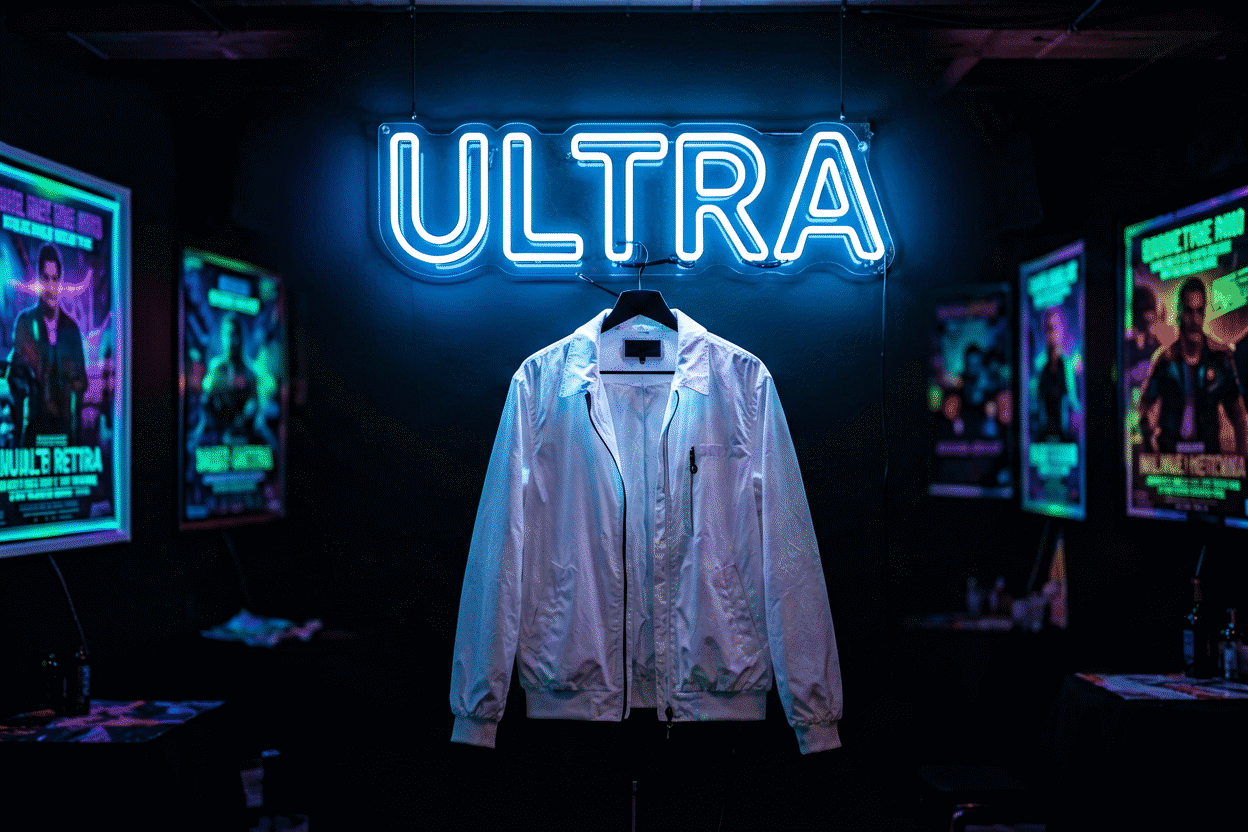
“UV neon” means two different things, and the SERP’s own results explain the split: most of what’s sold as UV neon is UV-printed signage — full-color artwork or logos UV-printed onto acrylic panels, combined with LED neon lettering or outlines (the format that puts your complete logo, photographs, and gradients into the glow) — while a smaller second meaning is blacklight/ultraviolet-emitting pieces — actual UV light that makes fluorescent things react (the party and Halloween register). This guide covers both, in that order of practical importance.
Where the format sits in the product taxonomy is covered at types of neon signs; the design side of pairing print with glow lives with the business color logic.
The Main Meaning: UV-Printed Neon Signs
What it is: ultraviolet-cured ink printing directly onto the sign’s acrylic panel — a high-resolution, full-color print layer — combined with LED neon flex for the glowing elements. The UV in the name is the curing process (UV lamps instantly harden the ink), not the light the sign emits.
What it adds that pure neon can’t:
- Complete logos — the full brand mark with gradients, shading, and photographic detail; pure flex neon does outlines, UV print does the whole thing
- Backgrounds and scenes — printed color fields, imagery, and patterns behind the glowing elements: the sign becomes a composed poster that partially lights
- Photographic content — faces, products, artwork — anything an image file contains
- Color exactness — brand-critical colors print precisely where neon hues approximate (the color-fidelity note)
- Complex detail at small sizes — fine graphics that flex tubing physically can’t bend to
The standard combinations: neon lettering over a printed logo; neon outline around a printed image; printed backgrounds with selective glow accents. The craft rule: glow for what should light, print for what should show — the two layers doing their own jobs.
Where it wins: business signage with real logos (the B-end guide), branded retail and events, sports and team pieces (printed crests + glowing text), and any design needing imagery the tube can’t draw. The trade: printed areas don’t glow (they show; the neon lights), and outdoor durability depends on the print’s UV-stability spec (ratings).
The Second Meaning: Blacklight / UV-Emitting Neon
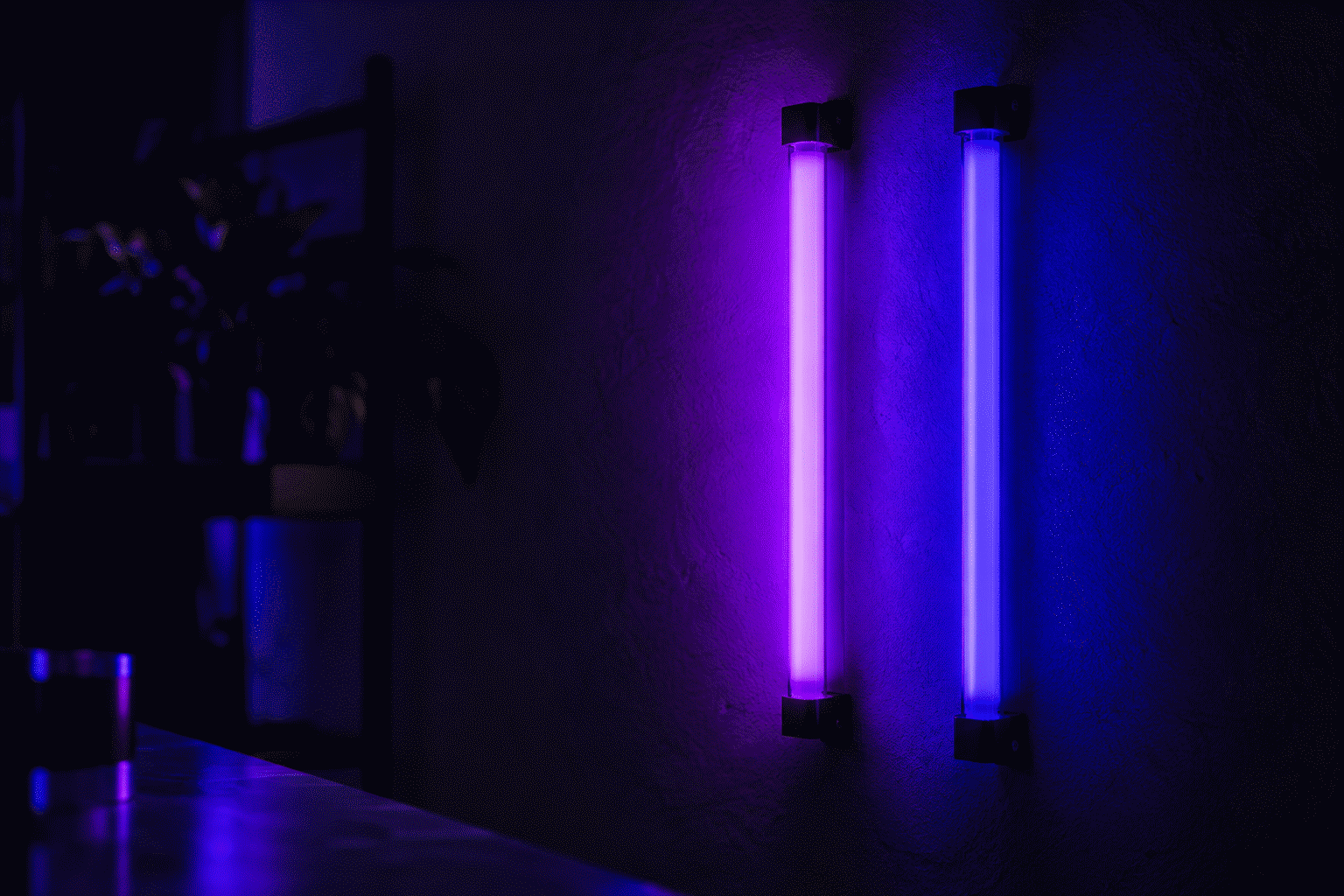
Actual ultraviolet-emitting pieces — “blacklight neon” — light that’s mostly invisible itself but makes fluorescent and phosphorescent materials glow in response:
- The party register: UV LED pieces in event spaces, paired with fluorescent decor, white fabrics, and reactive paint — the blacklight-party look
- The Halloween register: UV glow and reactive elements in spooky setups — the October genre (the Halloween guide)
- The aesthetic adjacency: UV-adjacent violet glows read mystic without actually being ultraviolet — most “UV purple” signs sold are visible violet, not true UV (the purple palette)
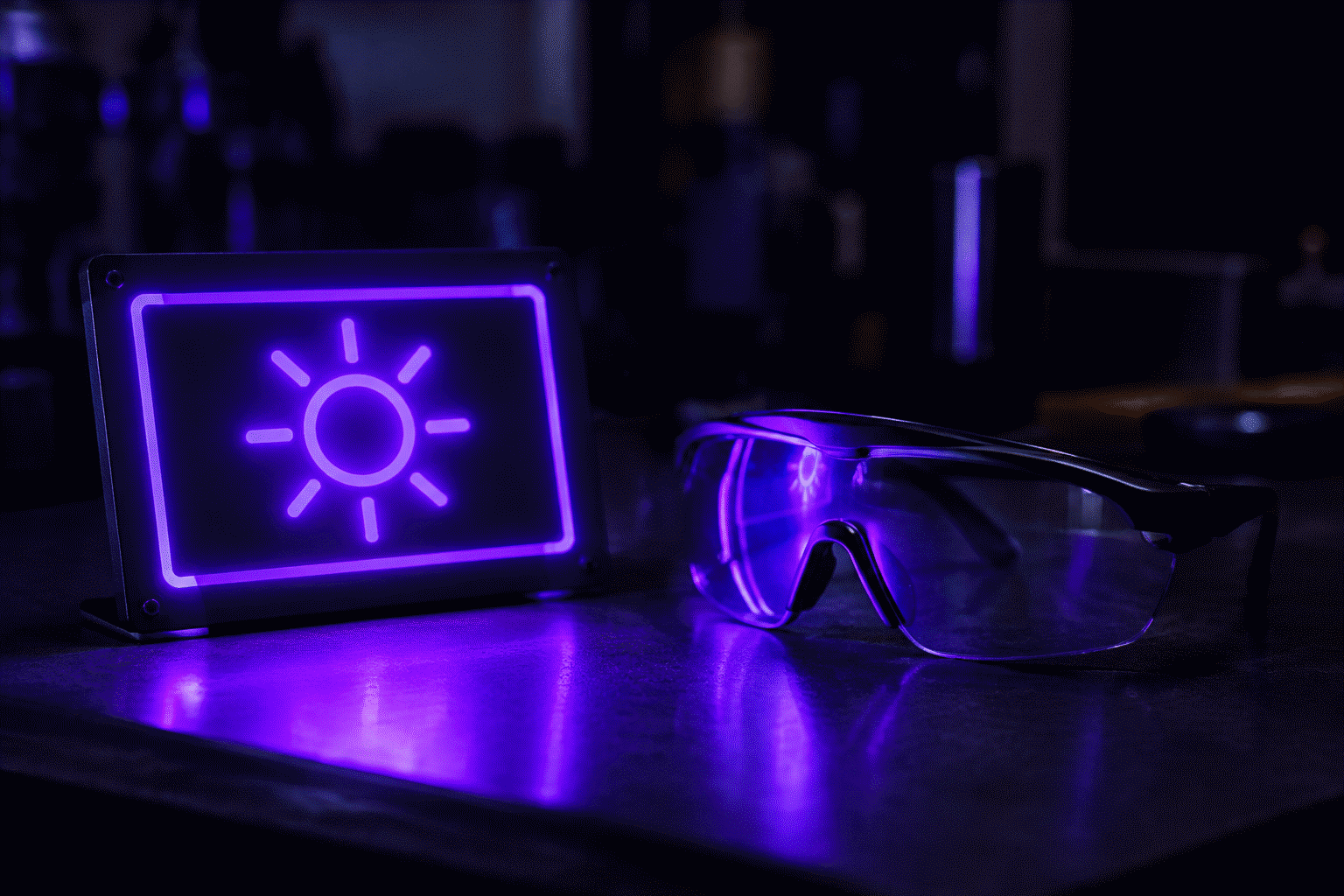
Practical notes for the true-UV path: the effect depends on what the light hits (fluorescent props, white fabrics, reactive paints) — the sign alone is half a system; UV output fades materials over time (fluorescent decor ages fast under constant UV); and eye-safety with extended close exposure follows the same common-sense rules as any blacklight (quality LEDs in signage operate at safe output levels — the concern class is high-intensity fixtures, not decor pieces).
Choosing Between the Two UVs
The intent test: “Do I want the full logo/photo to appear?” → UV print. “Do I want things to react and glow in the dark-party way?” → blacklight. The names collide in search results; the products don’t.
| You want… | The product |
|---|---|
| Complete business logo in a sign | UV print + neon lettering |
| Photographs or artwork combined with glow | UV print with neon accents |
| Brand-exact colors | UV print (printed precision) |
| The blacklight party effect | UV LED + fluorescent decor |
| Halloween reactive glow | UV pieces + reactive elements (guide) |
| The mystic violet look | Standard purple neon (visible violet — no UV needed) |
Designing the UV-Print Combo Well
- Lead with the glow plan — decide what lights and what shows; the neon layer is the hierarchy-maker
- Print high-contrast: printed detail sits behind glass-like acrylic — fine low-contrast prints disappear; bold graphics survive
- Keep glow and print registered: elements that touch need alignment precision — specify maker capability for tight registration
- Mind the daytime look: the print carries unlit appearance — design it to work both states
- Preview both layers — logo render plus neon layout — in the custom builder session; the print layer wants vector-quality art (the design flow)
Ordering the UV Combo: The Spec Sheet
The UV-print combination’s order-form specifics — what to prepare and confirm:
The artwork file. UV print quality starts at the source: vector files for logos and type (infinite resolution — the printer’s ideal), high-resolution raster (300 DPI at final size) for photographic elements, and clean layering in the file showing what prints and what glows (the combo’s two layers). The maker’s proof confirms the split — approve the layer roles explicitly, not just the composite look.
The registration conversation. Where print and glow touch (a logo outline, lettering over imagery), alignment precision is the craft: makers describe their registration tolerance, and tight designs stay within it. The order-time question: “How tight can print-to-flex registration run on this design?” — the answer separates the fluent makers from the flexible ones (the choosing notes).
The outdoor specification. UV-print builds for exteriors need the print-layer’s weatherability stated: UV-stable inks (the rating conversation (waterproofing)), sealed acrylic, and rated flex. The interior default is cheaper; the exterior spec is a different product — order the one the wall deserves.
The daylight test at proof stage. The print layer carries the unlit sign: approve the proof in both states — the maker’s render lit and the unlit mockup (the two-state design). The combo that looks perfect glowing and blank by day is the order that arrives without surprises.
The budget note. UV-print combos price above pure-flex builds (the print layer is a second process): expect the premium tier of the custom range, justified by what the format uniquely delivers — complete logos, photographic content, brand-exact color (the value case). For identity signage where the full mark must appear, it’s the only format that does the job at all.
Prepare the file, ask the registration question, approve both states — and order the combo here, where the two-layer preview shows exactly what lights and what shows.
FAQ: UV Neon
What is a UV neon sign? Most commonly: UV-printed signage — full-color artwork or logos printed onto the acrylic with ultraviolet-cured inks, combined with LED neon lettering. Secondarily: blacklight pieces that actually emit ultraviolet light for fluorescent-reactive effects.
What does UV print add to a neon sign? Everything flex tubing can’t draw: complete logos with gradients, photographic imagery, printed backgrounds, brand-exact colors, and fine detail at small sizes — the format for full brand marks and image-bearing designs.
Is UV print the same as blacklight neon? No — UV print is a manufacturing process (UV-cured inks showing full color); blacklight neon is UV-emitting light that makes fluorescent materials glow. Same letters, different products — the comparison table above separates them.
Can my full business logo be made into a neon sign? Yes, via UV print: the complete mark printed on the panel with neon elements for the glow — outlines, lettering, or accents — the standard format for logo-faithful signage (the business guide).
Do blacklight neon signs need special decor to work? Yes — UV light’s effect lives in what it hits: fluorescent props, white fabrics, and reactive paints complete the system. The UV piece alone is half the look.
Do UV printed neon signs work outdoors? With the right specs: UV-stable inks and rated components — printed layers weather differently than neon flex, so outdoor UV-print builds need the durability tier confirmed (the ratings guide).
The UV summary: one name, two products — UV-print combos (the full-logo format: print for showing, glow for lighting, registration as the craft) and true blacklight (the reactive-party system) — distinguished by intent and specified by their different order sheets (order the combo). The print-plus-glow piece is business signage’s complete answer; the blacklight system is event decor’s reactive engine. Know which UV you mean, and the rest specifies itself. Can UV printed signs be backlit? The current format is front-lit by design — the print shows, the neon glows, both facing the viewer (the combo logic). True backlit versions exist in the channel-letter and lightbox signage world (the adjacent trade format), where printed acrylic faces glow from behind — a commercial sign-shop product rather than the custom-neon category. For logo work, the front-lit combo delivers the same completeness with the neon aesthetic intact.
How much does a UV printed neon sign cost? The combo format runs the custom tier’s upper band — typically $250–800 by size and print complexity (the print layer is a second process (the format’s value)) against pure-flex equivalents’ $100–400. For logos and imagery the format uniquely delivers, the premium buys capability rather than quality — there is no cheaper way to put a complete brand mark in glow.
Print for showing, glow for lighting, registration as the craft — the UV combo’s whole spec sheet in nine words, with the two-product distinction guarding the door.
Sources & Further Reading
- Mercury (U.S. EPA) — federal guidance on mercury exposure and safe handling.
- Neon sign (Wikipedia) — the consolidated public record of neon-sign history and technology.