17 Retail Store Neon Signs That Sell the Shelf
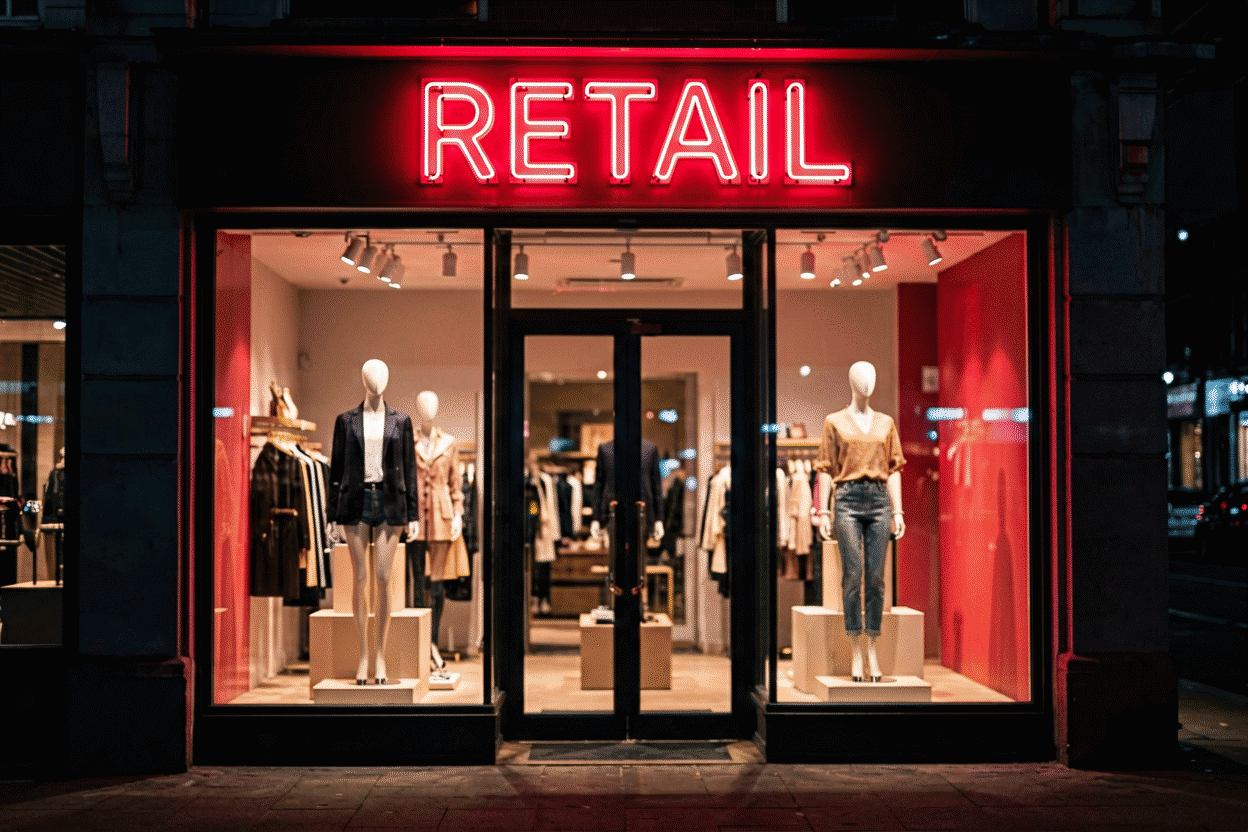
Retail signage has one job the other trades don’t carry: it has to sell merchandise it doesn’t name. The neon piece in a retail store is atmosphere engineering — the glow that makes the shelf worth browsing, the fitting room worth posting, and the bag worth carrying past the window again. The stores that understand this (the boutiques that photograph, the streetwear shops that queue) run neon as a merchandising layer, not a decoration.
Here are 17 ideas by the store’s zones and jobs. The storefront tier lives at storefront sign ideas; the clothing-specific register at clothing store signs.
The Window & Street Tier: Ideas 1–4
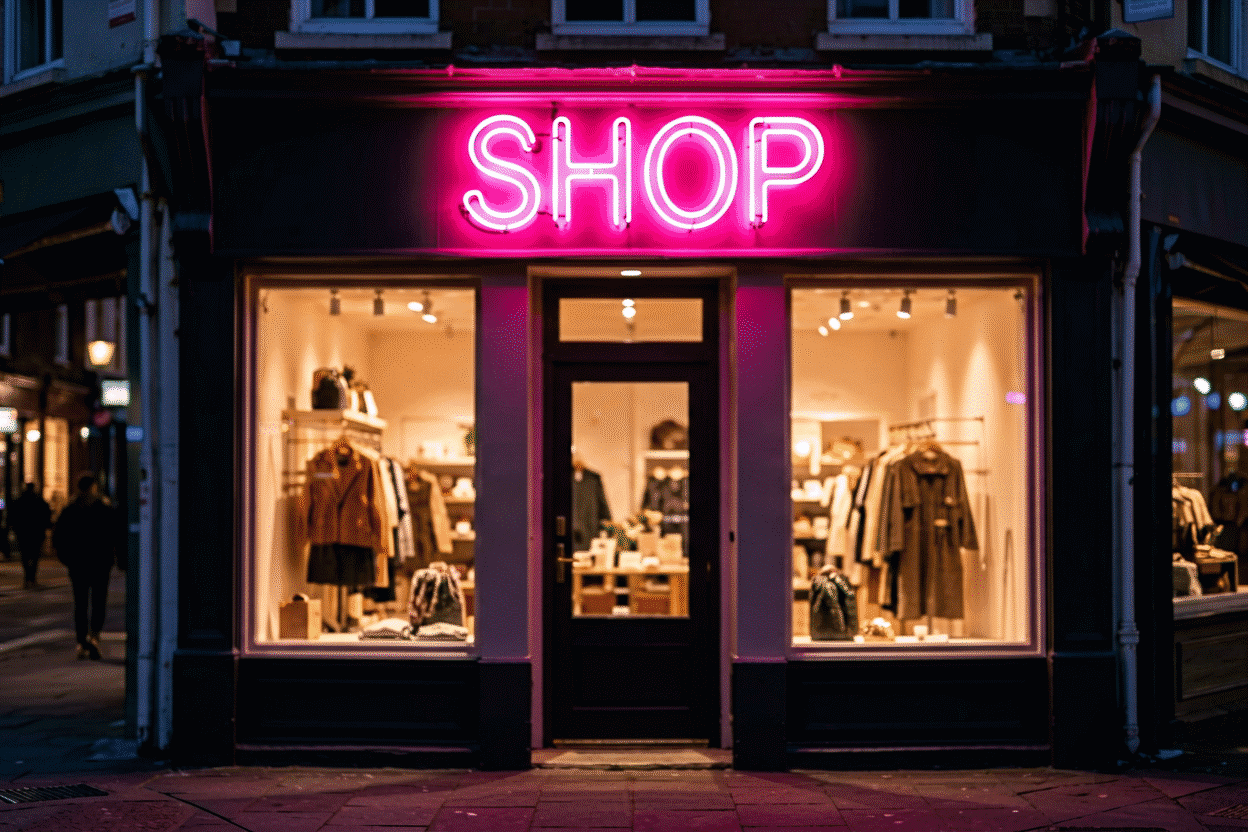
- The shop’s name in its aesthetic — the window’s identity piece (the B-end canon): the boutique’s script or the streetwear shop’s block — the register that pre-qualifies the customer before the door.
- The open sign — the status tier every retailer runs: window-centered, hours-adjacent, the conversion piece (the guide).
- The new-arrival marker — “NEW IN” in glow: the merchandising tier that routes the regular’s eye — the sign that updates the window without re-dressing it.
- The sale tier — “SALE” and “CLEARANCE” honest and loud: the transaction register that moves the season’s inventory (the storefront logic).
The Interior Merchandising Tier: Ideas 5–9
- The category glow — “DENIM,” “VINTAGE,” “HOME”: the wayfinding that doubles as merchandising — the shelf’s label in the room’s register.
- The feature-wall piece — the season’s story in light (the retail canon context): the glow that spotlights the collection the buyer’s proudest of.
- The price-point marker — “$5 AND UNDER” or the deal-tier glow: the value-retail’s signage engine, doing the shouting politely.
- The mirror tier — “You Look Amazing” at the fitting-room mirror (the clothing canon): the compliment piece that converts browsers and photographs the try-on.
- The color-wall accent — the glow behind the color-blocked merchandise: the visual merchandising trick that makes the shelf itself the display (the palette logic).
The Content Tier: Ideas 10–12
- The photo corner — the shop’s hashtag wall: the piece customers post, the handle in glow (the case) — the organic-content engine every boutique now budgets for.
- The fitting-room post piece — the mirror-adjacent phrase that ends up in every try-on story: the retail content tier’s highest-frequency square foot.
- The “tag us” call — the small sign by the register: the tier that converts happy customers into the marketing department.

The Brand & Experience Tier: Ideas 13–15
- The logo piece — the shop’s mark in brand colors (preview): the piece that appears in every post and anchors every bag’s exit through the window.
- The motto piece — the shop’s own line (“Wear It Loud”): the brand-voice tier that makes the store’s register legible (the small-business logic).
- The community piece — the neighborhood name or the local-sports glow: the store’s place in its block’s identity — the tier that earns the regulars.
The Craft & Seasonal Tier: Ideas 16–17
- The seasonal rotation — the holiday and event pieces (the calendar logic): the same mount, the year’s content — the window that never goes stale.
- The premium commission — the glass or custom-script piece for the heritage register (the craft tier): the boutique whose signage signals the same quality the merchandise does.

The Merchandising Physics
Retail’s sign logic runs the funnel: the window tier converts (the street’s passerby), the merchandising tier routes (the browser’s path), the content tier compounds (the poster’s feed) — and the brand tier glues them into an identity the bag carries out the door (the case). The palette runs by store type (the trade logic): warm-white for the premium and lifestyle registers, bold accents for streetwear and value, pink-chrome for beauty-adjacent.
The budget sequence: window trio first (name, open, one merchandising marker), the fitting-room and content pieces second (the photographable core), the brand and craft tiers as the store’s identity crystallizes (the brackets, the playbook).
The Retail Funnel: Window, Path, Post
The retail sign program maps to the customer’s funnel, and each tier serves a stage. The window tier (the passerby’s conversion): the shop’s name, the open sign, the new-arrival marker – the pieces that turn the walk-by into the walk-in (the case). The path tier (the browser’s route): the category glows, the feature wall, the fitting-room compliment – the pieces that turn the walk-in into the try-on and the sale. The post tier (the customer’s content): the photo corner, the mirror pieces, the hashtag wall – the pieces that turn the sale into the marketing.

The funnel’s discipline: each tier’s pieces are chosen for their stage (the window tier for legibility at speed, the path tier for browsing-distance reading, the post tier for photographing) – the piece that serves the wrong stage (the beautiful window piece nobody can read at speed, the photographing piece in the stockroom’s corner) wastes its tier (the storefront logic).
The fitting-room piece, justified: the apparel canon’s most effective single sign (the clothing guide) – the compliment at the mirror converts the uncertain try-on (the direct sale) and photographs the confident one (the content engine). The $150 piece at the fitting room outperforms the $500 window piece for the store whose traffic already knows it exists – the funnel’s stage logic in one example.
The Retail Budget by Store Type
The boutique ($400-900): the identity sign, the fitting-room piece, the photo corner – the content-forward program the boutiques run. The streetwear shop ($300-700): the block-type brand, the scarcity pieces, the color-wall glow – the register-forward program (the clothing canon). The multi-category retailer ($700-1,500): the wayfinding system, the category markers, the seasonal rotation – the navigation-forward program. The value retailer ($300-600): the deal-tier glow, the honest signage – the utility-forward program that shouts politely (the playbook).
FAQ About Retail Store Neon Signs
What’s the best neon sign for a retail store? The shop’s name in its own aesthetic plus the fitting-room compliment piece: the window’s conversion and the content engine’s core (the clothing canon). The open sign first, always.
How do neon signs help retail sales? The three-layer case (the evidence): window conversion, in-store routing, and the photographed-wall content tier — the boutique’s referral engine, compounding nightly.
What color neon for a boutique? The register’s palette (the trade logic): warm-white for premium lifestyle, bold for street, pink-chrome for beauty. The glow should agree with the merchandise, not compete with it.
How much does a retail neon program cost? The working window-and-content core lands $500–900; the brand and craft tiers add by ambition (the brackets). The photographable-wall return is the line item paid channels can’t replace.
What neon signs help retail stores sell? The funnel’s three tiers: the window pieces (the name, the open, the new-arrival marker – the passerby’s conversion), the path pieces (the category glows, the fitting-room compliment – the browser’s routing), and the post pieces (the photo corner, the hashtag wall – the customer’s content) (the retail funnel above). The fitting-room compliment is the apparel canon’s most effective single sign: the compliment that converts the try-on and photographs the sale – the $150 piece that outperforms the $500 window for the store with existing traffic.
Where should neon signs go in a retail store? The funnel’s three placements (the retail logic above): the window tier at the street’s read (the name, the open sign, the merchandising marker – the conversion pieces at the speed-reading sizes), the path tier at the browsing distance (the category glows, the feature wall – the routing pieces at the arm’s-length registers), and the post tier at the photographing spots (the mirror pieces, the photo corner – the content pieces at the camera’s compositions). The three placements’ shared discipline: one focal per sightline at each tier – the store that runs the funnel’s hierarchy converts at each stage, and the store that piles the pieces fails all three.
Where in a store do neon pieces earn their keep? Three zones with measured jobs: the window (stops foot traffic — the one piece sized for street legibility), the feature wall behind the cash wrap (the photo zone customers tag), and the department markers that wayfind (the fitting rooms, the gift section). The pieces that fail are the ones floating in mid-store no-man’s land catching no sightline and anchoring no decision; every sign should own a zone or go home.
How do chain stores keep neon consistent across locations? The program approach: one design package (specified tubing colors, letterforms, mounting heights, and even the glow schedule for dimmable pieces) that ships to every store with local installation only. Consistency lives in the spec document, not in re-deciding at each location — which is also why chains order in production runs and independents get the custom-tier pricing; the look is the same, the process differs.
The Window Program vs the Interior Program
The retail program’s two audiences, compared:
| Decision axis | The window program | The interior program |
|---|---|---|
| The audience | The street (the passerby’s conversion) | The browser (the customer’s experience) |
| The pieces | The name, the open sign, the new-arrival marker | The category glows, the fitting-room piece, the photo corner |
| The physics | The speed-read (the sizing) | The browsing-read (the arm’s length) |
| The budget | $200-500 | $300-900 |
| The measurement | The walk-in count | The try-on rate and the post count |
| The keeper weight | The identity (the permanent) | The merchandising (the rotating) |
The two programs’ funnel logic (the retail case above): the window converts (the traffic), the interior converts again (the sale) and again (the post) – the three-stage program that the best retail sign runs serve in sequence.
The interior program’s specific advantage for the established store: the window’s traffic is fixed (the location’s given), but the interior’s conversion is the store’s own – the fitting-room piece and the photo corner extracting the sale and the content from the traffic the window already won. The store with the foot traffic and no interior program is paying rent for browsers; the interior tier turns the browsing into the business (the funnel logic).
Sources & Further Reading
- Neon sign (Wikipedia) — the consolidated public record of neon-sign history and technology.
Pricing based on CustomNeon’s current catalog (2026); custom quotes come live from the sign builder.