21 Sports Room Neon Sign Ideas by Season
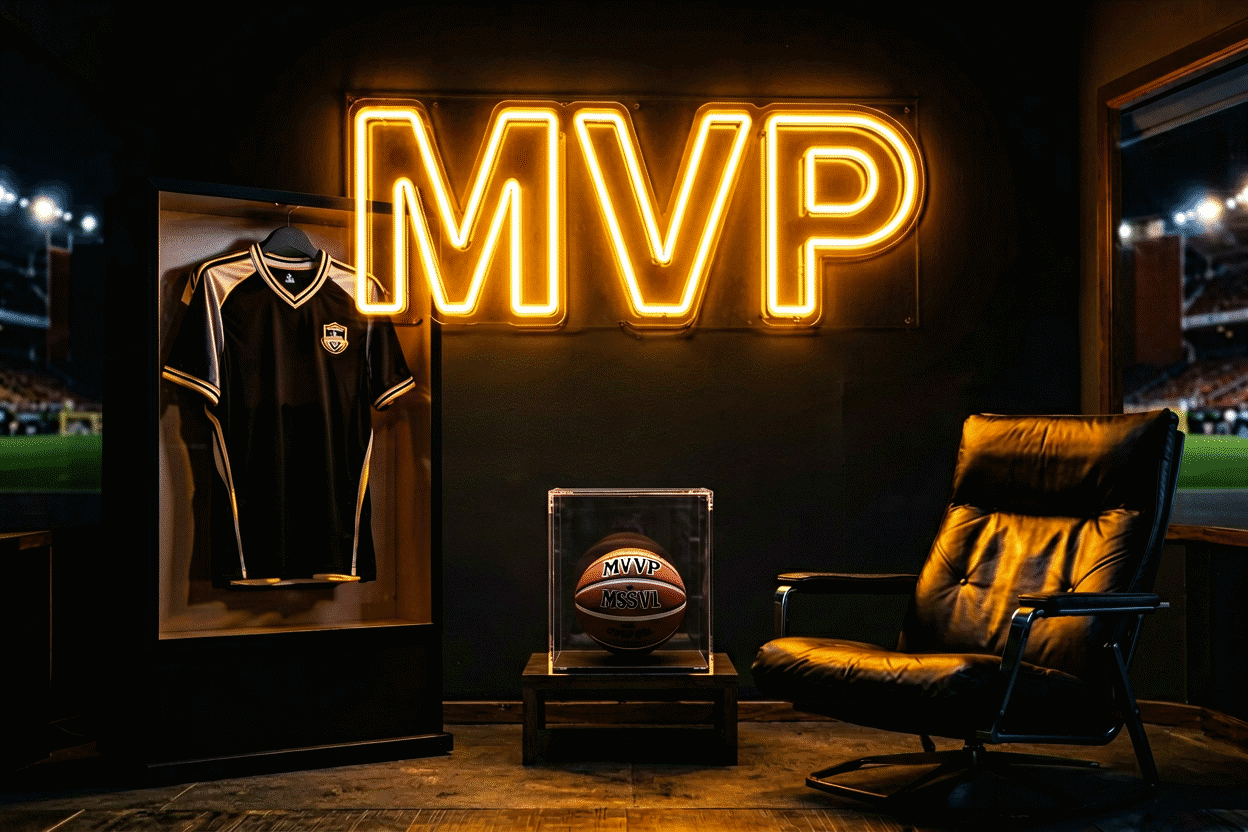
The sports room is a shrine with a schedule: it runs September to February (or October to June, or year-round for the golf household), and its neon marks the calendar. The pieces divide cleanly — the team tier (who you root for), the player tier (who you were), the motivation tier (what you coach), and the icon tier (what you play) — and every sports household runs some mix of the four.
Here are 21 ideas organized by the room’s seasons and tiers, with the display logic that keeps a sports wall a shrine instead of a merchandise rack. The gym-room register lives at gym neon signs; the team-IP canon at NFL signs.
The Team Tier: Ideas 1–6
- The franchise piece — team name in team colors, era-correct: the shrine’s anchor (the NFL lineup covers the league; the Cowboys star leads the most-built list).
- The Raiders — the silver-and-black earns its own line: the most neon-compatible identity in professional sports.
- The college piece — the alma mater’s name and colors (the college canon): the tier that runs deepest — college fandom is permanent.
- The city-skyline-plus-team combo — the team over the skyline: the two-loyalty piece (city and club) in one composition.
- The championship-year piece — the title season, glowing: the trophy tier that needs no explanation to anyone who was there.
- The two-team household treaty — his and hers pieces, opposite walls, equal sizes: the marriage-preserving arrangement (the couples logic applies).
The Player Tier: Ideas 7–10
- The jersey number, oversized — your number, your kid’s, the legend’s retired one: the player tier’s signature format, strongest in team color.
- The name-and-number pair — the jersey’s wall version: nameplate above, number below, the shrine’s mini-format.
- The autograph-adjacent piece — neon framing the signed jersey or photo: the museum treatment that turns memorabilia into installation.
- The position piece — “QB1,” “CLOSER,” “CAPTAIN”: the role register for the household that played the position or parents someone who does.
The Motivation Tier: Ideas 11–15
- Hustle — the two-sport word: works over the home gym and the sports wall equally (the gym canon).
- “No Excuses” — the coach register (the full archive): the phrase every sideline has said since sidelines existed.
- “Ball Is Life” — the devotion tier, half-ironic: the phrase that’s truer than its speaker admits.
- “Eat Sleep [Sport] Repeat” — the schedule register: the custom that names the household’s actual calendar.
- “Practice Like You’ve Never Won” — the long-game phrase: the motivation tier’s most gift-worthy piece.
The Icon & Play Tier: Ideas 16–21
- The sport’s icon — football, hoop, glove, stick: the zero-word tier that works under any phrase piece.
- The retro-arcade sports tier — the 8-bit hoops and pixel pucks (the retro context): the crossover for the gaming-sports hybrid room.
- The scoreboard piece — a mini neon scoreboard or the final score of The Game: the moment-frozen register.
- The golf tier — the flag, the ball’s arc, “Mulligans Permitted”: the sport whose humor is self-deprecating by design.
- The race tier — the checkered flag and the car’s number (the motorsport canon context): the garage-sports crossover.
- The kid-athlete piece — the youth team’s name and the young player’s number (the kids canon context): the tier that gets outgrown never — it gets kept.
Display Logic for the Shrine
Sports walls run museum rules: the anchor (franchise or number piece) at center, memorabilia around it, the motivation tier door-side, the icons filling gaps. The failure mode is merch-rack drift — five same-size team products in a grid; the cure is scale contrast (one big anchor, varied supports) and the autograph-framing trick that elevates everything near it. The hanging guide covers the wall-anchor work the shrine’s heaviest pieces need.

Season logic: the permanent tier (team, number, city) stays lit year-round; the “Game Day” switch-flippers (the man-cave canon) run in-season only; and the motivation tier earns its dimmer during the off-season’s quiet months. The shrine that respects the calendar stays fresh forever.
The Shrine’s Build Sequence and Budget
The sports shrine builds in the order that keeps it a shrine rather than a merchandise rack. First: the anchor – the franchise piece or the oversized number, the wall’s identity, at the quality the devotion deserves. Second: the memory tier – the autograph-framing, the jersey display, the championship-year pieces – the shrine’s artifacts, which the neon serves rather than joins (the display logic). Third: the calendar tier – the “Game Day” switch-flipper, the in-season pieces that run on the schedule. Fourth: the icon fill – the sport’s shapes and the joke tier, scattered small.
The budget by devotion: the fan’s wall ($150-400) – the anchor and two supports, the shrine’s honest core; the season-ticket wall ($400-900) – the full anchor system plus the memory tier’s framing glow, the wall that archives the fandom’s artifacts; the superfan’s room ($900-2,000) – the multi-sport system, the era collections, the custom commissions (the stadium’s silhouette, the dynasty’s years) – the room that IS the fandom (the man-cave context carries the hybrid walls).
The two-fan household’s treaty: opposite walls, equal sizes, pre-negotiated – the architecture that keeps the mixed-fandom marriage intact (the couples logic applies with team colors). The treaty’s one upgrade: the neutral-room strategy (the living room runs no team pieces; the cave runs both by treaty) – the household that separates the shrine from the shared space buys peace with the architecture.
The Sports Wall’s Calendar Physics
The sports shrine runs the calendar as its brightness schedule: the permanent tier (the franchise, the number, the city) glows year-round; the in-season tier (the “Game Day” piece, the playoff register) runs September through the season’s end; and the off-season dims to the 20% where the devotion rests without sleeping (the man-cave protocol). The wall that respects the calendar stays fresh forever – the shrine that runs full-power year-round reads fanatical in July, which the two-fan household’s treaty usually addresses first.
FAQ About Sports Room Neon Signs
What’s the best neon sign for a sports room? The franchise piece or the oversized jersey number — the two anchors every shrine builds around. The NFL lineup covers the league tier; the customizer builds the number pieces.
How do I display a signed jersey with neon? Neon above or around the framed jersey: the autograph stays the art, the glow becomes its gallery lighting — the museum treatment that upgrades the whole wall.
What about a two-fan household? Opposite walls, equal sizes, pre-negotiated: the treaty arrangement (couples logic). The mixed-household piece (both colors, one design) exists but is a last resort.
Are sports neon signs good for kids’ rooms? The number piece and the kid-athlete tier are the keepers (kids canon): they grow with the player and outlive the phase. The pro-team pieces start arguments early, which some households consider feature, not bug.
What is the best first sign for a sports room? The anchor: the franchise piece (the team name in its colors – the NFL lineup covers the league) or the oversized jersey number (the player tier’s signature format). The two formats cover the sports shrine’s first purchase at every budget: the team piece for the loyalty-forward wall, the number for the person-forward one (the shrine logic above). The autograph-framing trick (the neon above the signed jersey) upgrades either – the museum treatment that turns the memorabilia into the installation and the sign into its lighting.
How much do sports neon signs cost? The anchor tier runs $150-400 (the franchise piece or the oversized number – the shrine’s identity); the season-ticket wall runs $400-900 (the full anchor system plus the memory tier’s framing glow); the superfan’s room runs $900-2,000 (the multi-sport system, the era collections, the commissions) (the shrine budget above). The team-specific inventory rotates through the sports collection (the hub); the custom route (preview) builds any team’s colors, any stadium’s silhouette, any player’s number on order.
How do you pick between a team logo and a player piece? The team mark is the longevity play — franchises outlast rosters, and the logo piece stays current through a decade of roster turnover. Player pieces are the emotion play and they age like trading cards: the jersey number of a legend reads forever (the retired-number tier), while current-star pieces carry trade risk that turns a beloved wall into an awkward one overnight. The balanced room runs the logo as anchor and the player piece as the rotating fandom tier.
Do stadium and scoreboard-style neon pieces work in home rooms? They thrive at the right scale: the scoreboard register (score lines, inning counters, the ballpark’s distressed-cream palette) was practically invented for basements and bar walls, where its busier detail reads as texture rather than clutter. The fail mode is size mismatch — a full scoreboard-format piece in a bedroom overwhelms, while the 18-30 inch band in a viewing room becomes the wall’s storyteller every game night.
The Team Piece vs the Number Piece
The sports shrine’s two anchor formats, compared:
| Decision axis | The team piece | The number piece |
|---|---|---|
| The loyalty | The franchise (the permanent) | The player-era (the dated) |
| The budget | $150-450 (the franchise tier) | $100-300 (the number tier) |
| The keeper weight | The shrine’s permanent anchor | The era’s marker, kept proudly |
| The wall economics | The identity (one per household) | The layers (one per honored player) |
| The risk | The relocation bet (the team that moves) | The trade that breaks the heart |
| The gifting | The verified fandom (the trap) | The known favorite |
The comparison’s working combination – the team piece anchoring with the numbers orbiting (the current favorite, the retired legend, the household’s own) – runs the shrine’s standard composition (the shrine logic above): the permanent loyalty at center, the personal devotions layered around it, and the memory tier (the autograph framing, the championship pieces) completing the architecture.
The two formats’ calendar difference: the team piece runs year-round (the franchise’s permanence), and the number pieces date themselves proudly (the player-era the household lived through) – the sports wall that keeps its dated pieces (rather than replacing them) becomes the fandom’s archive, the same compounding the anniversary canon runs for the marriage’s markers.
Sources & Further Reading
- Neon sign (Wikipedia) — the consolidated public record of neon-sign history and technology.
Pricing based on CustomNeon’s current catalog (2026); custom quotes come live from the sign builder.