Bar Neon Signs: A Custom Guide for Bars & Pubs
A bar neon sign is the one piece of equipment that sells the room before the first pour: it marks the door from down the block, backlights the bottles that make you money, and gives a dark room its identity in a single line of light. Bars don’t buy neon the way homes do — a living-room sign decorates, a bar sign works a shift. It reads from the street at midnight, survives the humidity over a busy back bar, and ends up in more customer photos than your cocktail menu. That’s why neon has been the default language of drinking rooms for the better part of a century, and why the modern version — LED neon, the same glow at 12 volts, no glass over the liquor — has quietly taken over new installs.
Here is the buying-side playbook for pubs, cocktail rooms and basement bars alike: the walls worth lighting, the sizing that reads from the sidewalk, the wording that fits a room after midnight, the LED-versus-glass call, and the real budget. Want ideas first? The 18-sign playbook sits at bar neon signs for businesses; the den-and-corner mood board is bar neon sign ideas.
Why Bars Run on Neon
A dark room is where neon stops being decoration and becomes infrastructure: the bulbs above only light the space, but one glowing line gives it a mood, a house color and a point of focus — the bottle wall, the door, the booth in the corner. Hours are what makes the trade different: most of a bar’s take happens after the streetlights win, on blocks that have gone dim, and glowing script reads from a moving car or a slow walk better than nearly anything else a storefront can put up. There is a longer argument about what that does to walk-in traffic at how neon signs attract customers.
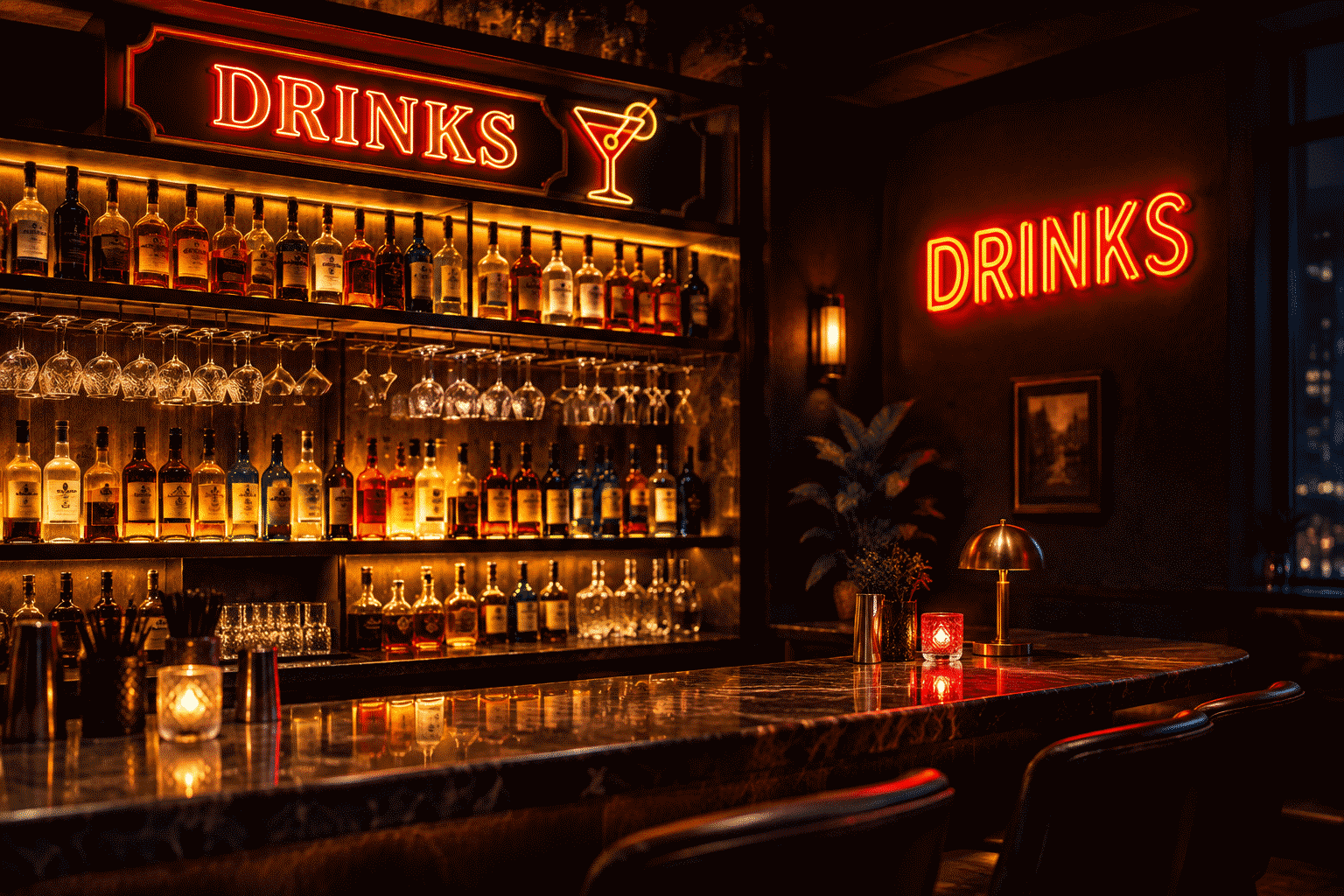
Most of what hangs in bars today is LED flex neon: silicone-jacketed tube that mimics hand-bent glass lettering while drawing low voltage, running cool behind a crowded rail, and dimming on a remote — useful when the room shifts gears from after-work buzz to last call. If you are weighing it against strip lighting (a different animal) or traditional tube, the side-by-sides live at neon signs vs LED strip lights and LED neon vs glass neon signs.
Where a Bar Neon Sign Works: Three Placements
Behind the bar, at the door, or over the booth — a sign only does one job well at a time, and size, brightness and wording all take their cue from where it hangs. Choose the wall before anything else.
The back bar wall
Work from the rail outward. The wall behind the bottles is where standing customers park their eyes while the pour settles, and it is the backdrop of nearly every photo your bar produces — so the name, a monogram or the house whiskey in tube belongs there. Reading distance at the rail runs about 6 to 12 feet, which flatters mid-size lettering; go oversized and the sign starts competing with the bottles instead of framing them. Regulars do the quiet marketing for you: they post the wall, and the name travels.
The entrance and the street window
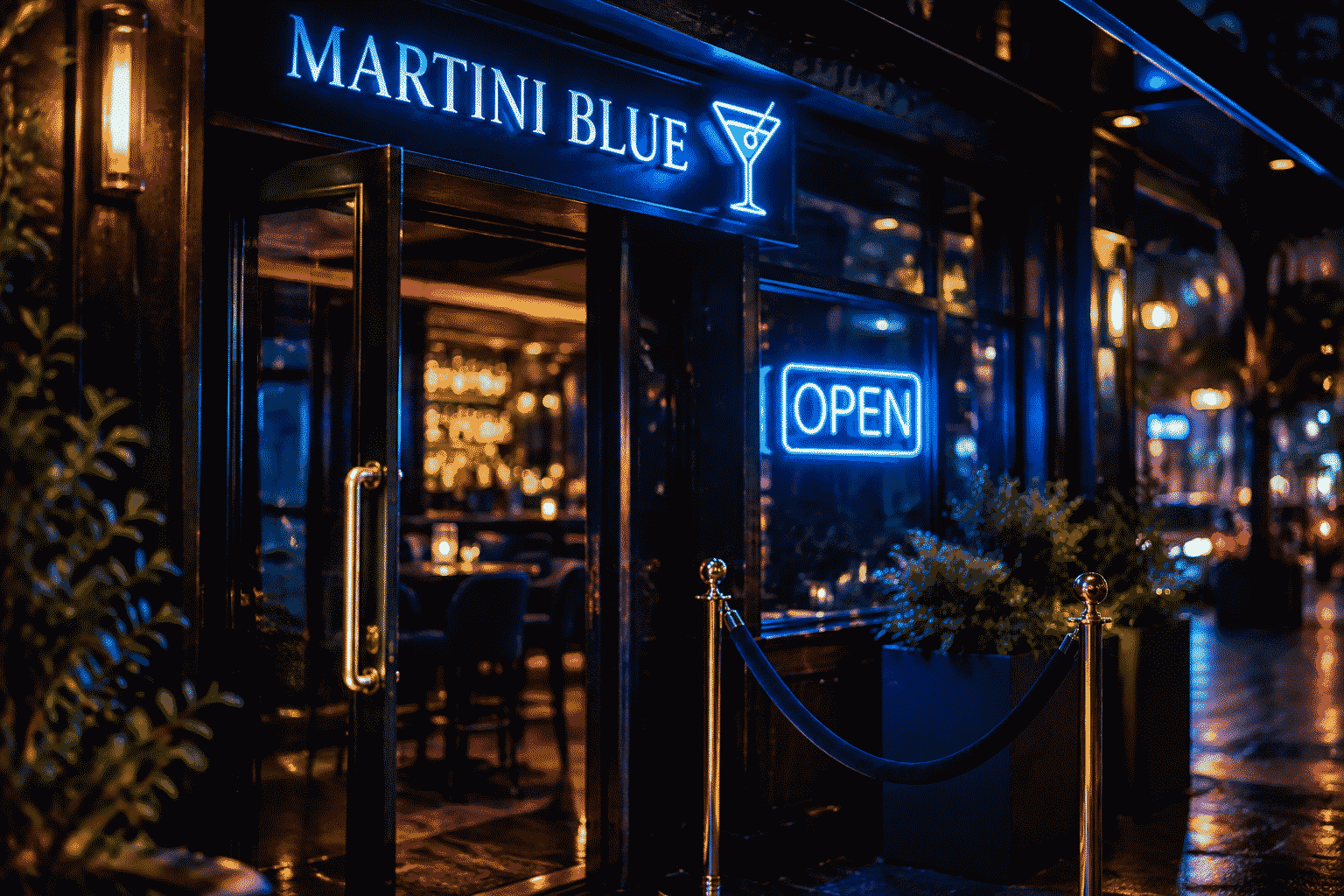
The street-facing job is announcing a dark block’s best-lit room. Peak drinking hours and worst visibility are the same hours, so the window or door piece carries OPEN, the hours or a small glowing mark meant to read from across the road. Dimming earns its keep here above all — full output against evening glare, stepped down once the kitchen closes and the room goes conversational. If the OPEN question is the whole question, the idea page is bar open sign ideas, and the business-side overview sits at open signs for business.
Booths, corners and the home bar
Close range is the third job: the booth walls, the corridor to the restrooms (where a neon arrow out-earns a printed sign every night of the week) and the home-bar corner owed better than a novelty lamp. At arm’s length a sign behaves like art, not advertising — fewer words, warmer hues, sized to be looked at rather than read from. The basement-and-den version gets a full walkthrough in bar neon sign ideas.
Sizing and Brightness for Bar Conditions
Start from how far away the reader stands, not from the empty wall you own. Letter height has to scale with distance — the measurement guide walks the full method — and the bar-specific shortcuts are: sidewalk-facing pieces built to clear the road, back-bar lettering sized for the 6-to-12-foot standing pour, booth and home-bar pieces cut for conversation range. Which wall should carry which job is its own question: the wall placement guide covers sightlines, mounting heights and traffic flow for exactly these rooms.
Output is a dial, not a setting. What suits nine on a Friday floods a Tuesday at midnight, so remote dimming is the feature bars end up touching every night — more than any color choice. And because LED flex runs cool, the placement map opens up: across the bottles, along the back shelf, any spot where glass tube’s heat and high voltage would turn a simple hang into an electrician’s visit.
What Should a Bar Sign Say?
Bar wording sorts into three layers, ranked by what each earns. Brand first: the house name or monogram over the bottles — every photo of the rail is a free ad with your name in it. Voice second: one house phrase that sounds like the room after its third drink. Atmosphere third: mood words for booths and dark corners. Five phrasings that hold up through a full shift:
- The house name, plain — the back-bar staple no shelf anywhere stocks.
- “No Bad Nights” — a promise the room then has to keep.
- “Good Vibes Only” — the mood-tier workhorse, legible at any hour and any crowd.
- “Est. 20XX” — borrowed heritage, convincing from opening night.
- One house in-joke — the piece guests photograph just to explain it.

Off-the-shelf wording handles the atmosphere layer just fine — the bar neon signs category and the neon bar signs landing roundup are where it lives — while brand and voice cannot be browsed into existence: nobody else stocks your name, in your letterform, cut to your wall.
LED or Glass for a Bar?
Real glass tube still matters where the room sells heritage on purpose: bent glass above a whiskey library says the place predates trends, and a vintage pub deserves tube the way it deserves tarnished brass taps. Be clear-eyed about the costs: glass typically runs 3–10 times an equivalent LED piece, wants a pro install, and stays glass — hung over a back bar, that is a maintenance bill waiting for its turn.
For working rooms, LED flex is the sane default: it runs cool at low voltage, takes a dimmer, and shrugs off beer-room humidity and the ladder that clips it during a bulb change. The mixed route is common — a single glass statement at the entrance or whiskey wall, LED everywhere the sign pulls shifts. Lifetime and running-cost numbers for both camps are in LED neon vs glass neon signs.
What a Custom Bar Neon Sign Costs
Anchor the budget in the cost breakdown: most custom LED builds for a bar land between $100–300, and the variables that move the number are size, how many letters, how many colors and which accessories — nothing mystical. Crating and fragile-rated freight can quietly eat 10–15% of a small piece’s price, since every unit is manufactured and shipped as a batch of one. Glass bends the curve hard: budget 3–10x for the same letterform in artisan tube.
Home buyers and bar owners should not use the same arithmetic. The cost guide frames a $200 piece as a decade of nightly glow for roughly a nickel a day — but a bar sign puts in six-to-twelve-hour nights and stars in every guest photo that markets the room for free, which pays the tab several times over. Driver-by-driver, the accounting sits at why are neon signs so expensive.
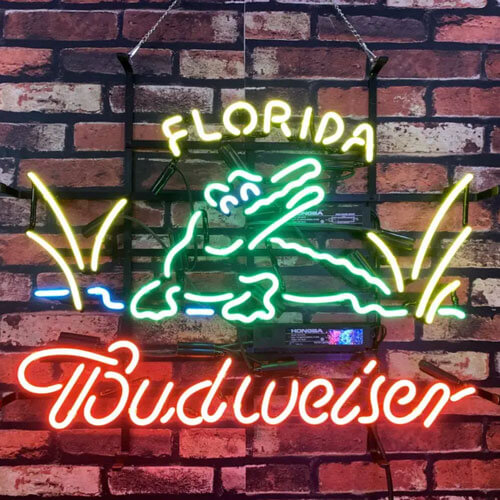
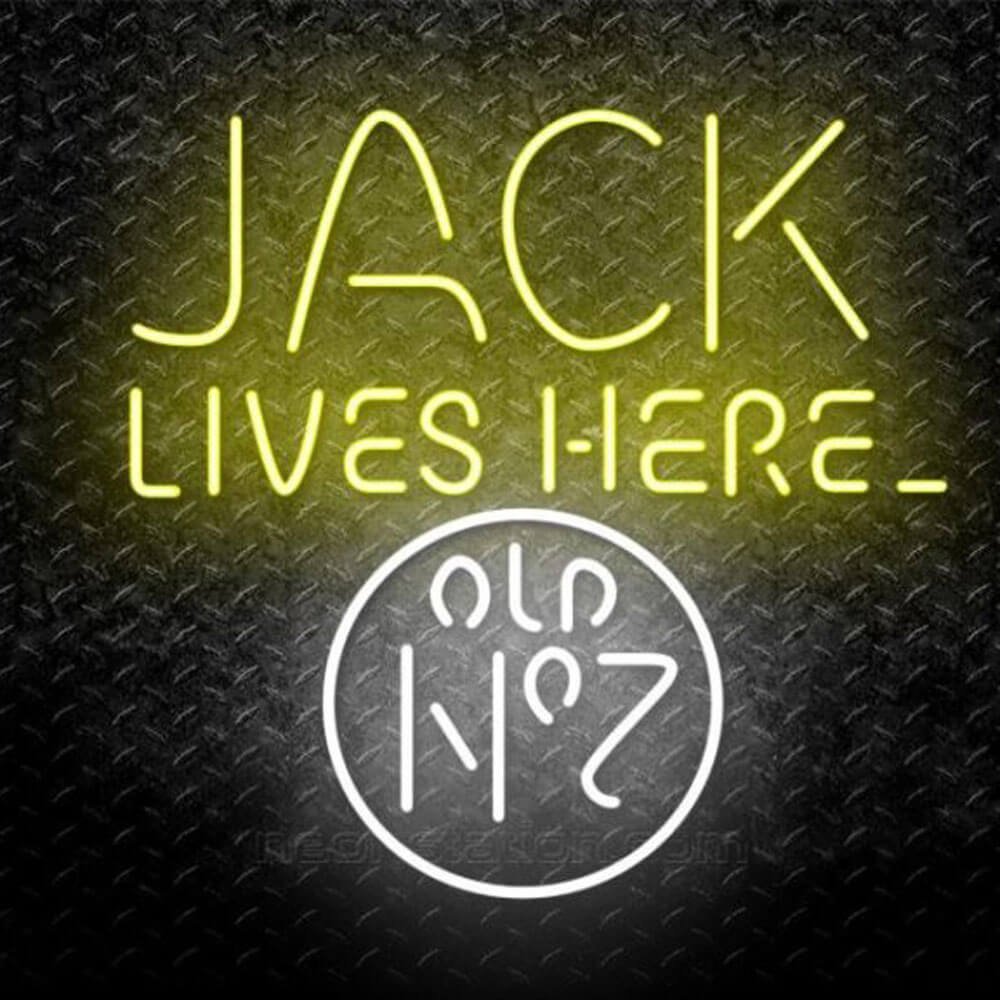
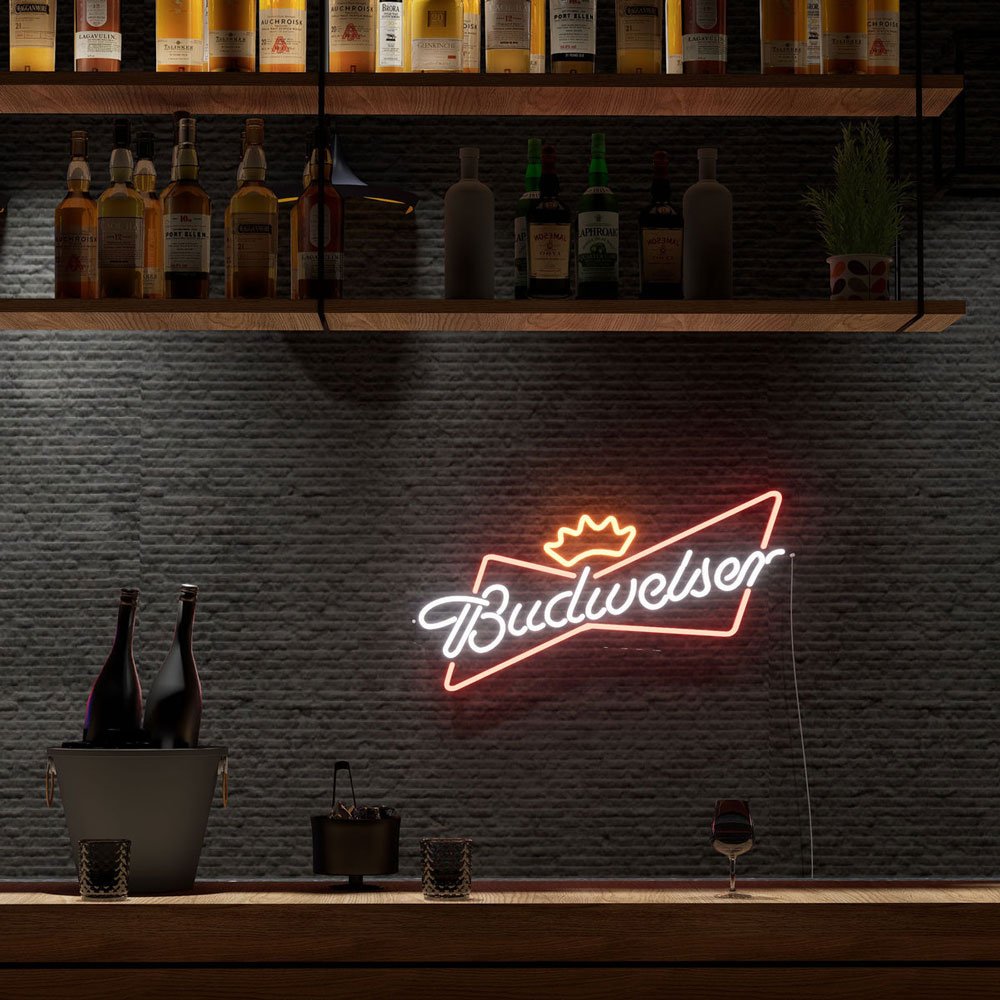
Two budgets, two routes. The name over the bottles goes through the sign builder — type your lettering, get a live quote, pay nothing to see it. The mood tier need not wait on anything: the Budweiser bowtie sign belongs on the bottle wall this week, and the Jack Lives Here piece was born for a whiskey corner.
FAQ: Bar Neon Signs
How much does a custom bar neon sign cost? Most custom LED builds for a bar run $100–300; size, letter count and color complexity do most of the moving, and artisan glass runs 3–10x beyond that. Our cost guide breaks down every driver.
What should a bar neon sign say? Three places a bar sign earns its words: the house name over the back bar (brand), one room-phrase like “No Bad Nights” (voice), and mood words such as “Good Vibes Only” for booths and corners (atmosphere). Your name needs custom work; mood words ship ready-made.
What size neon sign do I need for a back bar? Size for where the drink is poured: the 6–12 foot standing view at the rail, where mid-size lettering reads clean. Oversized pieces wrestle the bottle wall for the frame — the measurement guide walks the full sizing method.
Are LED neon signs safe behind a bar? Yes — and that is why it took over the rail. LED flex draws low voltage and stays cool enough to touch, so there is no kilovolt transformer or hot tube hanging above the liquor; it is now the standard for back-bar and shelf installs.
Can a bar neon sign go outside? Only with a build made for weather. A sidewalk-facing bar piece needs sealed, weather-rated construction plus mounting hardware rated for wind and rain — the outdoor guide lists exactly what changes from an indoor unit.
The Bottom Line
Treat the neon like staffing: the door piece works the street, the back bar works the room, the booth piece works the camera. Choose the wall, size to the distance, hang your name where the pours happen — then mock the whole design up free, before any money moves, in the sign builder.
Sources & Further Reading
- Solid-State Lighting (U.S. Department of Energy) — the DOE’s reference pages on LED efficiency and rated life.
- International Sign Association — the signage trade body’s material on placement, permits and legibility.
Pricing reflects the CustomNeon catalog as of 2026; live quotes come straight from the sign builder.