Blog
19 Event Neon Sign Ideas From Weddings to Expos
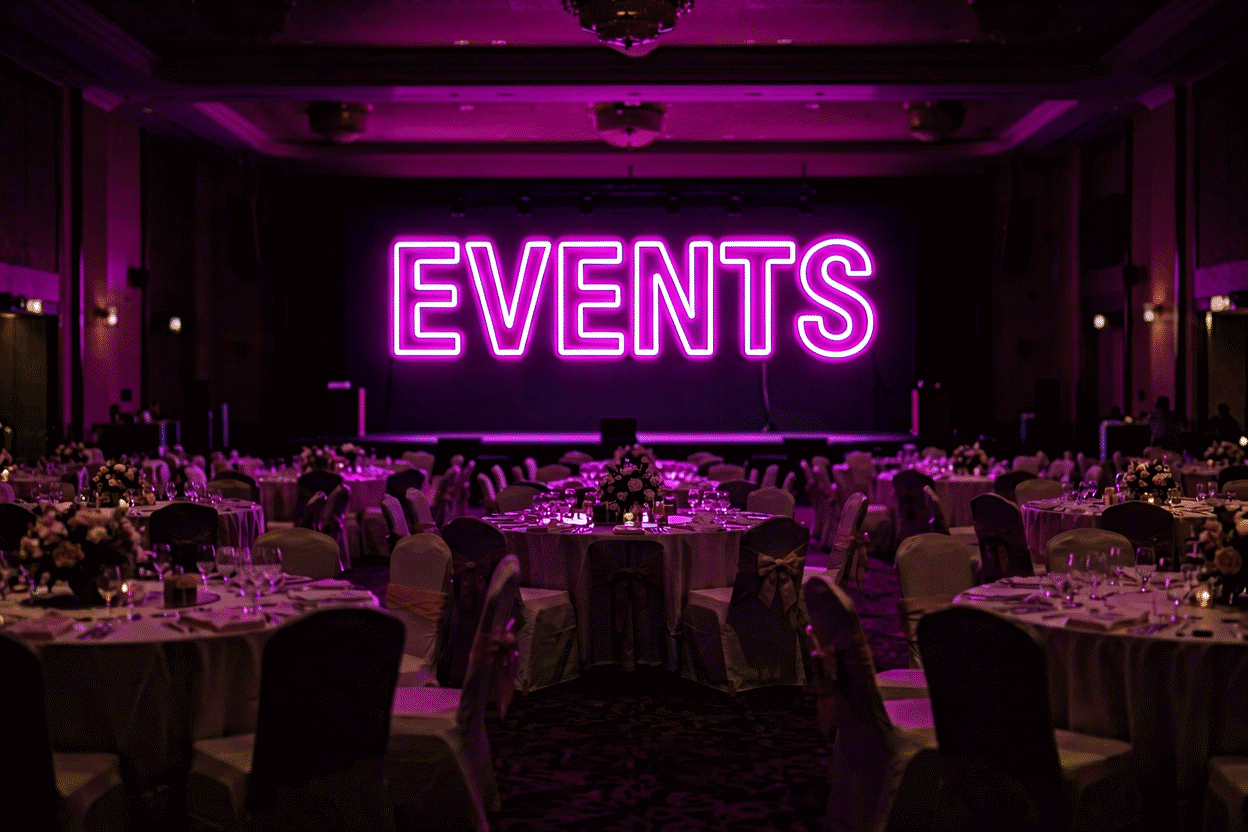
Events are neon’s natural habitat: a room full of people, an evening that runs past dark, and a single message the host needs everyone to receive within ten seconds of arriving. A good event sign does the greeter’s job, the photographer’s job, and the DJ’s job at once — it names the night, lights the room, and ends up in every album.
Here are 19 ideas organized by the event’s timeline — arrival, the rooms, the peak moments, and the exit — with the rental math and rigging notes that keep event neon working all night. The wedding canon lives at wedding sign ideas, and the commercial-expo tier at trade show neon.
The Arrival: Ideas 1–4
- Welcome — the event’s first word; hung at the entry where coats come off and moods come on. The single most effective event sign ever made.
- The event’s name — “THE JOHNSON REUNION” or “GALA 2026” (free preview): the title card that turns a room into an occasion.
- “Start Here” / the wayfinding piece — the arrival tier’s functional option: the sign that routes two hundred guests better than four volunteers with lanyards.
- The date piece — “10.14.26” glowing at the entry: the evening’s timestamp, and the piece the host keeps after.
The Room Signage: Ideas 5–9
- The bar marker — “COCKTAILS” or the signature-drink name: the event’s most-visited sign (this is measurable; ask any bartender).
- The food-station pieces — “DESSERTS,” “LATE NIGHT SNACKS”: the traffic tier that prevents the always-empty-charcuterie problem from being a layout problem.
- The seating-wall — “FIND YOUR TABLE” over the escort-card table: the moment-of-friction piece that glows the logistics.
- The photo-op build — the event’s phrase piece plus a shape at photo height (the backdrop system covers the composition math): the corner that generates the album.
- The kids’-zone marker — “KIDS CORNER”: the family-event tier that keeps the marshmallow cannon fire away from the wine table.
The Peak Moments: Ideas 10–14
- The toast piece — “CHEERS TO [NAME/HOST/YEAR]” over the toast hour: the moment’s backdrop, and the photograph that runs the thank-you cards.
- Good Vibes — the dance-floor-adjacent atmosphere piece: the sign that keeps glowing after the speeches end and the real party starts (the full party canon).
- The dedication piece — “IN HONOR OF” or “IN MEMORY OF”: the event’s heart, lit; the register that carries the night’s meaning in three words.
- The reveal piece — the anniversary number, the gender reveal, the award: the sign that gets switched on mid-event for the moment everyone photographs.
- The countdown piece — the New Year tier’s signature (the guide): the number that changes the room’s mood at midnight.

The Theme & Seasonal Builds: Ideas 15–17
- The holiday event wall — the Christmas tier and the Halloween party tier: the seasonal events where neon does its most dramatic work.
- The era piece — “EST. 1976” for the anniversary, the class year for the reunion: the nostalgia register, glowing.
- The destination piece — the city or venue’s name for the travel-event: the piece that anchors the weekend’s group chat.
The Exit & The Keepsake: Ideas 18–19
- The thank-you wall — “THANK YOU FOR COMING” at the exit: the last glow of the night and the last photo in every album.
- The keepsake handoff — the names piece, the date piece, the dedication piece: the event signage that moves to the host’s home the next morning — the buy-tier justification (the cost guide brackets it).

Rental Math and Rigging
The buy-rent line: pieces that live on (names, dates, dedications, monograms) buy; pieces that die with the night (the wayfinding, the food-station tier, the seasonal themes) rent — and the hybrid strategy most events run is one bought hero (the photo-op piece) plus a rented support tier. The cost guide has the full brackets.
The rigging: venues prohibit wall penetration almost universally, so event neon runs on freestanding frames, easels, and command-hook systems — the backdrop rigging guide covers the no-sag math that separates the pro rig from the cautionary tale. Power planning comes next: count the pieces, map the outlets, and bring the extension cords the venue swears it has.
The timeline: signs go up before florals (they need the ladder’s best hour), get photographed lit at dusk (the test every pro runs), and come down after the last song — the crew that plans the strike party finishes the night happier than the one that doesn’t.
The Event Production Timeline
Event neon runs on a clock that starts weeks before the room does.
Three weeks out: the order deadline. The customs (the names, the date pieces, the dedications) run 2-3 weeks production (the personalized logic) – the event that orders late gets the stock tier, and the album can tell. The order list: the keepsakes first (the pieces that live on – the cost logic funds them at event-appropriate quality), the rentals second (the logistics tier that dies with the night).
One week out: the rig rehearsal. The freestanding frames assemble, the pieces mount to their backings, and the power map draws – which piece runs which outlet, where the extension runs tape down, which pieces run battery. The venue’s outlet map (asked for in advance – the coordinator knows) prevents the event-day discovery that the photo wall and the DJ share a circuit (the rigging logic covers the frame math).
The day before: the install. The signs go up before the florals (they need the ladder’s clean hour), the glow test runs at the event’s actual hour (the dusk test – the piece photographed at the brightness it will run), and the strike plan writes (which pieces go home, which return, which belong to the venue). The event that installs the day before glows calibrated on the day of – the difference the photographer catches and the album keeps.
The Event Budget: The Three-Tier Split
The keepsake tier ($150-500): the names, dates, dedications – the pieces that move to the home the morning after (the cost brackets). The keepsake math: the $300 names piece at a fiftieth-anniversary party costs $6 per year of the marriage it archives – the best per-decade spend in the event budget.
The logistics tier (rental, $50-150 per piece): the wayfinding, the station markers, the theme pieces – the signage that dies with the night, rented at the fraction of the build (the event logic above). The rental discipline: everything that has no second event in it gets rented; the keepsake tier gets bought.
The spectacle tier (the splurge): the reveal piece, the countdown, the double-sided marquee – the moments the event exists for. The spectacle budget runs by the event’s ambition, not the catalog’s – the piece that makes the moment is the piece the album opens with, and every event’s album opens somewhere.
FAQ About Event Neon Signs
What’s the best neon sign for an event? The event’s name or “Welcome” at the entry — the pieces that greet every guest and name the night (preview). The photo-op piece is the budget’s second call and the album’s first.
Should I rent or buy event neon? Buy the keepsakes (names, dates, dedications), rent the logistics (wayfinding, stations, themes). The cost guide has the full math; most events run one bought hero plus a rented tier.
How do you hang neon at a venue? Freestanding frames and easels — venues prohibit wall penetrations. The backdrop guide covers the rigging system and the sag prevention.
How many signs does an event need? One per moment: entry, photo wall, bar, and exit cover 90% of events. Add the dedication or reveal piece for the nights that need one — the count follows the program, not the catalog.
How many neon signs does an event need? One per moment: the arrival (the Welcome or the event’s name), the photo wall (the piece the album runs on), and the exit (the thank-you tier) – the three-moment minimum that covers ninety percent of events (the composition logic above). The additions run by the program: the bar and station markers for the catered events, the dedication or reveal piece for the moments that need them, and the dance-floor tier for the nights that run past the toasts. The event that runs five-plus pieces reads the sign shop; the event that runs one reads the afterthought – the three-moment program at the $300-600 band serving everything between.
How do venue power rules shape the neon plan? Ballrooms and hotel venues cap which circuits you may touch, so the plan follows the outlets: monogram and photo-op pieces route to confirmed wall circuits, while garden ceremonies and tent receptions run on the battery tier — packs sized 8-10 hours that make the whole sign silent on logistics. Outdoor festivals with generator power want the signage load written into the generator quote early, because adding 150 watts of glow at load-in is easy and adding it at soundcheck is not.
What’s the backup plan if a sign dies mid-event? Professional rentals carry a spare of the hero piece in the truck and swap it during cocktail hour — ask for that line in the contract. The DIY hedge is structural: two mid-size pieces (a script and a name) keep the wall alive if one fails, where a single hero sign turns any failure into a visible hole; couples running their own signs should also pack a spare adapter, the component that actually fails, in the décor bin.
The Celebration Event vs the Corporate Event
The event canon’s two audiences, compared:
| Decision axis | The celebration (weddings, anniversaries, parties) | The corporate (galas, launches, expos) |
|---|---|---|
| The anchor pieces | The names, the dates, the dedications | The logo, the theme, the metric wall |
| The register | The warm and the sentimental | The brand-forward and the professional |
| The rig | The pipe-and-drape (the backdrop logic) | The trade-show modular (the expo kit) |
| The keepsake rate | High (the archive tier dominates) | Lower (the logistics tier dominates) |
| The photography | The album’s permanence | The feed’s content (the case) |
| The budget’s center | The photo wall | The stopping power |
The two audiences’ shared mechanics: the timeline (the three-week customs, the rig rehearsal, the day-before install – the production timeline above), the rental math (the logistics rented, the keepsakes bought), and the photo wall (the surface both audiences’ events generate their records on).
The crossover events (the corporate gala with the celebration’s warmth, the wedding with the corporate’s production values) run the combined program: the celebration’s anchors at the corporate’s engineering – and the wedding that runs the expo’s power discipline never dims at the first dance (the power logic above covers the circuit).
Sources & Further Reading
- Solid-State Lighting (U.S. Department of Energy) — DOE reference on LED efficacy and lifetime.
- Neon sign (Wikipedia) — the consolidated public record of neon-sign history and technology.
- Mercury (U.S. EPA) — federal guidance on mercury exposure and safe handling.
Pricing based on CustomNeon’s current catalog (2026); custom quotes come live from the sign builder.