Is Neon Gas Toxic? What’s Actually Inside
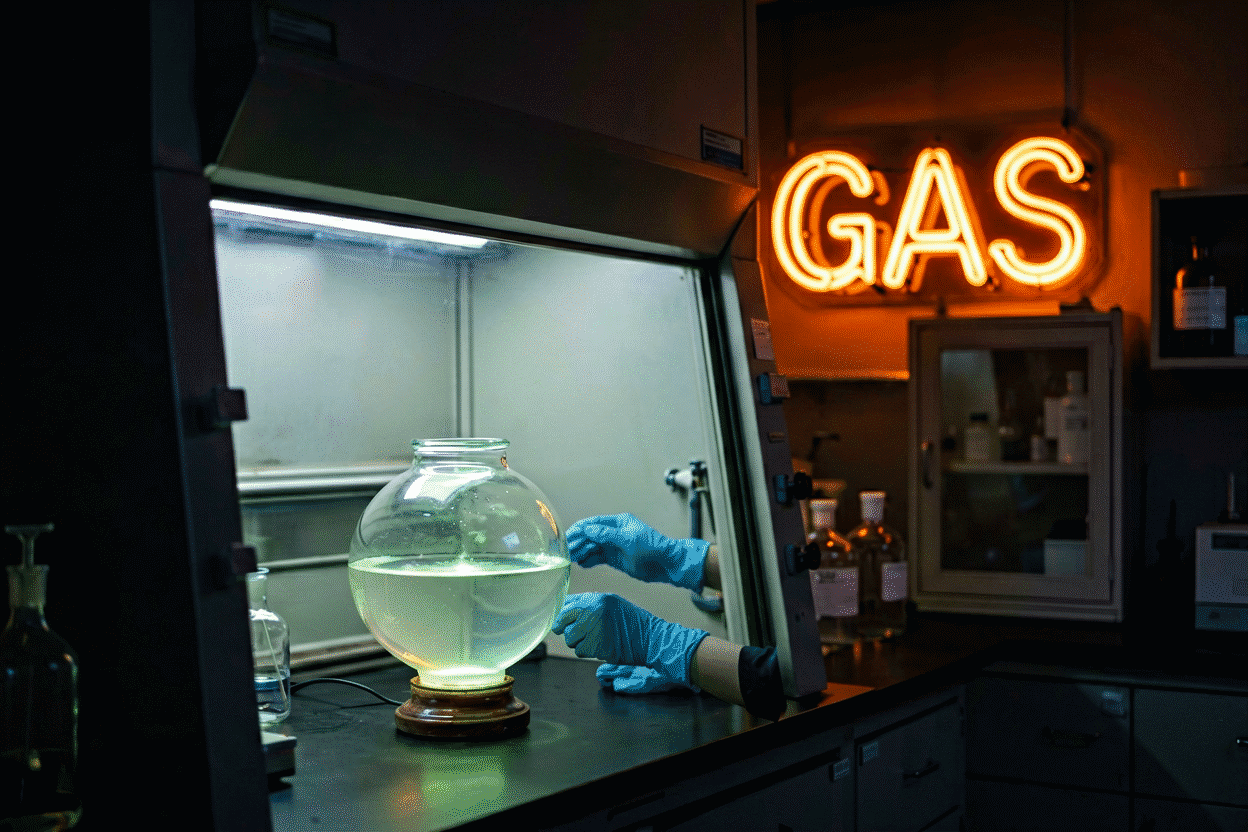
No — neon gas is chemically inert and non-toxic. It doesn’t react with anything in your body, isn’t absorbed, isn’t poisonous, and the amount inside a neon sign (a few grams at most, at low pressure) couldn’t harm you even if you inhaled all of it at once. The real questions people are asking underneath this one — what happens if a glass sign breaks, what about the mercury you’ve heard about, and is LED “neon” different — have real answers, and one of them (vintage mercury) deserves genuine caution.
This is the toxicity deep-dive; the full story of which gases make which colors lives at what gas is used in neon signs, and the general safety picture at are neon signs safe.
Why Inert Means Non-Toxic (The Actual Chemistry)
Neon sits in the noble gas group — the rightmost column of the periodic table — alongside helium, argon, krypton, and xenon. Noble gases’ defining property is a complete outer electron shell: they don’t bond, don’t react, don’t corrode, don’t oxidize. Toxicity, essentially always, is chemistry — a substance reacting with your biology. Neon has no chemistry to have.
The one physiological dimension inert gases do have is asphyxiation by displacement — a real hazard for neon in one narrow scenario: massive quantities in a sealed space displacing oxygen. This matters to industrial gas handlers filling rooms with cylinders. A neon sign holds the gas inside thin glass tubes at pressures around 10–20 millibar above atmosphere. The total neon content of a typical storefront sign, released into a living room, changes the room’s oxygen concentration by an amount you couldn’t measure without lab equipment. The asphyxiation question is to neon signs what the drowning question is to a glass of water.
What Happens If a Glass Neon Sign Breaks
The practical worst case, walked through:
- The tubes crack. Gas escapes — instantly and completely, since it’s only barely above atmospheric pressure. Being inert, it mixes with room air and does nothing. There is no cloud, no residue, no smell (neon is odorless), no lingering anything.
- The hazard that exists is the glass itself. Broken tube fragments are sharp and, in older signs, may carry phosphor powder coatings (see mercury below). Sweep with gloves, wipe with a damp cloth, dispose of fragments in a sealed container — standard broken-glass protocol.
- The transformer should be unplugged before you touch anything. Powered glass neon runs 2,000–15,000 volts, and a cracked tube doesn’t necessarily de-energize the circuit. Unplug first, clean second — always.
If you own glass neon and it breaks: ventilate out of habit, glove up, double-bag the fragments. If it’s a vintage blue or white sign (mercury-era, below), add the mercury protocol — don’t vacuum, use damp wipes, and check local hazardous waste disposal rather than the kitchen bin.
The Mercury Question (The One Real Toxics Issue in Neon History)
Here is the honest exception to everything above: from neon’s commercial beginnings through roughly the 1980s–90s, blue and white glass colors were commonly made with a mercury-argon fill — mercury vapor inside the tube shifts argon’s lavender glow to the blues and whites the palette demanded. Mercury is genuinely toxic, and it’s the reason vintage neon professionals ventilated shops and why the trade moved away from it where possible.

What that means for you in practice:
- Modern signs: quality makers have largely eliminated mercury fills, and many regions regulate them outright. A sign made in the last decade is very likely mercury-free — ask the maker; it’s a reasonable question and reputable shops answer it plainly.
- Vintage glass neon (the collectible stuff): assume blues and whites may contain mercury until told otherwise. Displayed intact, they’re safe — the hazard is sealed inside the glass. The caution applies at breakage and disposal time: damp-wipe cleanup, no vacuuming, hazardous-waste channel rather than household trash.
- LED neon: contains no gas, no mercury, no phosphor tube coatings. Nothing in this section applies to it at all.
Is the Gas in LED “Neon” Signs Toxic?
There isn’t any. LED neon signs are silicone-jacketed diode strips — the “neon” is a look, not a fill. No noble gas, no mercury, no pressurized glass, no high voltage. Every toxicology question about LED neon terminates at: check the power adapter is certified and the cord is intact. That’s the entire list, and it’s why homes, nurseries, and bedrooms overwhelmingly run LED — the safety architecture of the technology is the certification sticker.
Disposal: The Responsible Path
- LED neon: standard electronics recycling (it’s a circuit strip and an adapter — e-waste channel). The warranty and longevity guide covers how long you can expect to postpone this question (years to decades).
- Modern glass neon: intact tubes can often be re-homed — collectors and restorers actively want working vintage signs. Broken: glass recycling won’t take them (phosphor coatings); general waste in a sealed, labeled container per local rules.
- Vintage mercury-era glass: hazardous-waste facility. Most municipalities run free drop-off for exactly this class of item.
The Fire-Adjacent Question People Mix In
“Toxic” questions often carry a second worry — fumes in operation. Operating neon signs of both types emit no fumes: nothing burns, nothing vaporizes into the room. The smell people occasionally notice near new LED signs is the silicone jacket’s factory residue curing off in the first days — mild, temporary, and not the gas, because again, there isn’t any. The genuine operating hazards of signage are electrical (covered in the fire hazard analysis), and they’re about wiring quality, not chemistry.
Bottom Line
Neon the element is one of the least reactive, least toxic substances that exists — safer to be locked in a room with than the oxygen-displacing panic stories suggest by many orders of magnitude. Neon the sign is inert gas in glass; its real hazards are voltage and breakage, both professional-install matters. LED neon removes even those. And the one true toxics story in neon’s history — mercury in vintage blues — is a disposal-time protocol for collectors, not a reason your bedroom sign needs a second thought.
Design your own sign in the custom builder — every configuration is LED-based, gas-free, and certified-adapter powered by default.
The Toxicology Q&A: Deeper Questions, Straight Answers
The follow-up questions that arrive once the basics are established:
“What if the sign leaks slowly instead of breaking?” A micro-crack in a tube lets gas seep over weeks — and the outcome is the same as breakage with less drama: inert gas exits, air enters, the tube stops striking properly and flickers or refuses to light. The gas phase is harmless either way; the symptom is electrical, not medical. A slowly-leaking tube needs a shop’s re-pump for function, not a hazmat call for safety.
“Is the phosphor powder dangerous if a coated tube breaks?” The coatings inside phosphored tubes are rare-earth phosphor compounds — irritants in the way any fine dust is an irritant, not systemic toxics. The broken-tube protocol covers them: gloves, damp-wipe cleanup (never dry-sweep, which makes dust airborne), sealed-bag disposal. The mercury-era caveat applies to the vintage fills, not to modern phosphors (the mercury boundary).
“Do signs emit ozone?” Gas-discharge tubes can produce trace ozone at their electrodes — concentrations measured in parts per billion, below the output of a laser printer in the same room. The honest context: anyone bothered by ozone smells near electrical gear has noticed office equipment, not signage; neon’s contribution is lost in the household background. LED neon produces none.
“What about breathing near a sign every night?” The bedroom question, answered by chemistry: inert gases don’t react with anything at body temperature, don’t accumulate anywhere, and don’t metabolize. Sleeping under a glass neon sign is sleeping near sealed inert gas and warm electronics — the ventilation guidance for any electronics applies, and the night-time light exposure is the health conversation that actually has content.
“Are vintage signs safe to restore and resell?” The restoration trade handles mercury-era pieces as routine: ventilated benches, tube replacement rather than re-working mercury fills where regulations require, and disposal through the hazardous-waste channel. A properly restored vintage piece re-enters the market with the historical fills either absent or sealed — ask restorers directly; the honest ones enjoy the question (the vintage market).
“What should I actually do if a glass sign breaks?” The sixty-second protocol: ventilate the room, keep kids and pets clear, glove up, sweep fragments onto paper with cardboard (never vacuum for any glass breakage, doubly never for possible-mercury pieces), damp-wipe the area, double-bag everything, and check your municipality’s disposal rules for the sealed bag. For post-1990s or known-mercury-free pieces, standard careful-glass handling suffices. The anxiety-to-action ratio here should be low: the gas was never the hazard, and the protocol handles what was.
FAQ: Neon Gas Toxicity
Is neon gas toxic to humans? No. Neon is chemically inert — it doesn’t react with or accumulate in the body. Its only hazard mode is oxygen displacement in huge sealed-space quantities, which a sign’s few grams of gas cannot approach.
What happens if you inhale neon gas? Nothing. It’s odorless, tasteless, inert, and passes through respiration unchanged. The quantity inside a sign is a few grams at low pressure — undetectable in a room.
Is the gas in neon signs dangerous if the sign breaks? The gas itself, no — it’s inert and disperses instantly. The hazards are mechanical and electrical: sharp glass fragments and a powered transformer delivering thousands of volts. Unplug before cleaning.
Do neon signs contain mercury? Vintage glass blues and whites commonly did (mercury-argon fills); modern quality makers have largely eliminated it. LED neon contains none. For vintage glass, treat breakage and disposal with mercury protocols.
Is argon in neon signs toxic? Argon is inert like neon — non-toxic, non-reactive. Its asphyxiation-by-displacement risk, like neon’s, requires industrial-scale quantities that signs never hold.
How do you dispose of an old glass neon sign? Intact: collectors and restorers often want it. Broken: sealed container via local rules; mercury-era vintage glass goes to hazardous-waste drop-off, never the vacuum or household trash.
Are helium and the other sign gases as safe as neon? The whole noble-gas family shares neon’s inertness — helium, argon, krypton, and xenon are all chemically non-reactive and non-toxic at sign quantities, differing only in glow color and cost. The family’s single physiological note, oxygen displacement, needs industrial-scale volumes that signs never approach. Argon’s historical mercury pairing is the one exception in the roster, and it’s a vintage-era handling matter, not an operating hazard (the full gas roster).
The practical rule that survives every scenario above: modern LED neon contains nothing worth a second thought, and vintage glass deserves respect only at the moments it breaks or changes hands.
For the complete gas-by-color roster behind every shade on the sign, see what gas is used in neon signs and the color system it produces.
Sources & Further Reading
- Cleaning Up a Broken CFL (U.S. EPA) — the federal mercury-spill cleanup procedure; we mirror it for broken glass-neon tubes.
- Neon: Strong Lines (NIST Physical Reference Data) — the standard reference for neon’s emission wavelengths.
- Argon: Strong Lines (NIST Physical Reference Data) — the standard reference for argon’s emission wavelengths.
- Solid-State Lighting (U.S. Department of Energy) — DOE reference on LED efficacy and lifetime.