Home Gym Neon Signs: Glow Through the Last Set
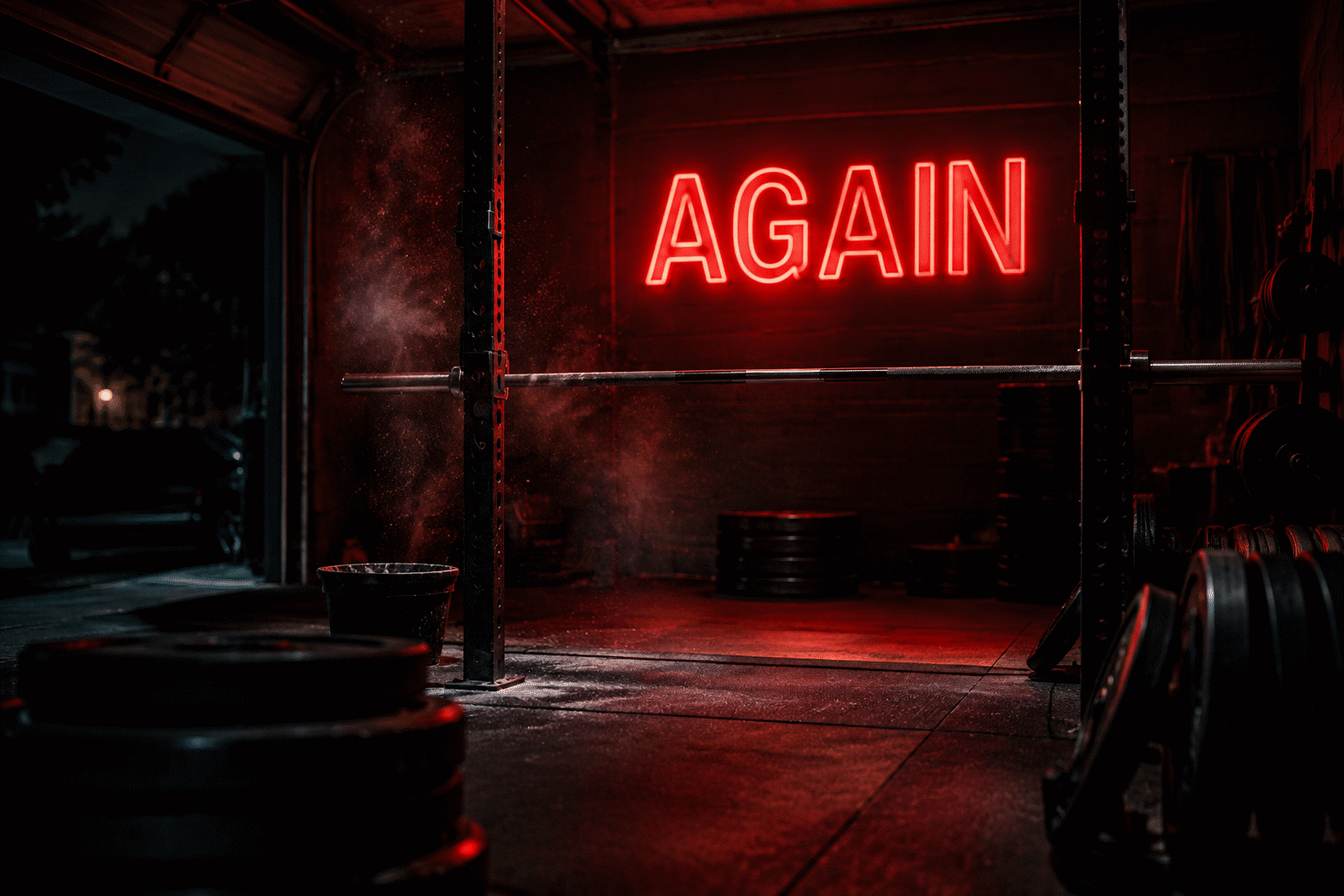
A home gym fails for lighting reasons more than equipment reasons. The overhead fluorescents that came with the garage make every session feel like a DMV appointment; the pitch-black basement corner makes 5 a.m. feel like a rumor. The gyms people actually keep going to — the boutique studios, the boxing gyms, the lifting caves that have been open since the seventies — all solved it the same way: low ambient light, one heroic glow source, and words on the wall that mean something at rep eight.
A home gym neon sign is that solution in one object. This guide covers the lighting logic (why the sign works as training light), the phrase canon (what to hang and why), the three gym rooms and their layouts, the color science, and the equipment-aware placement rules.
The Lighting Logic: Why Gyms Run Dim
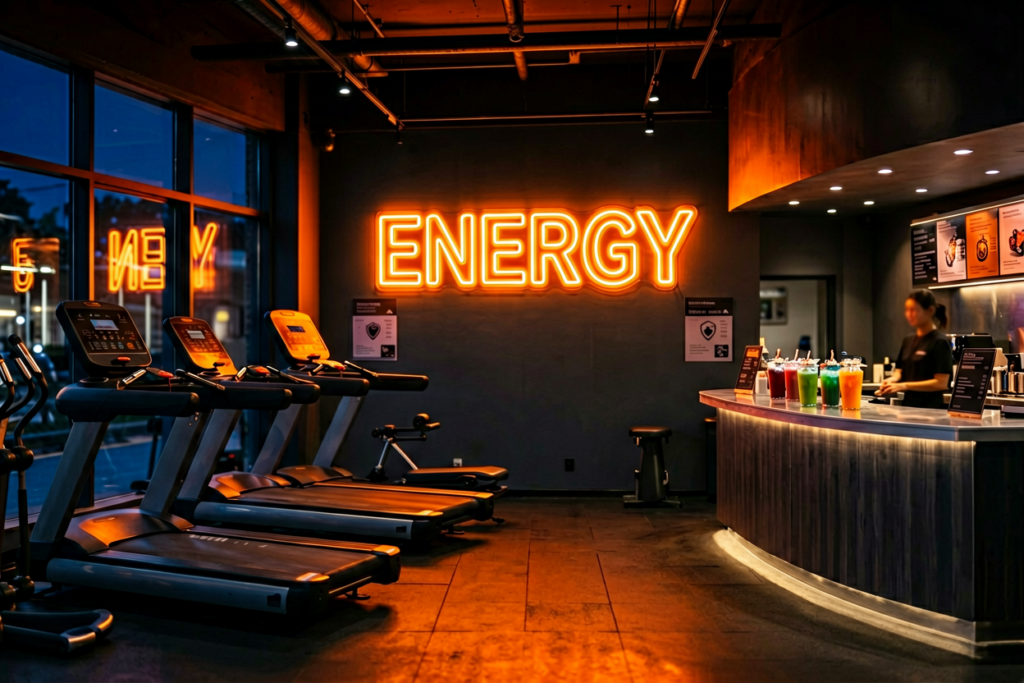
The boutique-fitness world discovered what fighters always knew: low light plus one glow source puts you in the work state.
- Overhead light is the enemy of effort. Full-flat illumination reads as institutional — the body relaxes into observation mode. Dim rooms with a single heroic light source read as event space — the body tightens into performance mode. Every boxing gym with a ring light and every spin studio riding one colored wash is running the same trick.
- The sign as spotlight. The neon piece over the rack or the mirror is your room’s stage light: it marks the lifting area as the room’s center, it throws color onto the wall you face during sets, and it gives the eye a fixed point during the hardest reps (staring at a fixed glow point is a focusing tactic as old as martial arts).
- The brightness schedule. The sign at 60–80% for the working sets, 30% for the warm-up and cooldown, 15% for the stretch-and-scroll after. The dimmer is the gym’s intensity dial in a way the overhead switch never was.
The Phrase Canon: What the Wall Says
The gym phrase tiers, from the classics to the personal:
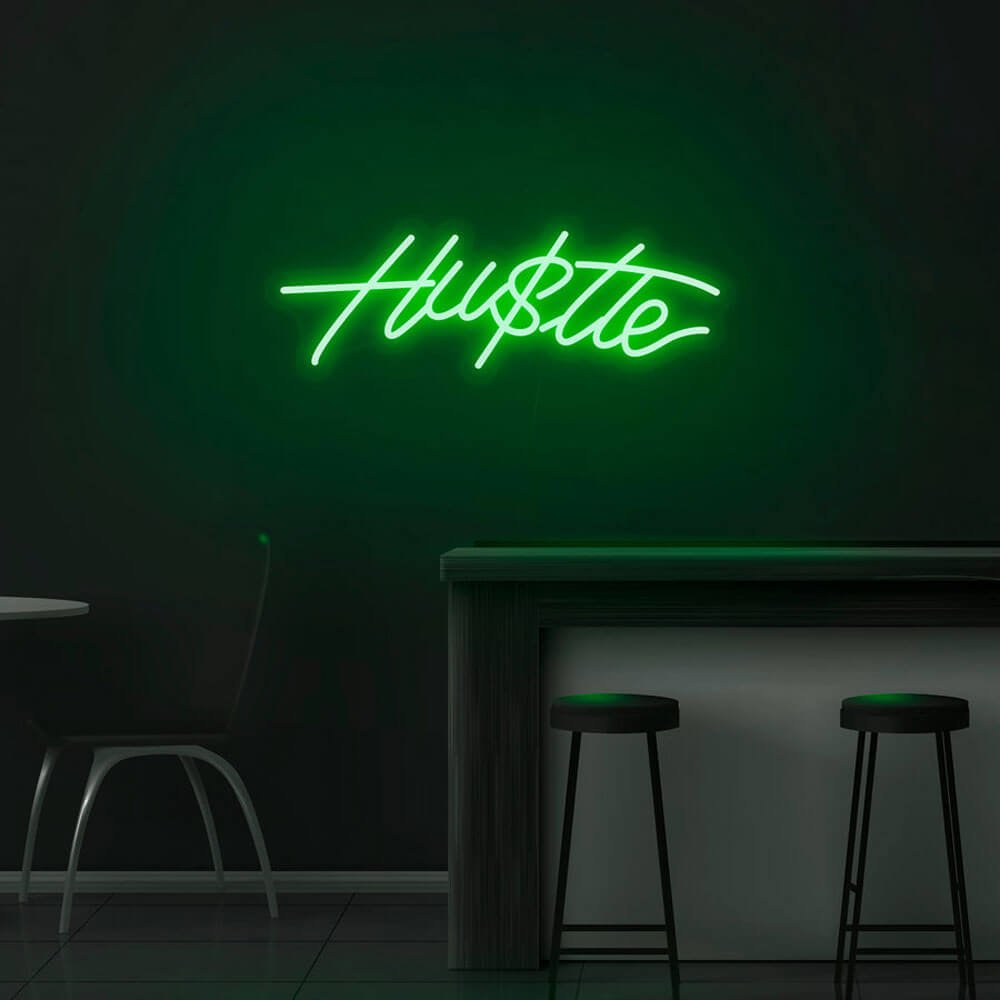
- The single word. “HUSTLE.” “STRONGER.” “AGAIN.” — the one-word piece is the gym wall’s native format (the Hustle design carries the classic). Short reads from across the room, and you’ll be reading it mid-set for years — one word survives; sentences become wallpaper.
- The rep-count humor. “ONE MORE REP.” “NO EXCUSES.” The motivational-classic tier — works best at the mirror where you actually negotiate with yourself.
- The personal record. Your goal weight, your target time, your est.-date — the documentation tier, the numbers you are chasing in lights. Custom builders price numerals by width; the PR piece gets updated by replacement, which is the point.
- The name tier. The garage gym’s own name — “IRON HOUSE,” “THE PAIN CAVE,” the household’s private gym-brand. The founding custom, usually with the est. year.
The phrase-placement rule: the motivational tier goes where the eyes go during failure points (at the mirror, above the bar), not where the eyes go during rest (the door, the water station). Motivation deployed at rest points is decoration; deployed at failure points, it is equipment.
The Three Gym Rooms
The garage gym (the classic). Concrete, a rack, and the door open to the driveway — the garage gym’s aesthetic is already half-built. The sign goes on the wall the lifter faces during squats (never the side wall — never in peripheral vision, always in focus). Red is the garage register (the red home gym piece carries it; the red guide explains why red reads as effort). The man cave integration applies when the garage doubles as the hangout.

The basement gym (the cave). The lowest ceiling, the fewest windows, the room that benefits most from the one-glow-source rule — the basement is where the sign stops being decor and becomes the lighting plan. Warm red or amber for the strength corner, ice blue for the cardio tier (below).
The bedroom-and-spare-room gym (the corner). The compact tier: one dumbbell rack, one mirror, one small sign at 14–18 inches. The corner gym’s piece runs at the lower brightness registers (it shares a wall with sleep) and carries the shortest phrases — “AGAIN.” is the corner gym’s whole genre.
The Color Science (Effort and Recovery Registers)
- Red. The effort register — the color that reads as intensity, urgency, and heart rate. The strength gym’s default for fifty years of weight-room culture. The full behavior in the red guide.
- Ice blue. The recovery register — the cardio and yoga tier, the color that reads as cool-down and distance. The home gym running both strength and recovery zones uses the two colors as zone markers: red corner for the iron, blue corner for the mat.
- Amber and warm white. The heritage register — the old-boxing-gym warmth, the seven-a.m. winter sessions. The friendliest choice for gyms that double as rooms people sit in.
- The RGB question. Color-shifting builds suit the party room more than the training room — the body reads changing light as event, not work. Fixed hue, chosen meaning: the gym wall’s rule.
Equipment-Aware Placement
The gym-specific placement rules (beyond standard wall decor):
- Never above the rack. The piece directly over a squat rack is a drop-zone liability and a forehead hazard on overhead work. Side wall or the facing wall — anywhere but the drop path.
- The mirror wall. The premium position — the piece shows in the mirror during every set, doubling the glow and the phrase. Offset from center so it doesn’t sit behind your own reflection’s head.
- Height at standing eye level. 60–68 inches to center — the gym wall is read standing, mid-lift, mid-row; the seated-arrival sightline rules of living-room decor don’t apply.
- The cord discipline. The gym’s floor is a footpath between stations — the power cord runs high (along the ceiling edge) or behind the rack, never across a walking lane. The cable-management logic from the installation guides applies double here.
The Budget Table
| Tier | Size | Range | For |
|---|---|---|---|
| The corner word | 12-18 in | $70-$120 | Bedroom corners, gifts |
| The mirror piece | 18-24 in | $100-$170 | The standard gym wall |
| The anchor phrase | 24-36 in | $150-$250 | Garage and basement gyms |
| The name custom | by width | $150-$300 | The founding piece |
Start in the custom builder — the word, the color, the width; the gym’s whole lighting plan follows from one piece.
More Gym Builds
- Nike swoosh neon signs — the mark that motivates the whole room
FAQ: Home Gym Neon Signs
What should a home gym neon sign say? One word, chosen for mid-set reading: HUSTLE, AGAIN, STRONGER. The motivational phrases go at the mirror (the negotiation point); the PR numbers and the gym’s name go on the founding wall. Sentences become wallpaper; words stay equipment.
What color neon for a gym? Red for the strength register — fifty years of weight-room culture and the color of effort. Ice blue for the cardio and recovery zone; amber for the heritage feel. Fixed hues over RGB: the body reads changing light as event, not work.
How bright should a gym sign be? The dimmer is the intensity dial: 60-80% for working sets, 30% for warm-up, 15% for the stretch after. One glow source in a dim room beats any overhead grid — the boutique-studio lighting lesson, covered in the lighting section above.
Where do you hang a sign in a garage gym? On the wall you face during squats and presses — never directly above the rack (the drop path), never in peripheral vision. The mirror wall is the premium position: the piece doubles in every set’s reflection.
How much does a gym neon sign cost? The corner-tier word runs $70-$120; the standard mirror piece $100-$170; the garage anchor phrase $150-$250. The founding-name custom with the est. year lands $150-$300 by width — the gym landing carries the ready designs.
What is the best first sign for a garage gym? The mirror piece: one word, red, 18-24 inches, on the wall you face mid-lift. It is the single change that converts a garage with weights into a training room – every other upgrade (the name custom, the PR numerals, the zone colors) builds from that first anchor.
Is a neon sign enough light to work out by? As the room’s mood layer, yes — the sign plus one low ambient source is the boutique formula. As the only light for technical lifts, add a task source at the rack; the sign carries the room’s state, the task light carries the safety.
Do the Work
The room you keep going back to is the room that feels like an event. One word, one glow, one dimmer — build the piece and make 5 a.m. feel like a main event.
More gym glow: the gym landing, the Hustle classic, the red home gym piece, man cave integration.
Sources & Further Reading
- Mercury (U.S. EPA) — federal guidance on mercury exposure and safe handling.
- Neon sign (Wikipedia) — the consolidated public record of neon-sign history and technology.
Pricing based on CustomNeon’s current catalog (2026); custom quotes come live from the sign builder.