Cross Neon Sign: Faith in Warm Light
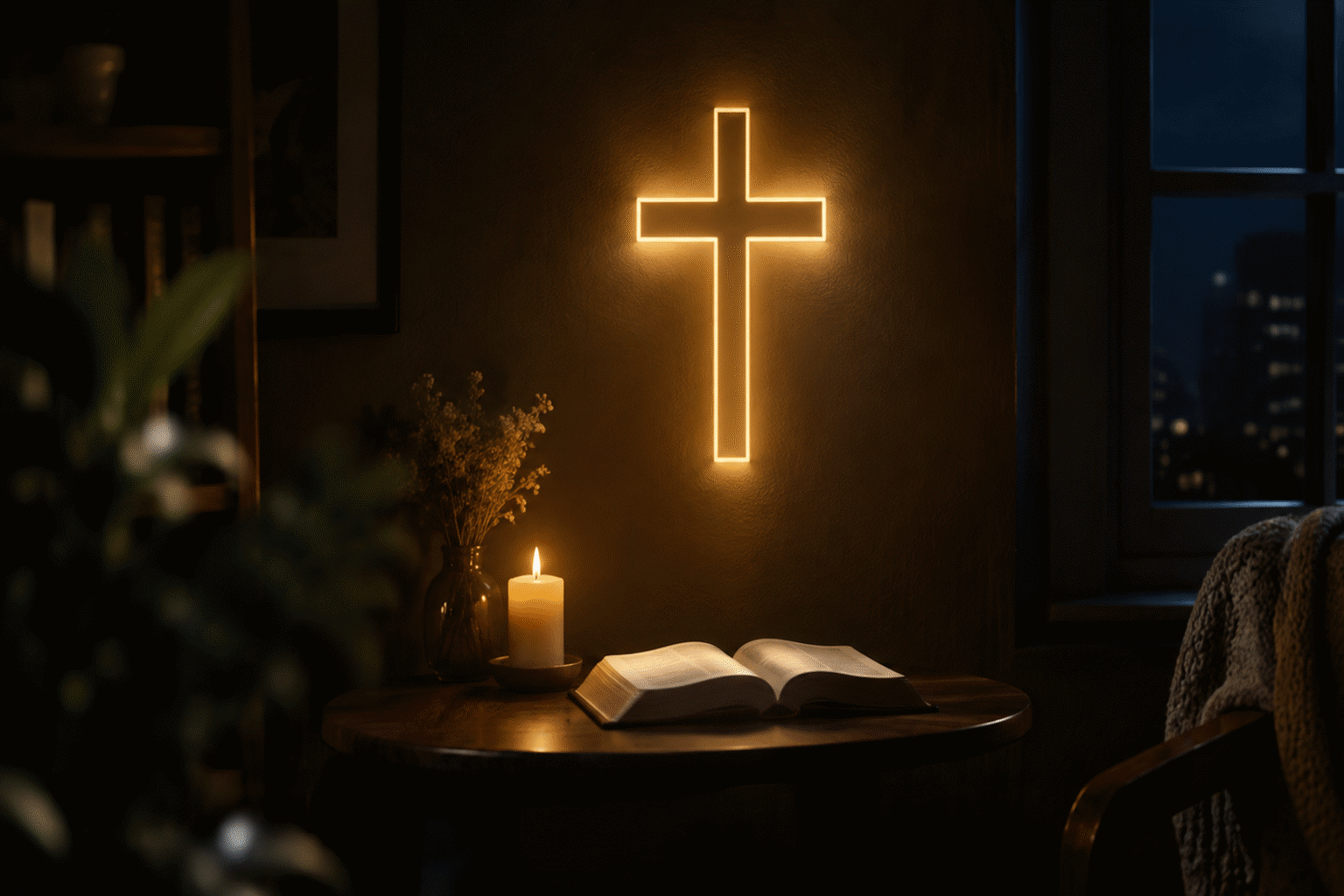
Two intersecting lines — the simplest construction in all of symbolism, and the most weighted. The cross predates every icon in this catalog by millennia and outlasts every trend cycle by definition: the shape that has been hung on walls continuously for two thousand years, in every medium humanity has produced. The neon cross is simply the newest medium doing the oldest work.
This guide covers the cross glow with the care the subject requires: the shape’s renderings, the palette (which carries meaning here more than in any other register), the rooms and placements, the phrase tier, and the sensitivity notes that a commercial treatment of sacred symbols wants.
The Renderings
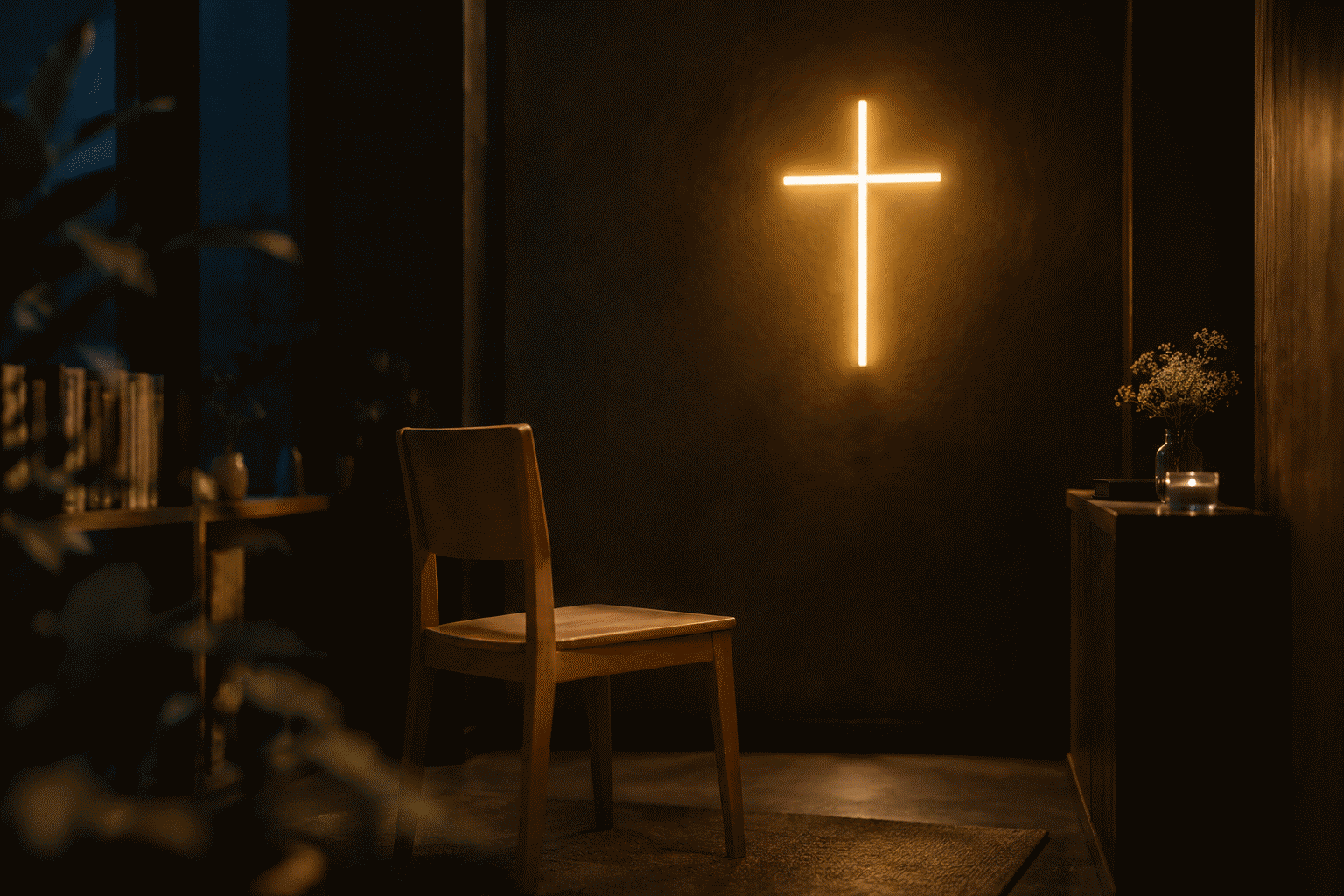
- The Latin cross. The classic form — the long vertical, the short horizontal, the proportions every church tower teaches. In neon: two straight tubes, the simplest build in the entire catalog (simpler than the bolt; the cross is the medium’s minimum object). The anchor build and the register’s whole center of gravity.
- The Celtic cross. The cross with the ring — the insular tradition’s form, the beautifully detailed variant. The ring makes the build (the circle adds the composition’s stability and the tradition’s whole history); the knotwork variants are the custom tier’s masterpiece end.
- The Greek and Orthodox variants. The equal-arm cross, the three-bar form — the eastern traditions’ shapes, for the households that hold them. The custom tier serves each tradition’s exact proportions.
- The corpus tier. The cross with the figure — the crucifix register. The most sacred build and the one most often requested as a custom; the treatment notes below apply double.
The Palette (Which Carries Meaning)
The cross register’s colors mean more than any other genre’s — the palette IS the statement:
- Warm white. The canon — the candle-register white, the color of two thousand years of vigil light. The default and the right one for most walls: the cross at warm white reads as continuity, not decor.
- Gold and amber. The sacred register — the icon-gold tradition, the liturgical warmth. The cross in amber at low output is the register’s most beautiful deployment.
- Purple. The Lenten register — the season’s color, the contemplative hue. The purple cross carries the calendar (Advent and Lent’s color) for households that run the church year on their walls.
- Blue and white. The Marian register — the household devotion tier’s colors.
- The one caution: novelty hues. The cross in hot pink or rainbow reads as a different statement than the tradition’s — fine for some contemporary registers, a category error in others. The household’s own tradition decides; when in doubt, warm white.
The Rooms and Placements
The prayer corner (the native tier). The household’s devotional corner — the cross with the candle tier and the family’s sacred objects, at the contemplative brightness register. The placement tradition runs high (the wall’s upper third); the piece at 18–28 inches.
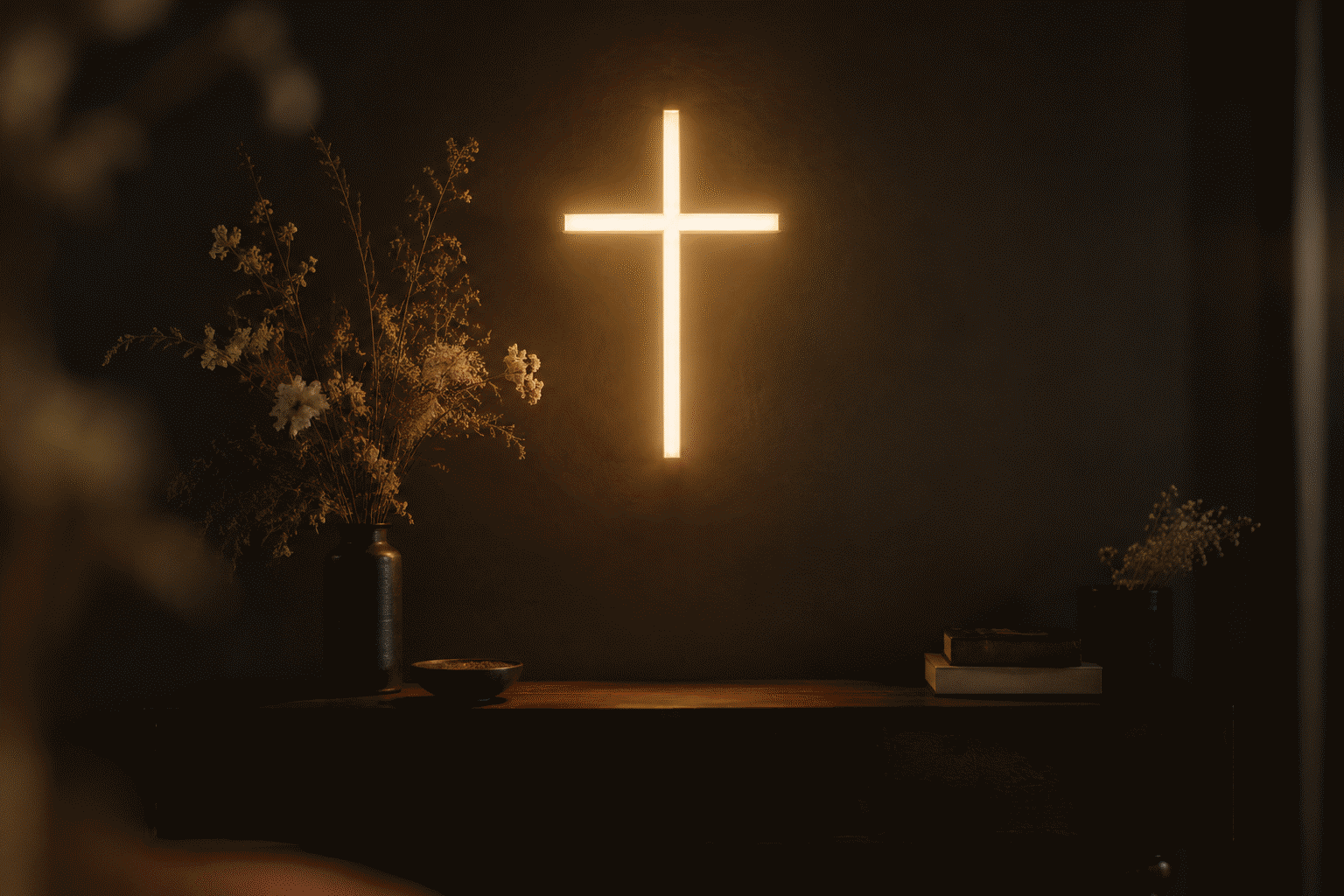
The bedroom (the quiet-faith tier). The small cross over the bed — the household’s most private deployment, warm white at the lowest register. The piece that ends the day the way the tradition intends.
The living room (the statement tier). The family cross in the public room — the larger build (26–40 inches), the palette’s formal register, the household’s faith visible at the door. The hanging guide’s standard placements apply; the cross runs the wall’s center line (the one icon where off-center reads as wrong).
The church and ministry tier. The youth room, the contemporary service, the camp and retreat center — the register’s institutional deployments. The contemporary church’s use of glow decor is the register’s commercial reality (the youth-room cross in purple or blue is practically its own genre); the brightness discipline runs conversation-level, not concert-level.
The Christian-aesthetic bedroom. The current wave’s decorative tier — the cross among the aesthetic pieces, the faith-decor register the social platforms built. The soft-palette cross at 14–20 inches; the aesthetic guide’s layouts apply with the palette’s own discipline.
The Phrase Tier
The register’s text canon, always beneath or beside the cross:
- “HE IS RISEN.” The Easter register — the season’s proclamation, the phrase tier’s peak (the Easter season being the register’s calendar, as Christmas is the tree market’s).
- “FAITH” / “GRACE” / “BLESS.” The virtue tier — the single words that carry the household’s register without a full statement.
- “FAMILY” with the cross. The household build — the name tier’s sacred version.
- The scripture line. A verse reference or short line — the custom tier’s most-requested build (the family’s verse in script beside the cross).
The Sensitivity Notes
The commercial treatment of sacred symbols runs on a few honest rules, and this register follows them:
- No denominational claims. The builds serve each tradition’s forms (the proportions are the tradition’s); the catalog’s voice describes shapes and palettes, not doctrine.
- The sincerity register. The genre works when the treatment is reverent — the palette discipline above is the practical version of this. The ironic or novelty treatment of the cross is a different product category and not this one.
- The placement respect. The home’s own tradition governs the placement conventions (height, orientation, the prayer-corner architecture); the guide’s layouts describe common practice, not prescription.
The Light-and-Faith Tradition (A Short History)
The neon cross runs a specific century of history, and the piece carries it – worth knowing because it explains the register’s whole character:
- The church-sign era. American churches adopted neon signage early and enthusiastically – the mid-century church marquee, the glowing cross on the roadside steeple, the urban storefront church’s window cross. The neon cross is not a new idea applied to an old symbol; it is a seventy-year tradition of exactly this application, the medium and the shape already old friends.
- The theater-to-storefront lineage. The neon craft itself was built by sign shops serving churches alongside theaters and bars – the same tube-benders who made the marquee era made the steeple cross. The register’s craft history is the medium’s own history.
- The contemporary-service adoption. The last three decades’ contemporary worship movement brought glow decor fully into the church interior – the youth room, the stage backdrop, the camp and retreat circuit. The register’s institutional market is mature and specific, with its own brightness conventions and its own vendor tier.
- The home-devotional tier. The home cross in light is the tradition’s domestic chapter – the prayer corner’s vigil light, updated. The household piece inherits both the church-sign tradition and the candle tradition, which is why the warm-white palette reads so correctly: it is the candle’s color, electrified.
Two stops for the faith wall: our white neon sign page maps the warm-white palette most cross builds use, and the bedroom neon signs guide places a devotion piece in a calm, private room.
FAQ: Cross Neon Signs
What does a cross neon sign cost? The Latin cross is the catalog’s simplest build – two tubes – and runs $70-$130 at standard sizes; the Celtic and ringed forms $120-$220; the detailed customs $200-plus. Warm white at 18-24 inches is the value tier and the canonical build.
What color cross sign is traditional? Warm white – the candle register, two thousand years of vigil light. Gold and amber for the sacred tier, purple for the Lenten and Advent calendar, blue and white for the Marian register. The household’s tradition is the palette’s judge.
Where should a cross sign hang? The prayer corner (the native tier), over the bed (the quiet-faith tier), or the living room’s center line (the statement tier) – the one icon where the wall’s center is right. High placement, the tradition’s upper-third convention.
What is a Celtic cross neon sign? The ringed form – the insular tradition’s cross with the circle, the beautifully stable composition. The ring adds the build’s geometry and the tradition’s history; the knotwork variants are the custom tier’s masterpiece end.
What is the simplest cross build? The Latin cross in warm white at 18-24 inches – two tubes, the medium’s minimum object, the register’s canonical form and its value tier at $70-$130. Every other build (the ringed forms, the corpus tier, the palette variants) builds outward from this center of gravity.
Are cross neon signs used in churches? Yes – the youth room and contemporary-service genre runs them widely (purple and blue being the institutional favorites). The discipline is brightness: conversation-level glow, the sanctuary treated as sanctuary.
What should a faith neon sign say? The canon: HE IS RISEN (the Easter proclamation), the virtue words (FAITH, GRACE, BLESS), and the family’s own verse – the custom tier’s most-requested build, in script beside the cross. Build yours.
The Light That Stays Lit
The oldest shape in the catalog, in the newest medium, doing the oldest work. Warm white, the center line, the tradition’s proportions — build the cross and let the vigil light modernize without changing.
More in the quiet-glow family: the white register, the purple calendar, hanging guide, aesthetic rooms.
Sources & Further Reading
- Neon sign (Wikipedia) — the consolidated public record of neon-sign history and technology.
Pricing based on CustomNeon’s current catalog (2026); custom quotes come live from the sign builder.