
Antique Neon Signs: Dating and Valuing
Antique neon signs — pieces from the medium’s first decades, roughly 1910s–1960s — are valued by a learnable method: date the piece from its construction marks, authenticate from era-specific tells, grade its condition honestly, and check the result against the auction record. The market pays four figures for the right combination and politely declines the wrong ones, and the difference between the two is knowledge, not luck. This is the dating-and-valuing guide for the oldest tier of the hobby; the broader market overview lives at vintage neon signs, and the full collector’s system (restoration economics, care, display) at the collecting guide.
First, Define the Tiers
The antique market sorts by era, and the eras have signatures:
- Pioneer era (1910s–1920s) — Claude-era pieces and early American licensed work; museum-grade rarity, most in institutions or legendary collections; values are exceptional and set by specialists
- Golden age (1930s–1941) — the trade’s peak craft: dense porcelain faces, hand-bent script, animated borders. The collector’s mainstream — the era most “antique neon” dreams are made of
- Postwar (1946–1960s) — plainer construction, plastic entering the mix, but strong brand graphics; the accessible tier and the restoration-friendly one
- Late century (1970s–90s) — not yet antique by any strict definition, but early LED-precursors and late glass work trade as “future vintage” at modest prices
How to Date a Neon Sign (The Four Marker Method)
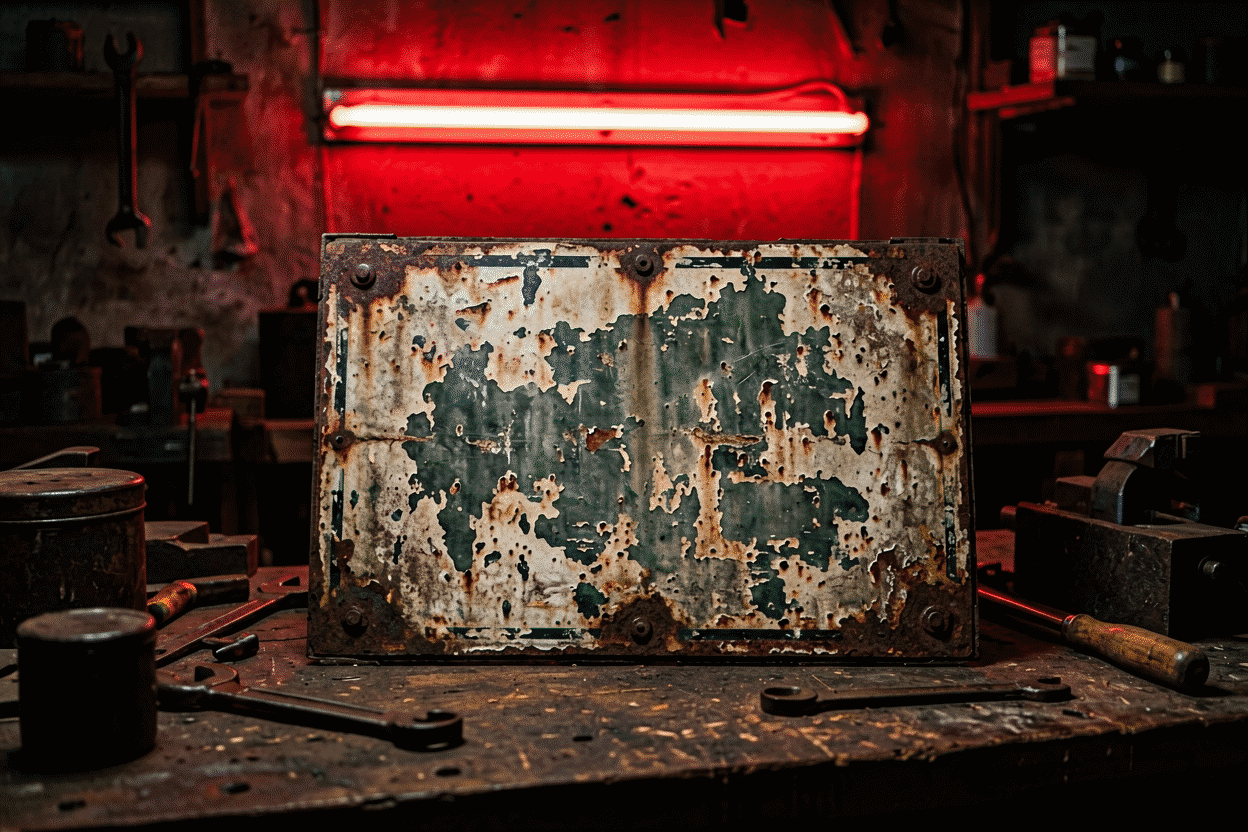
Marker 1: Porcelain and paint technology. Genuine porcelain enamel (fired glass-on-metal) dominates quality faces through the 1950s — its tell is depth: chips show layered construction, and the surface reflects like glass over color, not paint over metal. Painted tin means lower-tier or later production; modern replicas in paint or vinyl read flat under angled light.
Marker 2: Maker and date marks. The porcelain houses signed their work — stamped tags, corner marks, paper labels (rare survivors). Dated pieces carry stamps on frames or mounting brackets. The reference books and collector databases (the community maintains maker lists) turn a stamp into a production window; unknowns date by construction inference alone.
Marker 3: Construction logic. Hand-bent glass with visible irregularities and varied tube diameters reads pre-mass-production; uniform machine-consistent tubing suggests later work or full replacement. Transformer technology dates roughly by type and label (era-correct iron-core monsters vs. anything modern). Mounting: bolted steel frames and hanging eyes for facade work, standoff porcelain-button mounts for interior — consistent or not with the claimed story.
Marker 4: Graphics and typography. Signage letterforms date like everything else: 1930s deco geometry, 1940s–50s script exuberance, 1960s sans modernism. Brand slogans and phone exchange formats (like “MUrray Hill 5”) hard-date pieces surprisingly precisely. The anachronism test — any element that postdates the claimed era — is the fastest fraud-catch in the method.
Authenticity: What Fakes Get Wrong
| Tell | Genuine era piece | Reproduction/recent |
|---|---|---|
| Surface | Porcelain depth; chips layer | Flat paint; chips show metal |
| Glass | Hand-bent irregularity; era-consistent patina | Too-perfect bends; new glass brightness |
| Steel | Age-appropriate patina; period hardware | Sanded/re-welded frames; modern fasteners |
| Marks | Era-consistent maker/date stamps | Missing, inconsistent, or laser-crisp “stamps” |
| Electrical | Period transformers (unsafe to run) | Modern wiring under “antique” claims |
| Wear pattern | Wear where a facade would wear | Uniform “distressing” or suspiciously strategic damage |
The honest gray zone: quality restorations — original faces with re-pumped tubes and rebuilt electricals — are legitimate and often desirable (the piece survives to glow again), but they must be sold as restored. Restored-original and all-original are different price points, and misrepresenting one as the other is the market’s cardinal sin.
Valuing: The Five Factors, Weighted
- Brand graphics (the heaviest factor) — national brands with characterful artwork anchor the top of the market; regional and generic pieces trade far lower. Brand collectors set the pace at auction.
- Condition — original-condition pieces with honest wear outprice restored (when documented) which outprice rough/project condition. Working order is a bonus, not a requirement — buyers assume electricals need work.
- Rarity — one-location shop pieces and short runs against common national production.
- Provenance — a photographed installation history or documented chain adds real money and liquidity.
- Size/display-ability — home-scale pieces (under ~4 feet) command per-inch premiums over warehouse spectaculars; the collecting base displays in houses.
For calibration against the actual market: specialist sign auctions publish results (the honest price database), and the serious dealers maintain archives. Ballpark tiers: common postwar brand pieces in fair condition trade hundreds; strong golden-age porcelain in original condition, low thousands to five figures; exceptional rarity with provenance, whatever two committed collectors decide it’s worth — auction theater included.
The Antique-Specific Cautions
- Electricals: never run unrestored. Decades-old transformers and cloth wiring are fire hazards first, antiques second. Restoration shops rebuild them properly (the repair economics) — budget $200–800 on top of purchase for any piece you intend to illuminate.
- Mercury-era glass: blues and whites before ~1970 may carry mercury fills — restorers handle, breakage protocols apply (toxicology).
- Fragility logistics: antique glass ships badly — local pickup or specialist crating; the piece’s first journey in decades is its riskiest (shipping anatomy).
- Fakes have improved: the best reproductions now fake patina convincingly — which is why maker marks, construction logic, and the anachronism test carry the authentication weight, not surface “oldness.”
If You’re Not Buying — Just Appreciating
The whole dating method doubles as appreciation: once you can read porcelain depth and period typography, every surviving sign on a diner wall or in a museum case tells its production story plainly. The institutions holding the masterpieces — and the history they encode — are covered at museum of neon art and the history timeline. And when appreciation wants to become possession without a five-figure auction paddles: the era’s look commissions new, honestly, any day — in the custom builder.
Care and Conservation for Antique Pieces
Owning the antique tier responsibly — the conservation notes that protect both object and value:
The environment’s three enemies. Humidity (steel and porcelain’s rust catalyst — stable 40–50% RH is the conservation band), direct sun (paint fade and porcelain-crazing accelerator on southern exposures), and vibration (fatigue at every eighty-year-old joint — mount hardware checked annually, isolation from speaker walls and door slams). The fourth enemy is enthusiasm: over-cleaning original surfaces strips the patina that documents age — conservators clean stabilized grime, never original finish (the maintenance philosophy).
To light or not to light. The conservation-tier question, answered by tier: museum-grade pieces display dark or on minimal duty cycles (the light exists; running it is wear); strong collector pieces light for occasions with modern replacement transformers doing the electrical work (the originals preserved in a drawer — the reversibility principle); everyday-vintage pieces run as restored signs, which is what they are now (the restoration decision tree). The middle path — correct-voltage operation through a proper modern transformer, documented — is where most pieces live longest and happiest.
Documentation as conservation. The provenance file is part of the object in this market: purchase records, restoration invoices, installation photographs, the maker-mark close-ups (the dating method). Pieces with files outprice file-less equivalents and travel better between collections — the paperwork is the piece’s passport, and building it is free at acquisition.
When professional conservation earns its fee. Stabilization work on rare pieces (corrosion arrest, structural repair to porcelain and steel), full restorations where the design justifies it, and any work involving mercury-era glass (the handling protocols). The conservation tier’s economics mirror fine-art restoration: the best work is invisible, documented, and boring — exactly what a century-old object deserves.
FAQ: Antique Neon Signs
How can you tell how old a neon sign is? Four markers: porcelain-vs-paint technology (chips that layer are fired porcelain), maker and date stamps on frames and tags, construction logic (hand-bent glass irregularities, era-correct transformers and hardware), and graphics typography against known dating curves. Any anachronism disqualifies the claimed era.
How much are antique neon signs worth? Set by brand graphics, condition, rarity, provenance, and size — common postwar pieces in fair condition trade in the hundreds; strong golden-age porcelain originals run low thousands to five figures; exceptional rarity is auction-decided. Published auction results are the honest database.
What’s the difference between vintage and antique neon signs? Usage varies, but “antique” tends to mean the earliest tiers (1910s–60s, emphasizing pre-war porcelain and glass craft), while “vintage” covers the broader old-sign market through the 1970s-plus — plus the separate world of new “vintage-style” LED signs.
Are old neon signs safe to run? Not unrestored — aged transformers and wiring are fire hazards. Electrical restoration ($200–800 typically) makes them runnable; mercury-era blue/white glass needs professional handling.
Can antique neon signs be restored without losing value? Yes, when restoration is skilled and honestly documented — re-pumped tubes and rebuilt transformers are accepted practice. All-original pieces still command premiums over restored equivalents, so the disclosure is the value-protection.
Where do antique neon signs sell? Specialist sign auctions (price discovery), dedicated dealers with reputations, eBay’s antique category (buyer verification essential), estate sales, and collector swap meets — the channels and their trade-offs are mapped in the collecting guide. The antique tier’s closing guidance: date carefully, authenticate skeptically, grade condition honestly, and check every price against the auction record (the method) — the four disciplines that turn fascination into collection. The market rewards the prepared eye at every tier, and the pieces themselves reward the care: a century-old sign, conserved and glowing again, is the hobby’s whole argument in one object (the conservation notes).
Sources & Further Reading
- Cleaning Up a Broken CFL (U.S. EPA) — the federal mercury-spill cleanup procedure; we mirror it for broken glass-neon tubes.
- Neon sign (Wikipedia) — the consolidated public record of neon-sign history and technology.
- Mercury (U.S. EPA) — federal guidance on mercury exposure and safe handling.