Fun Facts About Neon: 24 Things Worth Knowing
Neon is the element that escaped the periodic table and became a mood. The facts below cover all of it — the physics quirks, the history with plot twists, the cultural conquest, and the modern bedroom-glow era — in 24 items you can actually deploy at a party. Each section links to the full story where the facts run deeper.
The Element: Facts 1–6
1. Neon was discovered in 1898 — by two men freezing air. William Ramsay and Morris Travers liquified air and watched the fractions boil off; neon revealed itself by glowing red-orange in their discharge apparatus. Travers later wrote they “gazed at the tube with awe” — the lab note of men who knew they’d found something theatrical.
2. A twelve-year-old named it. Ramsay’s son, at the discovery dinner, suggested the Greek neos (“new”). The name stuck — one of chemistry’s great naming stories (the element’s full profile).
3. It’s everywhere in the universe — and almost nowhere on Earth. Cosmically top-five by abundance, forged in stars. Terrestrially: 18 parts per million of air, because neon is too light for Earth to keep and too inert to bind into anything. (The full sourcing story.)
4. Neon has no compounds. None confirmed under ordinary conditions — the noble gas that out-nobles the noble gases. Its complete electron shell (2+8) means it simply doesn’t participate. There is no neon rust, no neon mineral, no neon biology.
5. Pure neon only glows one color. The famous red-orange. Every other “neon” color — blues, greens, pinks, whites — comes from argon, helium, krypton, phosphor coatings, or tinted glass. The rainbow is engineering on top of a monochrome element (the palette’s story).
6. Liquid neon is among the coldest refrigerants known. Boiling point: −411°F. It’s used in specialized cryogenics — and neon’s liquid range is so narrow that handling it is considered an expert’s game even among cryogenic engineers.
The Invention: Facts 7–12
7. The first neon sign advertised a barbershop… at a car show. Georges Claude debuted neon signage at the 1910 Paris Motor Show — his own pavilion. The first commercial install followed in 1912: a barbershop on the Boulevard Montmartre (the full history).
8. Neon reached America through a Packard dealership. 1923, Los Angeles: “Packard” in neon, commissioned by earl C. Anthony. The sign reportedly cost $24,000 (in 1923 dollars — a house and a half) and stopped traffic so effectively that the rooftop had to be reinforced for the crowds.
9. Claude patented the whole industry — and litigated it into shape. Claude Neon Lights controlled the technology through patents into the 1930s, licensing franchises and suing infringers. The neon age’s geography still shows Claude’s licensing map.
10. Neon saved Times Square’s first golden age. The 1920s–30s “Great White Way” ran on neon’s density — spectaculars with chasing borders, animated figures, and block-long wall-to-wall glow. Broadway’s visual identity is a neon artifact.
11. The craft is called “glass bending,” and it’s dying-art rare. Tube benders train for years; each letter is bent by hand over a flame from a printed pattern. The trade’s aging workforce is why authentic glass neon carries craft pricing (how signs are made).
12. War killed neon’s first era. WWII’s materials rationing (and blackout orders) shut sign production; the postwar return favored plastic and fluorescent, and neon entered its forty-year decline — the era preservationists now memorialize (vintage story).
The Culture: Facts 13–18
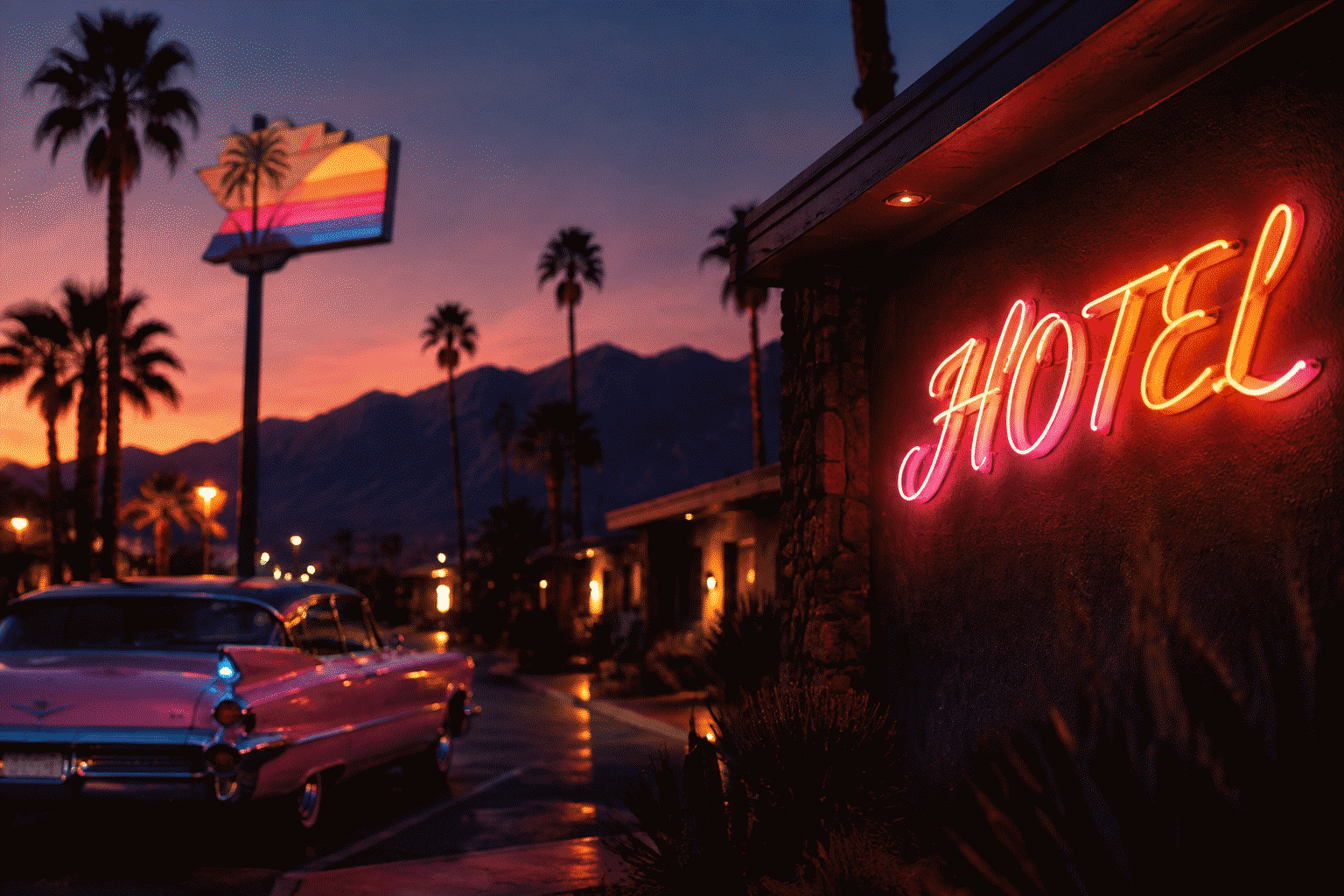
13. Las Vegas was built on neon’s physics. Desert sun demands after-dark identity; neon’s brightness wrote it. The Vegas sign vocabulary (script, arrows, stars) is the medium’s most complete dialect — and the Neon Museum’s Boneyard is its archive (museum story).
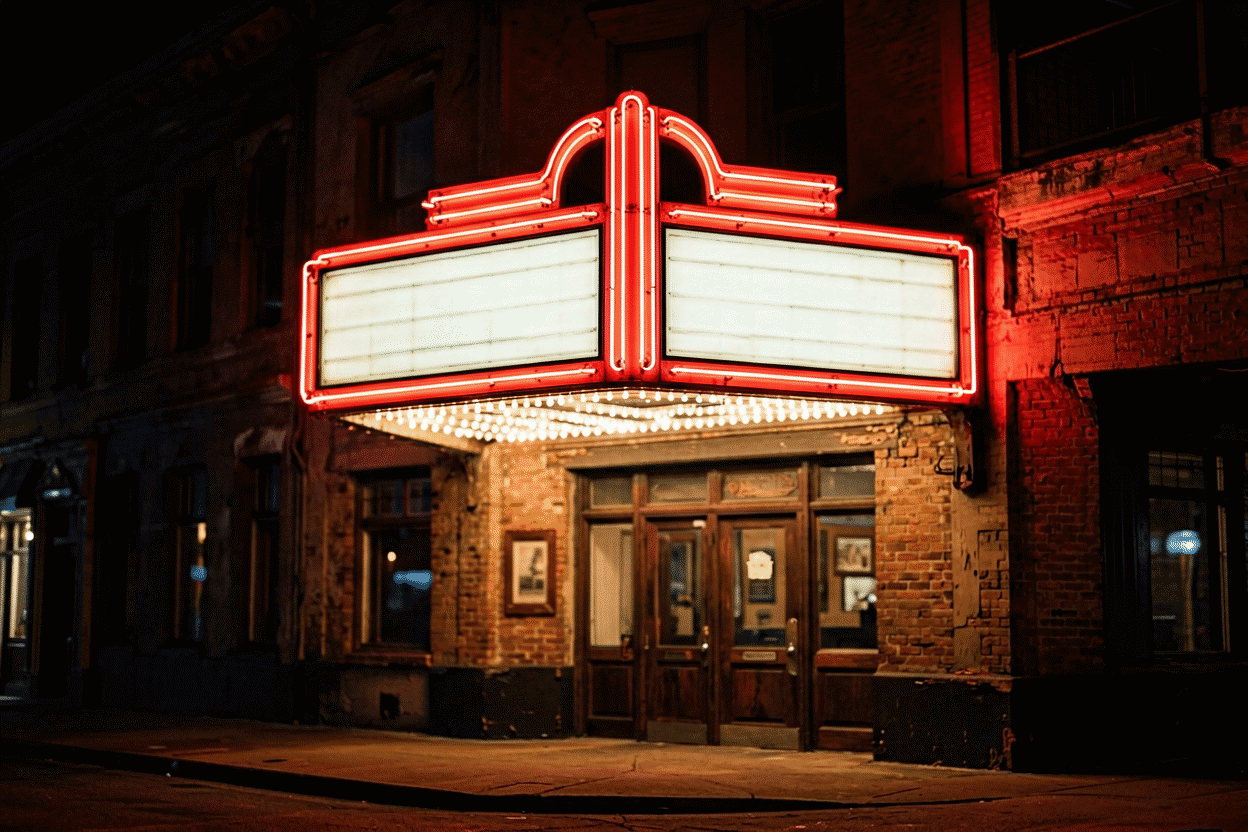
14. “Neon” stopped meaning the gas around 1930. Language borrowed the word for any glowing tube and then for any hyper-saturated color — regardless of contents. Most “neon” signs today contain zero neon: they’re LED (the definitional tangle).
15. Hong Kong’s streets ran a neon script of their own. The city’s stacked vertical signs — characters climbing whole facades — made it neon’s other world capital, a visual language so distinctive it became cinema’s shorthand for urban future (the aesthetic layer).
16. Hollywood codes entire genres with it. Film noir’s wet streets, the 80s synthwave grid horizon, cyberpunk’s kanji rain — neon is the most genre-productive lighting technology ever (the aesthetic vocabulary).
17. Neon signs have been protected as landmarks. Cities from Los Angeles to Shanghai run preservation programs for historic signs; Las Vegas’s Boneyard and Los Angeles’s Museum of Neon Art exist specifically because the medium’s works were being scrapped (art history).
18. There is a National Neon Sign Day. Marked in the sign industry on… naturally glowing dates vary by source, which is itself a very neon fact: the medium’s history is craft-lore more than legislation (the calendar story).
The Modern Era: Facts 19–24
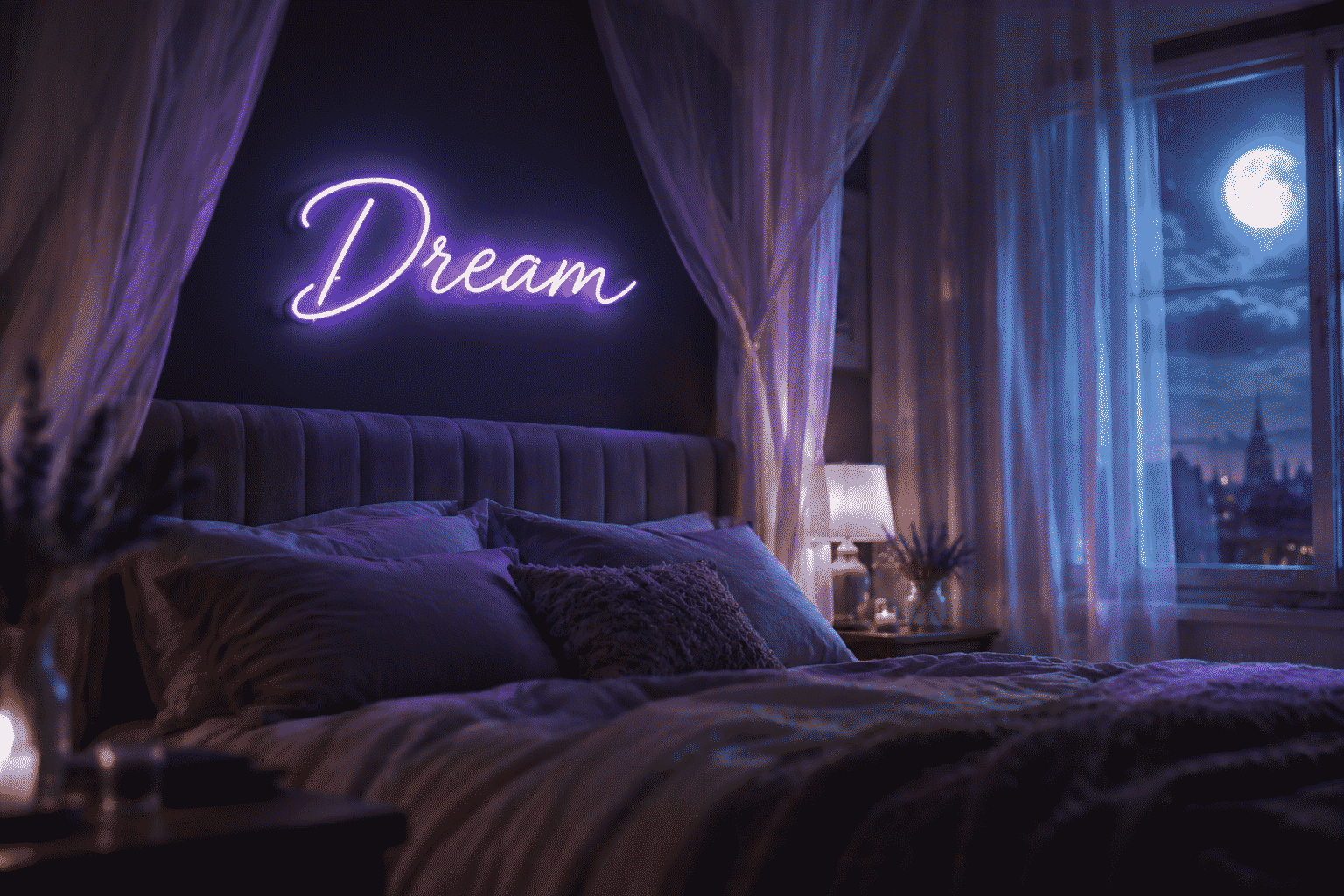
19. The neon revival was LED-powered. The bedroom-glow era (2015–now) runs on silicone-clad LED flex: 12 volts, dimmable, $100–300 custom — the physics of the look democratized (the comparison).
20. An LED neon sign costs about a dollar a month to run nightly. 10–30 watts against evening hours — the energy anxiety is retroactive folklore from the glass era (the math).
21. A neon sign can last decades — the gas never runs out. Glass tubes dim from electrode wear and phosphor aging, not gas depletion; LED flex from component wear at 30,000–50,000 hours (longevity data).
22. Weddings revived the format before bedrooms did. The names-and-dates sign became the 2010s’ most-photographed wedding prop — the event market that funded the custom-sign industry’s modern rebuild (the wedding genre).
23. “Instagram walls” are a neon business model. Museums, bars, and retail installations built photo-op rooms around glowing phrases — signage as an attraction that markets itself through every visitor’s camera (the photography side).
24. The most common neon sign text might be “Open.” Followed closely by names and dates. The medium that started selling cars a century ago now mostly sells the feeling of a place being exactly itself — from dive bars to nurseries (start yours).
Want the Deep Dives?
Every fact above opens into a full guide — the element, the gases, the history, the art, the colors. And fact 25 is always the one you write yourself: your words, your glow, in the custom builder.
Facts 25-30: The Modern Additions
The collection continues — six facts from the medium’s current chapter that the classic lists haven’t absorbed yet:
25. The wedding sign saved the custom-neon industry. The names-and-dates format’s 2010s dominance built the custom e-commerce tier’s entire economic base — event photography did the marketing (the wedding chapter). The bedroom era inherited an industry the altar funded.
26. LED flex made neon the most-photographed decor category. Camera-native glow, dimmable to sensor-perfect levels (the photography physics) — the aesthetic-feed era adopted the medium because it out-photographs nearly everything at wall scale.
27. The sign’s most common word is a tie between Open and Love. Commerce and romance split the market’s center — the B2B vernacular (open signs) and the personal register carrying nearly equal volume, a fact that would have amused Claude’s advertising-first assumptions.
28. Neon signs are the only decor category with museums dedicated to the format itself. Not to designers or eras — to the object class (MONA and the Boneyard): signage elevated to institutional study while still being manufactured new daily.
29. The LED revival inverted the price class system. Glass neon was the democratic medium of its century (cheaper than sculptural alternatives); LED neon is the democratized descendant — while glass settled into the premium craft tier (the inversion). The medium’s class structure flipped without anyone planning it.
30. You can commission the 31st fact. The custom tier’s whole premise: the fact worth knowing about neon in 2026 is whatever your own words look like glowing — the builder renders it before the fact exists.
These six join the 24 above as one continuous story: a lab curiosity that became advertising, then art, then heritage, then everyone’s — with the newest chapters being written at consumer scale, one bedroom phrase at a time. The facts get more numerous as the medium gets more ordinary, which is the pattern of every technology that succeeded.
FAQ: Fun Neon Facts
What are the most interesting facts about neon? Neon was named by a twelve-year-old, glows only red-orange in pure form (every other “neon color” is other gases or LEDs), ranks top-five in cosmic abundance but 18 ppm on Earth, forms no compounds at all, and its first American sign cost the price of a house.
Who discovered neon and when? William Ramsay and Morris Travers, June 1898, by fractionating liquefied air — the gas announced itself by glowing in their discharge tube. Georges Claude turned it into signage by 1910–1912.
Why is it called neon? From Greek neos, “the new one” — suggested by Ramsay’s twelve-year-old son at the discovery celebration.
Do neon signs actually contain neon? Authentic glass signs in red-orange do; other colors use argon, helium, or krypton fills; and the majority of modern “neon” signs are LED and contain no gas at all.
What was the first neon sign? Georges Claude’s display at the December 1910 Paris Motor Show; the first commercial customer was a Paris barbershop in 1912. America’s first (1923, “Packard,” Los Angeles) cost roughly $24,000.
Is neon still popular today? More than ever in reach — the LED era put custom glowing signs in bedrooms, weddings, and home bars at consumer prices, while glass neon survives as craft, art, and heritage signage.
Sources & Further Reading
- Neon: Strong Lines (NIST Physical Reference Data) — the standard reference for neon’s emission wavelengths.
- Argon: Strong Lines (NIST Physical Reference Data) — the standard reference for argon’s emission wavelengths.
- Solid-State Lighting (U.S. Department of Energy) — DOE reference on LED efficacy and lifetime.
- Neon sign (Wikipedia) — the consolidated public record of neon-sign history and technology.
Pricing based on CustomNeon’s current catalog (2026); custom quotes come live from the sign builder.