No Vacancy Neon Sign Meaning: Roadside America at Home
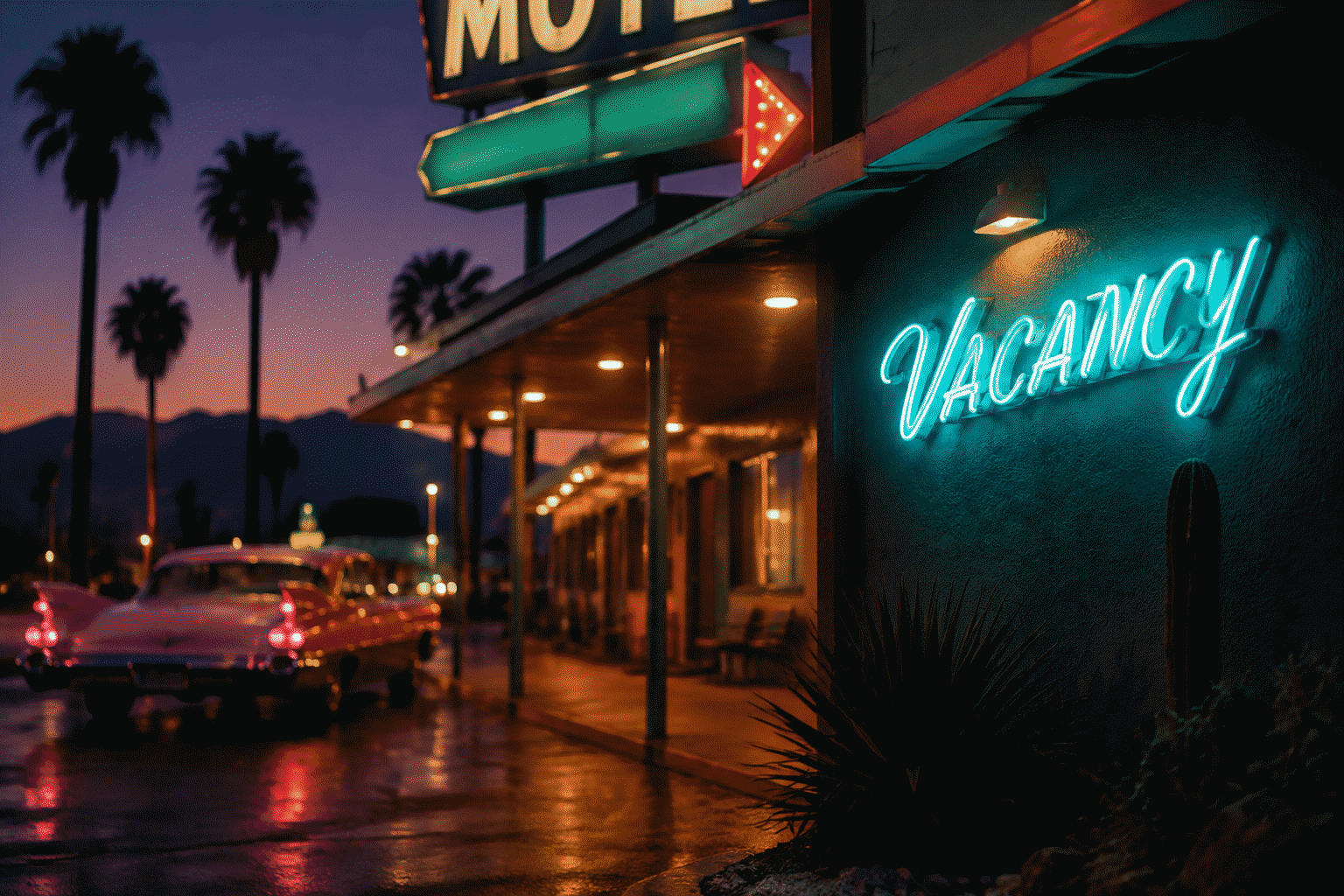
Two words divided a nation’s nights for half a century: VACANCY, flickering hopefully, and NO VACANCY, steady and faintly smug. The motel vacancy sign is one of the great artifacts of American driving — and its “full” half has outlived the highway age entirely, hanging on home bars and garage walls as pure nostalgia with a smirk. Here’s what the sign means, where it came from, and why posting it over your bar is the opposite of what it used to mean.
The Sign That Ran the Highways
The vacancy board predates the motel itself — campgrounds and motor courts hung NO VACANCY boards for drivers decades before neon made them glow. The logic was pure roadside economy: a passing driver at 60 feet decides in two seconds whether to stop, and a lit board was the entire marketing department. Neon turned the decision into an icon: the colored tubes of the highway age made vacancy signs readable at speed, and the two-word architecture (vacancy / no vacancy, often with changeable panels) became standard equipment at every motor lodge on every US route.
Through the postwar highway boom — the Route 66 era — the sign divided America nightly into the welcome and the full. Motels with vacancy glowed their invitation; the no-vacancy boards ran steady red, the color of a closed door. The culture absorbed the grammar: cartoons, films, and novels used the lit NO VACANCY as shorthand for the town that has no room for the protagonist. The sign became a minor literary device — the highway’s way of saying keep driving.
Then the interstates bypassed the motor courts, the big blue chains replaced the individual signs with lobby computers, and the vacancy board retired into Americana. Collectors hunt original glass boards today — working mid-century pieces surface at auction from the low hundreds into four figures — and the rest of the culture hangs LED versions with full knowledge of the irony.
What the Sign Means at Home
On a home wall, “no vacancy” runs three registers at once:
The full-house boast. Over a home bar or in a garage lounge, the sign means the seats are taken and the night is closed to new business — a flattering way to describe your own popularity. It’s the two-seat bar posting a full house, and the smugness is the joke the sign is making about itself.
The Americana citation. For fans of roadside history — the route shields, the license plates, the diner china — the sign is the era’s most legible artifact. It hangs in the vintage wall the way a date stamp hangs in an archive: this happened, it glowed, it’s over, we keep it.
The guest-room wink. The ironic guest-room posting — “we are full, except for you” — is the sign’s domestic comedy register. Households with a standing guest room run it on the door; the guests who get the joke become recurring guests.
Why Red, and the Honest Alternatives
Red is canonical and correct — the color of the original glass boards and of every highway after dark. Red reads instantly at night, which was the entire point of the sign’s existence; the red register covers the shade range from fire-engine to oxblood.
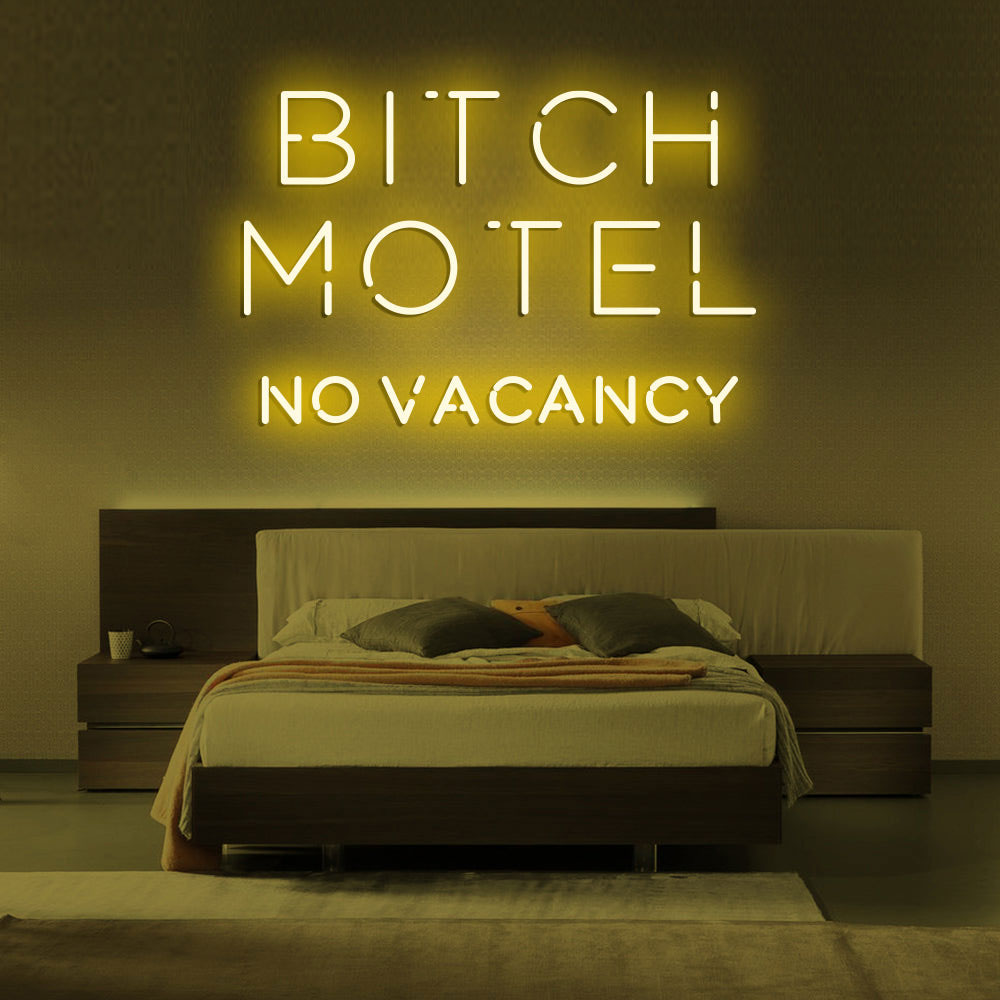
The alternatives are deliberate departures: warm white reads ghost-sign vintage — the faded-board aesthetic for farmhouse and industrial rooms; blue runs the mid-century-modern register; amber the desert-motel register of the Southwest. The stock red design ($249) covers the classic in block letters — the word pair is institutional by nature, and script would read as a bed-and-breakfast apology.
The Roadside Wall: Building the Context
The sign wants company of a specific kind. The full vintage wall runs three layers: the no-vacancy glow as the light source; flat memorabilia — license plates, route shields, road maps — as the texture; and one warm secondary light (a moon lamp, an Edison strand) as the depth. Keep the red count to one glowing piece per wall; two reds fight.
The canonical running mates: Hotel California ($243) for the desert-motel register, Girls Girls Girls ($212) for the eighties road-movie register, and Live On Air ($316) for the broadcast-era corner of the same wall. The bar signs guide and man cave guide cover the full pairing playbooks.
For actual businesses — inns with a sense of humor, bars with history — the commercial register pairs the sign with a working open sign: open at the door, no vacancy at the bar. The two boards together recreate the entire roadside decision at retail scale.
Block Letters and the Layout Options
No vacancy takes block capitals — the institutional register the phrase was born in. The detailing is where versions differ: the classic arrow underline (pointing to the office, historically), the bordered-box layout of genuine motel signage, or bare letters for modern rooms. The two-line build — VACANCY in a dimmer tone beneath the NO — recreates the changeable-panel original; preview all layouts free in the custom neon sign builder.
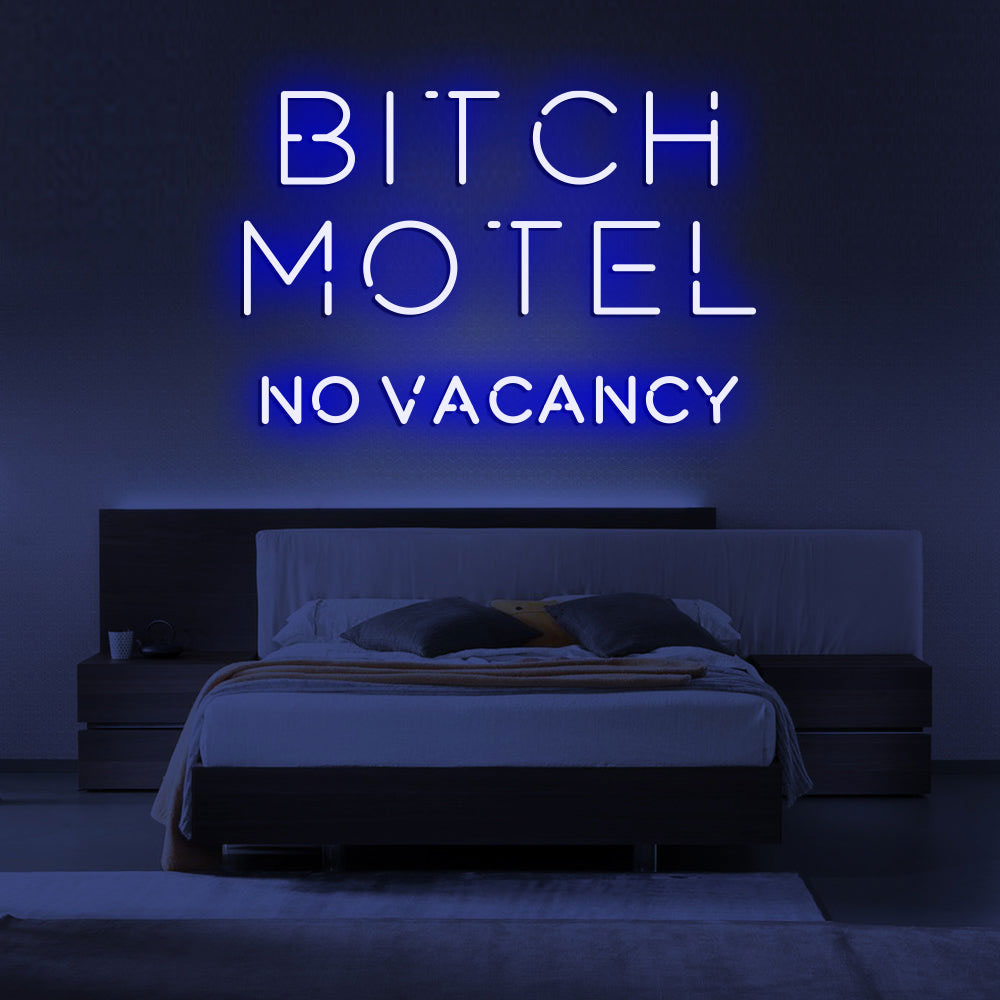
Sizes run wide and low, matching the word pair’s shape: 36–48 inches over a bar (the horizontal spread suits the back-bar), 18–24 above doorways where the ironic work happens best.
Building the Roadside Wall: Layout and Cost Math
The roadside look is a three-layer build, and each layer has a budget. Layer one — the glow: the stock red block-letter no vacancy design sits in the mid $240s; the vintage-layout upgrades (bordered box, arrow underline, the two-line vacancy build) price as custom flourishes, each adding a modest step. Layer two — the texture: license plates, route shields, road maps, and the flat memorabilia that make the sign read motel rather than retail; this layer is garage-sale-priced and does half the aesthetic work. Layer three — the warmth: one secondary light (a moon lamp, an Edison strand) so the wall has glow at two heights. Compare the total against working vintage glass at auction — low hundreds into four figures, restoration not included — and the modern build is the value play with the identical punchline. The cost guide has the full band tables.
Care for the Garage Environment
Garages and man caves are the sign’s most common habitats, and they’re harder service than living rooms: dust, temperature swings, and the occasional basketball. The care program stays simple — a dry microfiber pass monthly rather than seasonally, keeping the sign out of the direct path of workshop dust (mount high), and checking the mount after any wall-adjacent project. LED construction shrugs off temperature swings that would stress vintage glass; the realistic failure point is physical contact, which mounting above head height solves permanently. The cleaning guide and longevity guide cover the rest.
Two more from the roadside: the open 24 hours neon sign ideas piece covers the other doorboard worth the same wall, and the food truck neon signs piece extends the roadside-sign language to the street kitchen.
FAQ About No Vacancy Signs
What does a no vacancy sign mean at home?
Ironic pride: the house is exactly as full as it wants to be. Over the bar it means the seats are taken; in the guest room it means we’re full, except for you. The original roadside meaning — the motel is full, keep driving — is what charges the irony.
Why is it always red?
Red was the original glass-board color and the color of every highway after dark — instantly readable at night, which was the sign’s entire job. The red guide covers the range; warm white runs the ghost-sign vintage alternative.
Are original glass motel signs valuable?
Working mid-century boards surface at auction from the low hundreds into four figures depending on era and condition — the collector market mirrors vintage beer-sign tiers. Modern LED versions deliver the aesthetic without the fragility; dead vintage pieces are restoration projects priced accordingly.
Where should it hang?
The home bar at eye-line (60–66 inches center), garages and man caves with plate-and-sign Americana, and guest-room doorways for the ironic register. Against material — brick, panel, corrugated metal — it reads motel; against bare drywall it reads retail.
What’s the two-line build?
NO over a dimmer VACANCY — recreating the changeable-panel original, where motels swapped the panels nightly. It’s the vintage-fidelity layout; preview it free in the customizer.
How much does a no vacancy sign cost?
The stock red block build sits in the mid $240s — the two-word phrase keeps it in the friendly band. Vintage-layout customs (box border, arrow, two-line vacancy) add modest steps. Against working vintage glass at auction — low hundreds into four figures — the modern build delivers the same punchline at a fifth the weight and none of the wiring anxiety; full bands are in the cost guide.
Can a business use a no vacancy sign seriously?
Inns with a sense of humor and bars with history run it next to a working open sign — open at the door, no vacancy at the bar, the roadside decision recreated at retail scale. B&Bs post it at full occupancy honestly. The sign reads as wit in commercial use precisely because everyone knows the original job.
The Bottom Line
No vacancy is roadside America, retired and flattered — the highway’s full house posted over a two-seat bar. Hang the classic red block, pair it with Hotel California for the desert register, and pour like the town is full. The sign means the night is closed to new business — and everyone’s glad to be inside.
Sources & Further Reading
- Neon sign (Wikipedia) — the consolidated public record of neon-sign history and technology.
- Mercury (U.S. EPA) — federal guidance on mercury exposure and safe handling.
Pricing based on CustomNeon’s current catalog (2026); custom quotes come live from the sign builder.