Neon Sign Collecting: A Starter’s System
Neon sign collecting rewards a system over a shopping habit: pick a focus before your first purchase, buy condition within a disciplined budget tier, learn the two decision trees (restore-or-display-dark, and when to sell), and build the display-and-care infrastructure before the collection outgrows it. Done that way, it’s a hobby with real asset behavior — the market for authentic golden-age pieces has decades of appreciation behind it. Done impulsively, it’s an expensive way to fill a garage with fragile glass.
This is the system-layer guide — it assumes you’ve read the market overview (vintage) and the authentication method (antique), and it organizes what comes next: focus, budget, buying, restoring, displaying, protecting.
Step One: Pick a Focus (The Decision That Compounds)
Unfocused collections become inventories. The focused ones become valuable and — more importantly — interesting. The proven axes:
- By brand family — one brewery’s signage across decades; one oil company’s roadside evolution; a soda brand’s regional variants. Brand focus plugs you into the market’s deepest collector base (and its price support).
- By era — golden-age porcelain only; or postwar script; or “anything pre-1960 that still glows.” Era focus trains your eye fast.
- By theme — motels, diners, bars, theaters, Route 66 geography. Theme focus builds the collection that tells a story in a room.
- By format — script only, arrows only, animated units only. Format focus is the connoisseur’s lane — narrow and deep.
The starter’s sweet spot: one primary axis, loosely held. You’ll refine it after your fifth piece, when the collection starts telling you what it’s about.
Step Two: Budget in Tiers
The hobby’s honest money map:
| Tier | Budget per piece | What it buys | Role in a collection |
|---|---|---|---|
| Entry | $100–500 | Common postwar pieces, “project” condition, regional oddities | The learning tier — buy here while your eye trains |
| Mid | $500–2,500 | Strong golden-age graphics in honest condition | The collection’s core |
| High | $2,500–10,000 | Rare, original-condition, documented pieces | The trophies — after focus and knowledge mature |
| Museum | $10,000+ | Exceptional rarity/provenance | Auction-theater territory; specialists advised |
The discipline: spend your first year in entry tier even if you can afford higher. The tuition you’re paying at $300 mistakes is the same education $3,000 mistakes teach, at a tenth the cost.
Step Three: Buy Through the Right Channels
In trust order: specialist auctions (price discovery, authentications, buyer protections — premiums priced in), established dealers (curation and reputations; you pay for both, fairly), collector community sales (swap meets, club networks — best prices, relationships required), estate sales and barn finds (the romance channel; condition surprises priced in), online marketplaces (widest selection, full verification burden on you — the authentication checklist is your gate).
Two buying rules that protect beginners: never buy unverified glass through shipping channels (fragility logistics eat refunds), and never bid past your pre-set number at auction — theater is priced into the room for a reason.
Step Four: The Restoration Decision Tree
Every dead-or-dying antique piece asks the same question: restore the glow or display dark?
- Is the piece historically exceptional (all-original, rare)? → Display dark or minimal conservation. Originality is the value; irreversible work trades it away.
- Is it a strong-but-common piece you’ll enjoy lit? → Restore: tubes re-pumped, transformers rebuilt ($200–800 typical — the economics), all documented by the shop. Honest restoration is accepted practice.
- Is it a “project” bought cheap? → Restoration is the purchase — the entry tier’s classic play: $300 piece + $500 restoration = a $1,200-looking sign and the best education in the hobby.
- Mercury-era blue/white glass? → Professional handling for any tube work (the why).
Document everything — before photos, shop invoices, what was replaced. The paperwork is provenance’s next chapter.
Step Five: Display and Care
Display — the constraint is wall real estate and circuit sense:
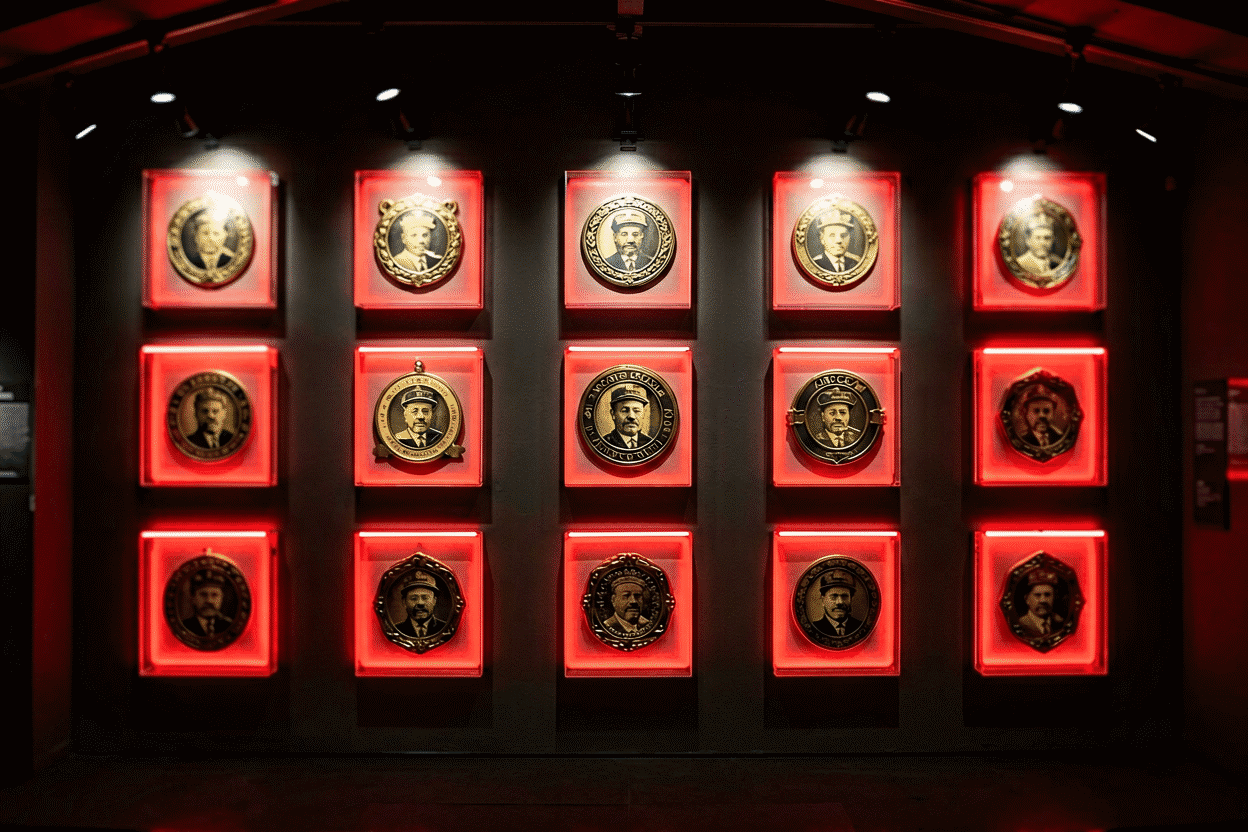
- Rotate rather than crowd: lit displays age (phosphor wear, tube life — longevity math) and rotating spreads it; also keeps the room’s glow evolving
- Power discipline: restored pieces on surge-protected circuits, timers for session viewing — treat century-old restorations like the heirlooms they are (maintenance rhythm)
- Photography: catalog the collection well — how to shoot neon — both for pleasure and for the insurance file
Care — the short list: dust with dry microfiber (never solvents on porcelain or glass), inspect mounts and frames yearly (steel fatigue is real), store un-displayed pieces upright, padded, climate-sane, and never stacked (the storage discipline works for home moves too).
Step Six: Protect It
- Insurance: collections belong on scheduled personal-property riders, appraised and photographed — standard homeowner’s caps leave antiques badly exposed. Appraisers who know the sign market exist; auction results anchor values.
- Environment: stable humidity for porcelain and steel (rust is the quiet killer), no direct sun on painted faces, glass pieces anchored against vibration.
- Legacy: the documentation file — purchase records, restoration invoices, authentication notes — is what makes the collection transferable. The best collections sell as stories; the paperwork is the story’s receipt.
The Modern Parallel Track
Worth naming honestly: much of today’s “collecting energy” runs new-build — the custom LED era’s vintage-style vocabulary — where people assemble walls of commissioned pieces by theme without antique fragility or pricing. Different game, real pleasure, zero asset pretense. The two tracks even cooperate: the new-build wall funds the eye that hunts the antique. Start either one in the builder.
The Collector’s Network: Where the Community Lives
The collecting life beyond the buying — the social infrastructure of the hobby:
The organizations. The sign-collecting world organizes through enthusiast societies and museum memberships (MONA, the Las Vegas Neon Museum, the American Sign Museum’s community) — the channels where knowledge circulates, sales announce, and the authentication eye trains fastest. A year of event attendance teaches what a decade of solo buying teaches slowly.
The swap meets and shows. The hobby’s calendar revolves around regional sign meets — parking-lot museums where collections circulate at pre-auction prices and the education is ambient: every table a seminar in construction, era, and condition. The etiquette that earns standing: ask before touching, know your numbers before negotiating, and pass knowledge forward — the community’s currency.
The online forums and groups. Authentication help, market intelligence, and the restoration-shop reviews that matter (the trade’s reputation network is oral and digital, not advertised). The forums’ archival value: the authentication threads are the literature — case-study fakes and tells, crowd-verified (the authentication method).
The restorer relationships. Every serious collector ends with a shortlist: the glass shop that re-pumps honestly, the transformer rebuilder who labels work, the porcelain conservator for the museum tier (the restoration economics). These relationships compound like the collection itself — the restorer who knows your pieces serves them better, and the good ones keep waiting lists worth being on.
The endgame options. Collections resolve three ways: family succession (the documentation file’s final service (the legacy notes)), museum donation (tax and legacy benefits, the institutions’ acquisition wish-lists public), and dispersion sales (specialist auctions, the community’s own market). The best collections end deliberately, planned by the collector whose eye built them — the difference between an estate sale and a legacy.
The network’s summary value: sign collecting is a knowledge sport played with objects, and the community is where the knowledge lives. Join it early, contribute honestly, and the hobby’s deepest pleasures — the find, the save, the story — arrive on schedule.
FAQ: Neon Sign Collecting
How do I start collecting neon signs? Pick a focus axis (brand, era, theme, or format), spend your first year in the entry tier ($100–500 pieces) while your eye trains, buy through auctions and established dealers with verification discipline, and build the display-and-documentation infrastructure as you go.
Are neon signs a good investment? Authentic golden-age pieces have decades of appreciation history — but it’s a collector’s market first: value concentrates in brand graphics, condition, rarity, and provenance, and liquidity is auction-paced. Buy what you’d keep; treat appreciation as the bonus.
How do you display a neon sign collection? Rotate pieces rather than crowding (spreads tube-and-phosphor aging and keeps rooms fresh), run restored pieces on surge-protected circuits with timers, catalog everything photographically, and anchor glass against vibration.
Should I restore an antique neon sign or leave it original? Exceptional all-original pieces display dark (originality is the value); strong common pieces restore joyfully ($200–800 typical, documented); project pieces bought cheap make restoration the whole point. The decision tree is above — and honest documentation protects value in every branch.
How do you insure a neon sign collection? Scheduled personal-property riders with appraised values and a photographic catalog — standard homeowner’s coverage caps fall far short of antique replacement values. Auction results anchor the appraisals.
What’s the best way to store neon signs not on display? Upright, padded, unstacked, in stable humidity — porcelain and steel fear rust and swings, glass fears vibration and impact. The shipping-grade packing discipline is the home-storage standard. The collecting system in final summary: focus before the first purchase, entry-tier tuition while the eye trains, channels matched to trust needs, the restoration decision tree for every dead-or-dying piece, display-and-care infrastructure built ahead of the collection, and documentation treated as part of every object (the full system). The hobby’s rewards — the hunt, the save, the story, the glow — arrive on schedule for collectors who build the system first and buy second.
Sources & Further Reading
- Cleaning Up a Broken CFL (U.S. EPA) — the federal mercury-spill cleanup procedure; we mirror it for broken glass-neon tubes.
- Neon sign (Wikipedia) — the consolidated public record of neon-sign history and technology.
Pricing based on CustomNeon’s current catalog (2026); custom quotes come live from the sign builder.