Neon Sign Maintenance: The Complete Routine

Neon sign maintenance is three rhythms in fifteen-minute sessions: daily habits (dim when appropriate, power off before touching), a monthly wipe-down, and a yearly inspection of the parts that actually fail — connectors, cords, and mounts. Done, an LED neon sign runs 30,000–50,000 hours; skipped, the same sign dies years early at its weakest joint. Glass neon adds a professional-service rhythm on top. There is no fourth category of work, no mystery — the signs are simple machines, and this is their entire care manual.
The cleaning deep-dive (products, techniques, what never touches the tube) lives at how to clean a neon sign — this guide is the full maintenance system around it.
What Actually Ages a Neon Sign
Maintenance makes sense once you know the enemy list, in order of real-world kill rate:
- Connector and cord failure — vibration, moisture, and repeated unplugging fatigue the joints. The number-one end of life for LED signs.
- Driver/adapter wear — power supplies age with heat cycles and surges; a $20 part takes the sign down with it.
- Dust film — cuts light output measurably and traps heat against the LEDs. The most fixable item on this list.
- Mount stress — loose screws and single-point hangs let signs flex and work their own wiring apart.
- LED fade (the slow background process) — quality LEDs dim perhaps 10–20% over a decade of normal use. Nothing to be done, and rarely worth doing.
Notice what’s absent: the glowing tube itself basically never fails first. Maintenance is 90% attention to the boring parts — which is why fifteen-minute rhythms cover it.
The Daily Habits (Zero Minutes, Really)
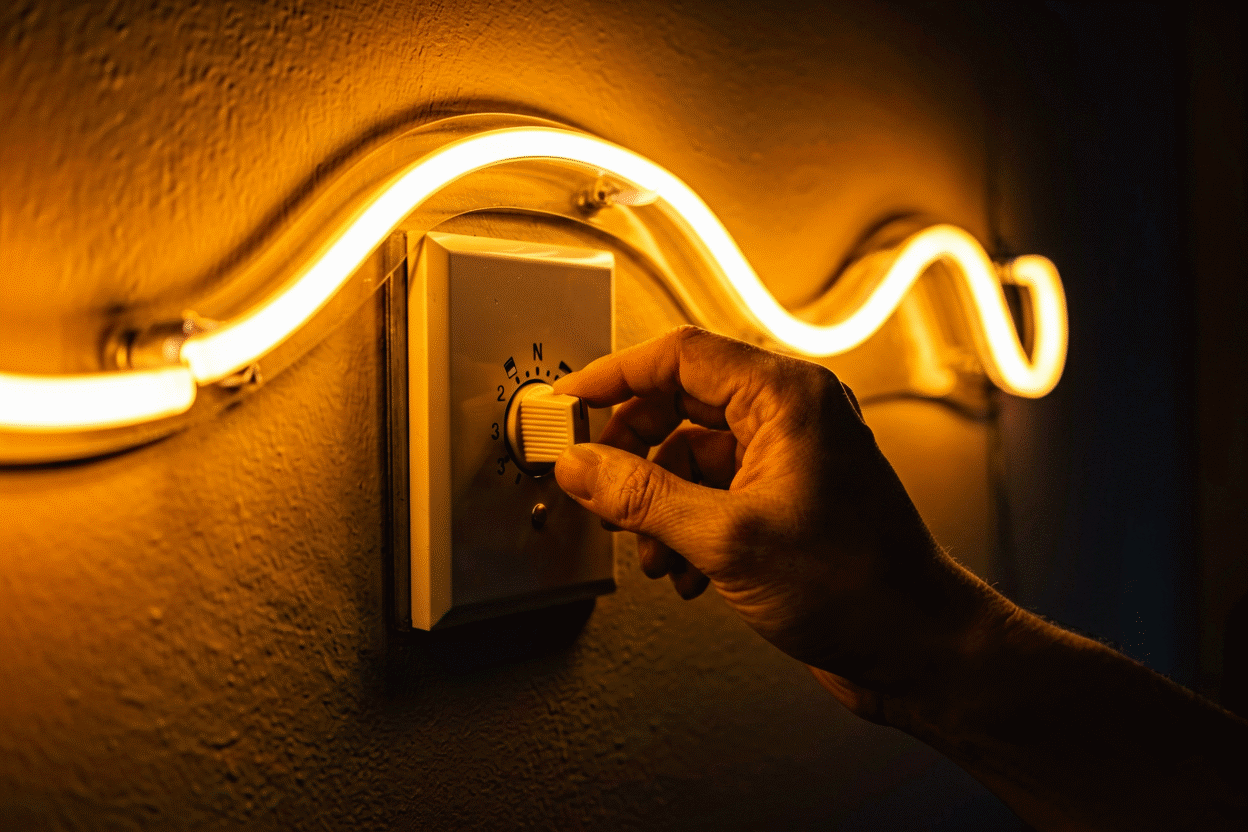
- Dim instead of running full brightness constantly — lower output means lower driver load and cooler electronics. Dimming is maintenance that feels like mood-setting.
- Power off before you clean, adjust, or touch the sign — habit protects fingers and electronics equally.
- Notice flicker early — flicker is a connector or driver speaking its last words. A two-second glance when you walk past is the entire daily inspection; intermittent flicker caught early is a connector reseat, caught late it’s a repair.
The Monthly Fifteen Minutes
- Power off and wipe the tube face and backing with a dry or barely-damp microfiber cloth — the full method, including the no-chemicals list, is the cleaning guide. Kitchens and bars (grease film) and workshops (dust) need this most.
- Check the cord path — no new pinches, no furniture recently parked on the run, connector seating still firm.
- Look at the glow in a dark room — dark spots, color drift, or uneven sections are early LED/section issues; note them and watch their progression rather than panicking (single dim LEDs in a strip are cosmetic; growing dark sections are electrical — see the troubleshooting tree).

The Yearly Thirty Minutes
- Unplug everything, inspect every connector for discoloration, wobble, or corrosion — especially outdoor and humid-room signs (bathroom, covered patio). Contact cleaner on sockets is the fix for early corrosion.
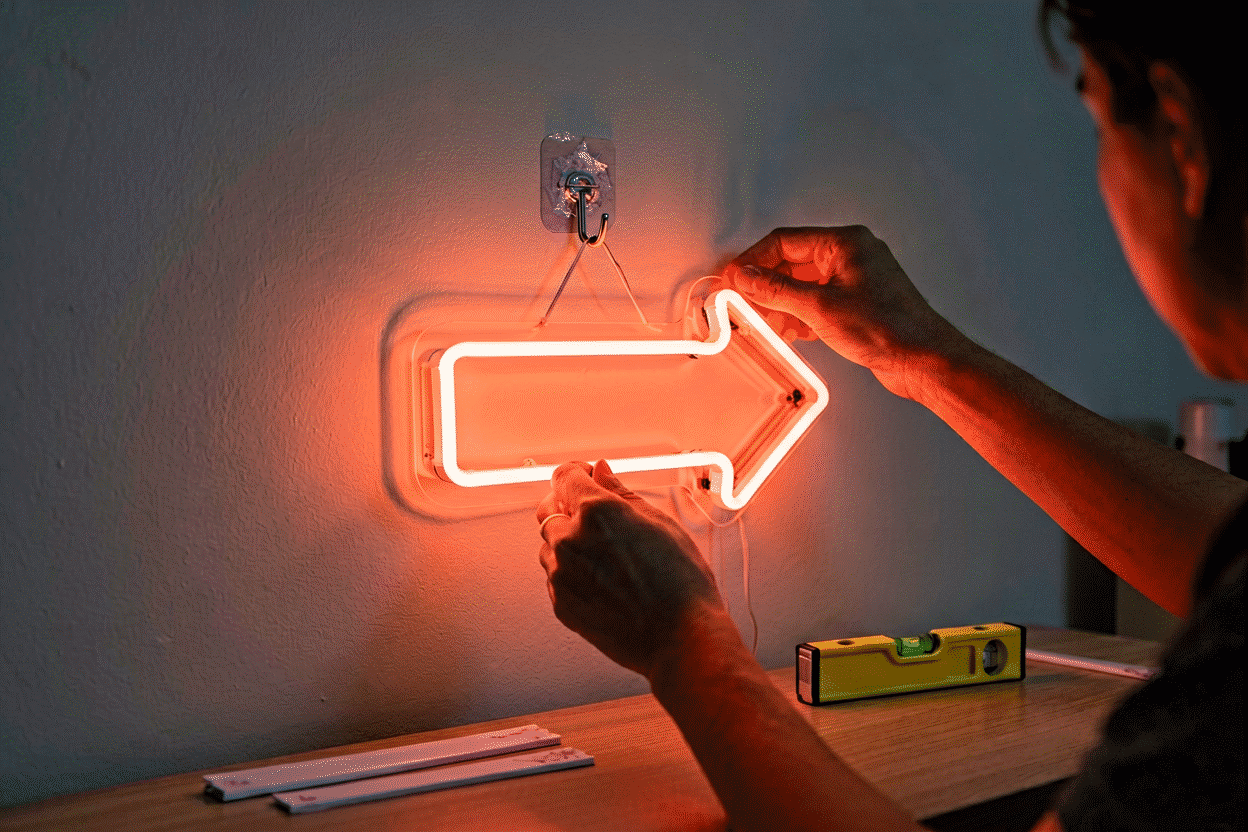
- Snug the mounting hardware — the vibration tax comes due annually. Every backing screw, every wall anchor, checked in five minutes.
- Dust the driver and its vents — the adapter is the sign’s heart and its least-inspected part. A dry brush pass keeps its heat down and its years up.
- Outdoor signs: the seasonal double-session (spring connector check, fall re-sealing and cord inspection) is detailed in the outdoor guide.
- Test the dimmer and remote through their full range — controls that die gradually get mistaken for “the sign getting dimmer.”
LED vs Glass: Two Different Care Books
LED neon is consumer-maintainable — everything above applies, nothing more exists to do, and any repair beyond connectors and adapters is panel-level work covered in the repair guide and its cost analysis.

Glass neon runs on a professional schedule:
- Annual professional inspection of transformer, wiring, and tube mounts — sign shops sell this as a service visit, and storefront owners should budget it like HVAC maintenance.
- Tube re-pumping: glass tubes slowly lose gas pressure over decades; a dimming section on an old sign means a shop visit for a re-pump or section replacement, not a DIY fix.
- Immediate professional attention for: buzzing transformers (capacitor wear), flickering sections that re-strike when touched (failing tube joints), and any burning smell. Glass neon’s high-voltage system announces its problems early — the skill is listening.
The maintenance-cost asymmetry is one of the quiet structural arguments for LED in homes (the whole comparison lives in how long do neon signs last).
The Prevention Matrix (What Stops What)
| Failure mode | Prevented by | Cost |
|---|---|---|
| Connector fatigue | Annual inspection, strain-relief loops, no frequent re-plugging | $0 |
| Driver early death | Surge-protected strip, dusted vents, dimming habit | $10–20 (strip) |
| Dust dimming | Monthly wipe | $0 |
| Mount failure | Yearly hardware snugging | $0 |
| Surge death | Quality surge protector, always | $15 |
| Heat buildup | Nothing flammable against the backing, dust control | $0 |
| Moisture ingress (rated signs) | Annual connector re-sealing outdoor | $5 (tape) |
Total annual maintenance spend for a home LED sign: under ten dollars and under an hour. The ROI is measured in years of additional service — the cheapest longevity available in lighting.
When Maintenance Becomes Repair
The handoff line: maintenance handles everything preventable; repair begins when symptoms persist past prevention. The fix guide covers the eight common faults and their diagnoses, and the repair-cost analysis answers the real question — when repair beats replacement (short answer: connector/driver repairs always; panel-level failures on older signs, rarely).
Start Right: Maintenance Begins at Purchase
Half of maintenance is pre-decided at order time: sealed connectors, certified adapters, quality LED density, and dimming support are purchase decisions with maintenance consequences. Every sign from the custom builder ships with the certified electricals and documented specs that make the fifteen-minute rhythms the only care it will ever need.
The Maintenance Log: What a Year Actually Looks Like
One calendar year of maintaining a three-sign household (bedroom, bar corner, desk) — logged as it happened:
January. The annual thirty-minute inspection, all three signs: connectors clean and tight, mounting hardware snugged (the bar sign’s top-left screw needed a quarter-turn — the vibration tax), drivers dusted, cords checked for pinch points. The bar sign’s dimmer ran its full range cleanly. Total spend: zero. Total time: thirty-five minutes including the log notes.
February–April. The routine months: monthly microfiber wipe of all three faces (the bar corner’s grease film is real — five minutes monthly keeps output at full), daily dimming habits running (the profiles), one flicker event in March traced to the desk sign’s connector — reseated, resolved in two minutes (the diagnosis tree). The log’s note: “desk sign connector is the annual weak point — watch at January inspection.”
May. The desk sign’s adapter died — the year’s only parts purchase: $22 for a spec-matched replacement (the matching rules), swapped in five minutes. The dead adapter’s lesson confirmed the maintenance math: adapters die, signs don’t. The surge strip it rode through survived the same event unfazed — the $15 insurance working as designed.
June–September. The quiet season: wipes, dimming, nothing else. The log’s summer note: dust film visible on the bar sign after a party-heavy month — output visibly down until wiped, immediately restored. The most tangible demonstration of why the monthly wipe is the schedule’s anchor.
October. The fall double-session for the porch piece (the household’s fourth sign, seasonal): connector inspection found early corrosion at one outdoor junction — contact cleaner and a re-wrap with self-fusing tape, ten minutes, prevented what January would have found as a failure (the outdoor rhythm). The sign itself: sound.
November–December. The holiday layer ran hard (the seasonal rotation at party brightness more evenings than usual), and the year closed with the second annual inspection: everything tight, everything bright, one connector flagged for the January watch list. The year’s total maintenance ledger: about $25 in parts (one adapter, one tube of contact cleaner, replacement microfiber), under three hours across twelve months, zero service calls, zero sign failures.
The log’s closing summary, worth the pixels: three signs × ~$200 average purchase price, maintained for pennies per month, projecting 5+ more years of identical service (the lifespan math) — the maintenance schedule isn’t a cost of sign ownership; it’s the discount.
FAQ: Neon Sign Maintenance
How do you maintain a neon sign? Three rhythms: daily habits (dim when appropriate, power off before touching, glance for flicker), a monthly powered-off wipe with microfiber, and a yearly inspection of connectors, cords, mounts, and driver. Fifteen minutes monthly, thirty yearly.
Do LED neon signs need maintenance? Minimal but real: monthly dusting keeps output up and heat down, and annual connector/hardware checks catch the parts that actually fail. Done, an LED sign runs 30,000–50,000 hours.
How often should you clean a neon sign? Monthly for signs in kitchens, bars, workshops, and high-dust rooms; quarterly for clean bedrooms and offices. Always powered off, always dry or barely-damp microfiber — the full technique is in the cleaning guide.
How long do neon signs last with proper maintenance? Quality LED neon: 30,000–50,000 hours — years of nightly use. Glass neon: decades with professional servicing (transformer replacement and tube re-pumps along the way). The full lifespan math is in our longevity guide.
What kills neon signs early? Connector and cord failure first, driver wear second, dust-trapped heat third — all preventable with the yearly inspection. The glowing tube itself is rarely the first failure point in either technology.
Does dimming a neon sign make it last longer? Yes, modestly — lower output means lower driver load and cooler components. It’s also the maintenance habit that costs nothing because it feels like mood-setting rather than upkeep.
The Maintenance Myth-Check
Three beliefs that send owners down unnecessary paths, cleared: first, “neon signs need servicing like cars” — no schedule of oil-change equivalents exists for LED signs; the three rhythms above are the entire job, and they take less time annually than one car wash. Second, “leaving it on shortens its life” — LED lifespan is running-hours math, and at 30,000–50,000 rated hours, nightly use takes a decade-plus to matter (the numbers); the off-hours habit saves pennies, not the sign. Third, “cleaning products revive brightness” — there is no polish for LED flex; the microfiber wipe removes the dust film that dims output (the cleaning rules), and beyond clean, brightness is what the diodes give. Maintenance’s honest scope: keep it clean, keep connections sound, keep mounts tight — everything else is the sign’s own business.
How do I maintain a neon sign I inherited or bought secondhand? Start with a baseline inspection rather than assumptions: verify the adapter matches the sign’s label specs (the matching rules), check every connector and the cord’s integrity, mount to fresh hardware appropriate for the wall, and run a first-week watch for any behavior the previous owner didn’t disclose. Inherited glass pieces add the professional assessment step — a sign shop’s condition check tells you what you actually own (the vintage servicing).
Sources & Further Reading
- Neon sign (Wikipedia) — the consolidated public record of neon-sign history and technology.
- Mercury (U.S. EPA) — federal guidance on mercury exposure and safe handling.
Pricing based on CustomNeon’s current catalog (2026); custom quotes come live from the sign builder.