Glow-in-the-Dark Neon Signs: After-Glow Guide
“Can a neon sign glow in the dark without power?” — the honest answer requires untangling three different products that share the phrase: LED neon with night-mode dimming (electric glow, just very quiet — the practical version of what people mean), phosphorescent (true glow-in-the-dark) signs (phosphor materials that absorb light and release it slowly after the lights go out — no electricity at all), and UV/fluorescent pieces (glow under ultraviolet activation — a different mechanism again). This guide separates the three, explains the physics honestly, and maps each to what it’s actually good for — because the dream of “a neon sign that glows with no power forever” bumps into real physics, and the products that exist are each excellent at their own version.
Product 1: LED Neon in Night Mode (What Most People Actually Want)
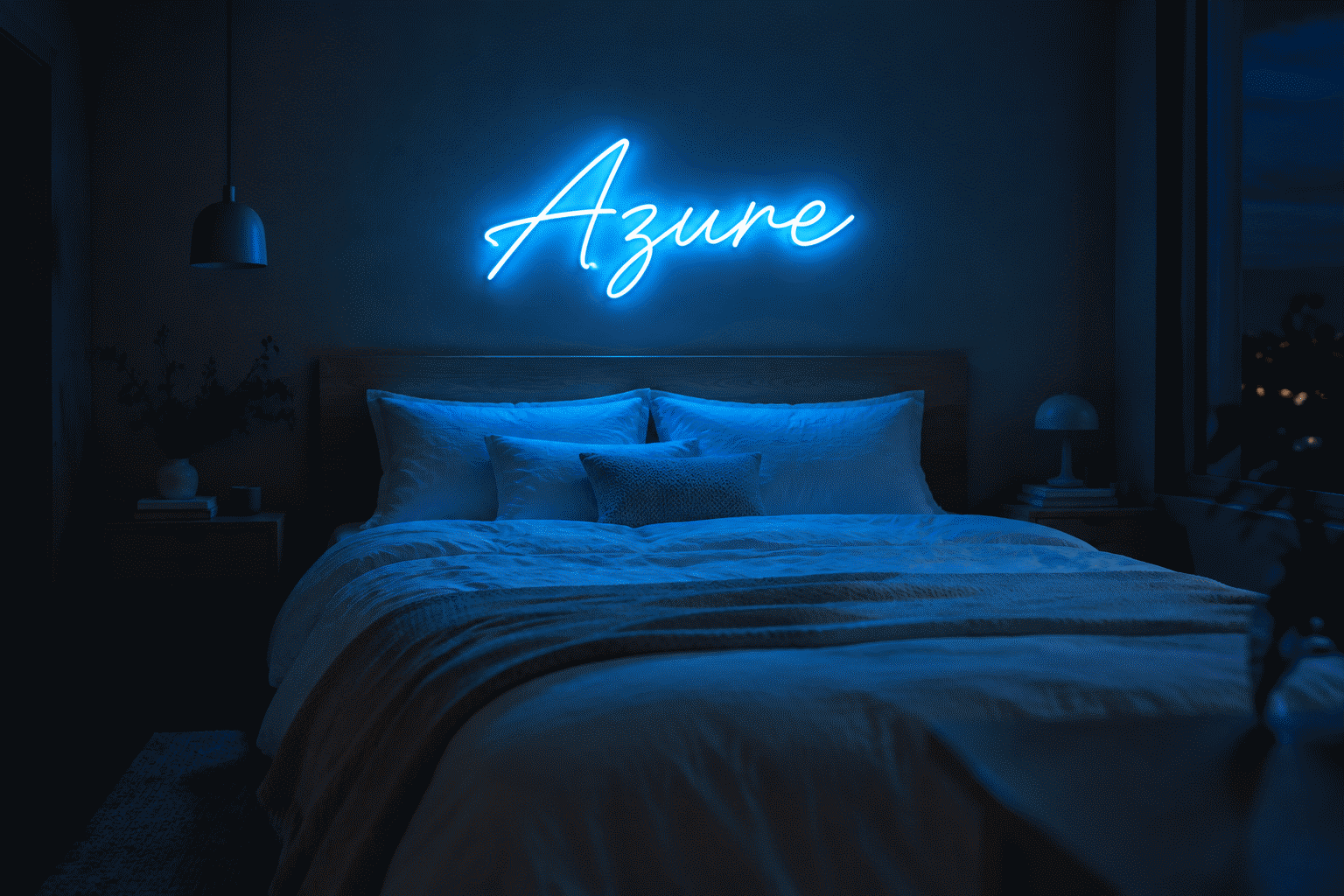
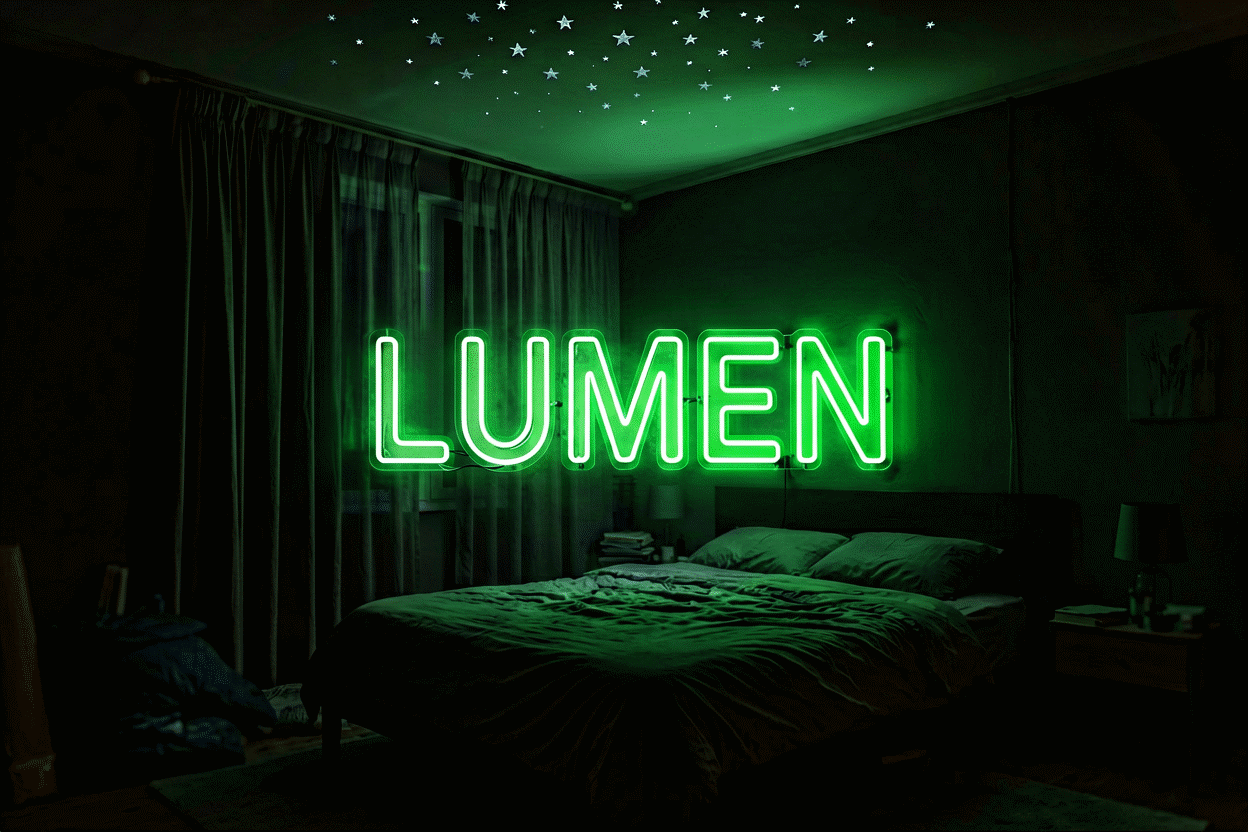
An LED neon sign dimmed to its lowest setting is a glow-in-the-dark sign in every practical sense: 5–10% brightness, pennies of electricity, a soft all-night presence (dimming).
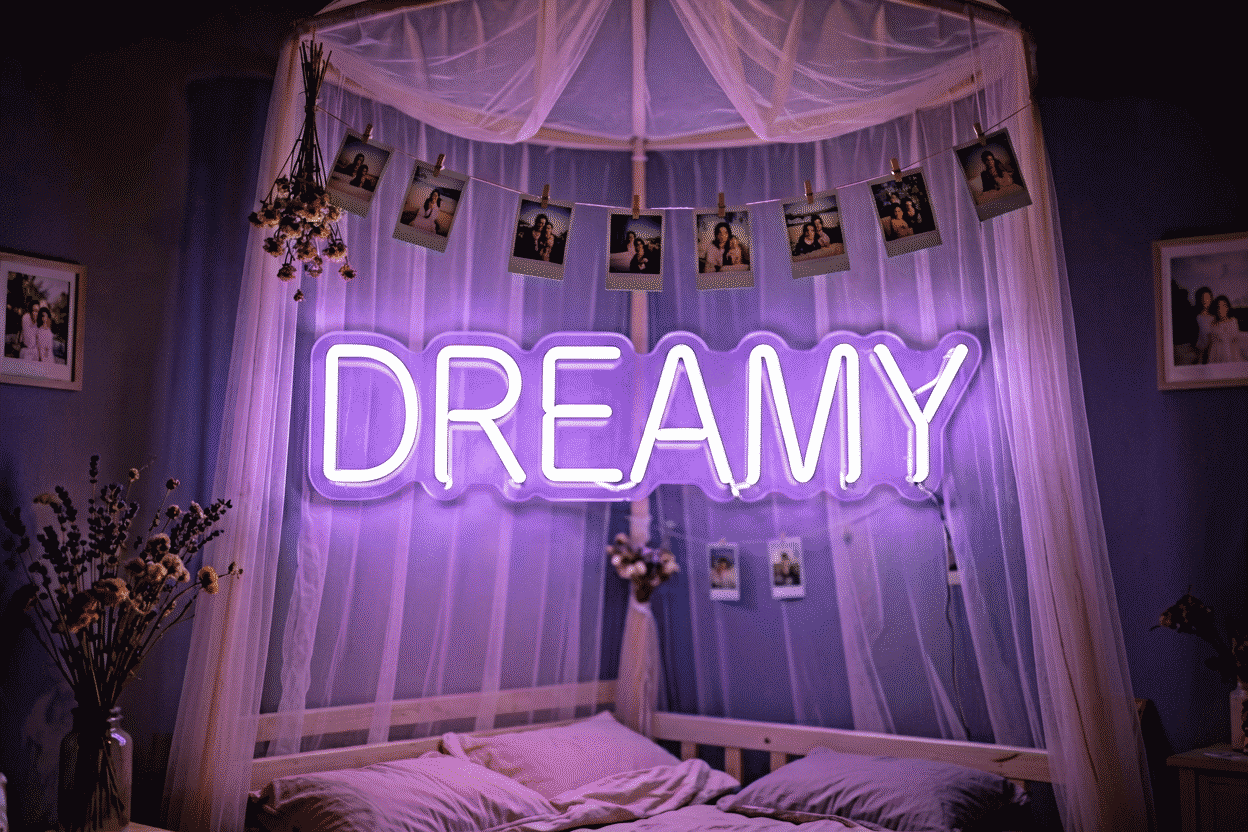
- The night-glow setup: warm colors (red, amber, warm white — the sleep-compatible hues; the science), dimmed to 10–20%, optionally on a smart schedule that drops the level at bedtime (the smart layer)
- Why it wins: controllable (brightness is a setting, not a decay), rechargeable (battery builds run all night — the power options), and it’s the actual look people picture
- The cost: it uses power — a few watts; the “without electricity” dream is the one thing it isn’t
This is the honest recommendation for 90% of “glow-in-the-dark sign” intents, especially kids’ rooms (the setups): a moon or star piece in warm white at 10% is a nightlight that looks like magic and dims by schedule.
Product 2: True Phosphorescent Signs (The No-Power Version)
Real glow-in-the-dark — phosphorescence: phosphor compounds absorb light while it’s available and re-emit it slowly afterward, glowing for minutes-to-hours after the source leaves. The physics, honestly stated:
- Charge-then-glow: needs light exposure first (bright room or a lamp); glows afterward with declining intensity — bright in the first minutes, dim for the following hours (strontium-aluminate phosphors are the modern long-glow material)
- The color constraint: phosphorescent emission is essentially green or aqua — the chemistry gives those wavelengths; other “colors” are tinted housings over green glow, not true hue variety
- The brightness ceiling: phosphorescent glow is soft ambient presence, never signage-grade illumination — it marks where something is; it doesn’t light anything
- Where it’s real: safety signage (exit-path markers — the photoluminescent building code world), kids’ ceiling stars, novelty pieces — applications where “no power, no maintenance, dim-but-there” is exactly the spec
“Phosphorescent neon sign” as a product is thus a hybrid: typically neon for the lit state plus phosphorescent elements (or paint detailing) for the after-glow — the sign that glows when on and softly persists when switched off. It exists; it’s charming; it’s a novelty-plus, not a replacement (the format taxonomy).
Product 3: UV/Fluorescent Glow (The Activated Version)
Fluorescent materials glow while UV light hits them and stop when it stops — no after-glow, but vivid while active (the full guide). The party and Halloween register: UV pieces plus reactive decor, white fabrics, and fluorescent paints. Related but distinct: this is glow-on-command (yours, via the UV source), not glow-in-the-dark.

The Three, Compared Honestly
| LED night mode | Phosphorescent | UV fluorescent | |
|---|---|---|---|
| Power | A few watts | None (charged by light) | UV source needed |
| Glow duration | As long as on | Minutes–hours decay | While UV active |
| Brightness | Fully controllable | Soft ambient only | Vivid when active |
| Colors | The whole palette | Green/aqua (physics) | Reactive hues |
| Best for | Kids’ rooms, bedrooms, nightlights | Ceiling stars, novelty, safety | Parties, Halloween |
Choosing for the Kids’ Room (The Main Event)
The glow-in-the-dark question is mostly a kids’-room question (the guide), and the decision is easy:
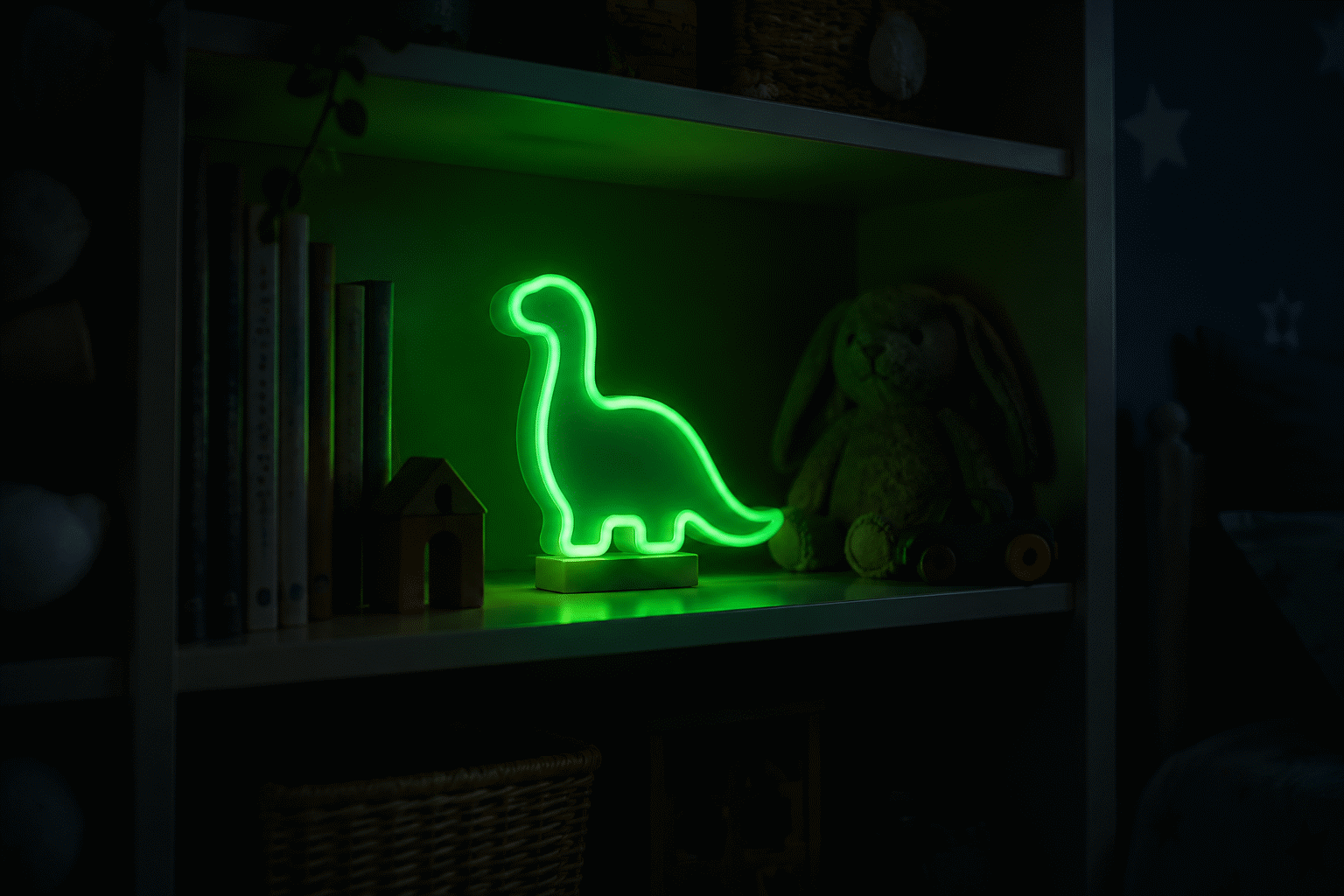
- Want a nightlight that looks magical and grows with them? → LED neon, warm white or soft pink, moon/star/their-name formats, dimmed to 10%, smart-scheduled (setups)
- Want zero-power ceiling stars they can look at after lights-out? → phosphorescent stars (the classic, unchanged since your own childhood, still perfect)
- Want the combo? → LED sign for the wall, phosphor stars for the ceiling: the complete glow room
- Want the party version for the sleepover? → UV pieces plus reactive decorations (the Halloween genre)
Safety notes that matter here: LED neon is cool and low-voltage — safe for kids’ rooms with secure mounting (the safety guide); phosphorescent materials are inert; UV party use at decor intensities is unproblematic with standard exposure common sense.
Designing the Night-Glow Setup
- Pick the format: moon, stars, name in script, or their chosen icon
- Pick the sleep-compatible hue: warm white leads; soft pink and lavender follow (bedroom colors)
- Order dimming with the sign (integrated beats retrofit — why)
- Set the schedule: bedtime level automatic, morning off (the smart route)
- Preview the piece in its hue — the whole thing renders in the custom builder before it exists
The Night-Glow Specifier: Choosing Your Path
The three-product decision, resolved as an order sheet:
For the parents (the most common brief). The LED night-mode piece: warm white or soft pink (the sleep-compatible hues), moon/star/name formats (the nursery canon), dimming integrated at order (the control), scheduled via smart plug or app for the automatic bedtime drop (the automation). Add the phosphorescent ceiling stars for the zero-power layer — the complete glow room for under $150 total.
For the zero-power purists. The phosphorescent path honestly scoped: green-aqua emission only (the chemistry’s constraint), hours-per-charge decay curves (bright to ambient over the evening — presence, not illumination (the physics)), and the charge-source planning (a lamp’s evening hours feed the glow’s overnight reserve). The ceiling-star classic and the safety-sign world run this physics — decor applications join them knowing the register is soft.
For the party builders. The UV-fluorescent combo: the UV piece or source (the UV guide) plus the reactive layer (white fabrics, fluorescent props, reactive paints) — the system that delivers the blacklight look. The planning notes: the effect lives in what the light hits (budget for the reactive decor, not just the source), and the materials age under constant UV (party cadence, not daily use).
For the hybrid seekers. The honest hybrid the market actually delivers: LED sign for the wall’s night-mode plus phosphorescent elements (stars, painted accents) for the after-off persistence — the sign that dims to bedtime and, when finally switched off, leaves a faint afterglow trail of stars. Two technologies, one ritual, no physics violated.
The sheet’s closing line for every path: the glow-in-the-dark dream has three honest implementations, and the right one is the one matching what “glow in the dark” meant to you — nightlight, afterglow, or party (order the LED path’s piece, which is, for 90% of briefs, the answer).
Two stops on the science shelf: our what are neon colors guide covers the pigment-versus-phosphor distinction this whole topic turns on, and the green neon sign page maps the radioactive end of the palette.
FAQ: Glow-in-the-Dark Neon
Do glow-in-the-dark neon signs exist? As three products: LED neon dimmed to night mode (the practical version — a few watts, fully controllable), true phosphorescent signs (no power, green-aqua after-glow that decays over hours), and UV fluorescent pieces (glow while ultraviolet light activates them). The comparison table above matches them to intents.
Can a neon sign glow without electricity? True neon and LED neon cannot — their glow is electric by physics. Phosphorescent signs glow without power by storing and slowly releasing absorbed light, softly and in green/aqua hues only. The practical “no-power look” is LED at very low dim: pennies per night.
How long do phosphorescent signs glow? Quality strontium-aluminate phosphors glow visibly for several hours after a good light charge — brightest in the first minutes, ambient thereafter. They’re presence-markers, not light sources.
What’s the best glow-in-the-dark sign for a kids’ room? LED neon in warm white or soft pink (moon, stars, or their name), dimmed to 10–20% on a bedtime schedule — the nightlight that looks like magic; add phosphorescent ceiling stars for the zero-power afterglow (the setups).
Is glow-in-the-dark the same as UV or blacklight? No — phosphorescence stores and re-emits light after the source leaves; fluorescence glows only while UV light is present. Different physics, different products, different rooms (the UV guide).
Are glow-in-the-dark signs safe for children? All three versions, at decor scale: LED neon is cool-running low voltage, phosphorescent materials are inert, and UV party use at decorative intensities is standard-safe — mounting security is the real safety item (the guide).
The glow-in-the-dark summary: three honest products — LED night-mode (the practical answer for 90% of briefs), phosphorescent (true zero-power, green-aqua, hours-of-decay), and UV-reactive (the party system) — each excellent at its own version of the dream (order the nightlight). The no-power wish meets physics at three different compromises; the right one depends on what the dark hours are for. For nurseries and nightstands, the warm-dimmed LED piece has quietly become the era’s nightlight standard. What is the best nightlight: LED neon or a regular nightlight? The warm-dimmed LED piece outclasses plugin nightlights on every axis that matters: design presence (a moon or name versus a beige dot), light quality (warm continuous glow versus harsh LED points), and control (dimming schedules versus on/off (the profiles)). The regular nightlight wins on outlet-freedom (needs no wall space) and price at the very bottom — everything past those two considerations belongs to the sign.
Sources & Further Reading
- Neon: Strong Lines (NIST Physical Reference Data) — the standard reference for neon’s emission wavelengths.
- Solid-State Lighting (U.S. Department of Energy) — DOE reference on LED efficacy and lifetime.
- Neon sign (Wikipedia) — the consolidated public record of neon-sign history and technology.
- Mercury (U.S. EPA) — federal guidance on mercury exposure and safe handling.