Are Neon Signs Waterproof? IP Ratings Explained
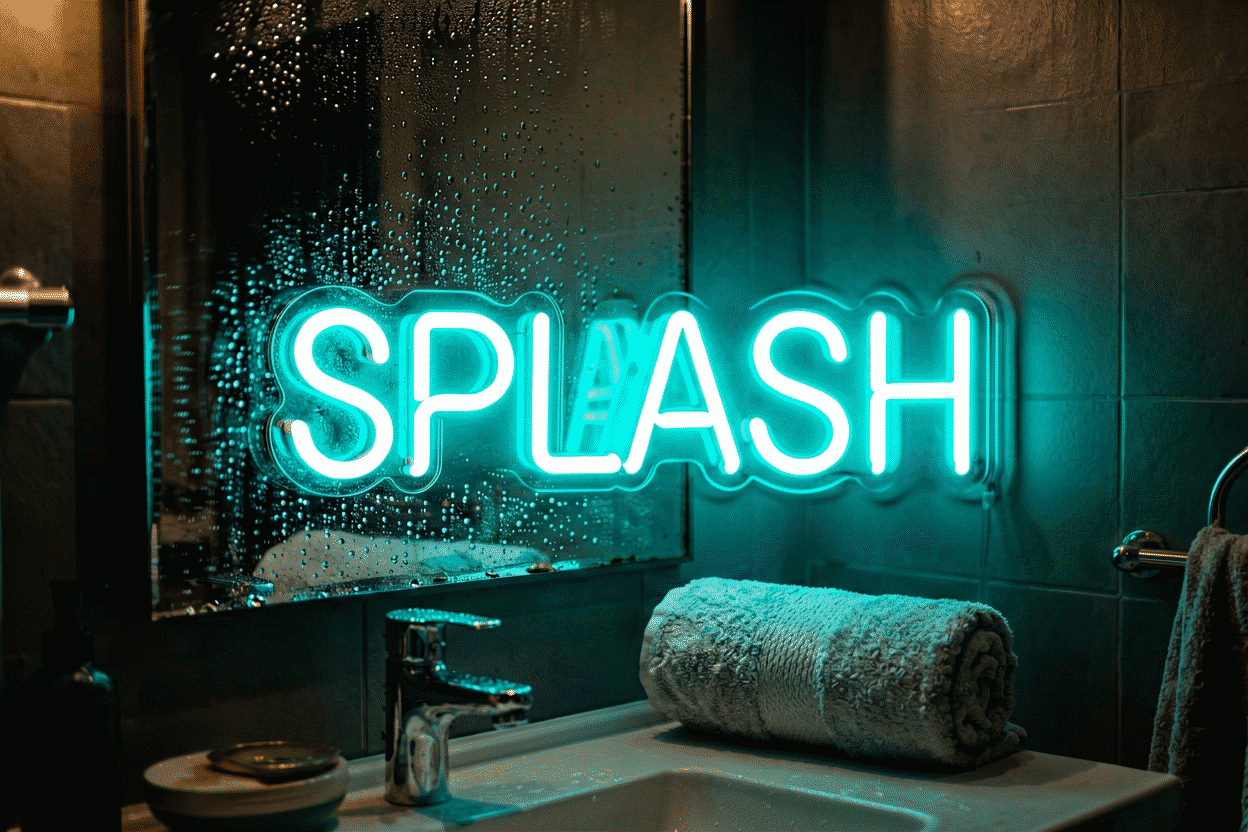
Most LED neon signs are water-resistant, not waterproof — and the two words mark a real engineering line. The number that tells you exactly what a sign survives is its IP rating: IP65 signs shrug off rain spray and humidity (covered patios, porches), IP67 signs take direct rain and even brief submersion (open outdoor walls, storefronts), and signs with no stated rating at all — the majority sold online — are indoor-only and will fail in damp conditions regardless of how careful you are. Glass neon is its own story: the tubes themselves don’t mind rain, but the transformer end of things is a high-voltage installation that needs professional weatherproofing.
Here’s what the ratings actually mean, how to read a listing like an engineer, and where each tier belongs — including the humid indoor rooms people forget about.
The IP System in Sixty Seconds
IP stands for Ingress Protection (the IEC 60529 standard), and the two digits do separate jobs:
- First digit — solids (0–6): how well the housing keeps out dust and debris. A 5 means “dust-protected”; a 6 means “dust-tight.”
- Second digit — liquids (0–9): water resistance. The steps that matter for signs: — 4: splashing water from any angle — 5: water jets (a hose) — 6: powerful jets and heavy seas — 7: temporary immersion — up to 1 meter for 30 minutes
So IP65 = dust-tight + rain and hose-proof, and IP67 = adds full temporary submersion. For signage, the jump from 6 to 7 in the second digit is the difference between “weather-proof under rain” and “survives the flooded patio.” A listing that says “waterproof” with no IP number is telling you nothing — ask for the rating, and buy from sellers who print it.
One nuance worth knowing: IP68 exists (continuous immersion) and matters mostly for signs mounted low where water pools. For anything mounted at sign height, IP67 is already beyond the weather it will ever meet.
Are LED Neon Signs Waterproof?
The tube itself: yes, easily. LED flex neon is LEDs embedded in solid silicone — the “tube” is one continuous weatherproof extrusion. Water landing on the glowing part is genuinely fine.
The three failure points are where water gets in:
- The power connection — where the cord meets the sign and where the driver/adapter sits. This is the weak joint on every sign, and why rated signs ship with sealed IP-rated connectors instead of bare barrel plugs. The driver itself must be rated for the location — an IP67 sign running through an indoor adapter dangling in the rain is an indoor sign with a waterproof costume.
- The mounting holes’ edges — not for the electronics (they’re sealed inside) but for the jacket: unsealed cut edges can wick moisture along the LED strip inside over months. Quality outdoor signs seal every cut.
- The remote receiver, on dimmable and color-changing models — a small box that is very often the least weatherproof component on the bill of materials. Outdoor installs hide it indoors or under cover.
Practical translation: an honest IP67 sign is waterproof as a system — tube, connectors, and driver all rated. That’s the package to look for, and it’s what our outdoor sign guide recommends for open exposure.
Are Glass Neon Signs Waterproof?
The counterintuitive answer: the glass tubes are fine — borosilicate glass and noble gas don’t care about rain. What isn’t fine:
- The transformer pushes 2,000–15,000 volts and lives outdoors in a proper weatherproof cabinet, professionally installed.
- The wiring and electrodes at tube ends are metal joints that corrode and arc when wet without exact installation technique.
- The mounting infrastructure (GTO wire, housings) is electrical-trade work with code requirements, not consumer hardware.
Outdoor glass neon is a sign-contractor project — legitimate, gorgeous, and common on real storefronts — but it lives in a different world from the screw-it-up-this-afternoon IP67 LED sign. The economics and safety contrasts are laid out in our LED versus glass comparison; the power side is detailed in the power supply guide.
The Rooms People Forget: Humid Indoor Locations
Waterproofing matters indoors too, in three rooms:
Bathrooms. Shower steam is constant humidity — an IP65 minimum is the sane spec for any sign inside a bathroom, and keep it out of direct splash range of tubs and showers. The vanity-wall sign above the mirror is usually fine at IP54+; the sign next to the shower head is not a thing.
Kitchens and bars. Cooking grease and drink splash are solids-plus-liquids ingress with extra chemistry. Above-the-bar signs wipe clean forever if the jacket is quality silicone; near the stove, heat cycling matters more than moisture (see our kitchen sign guide for placement rules).
Garages and covered outdoor rooms. The in-between zone: technically sheltered, practically exposed to temperature swings and blowing rain. Treat covered patios and open garages as IP65 territory minimum.
Can You Waterproof a Sign Yourself?
The YouTube tutorials exist (the SERP shows “how to waterproof an LED neon sign” tutorials ranked), and the honest engineering answer is: you can upgrade the joints, not the rating.
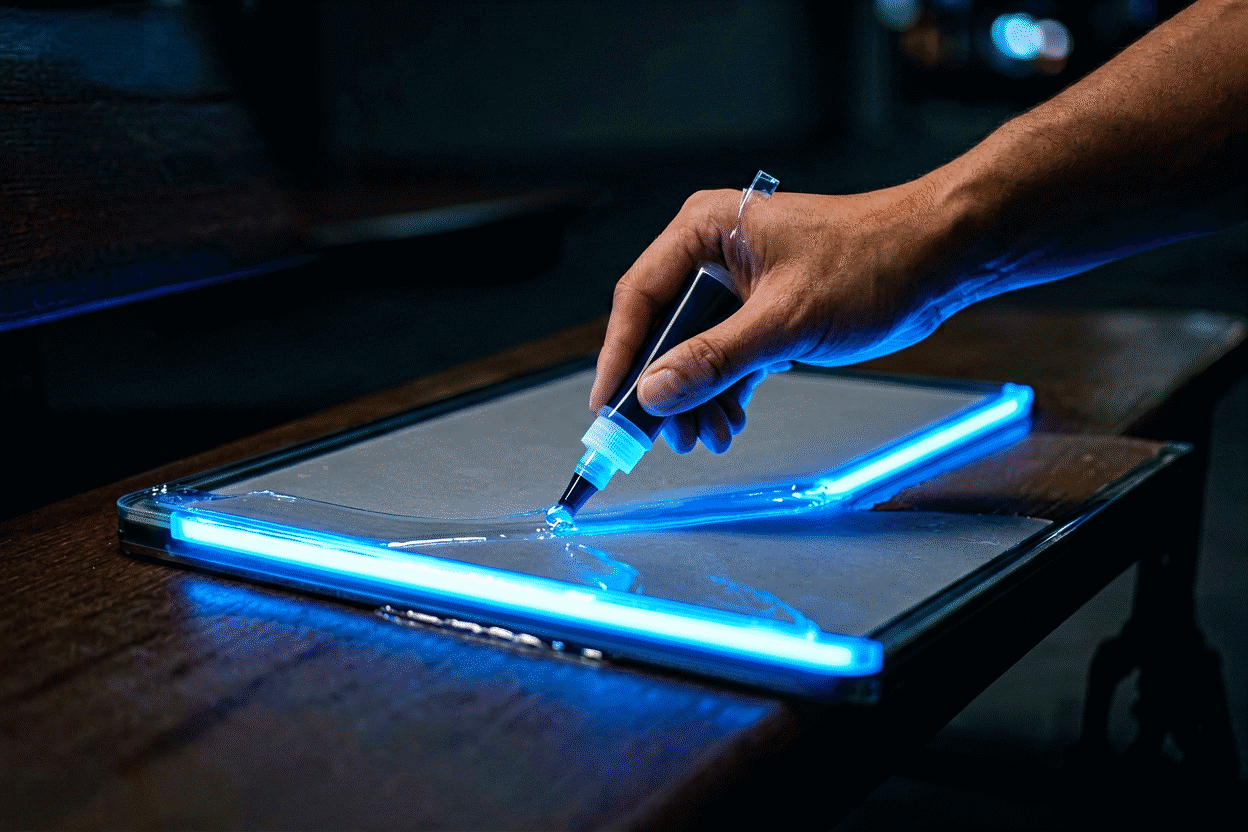
What self-helping accomplishes:
- Re-wrapping cord connections with self-fusing silicone tape (stretched, half-lapped, bottom-up) genuinely improves a marginal connection.
- Moving the driver and remote receiver indoors or under cover removes the weakest components from weather exposure entirely — the single best free upgrade.
- A weatherproof junction box on the plug interface tidies the common failure point.
What it can’t accomplish: an unrated indoor sign doesn’t become an IP67 sign through tape. The seals that make rated signs rated are molded in manufacturing — connector overmolds, sealed cut edges, potted drivers. A taped indoor sign outdoors is still on the one-to-two-season failure clock; it’s just slightly later on the curve.
Reading a Listing Like an Engineer
The checklist, in the order that eliminates fastest:
- Is there an IP number (65 or 67), not just the word “waterproof”?
- Is the driver/adapter included in the rating, or is it indoor-only? (Listings that say “IP67 sign, indoor adapter” mean “indoor sign with a brave tube.”)
- Is the jacket UV-stable silicone — specified, not implied? (For sun exposure; see the outdoor guide for why sun outranks rain as the killer.)
- Are connectors described as sealed or IP-rated?
- Does the seller publish an operating temperature range (roughly −4°F to 140°F is the quality band)?
Three yeses on the first three = a sign you can put outside. All five = a sign you can put outside and forget about.
The Rating in Practice: Exposure Cases Decoded
How IP ratings translate to real-world exposure — the cases buyers actually face:
The covered porch, three feet from open air. IP65 has done this job for a decade in millions of installs: blowing rain reaches the porch’s edge but not three feet deep with any force. The failure point found in practice isn’t the sign — it’s the adapter dangling in the damp zone. The fix that closes the case: the driver and connections inside the house or in a weatherproof box, with only the rated tube in the covered zone. IP65 sign plus protected electronics equals a solved porch.
The open patio, direct rain path. IP67 territory, verified by the mechanism: rain lands, drains, dries — nothing enters. The practical additions that make direct exposure boring (in the good way): standoffs creating the drainage airspace behind the backing, connector junctions wrapped in self-fusing tape regardless of their native sealing (belt and suspenders is a legitimate engineering philosophy in weather), and the annual connector inspection catching green fuzz before it becomes green crust (the maintenance calendar).
The bathroom, two feet from the shower. The indoor case everyone underestimates: steam is constant humidity, and unrated signs in bathrooms corrode at their connectors within a year or two — flickering into the service queue. IP54-plus handles bathroom steam for the sign body; the higher-leverage move is placement: the vanity wall two feet further from the shower reads identically in the room’s design but lives in dramatically less vapor. Rate the sign, then place it out of the steam column anyway.
The garage workshop, coastal air. Salt fog is the invisible moisture: it infiltrates everything, corrodes contacts, and no indoor rating addresses it. The coastal-garage protocol: IP65 minimum even “indoors,” silicone grease on accessible contacts at the annual service, and inspection cycles measured in months rather than years. Signs near the ocean live in a different atmosphere — literally.
The kitchen, above the stove. The failure mode is grease, not water: cooking films coat tubes, dim output, and eventually wick into connections. The countermeasures: placement outside the direct cooking plume (the kitchen guide maps safe zones), monthly wipe-downs which grease makes mandatory anyway, and quality silicone jackets that shed films rather than absorbing them.
The takeaway pattern across all five: the IP number on the sign is the cover charge; the party is won by the connections, the driver placement, and the inspection rhythm. Water gets in at the joints — every field case confirms the same physics.
FAQ: Neon Signs and Water
Are neon signs waterproof? LED neon signs with an IP67 rating are waterproof — direct rain and temporary immersion. IP65 signs are water-resistant (rain spray, humidity) for covered locations. Signs without a stated IP rating are indoor-only, and no amount of careful placement changes that.
Can neon signs get wet? An IP-rated LED sign’s tube can get wet without harm — the silicone extrusion is sealed. The vulnerabilities are the connections, driver, and remote receiver, which is why the whole system’s rating matters, not just the tube’s.
What does IP67 mean on a neon sign? Dust-tight (6) plus waterproof against temporary immersion to 1 meter for 30 minutes (7) — in practice, any weather a mounted sign will ever face. IP65 means dust-tight plus protected against rain spray and hose jets: covered outdoor use.
Can you put an indoor neon sign outside under cover? A covered porch extends an indoor sign’s life but doesn’t make it an outdoor sign — humidity, temperature swings, and blowing rain still reach under cover. For anything permanently outdoors, buy the rating once instead of replacing the sign twice.
How do you waterproof neon sign connections? Self-fusing silicone tape stretched and half-lapped from bottom to top over cord joints, IP-rated junction boxes at plug interfaces, and — the best move — relocating the driver and remote receiver indoors or under cover where they’re out of weather entirely.
Are glass neon signs waterproof? The glass tubes tolerate rain fine, but glass neon’s transformers (2,000–15,000 volts), electrode wiring, and mounting hardware require professional weatherproof installation — outdoor glass neon is sign-contractor work, not consumer hardware.
Can snow or ice damage an outdoor neon sign? Directly, rarely — rated silicone handles freezing fine. The real load is mechanical: ice accumulates weight and wind works mounts loose, which is why fence and pergola signs in snow country come down for winter while wall-mounted IP67 signs under eaves ride through. Re-seal connector wraps before the first freeze and check mounting hardware tightness in your fall inspection (the seasonal routine).
Sources & Further Reading
- Neon: Strong Lines (NIST Physical Reference Data) — the standard reference for neon’s emission wavelengths.
- Solid-State Lighting (U.S. Department of Energy) — DOE reference on LED efficacy and lifetime.
- Mercury (U.S. EPA) — federal guidance on mercury exposure and safe handling.