Blog
27 Man Cave Neon Sign Ideas That Own the Basement
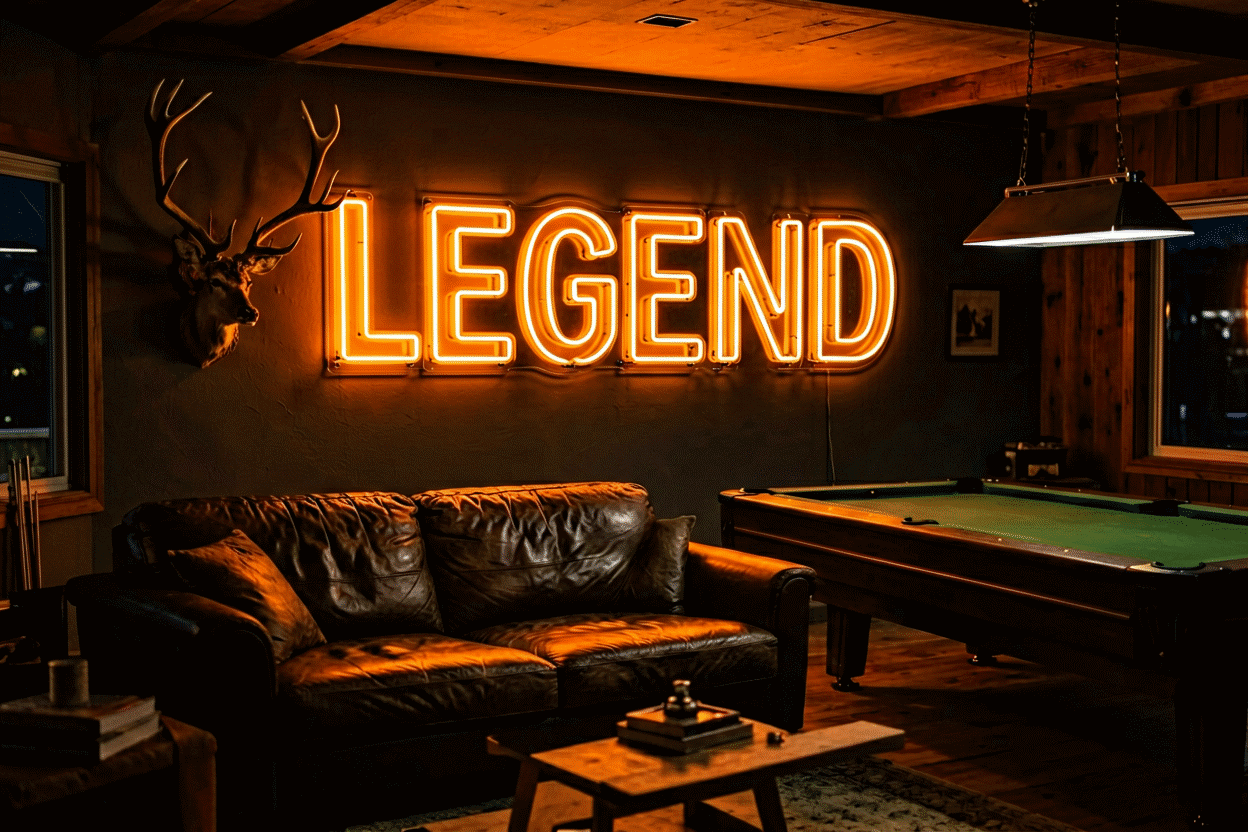
Every man cave needs one piece that survives every redesign: the neon. The couch gets replaced, the TV grows, the dartboard moves — but the sign on the wall stays. It is the room’s thesis statement in glass-bright light: this space belongs to someone specific, and everyone who walks in knows it within two seconds.
Here are 27 ideas sorted the way a man cave actually gets built — the bar wall first, then the sports shrine, the workshop corner, and the quiet flex pieces — with sizing, color calls, and placement logic for each. The full shopping tier lives at man cave neon signs.
The Bar Wall: Ideas 1–8
The bar is the man cave’s capital city, and the bar wall is where neon earns its keep.
- A vintage-style beer script — the beer sign family is the man cave’s default for a reason: warm, amber-toned, instantly readable. The Budweiser script and bowtie builds (the classic) are the most-hung pieces in basements across America.
- Your own last name in block letters — “THE JEFFREY HOUSE EST. 1998.” The custom nameplate is the single most repeated man cave build; preview any text free in the customizer.
- “Open” — on the basement door — the joke that never dies: the basement as its own bar. A small open sign on the stair-side door sets the register before anyone descends.
- No Vacancy — the roadside motel classic repurposed as full-house humor: when the cave is at capacity, the sign says so.
- “Cold Beer” in ice blue — the two-word promise every garage bar should make.
- A cocktail glass or shot glass shape — the zero-word bar piece; works when the wall already has text.
- “It’s 5 O’Clock Somewhere” — the daytime-drinking permission slip; afternoon-project energy.
- The bar’s own name — “The Office.” “Dad’s Hideaway.” “Stumpy’s.” The fictional establishment is a man cave tradition; the sign makes it official.
The Sports Shrine: Ideas 9–15
- Your team’s name in team colors — the NFL lineup covers the league; the Dallas Cowboys star in navy-and-silver is the most-built piece of the family.
- The Raiders — the silver-and-black deserves its own mention: the single most neon-compatible brand identity in sports.
- A jersey-number piece — your number, your kid’s number, or the retired legend’s. One number, oversized, in team color.
- “Game Day” — the two-word season ticker; pairs with the team piece or stands alone.
- A football or basketball shape — the shape tier for walls that already carry text.
- The college piece — the alma mater’s name in school colors; check the college football guide for the full ranks.
- “Man Cave Sports Bar” — the hybrid custom: your name + the words sports bar, the room’s whole business model in four words.
The Workshop & Garage Corner: Ideas 16–20
- “Hustle” — the grind-culture classic (the build); the garage-gym-workshop crossover piece.
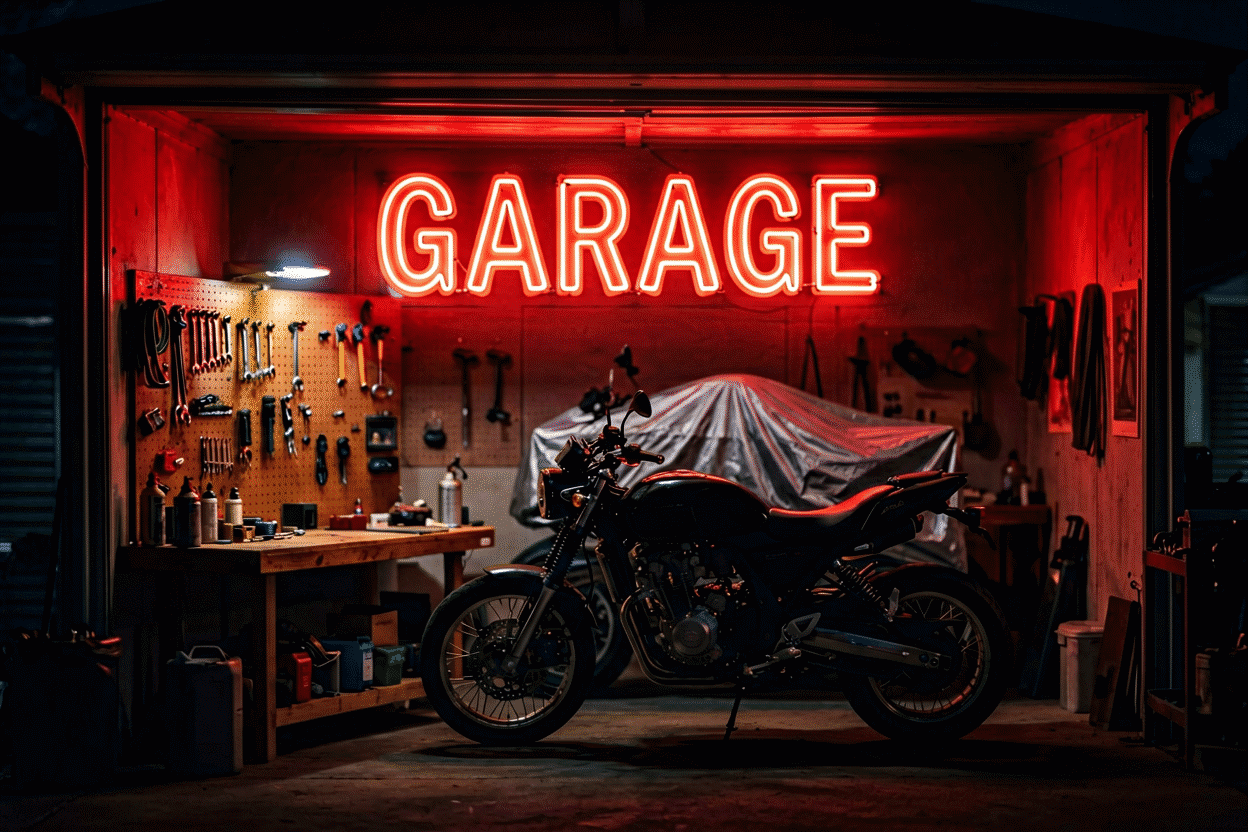
- Howdy in burnt orange — the friendly-garage register; works when the cave shares space with the actual car.
- A tool shape — wrench, piston, or spark plug in white; the workshop wall’s zero-word option.
- “Do Not Touch” — over the workbench, the tools, or the good bourbon; the rule-posting piece.
- The measurement piece — “Measure Twice” or a neon level-bubble; workshop humor that only woodworkers get.

The Statement Pieces: Ideas 21–27
- An orange accent piece — warm orange is the man cave’s most underrated color: garage-door-opener warm, reads amber at dusk, flatters brick and wood paneling.
- A yellow marquee letter set — yellow is the classic cinema-lobby register; a single oversized letter (the family initial) beats a full word on big walls.
- A movie quote — “Say Hello To My Little Friend” over the gun safe, or the full hotel california treatment for the classic-rock corner.
- A retro diner-style piece — 50s script, warm white, Coca-Cola red; see the Coca-Cola build for the era’s signature brand.
- “Established” + year — the family’s move-in year, the marriage year, or the year the basement was finished; pairs with the last-name piece.
- Motivational quotes — “No Days Off” over the treadmill zone; the garage-gym hybrid’s standard.
- The hobby flex — a fish shape for the angler, a guitar for the player (guitar builds show the format), a bike for the rider. The piece that makes the cave yours instead of a catalog’s.
Sizing and Placement: The Short Course
The bar wall piece wants to be the room’s largest: 36–48 inches wide for a standard two-car-basement bar wall, mounted so its centerline sits just above standing eye level (roughly 66–72 inches off the floor). Sports pieces run smaller — 24–36 inches — and cluster well: two or three pieces on one wall read as a shrine; the same pieces scattered across four walls read as clutter. Statement customs belong where the eye lands from the stairs: the far wall, dead center, visible from the top step.

Color follows the room’s existing palette more than any rulebook: wood paneling and brick want warm registers (orange, amber, warm white — the orange treatment is the proof), dark painted walls carry cool registers (ice blue, purple), and the mixed cave stays neutral with warm white plus one accent. If the cave doubles as a movie room, add a dimmer: full brightness for the game, low glow for the film. The hanging guide covers the screw-and-anchor method most basement walls need — concrete and paneling each get their own section.
The Budget Tiers: Starter, Serious, Shrine
Man cave neon buys in three tiers, and knowing which one you’re in prevents both overspending on a phase and underspending on a keeper.
The starter tier ($80-200) buys the entry pieces: the beer-adjacent phrase (“Cold Beer,” “It’s 5 O’Clock Somewhere”), the small shape pieces (pint glass, lightning bolt), and the first joke signs. This is the tier to buy honestly – the pieces that test whether the room’s register works before the real money moves. Every serious man cave started here, and most of the starter pieces survive into the finished room as the accents around the hero.
The serious tier ($200-450) buys the anchors: the last-name custom in the real size (preview), the team piece in franchise colors, the vintage-style brand script. This is where the budget should concentrate, because these are the pieces that define the room – the ones that survive redesigns, moves, and the decade’s changes in taste. A serious-tier anchor hung right does more for the room than five starter pieces hung anywhere.
The shrine tier ($450-1,000+) buys the collection: the brand-script wall at three and four pieces deep, the full sports corner (team piece plus number plus era piece), the custom commissions that name the room’s institution. This tier earns itself only after the room’s identity is settled – the shrine built before the register is known ends up half-donated to the next garage sale.
The tier discipline’s single rule: anchors first, accents second, collections last. The room that buys its anchor early (the name or the hero script) spends the rest of its budget in service of a center; the room that buys accents first accumulates around a hole.
Sizing and Color: The Working Table
| Placement | Width | Height to centerline | Notes |
|---|---|---|---|
| Bar wall (hero) | 36-48 in | 66-72 in | Sized to the bar, never wider |
| Sofa/bench wall | 30-42 in | 60-66 in | The secondary focal |
| Workbench zone | 18-24 in | 60+ in | Above the tool arc, out of the work |
| Door or entry | 12-18 in | 60-66 in | The status tier’s home |
Color by the room’s existing palette: wood paneling and brick want the warm registers (amber, orange, warm white – the orange treatment is the proof); dark painted walls carry the cool registers (ice blue, purple) plus one warm accent; the mixed room stays warm-white plus a single accent color. The man cave’s specific trap is the all-cool wall (reads convenience store) and the all-warm wall (reads burger joint) – the classic ratio is three warm pieces to one cool, or the reverse if the room’s identity leans tech.
The brightness plan runs the room’s schedule: full for the game and the parties, 60% for the weeknight hang, 30% for the late-night wind-down when the room’s real work happens. The dimmer is the man cave’s most-underrated ten dollars – the room that can shift registers by dial does more with five pieces than the full-power room does with ten (the brightness physics covers the wiring tier).
Variations and Pairings
The man cave canon runs variant word-faces and piece pairings worth knowing. The word-face variants: “man cave signs” and “neon signs for man cave” pull the same ideas through different search doors – the collection above serves all three (the landing’s commercial tier and this guide’s ideas tier the standard split). The garage face: the man cave that lives in the garage runs the garage canon – the crossover pieces (the beer script, the sports tier) appearing in both guides by design. The bar face: the man cave built around the bar runs the bar canon as its primary and the man-cave tier as its accents – the room’s center of gravity deciding the guide.
The pairing logic: the pieces that pair best are the ones that share a register without sharing a job – the namepiece (identity) with the beer script (appetite), the team piece (loyalty) with the number piece (person), the joke tier scattered small beneath both. The pairings that fail are the ones that compete: two identity pieces, two jokes of the same size, two team pieces from rival cities on the same wall (the household’s treaty matter, resolved elsewhere).
The gift pairing: the man-cave pieces gift in pairs – the charter with the joke (the serious and the social), the brand with the phrase (the loyalty and the laugh) – the two-piece gift that covers the room’s two registers at the entry price (the gift logic).
FAQ About Man Cave Neon Signs
What’s the best first sign for a man cave? The bar piece. It anchors the room’s main function, survives every redesign, and photographs best. A last-name custom or a beer script is the default first build; everything else accretes around it.
How many neon signs is too many? Three working pieces per sightline is the ceiling. The best caves run one hero piece (the bar wall) plus two supporting pieces (the sports shrine, the statement wall) and resist the fifth. Dimmers let you rotate the mood instead of adding more glass.
What size works over a home bar? Width follows the bar’s footprint: a 4-foot bar wants a 30–36 inch sign, a 6-footer carries 40–48 inches. The sign should never be wider than the bar below it — the bar is the base, the sign is the crown.
What’s the first-piece mistake most man caves make? Buying the novelty piece before the anchor: the joke sign arrives first, sets the room’s tone at slapstick, and then the sports memorabilia and the good bar look like they’re renting space in a gag gift’s house. The tier order that works is identity first (team, name, or brewery script), bar tier second, humor third — the joke lands harder against a serious anchor anyway.
How much glow can one basement circuit take? A typical basement’s 15-amp circuit feeds the TV, the fridge, the soundbar, and still has headroom for a three-piece program in the 40-60 watt range — the flex tier’s whole draw is comparable to one game console. Problems only show up when the room adds a space heater or a kegerator on the same line; move those to the other outlet strip and the glow stays out of the breaker conversation entirely.
Sources & Further Reading
- Solid-State Lighting (U.S. Department of Energy) — DOE reference on LED efficacy and lifetime.
- Neon sign (Wikipedia) — the consolidated public record of neon-sign history and technology.
- Mercury (U.S. EPA) — federal guidance on mercury exposure and safe handling.
Pricing based on CustomNeon’s current catalog (2026); custom quotes come live from the sign builder.