Multicolor Neon Signs: The RGB Guide
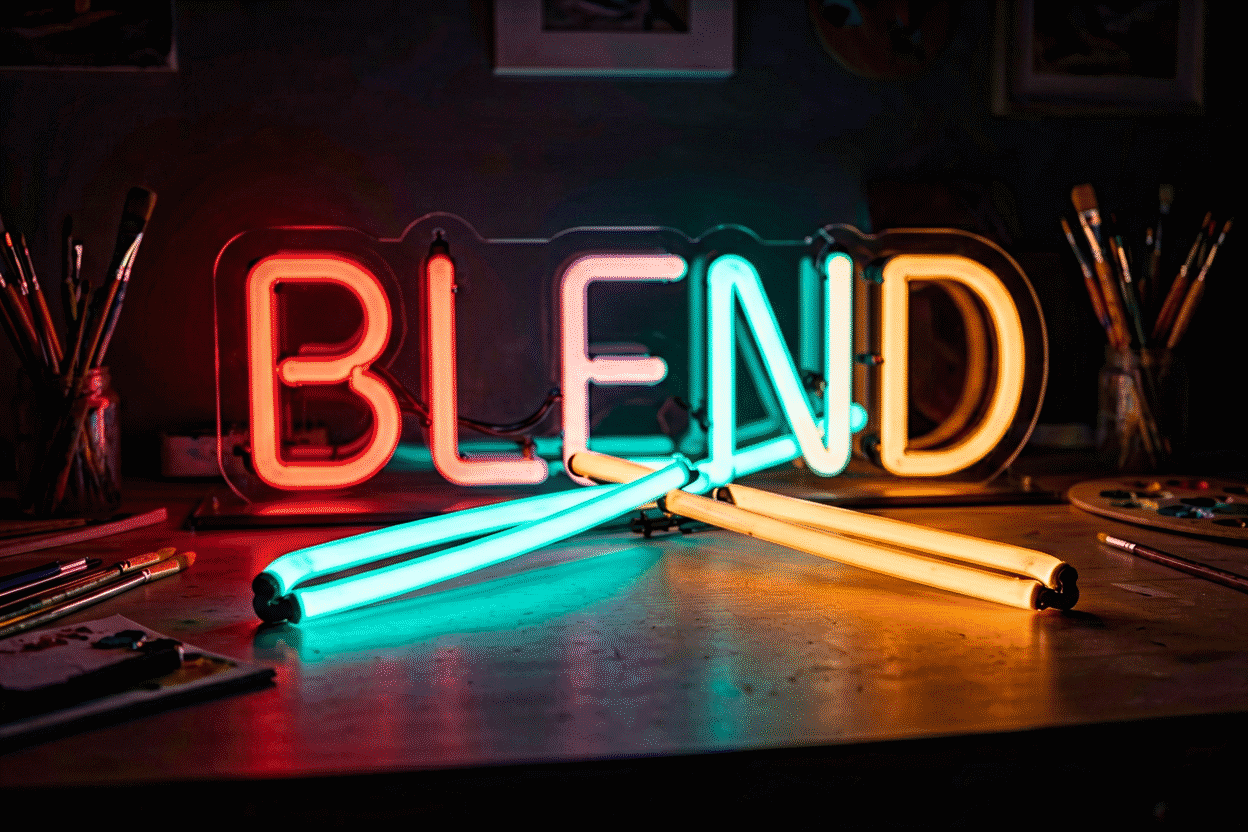
There are two ways to own multicolor neon, and choosing between them is the whole decision: static multicolor — a single sign (or a set of signs) with fixed, designed-together hues, each section glowing its assigned color forever — and dynamic multicolor — one RGB sign that changes colors and modes on command (the technology guide). Static is the designer’s path: deliberate, curated, exactly your palette. Dynamic is the maximalist’s path: every color, every mood, one remote. This guide covers both, the physics that shape each, and how to decide.
The pairing science for static multi-hue work lives at neon color combinations; the full palette method at neon color palette.
Path 1: Static Multicolor (The Designed Route)
Fixed-hue multicolor comes in three formats:
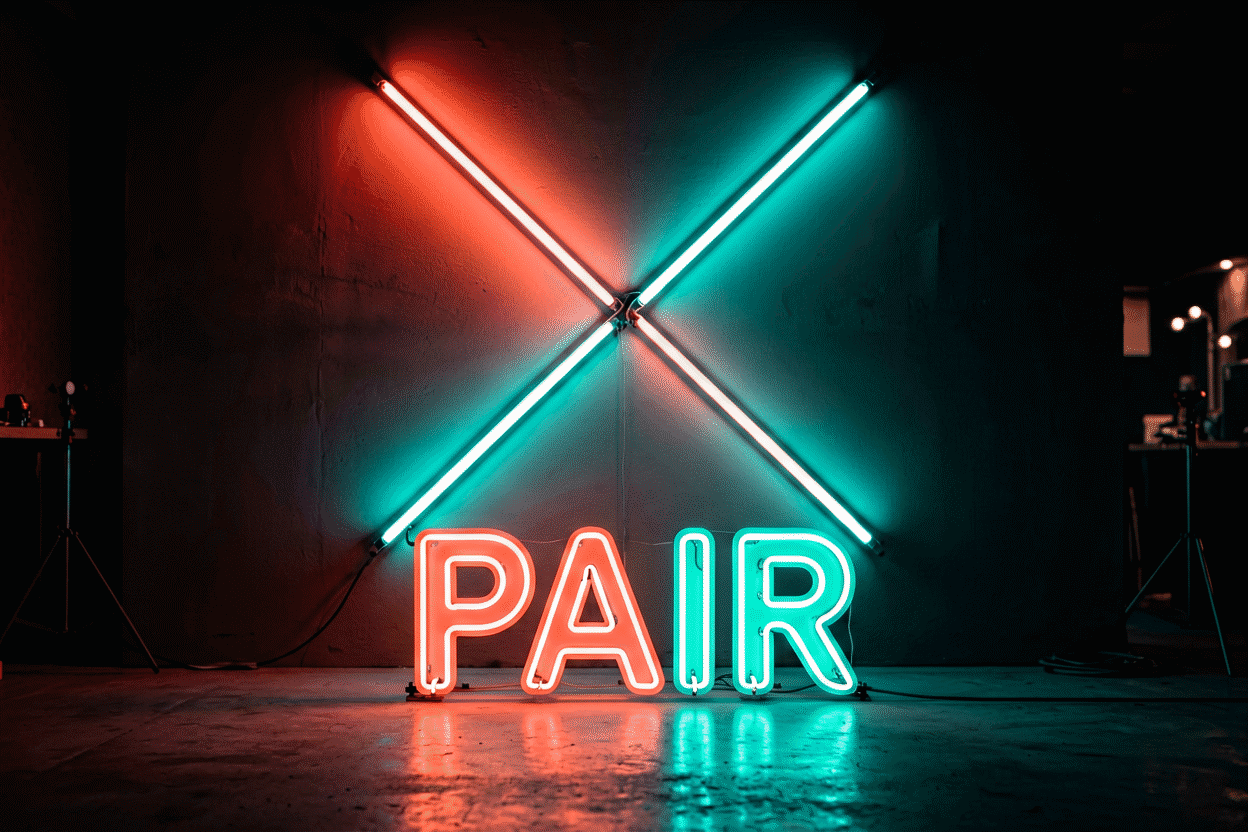
Bi-color single signs. Word in one hue + icon in another (the standard), dual-tone lines for stacked phrases, accent details on monochrome lettering — the craft rules at the combinations guide, with the dominance principle (one hue ~80%, the accent ~20%) doing the design work.
Multi-sign collections. Two or three separate signs, each a single hue, composed on one wall — the gallery approach. This is how the best content walls run: a white script, a pink icon, a blue wordmark, arranged with the placement method. Multi-sign static gives each hue its own object and full native brightness (why that matters below).
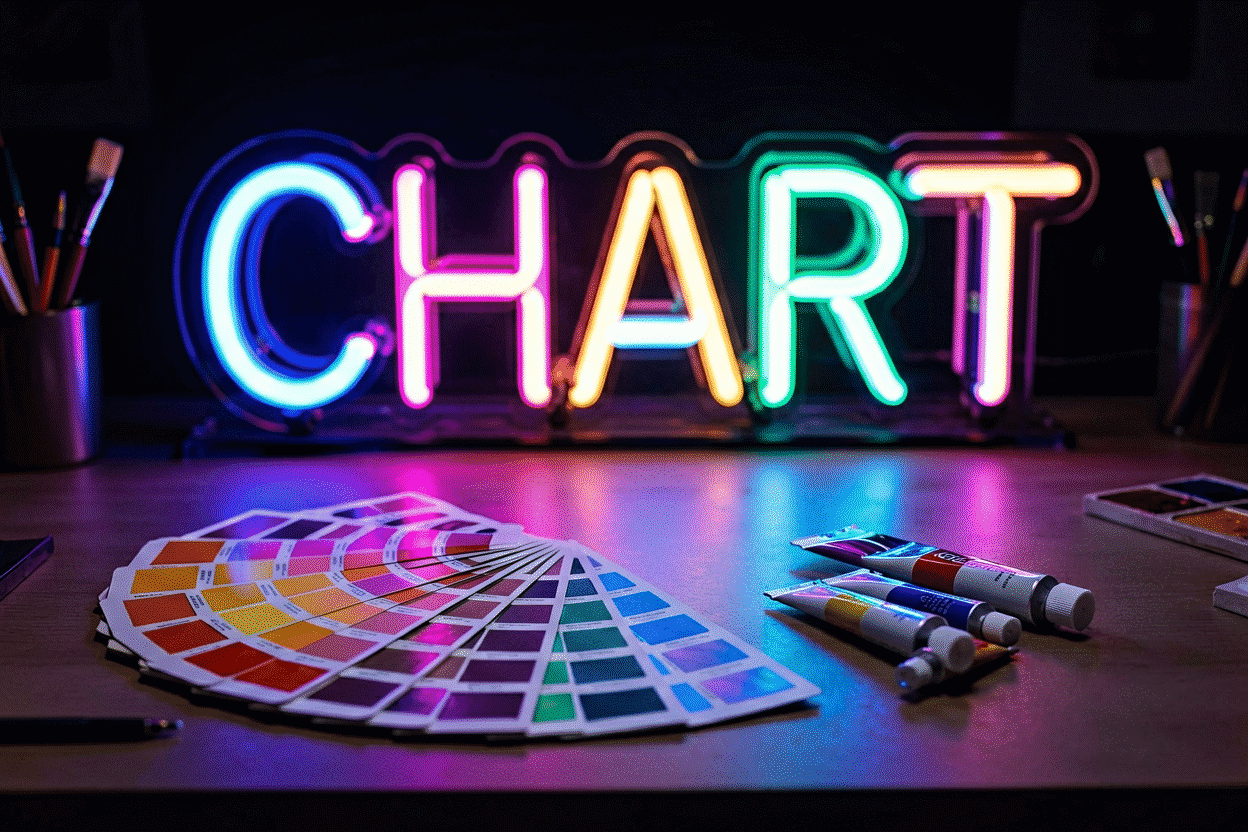
Sectioned multicolor designs. Single signs built with three-plus color sections — rainbow pieces (their own guide), spectrum waves, multi-color logos. Works when the design itself justifies the many-hues (rainbows, brand marks, floral pieces with varied blooms).
What static buys you: deliberate design, exact hues, full brightness per color, and no modes to fiddle with — the sign is the finished statement. What it costs: immutability. The palette you choose is the palette you live with.
Path 2: Dynamic RGB (The Flexible Route)
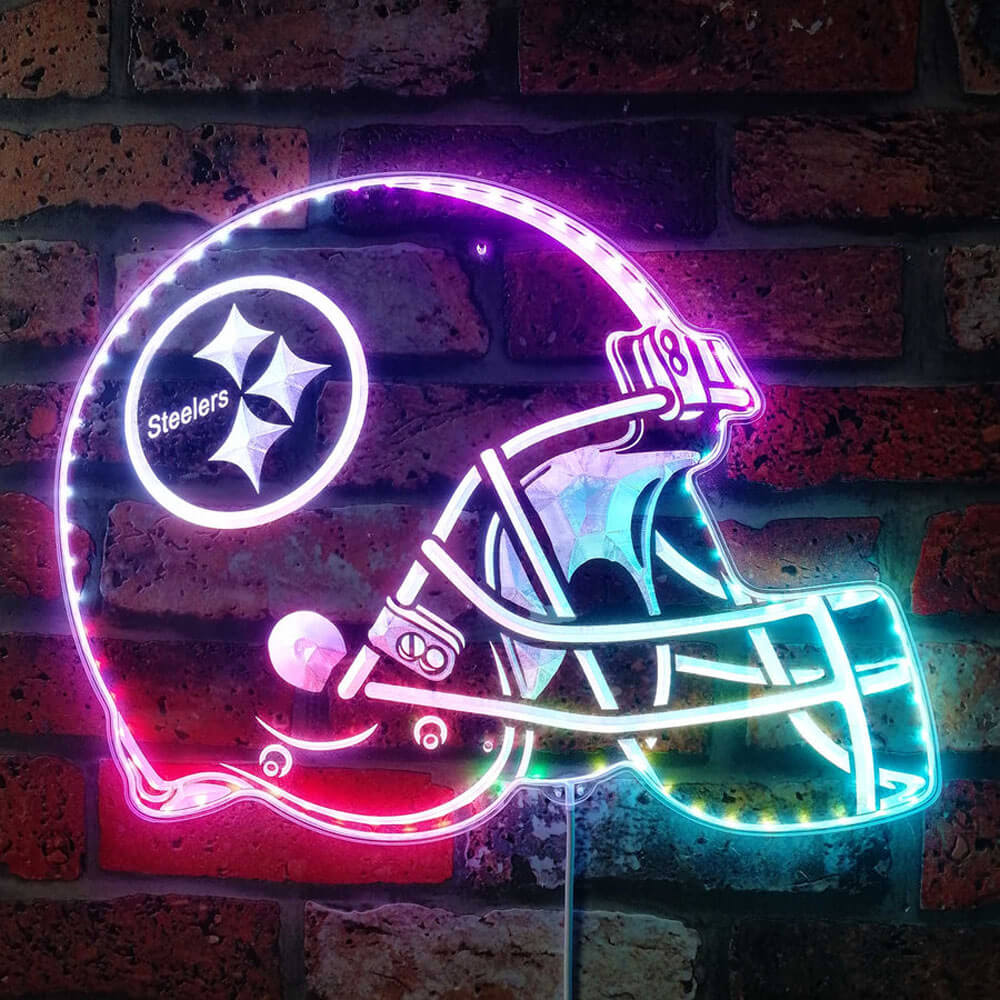
One sign, many colors: red-green-blue diode sections blended by a controller into any hue, switchable by remote or app (the full technical guide).
What dynamic buys you: every color for one price — the sign that’s blue for gaming night, pink for the party, warm for the evening; dynamic modes (fades, jumps — the mode catalog); and seasonal flexibility (orange at Halloween, green at Christmas without buying anything).
What it costs honestly: the brightness tax — mixed colors share output across channels, so an RGB “purple” reads quieter than a native-purple diode would (the physics); mode discipline — the fun modes can turn a designed wall into an arcade; and a slight color-craft gap: RGB approximates hues rather than manufacturing them, so exact brand colors and precise pastels belong to static builds.
The Brightness Physics (Why Native Hues Glow Harder)
A fixed-color sign dedicates its entire output to one hue’s wavelength — maximum perceived saturation. An RGB sign making the same visible color splits output across two or three channels, so mixed hues land roughly 20–40% less bright than native equivalents at the same power. Practical translation: the pink of a fixed-pink sign is pinker than the pink of an RGB sign set to pink. Neither is wrong — static is the print, dynamic is the screen — but know which you’re buying for which wall (dimming and color behavior).
Choosing Your Path (The Decision Table)
| You want… | Path |
|---|---|
| An exact curated palette | Static (bi-color or multi-sign) |
| Seasonal and mood flexibility | Dynamic RGB |
| Maximum brightness per hue | Static |
| One purchase, every color | Dynamic RGB |
| A designed gallery wall | Static multi-sign |
| Gaming/content versatility | Dynamic RGB (+ a static anchor piece) |
| Exact brand colors | Static — RGB approximates |
| Party modes | Dynamic RGB |
The hybrid wisdom (what well-built walls actually run): one static anchor — your primary phrase in its native hue, always right — plus RGB flexibility in the secondary pieces (the layered method).
Designing Static Multicolor Well
- Pick the palette by room, not by rainbow — two to three hues maximum (combinations)
- Assign dominance — 80/20 for bi-color; a clear lead sign for multi-sign walls
- Give hues their own objects when possible — multi-sign beats cramming hues into one design
- Anchor with white or black — multicolor wants discipline more than single-color does (the anchor law)
- Preview hues together — colors interact at the rendering stage; the builder shows your exact design in every configuration
Owning Dynamic Multicolor Well
- Set three saved scenes — day, evening, party — and live on them (scene method)
- Default to static mode — a fixed well-chosen hue beats mode-wandering for daily rooms
- Use modes where they belong — events and gaming, not dinner
- Respect the brightness tax — size up one notch vs. your static-hue instinct
The Multi-Sign Wall: Layout Mathematics
For static multicolor via multiple signs — the composition rules the gallery walls run on:

The anchor-accent-satellite structure. The working geometry for three-sign walls: the anchor (the largest statement, center-weighted at seated eye level), the accent (the icon or secondary word, offset left-or-right, roughly half the anchor’s size), and the satellite (the smallest piece, filling the asymmetry the first two create). The hues: anchor in the wall’s dominant glow, accent in the pair hue, satellite either — with dominance preserved across all three (one hue family carries, the others visit (the combinations logic)).
Spacing mathematics. The 6–12-inch separation rule from gallery design applies to glow with a twist: neon halos read as closer than their physical gaps, so lean generous — 10–15 inches between pieces at wall scale. Alignment by visual center, not top edge (script and icons have ragged geometry (the hanging guide’s gallery section)).
Power topology for multi-sign walls. The layout’s electrical layer: all signs to one surge-protected strip (the power rules), drops routed through the shared shadow-line, and — the multi-sign upgrade — dimming harmonized so the wall’s signs share brightness registers (one sign at full beside one at half reads as an error; synchronize at the level that flatters the weakest piece or let the strongest carry purpose (the dimming layer)).
The rotation dividend. Multi-sign walls earn their cost through rotation: the three-sign wall that swaps its satellite seasonally (the rotation plan) refreshes quarterly for the price of one small piece — the gallery approach’s quiet compounding.
The honest ceiling. Beyond four signs, walls stop composing and start accumulating — the arcades’ lesson (the failure gallery). The multi-sign answer peaks at three-to-four pieces; more glow wants more walls, not more density.
Plan the layout with painter’s-tape outlines on the wall before any order (the mockup ritual) — then build the pieces to the plan, in the builder, one anchor at a time.
FAQ: Multicolor Neon
What is a multicolor neon sign? Either of two products: static multicolor — fixed hues designed together in one sign or across a set — or dynamic RGB — one color-changing sign blending red, green, and blue channels on command. The two paths, compared above.
Can a custom neon sign have multiple colors? Yes: bi-color single signs (word+icon is the standard format), multi-sign collections with one hue each, sectioned multicolor designs for rainbows and logos, or RGB builds that change every color dynamically.
Is RGB better than fixed colors? Different tools: RGB wins flexibility (every hue, seasons, modes, one purchase); fixed wins design precision (exact hues, full native brightness, curated palettes). Hybrid walls run a static anchor plus RGB flexibility.
Why do mixed RGB colors look dimmer than single-color neon? Output-splitting physics: a native-hue sign dedicates all output to one wavelength; an RGB sign making the same visible color divides output across channels — mixed hues land 20–40% less bright at equal power.
How many colors should a neon sign have? Two in one sign (with 80/20 dominance) or one hue per sign across a two-to-three-sign wall. Three-plus hues in a single design needs a justifying structure — rainbow, spectrum, or logo (combinations).
Can RGB neon signs match exact brand colors? Approximately, not exactly — RGB blends approximate target hues while static builds manufacture them. Brand-critical colors belong in fixed-hue signs (the business logic).
The multicolor summary: two paths — static (designed, curated, full-brightness-per-hue) and dynamic RGB (flexible, every-color, the brightness tax) — plus the multi-sign wall’s composition mathematics and the hybrid wisdom the best walls run (choose your path). Multicolor is where neon design earns its difficulty: one hue is always right, two is a composition, and everything past three wants the rainbow’s justifying structure. The deliberate answer out-glows the maximalist one every time. Do multicolor neon signs cost more? Static multicolor adds modestly (a second hue’s section work — typically $20–60 on home sizes); RGB capability adds more (the control module — $40–100 (the tiers)). The honest economics: multicolor-by-multiple-signs scales linearly (each sign its full price), which is why the multi-sign wall is a collection decision rather than a color decision (the layout math).
Static for the designed wall, RGB for the changing one, multi-sign for the collection — the multicolor decision ends there, and every path leads through the same builder.
The paths all end at the same builder, where each multicolor strategy renders on your own words before any of it costs anything.
Sources & Further Reading
- Neon: Strong Lines (NIST Physical Reference Data) — the standard reference for neon’s emission wavelengths.
- Neon sign (Wikipedia) — the consolidated public record of neon-sign history and technology.